6 Safety Red Flags in Thermostat Wiring Electricians Catch on Twin Cities Calls
Updated: Nov 9, 2026
This article explains the key thermostat wiring safety issues a licensed electrician may identify during a service call in the Twin Cities. It covers melted or damaged insulation, incorrect wire gauge, improperly modified electrical connections, corrosion caused by moisture and seasonal conditions, loose or exposed conductors, and wiring that does not match HVAC equipment requirements. The article also explains why thermostat wiring should not be treated as a simple DIY project and when homeowners should call a licensed electrician.
A thermostat may look like a simple wall-mounted control, but the wiring behind it connects to the electrical and HVAC systems that keep your home comfortable. Most residential thermostats use low-voltage control circuits, commonly around 24 volts, but that does not mean every wire or component involved in the installation is low voltage. Some HVAC equipment also contains line-voltage connections, and the two must be kept properly separated. Manufacturer documentation, for example, distinguishes 24-volt thermostat connections from 120- or 240-volt wiring.
That is why an electrician looking at thermostat wiring is not simply checking whether the thermostat turns the furnace or heat pump on and off. They are also looking for signs of overheating, incorrect connections, damaged insulation, moisture-related corrosion and unsafe modifications.
For Twin Cities homeowners, these are some of the red flags worth taking seriously.
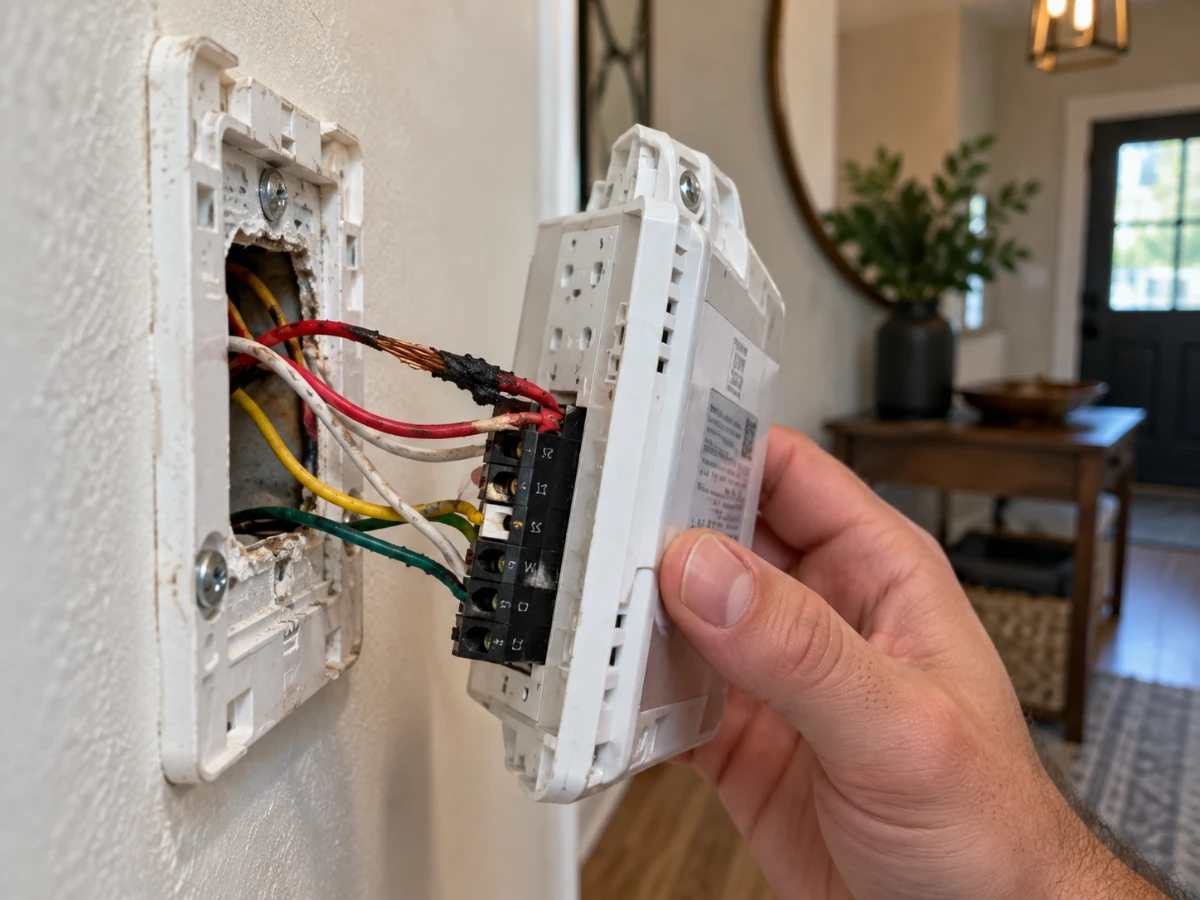
1. Melted, Brittle or Discolored Wire Insulation
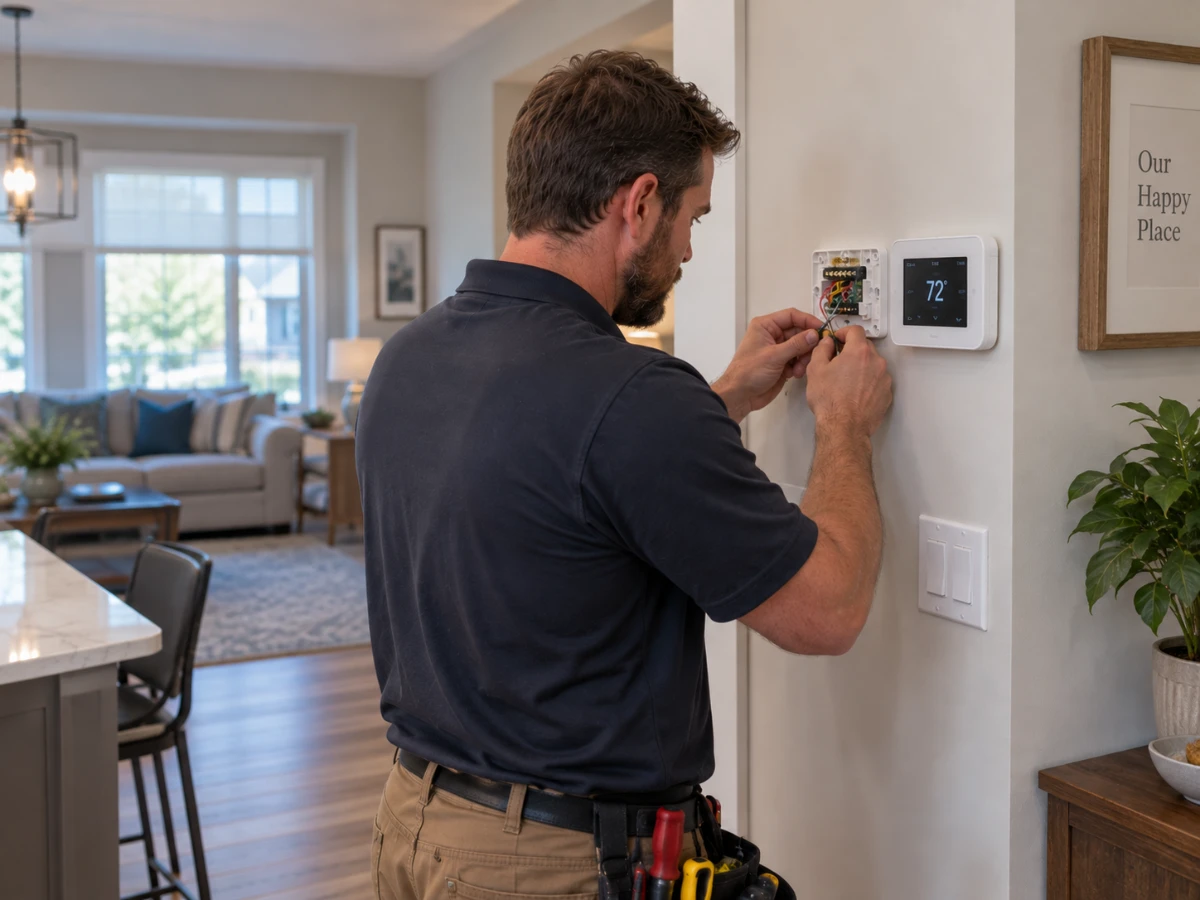
Burn marks, melted insulation, cracking or unusual discoloration around thermostat wiring should never be dismissed as normal wear.
Most thermostat wiring is low voltage, but the HVAC equipment it controls also contains line-voltage wiring. A thermostat designed for a 24-volt circuit, for example, can present a safety problem if it is connected directly to line voltage. Smart thermostat producers specifically warns that certain thermostats intended for 24 VAC can create safety issues when connected to 120 VAC or higher.
An electrician will look beyond the thermostat itself to determine what caused the damage. The problem could involve an incorrect connection, damaged conductors, a failed component, or an installation that does not match the equipment manufacturer's wiring diagram.
General electrical-safety guidance also identifies damaged insulation, overheating, unusual smells, discoloration and other signs of heat buildup as reasons to have wiring inspected by a licensed electrician.
If insulation looks melted or blackened, the goal is to avoid replacing the thermostat if possible, but the underlying cause needs to be identified.
2. The Wrong Wire Gauge for the Installation
Not all thermostat wiring is interchangeable.
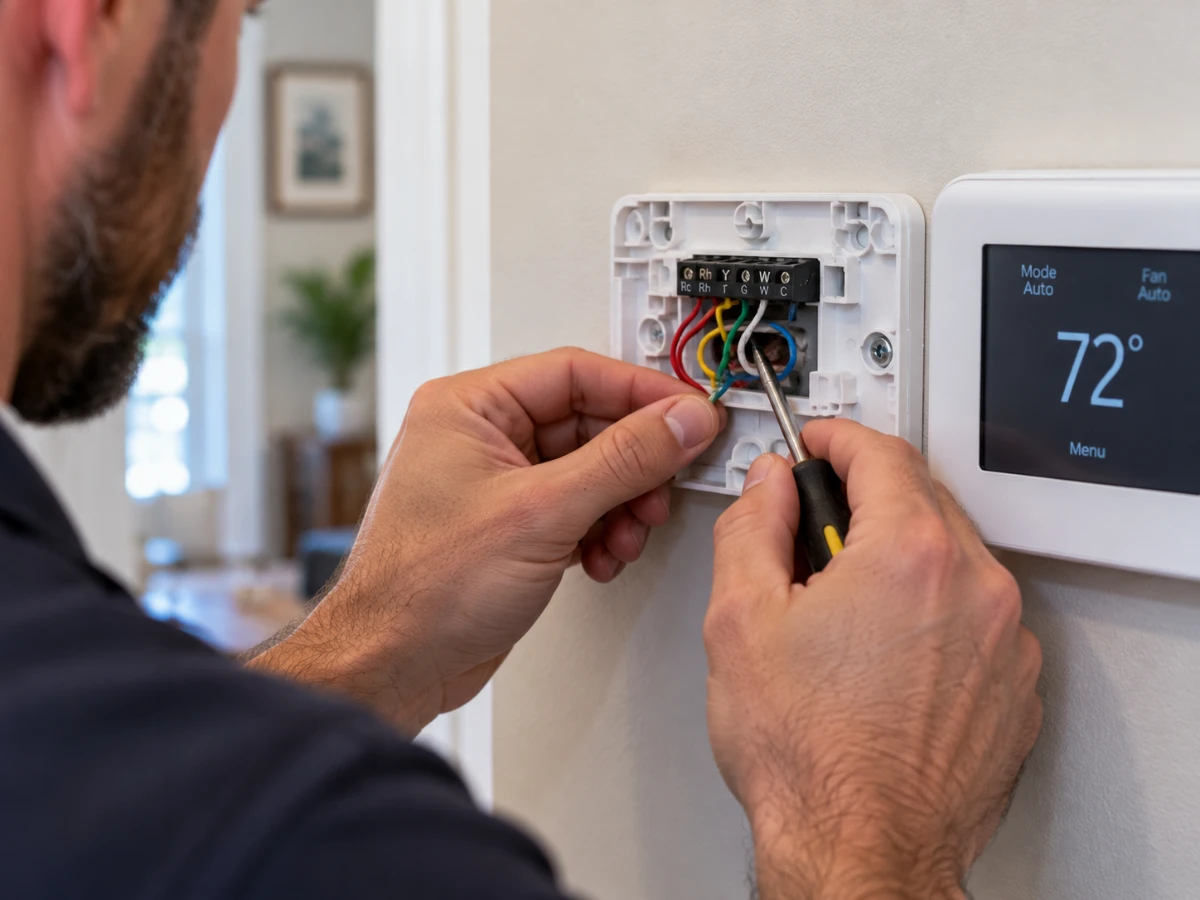
The wire gauge required depends on the equipment, control circuit, length of the run and manufacturer's specifications. Longer low-voltage runs can require a larger conductor to limit resistance and voltage drop. Manufacturer installation information shows different recommended wire gauges for different thermostat wire lengths, rather than treating one wire size as suitable for every installation.
That matters when an older thermostat is replaced or wiring has been extended during a renovation.
An electrician may check whether the existing conductors are appropriately sized for the equipment and whether connections are secure and compatible with the thermostat and HVAC control board. They may also look for wiring that has been damaged, pinched or improperly spliced.
The issue is not simply that a smaller wire automatically means an unsafe thermostat. The correct gauge depends on the particular circuit and equipment. The red flag is wiring that does not match the system's requirements.
Manufacturers also provide specific wiring diagrams and connection requirements. Honeywell Home, for example, notes that thermostat wires should be identified by their terminal connections rather than color because wire colors are not universally standardized.
That is one reason copying a previous installation without checking the actual equipment documentation can create problems.
3. Shared or Improperly Modified Neutrals in Older Systems
This is where an electrician may look beyond the thermostat wall plate.
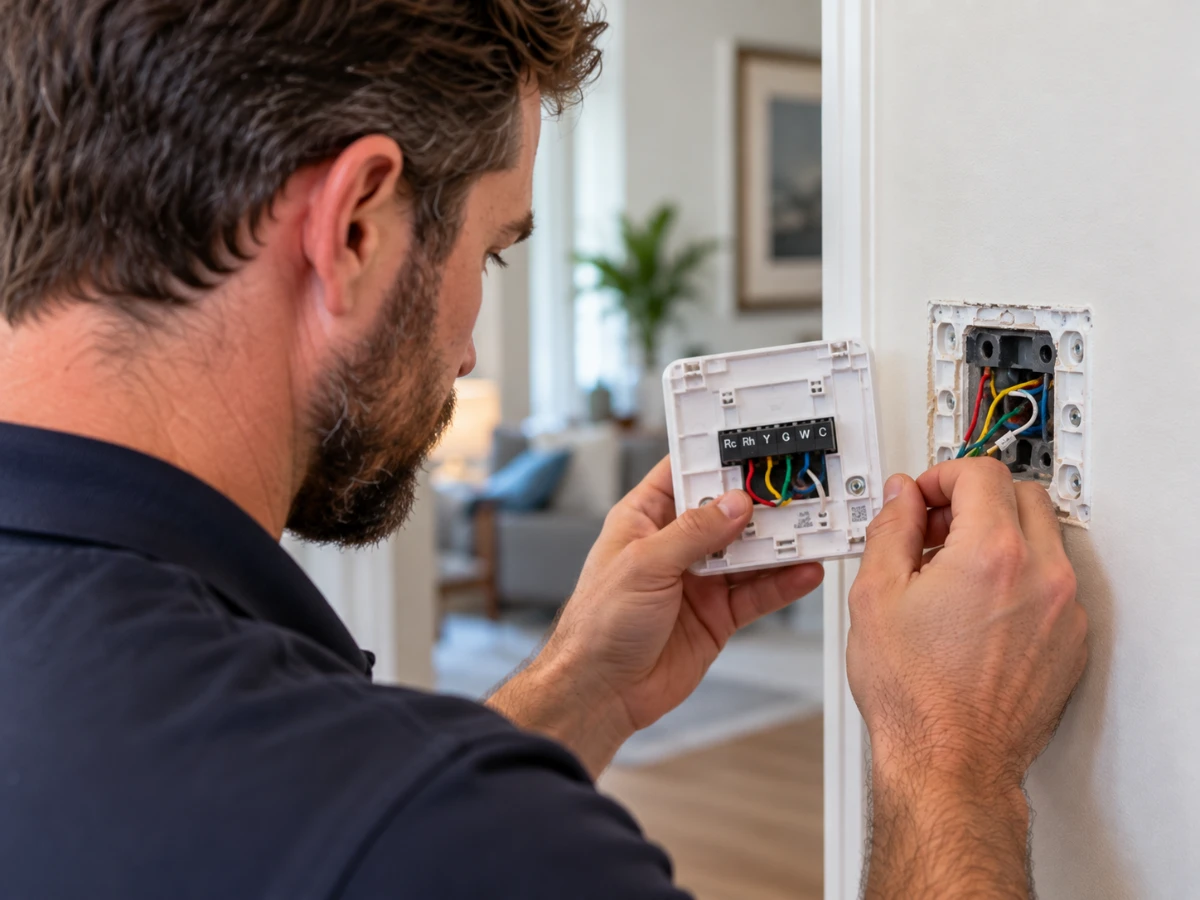
Most modern residential thermostat control wiring operates on a low-voltage control circuit. A typical 24-volt thermostat connection may use terminals such as R and C rather than a conventional household line-voltage neutral. HVAC equipment, however, can also contain line-voltage circuits, including 120- or 240-volt connections.
In an older home, an electrician may therefore investigate whether previous electrical modifications have created an improper shared-neutral or other line-voltage wiring arrangement near the HVAC equipment.
The concern is not that every shared neutral is automatically unsafe. Properly designed electrical systems can contain shared-neutral arrangements. The red flag is an arrangement that is improperly connected, altered, overloaded or inconsistent with the applicable electrical requirements.
That distinction matters because a thermostat problem can sometimes be a symptom of a larger electrical issue.
Minnesota's electrical requirements are based on the National Electrical Code, which establishes minimum criteria for electrical wiring and equipment and is intended to safeguard people and property from electrical hazards.
For homeowners dealing with an older furnace, boiler, air handler or other HVAC equipment, an electrician can determine whether the thermostat circuit and the equipment's line-voltage wiring have been modified correctly.
4. Corrosion Around Thermostat Terminals
Minnesota's seasonal changes create another reason to inspect thermostat connections carefully.
Temperature and humidity changes can contribute to condensation in areas where warm indoor air meets colder surfaces. More generally, changes in temperature and humidity can create conditions that encourage corrosion in electronic components and electrical connections. Research on electronic-system reliability has linked humidity and seasonal temperature variation with condensation and corrosion.
The risk can be more noticeable in locations such as damp basements, poorly conditioned spaces or areas affected by moisture intrusion.
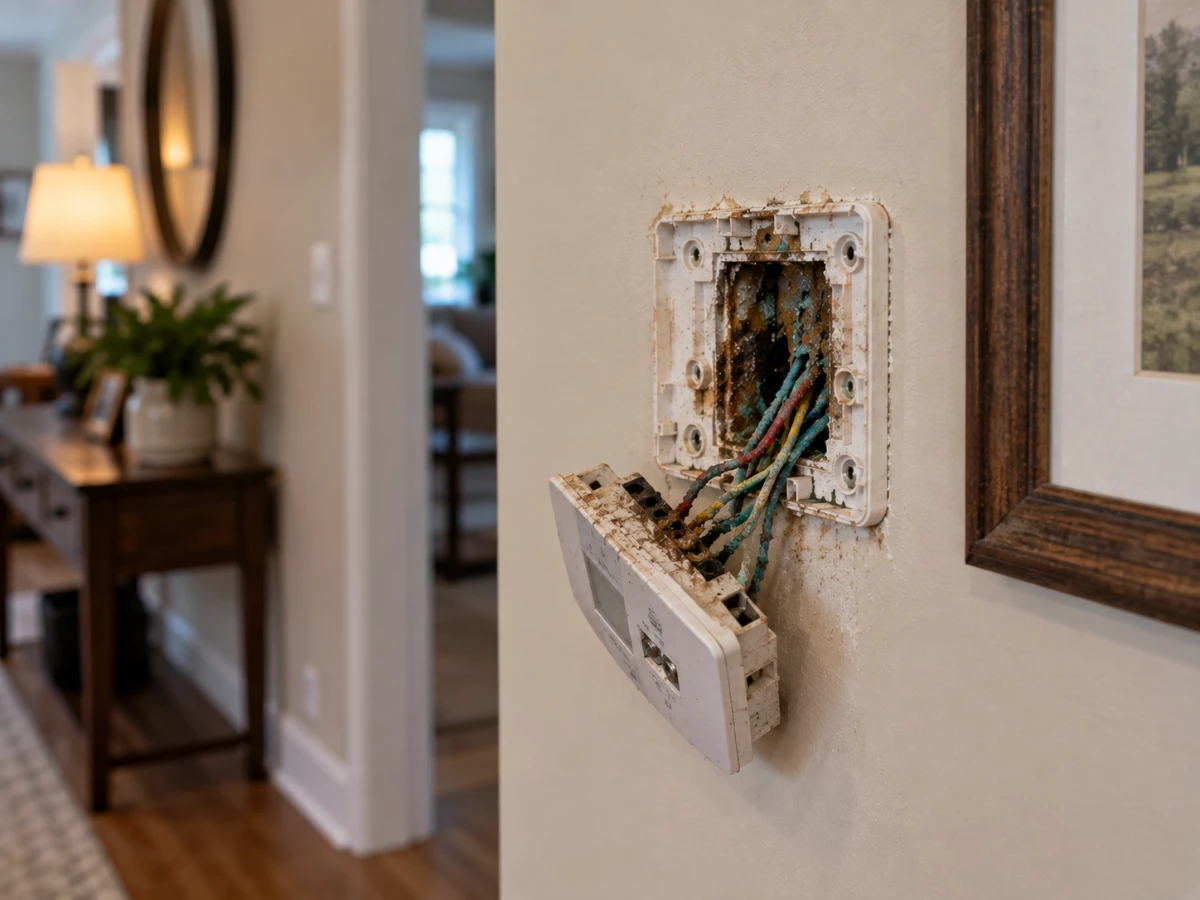
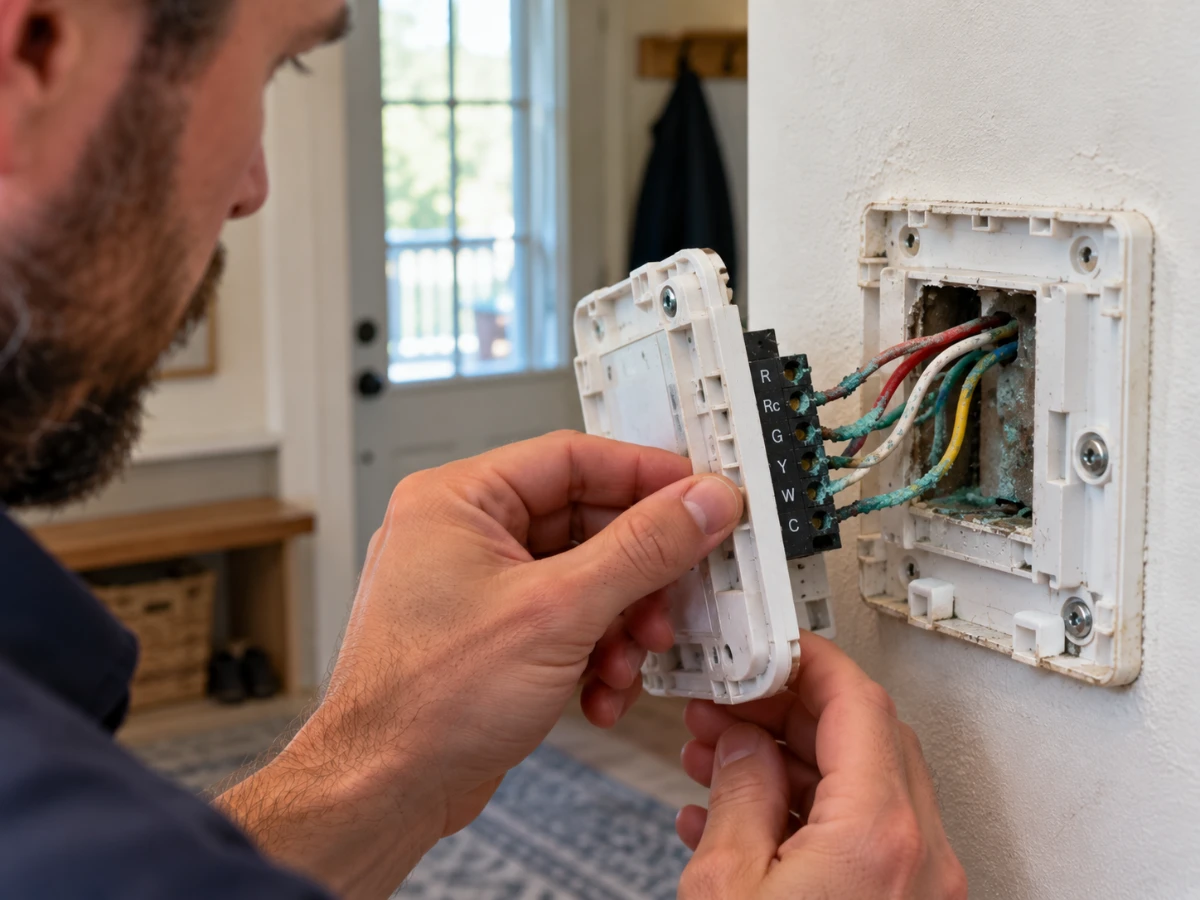
An electrician may look for oxidation or corrosion around terminal connections, exposed conductors and other electrical components. Greenish or whitish deposits, deteriorated metal connections and loose terminals can indicate that moisture has affected the connection.
Corrosion is more than a cosmetic problem. Deteriorating connections can increase resistance and interfere with reliable electrical contact. Minnesota transportation-maintenance guidance similarly identifies moisture exposure and corrosion as causes of electrical-connector problems and recommends regular inspection for oxidation, corrosion, loose connections and broken wires.
If corrosion keeps returning, replacing the affected connection without addressing the source of moisture may only provide a temporary solution.
5. Loose, Exposed or Damaged Conductors
An electrician will also check whether thermostat wires are firmly secured and whether the insulation remains intact.
A loose conductor can create an intermittent connection. A frayed wire or exposed copper can create a short or cause the HVAC system to behave unpredictably. Physical damage can also occur where wiring passes through equipment openings or has been disturbed during previous repairs or renovations.
Manufacturer guidance for HVAC control wiring stresses checking connections against the equipment wiring diagram and protecting wiring from physical damage.
Visible damage is particularly worth investigating if a thermostat has recently started behaving inconsistently.
Warning signs can include:
- A thermostat that repeatedly loses power
- HVAC equipment that starts and stops unexpectedly
- A heating or cooling system that does not respond consistently
- Burn marks or discoloration near connections
- Frayed or exposed conductors
- Corrosion around terminals
- A recurring blown low-voltage fuse
- Unusual electrical smells, buzzing or sizzling
These symptoms do not necessarily mean the thermostat wiring itself is the cause. They are reasons to have the electrical and HVAC systems properly diagnosed rather than repeatedly resetting or replacing components.
6. Wiring That Does Not Match the Equipment
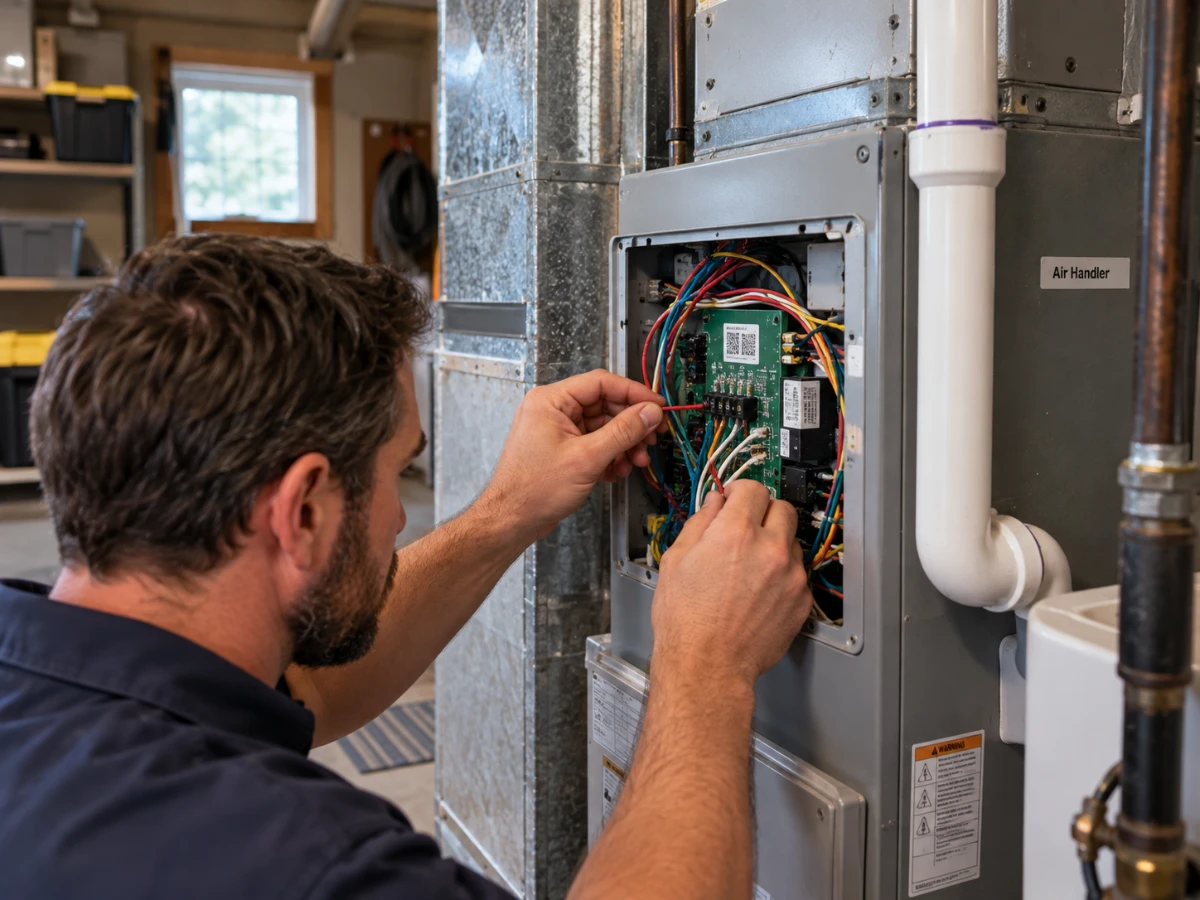
One of the biggest red flags is simply finding a wiring arrangement that does not correspond with the thermostat, furnace, boiler, heat pump or air handler manufacturer's instructions.
Modern systems can have significantly different control requirements. Heat pumps, zoning equipment, boilers, auxiliary heat and other HVAC components may use different terminal configurations. Some technical documentation, for example, shows 24-volt R and C connections alongside other control terminals for heat-pump and boiler applications.
This is why wire color alone should never be treated as proof that a conductor belongs on a particular terminal. Honeywell Home explicitly advises identifying wires by their terminal connections and checking the equipment documentation.
An electrician can trace the circuit, verify the connections and determine whether previous work has left the system correctly configured.
Why Do-It-Yourself (DIY) Thermostat Wiring Can Carry Real Risk
Thermostat replacement can look like an easy DIY project, particularly when the old and new thermostats appear to have similar terminals. The problem is that the visible thermostat is only one part of the system.
A homeowner may not know whether the equipment uses a 24-volt control circuit, a line-voltage thermostat, multiple transformers or another control arrangement. Even within low-voltage systems, incorrect connections can damage equipment or cause the control circuit to malfunction. Manufacturer instructions consistently call for power to be disconnected before certain wiring work and for connections to follow the applicable wiring diagrams.
Minnesota also regulates electrical work through its state electrical code, and the Minnesota Department of Labor and Industry licenses electrical contractors and electricians. The Department notes that electrical work includes installing, altering and repairing electrical wiring, apparatus and equipment and that applicable electrical safety standards still apply even where certain work is exempt from mandatory inspection.
If the wiring is damaged, the system is older, the installation has been modified, or you are unsure what voltage is present, getting professional help is safer than guessing.
When to Call an Electrician
A thermostat that simply needs a new battery is one thing. Wiring that shows signs of overheating, corrosion, physical damage or incorrect connections is another.
Twin Cities homeowners should consider calling a licensed electrician if they notice melted or discolored insulation, exposed conductors, recurring electrical faults, corrosion around connections, unusual smells or sounds, or a thermostat that behaves unpredictably after wiring changes.
The goal is not simply to make the thermostat work again. A proper inspection should establish whether the wiring, electrical supply and HVAC controls are correctly connected and operating safely.
For homes with older electrical systems or previous renovations, that wider inspection can be particularly important. Minnesota's electrical code establishes minimum safety requirements for electrical installations, and professional assessment can help identify problems that are not visible from the thermostat faceplate.
When there is any doubt about what is behind the wall or inside the HVAC equipment, turning the system off and calling a licensed electrician is a safer choice than experimenting with the wiring yourself.
Give Loch Monster Electric a call at 763-292-1191 or schedule a call.
Frequently Asked Questions
Most residential thermostat control circuits are low voltage, but HVAC systems can also contain line-voltage wiring. Incorrect connections, damaged insulation or electrical faults can create hazards. Visible overheating, burning or damaged wiring should be professionally inspected rather than repaired by trial and error.
Corrosion can indicate that moisture or condensation has reached the electrical connection. It can interfere with reliable electrical contact and may continue if the underlying moisture problem is not addressed. An electrician can inspect the connection and determine whether the wiring or surrounding area needs attention.
No. Many residential HVAC thermostats use low-voltage control circuits, commonly 24 VAC, but some systems use line-voltage thermostats. The thermostat and HVAC equipment must be matched to the correct wiring and voltage. Manufacturer instructions should be followed rather than assuming every thermostat uses the same type of circuit.
Not before identifying the cause. Burned or melted insulation can indicate an electrical or equipment problem. Replacing the thermostat without diagnosing the underlying fault may leave the safety issue unresolved and could damage the replacement.
Call a licensed electrician when wiring is burned, melted, exposed, corroded or incorrectly connected, or when the system has recurring electrical faults. Professional help is also advisable when you cannot determine the voltage or wiring configuration of an older HVAC system.