
Pre-Freeze Roof & Exterior Electrical Maintenance Guide for Twin Cities Homes
Updated: Nov 6, 2026
A Twin Cities homeowner’s guide to pre-freeze exterior electrical maintenance: what to check on roof heat cables, outdoor outlets, GFCIs, grounding, conduit, and buried garage feeders, plus what a licensed electrician should test and repair before the ground freezes.
Imagine an early morning in January: it’s 15 below, and your truck won’t start because the outdoor outlet powering your engine block heater decided to quit overnight. Or maybe your roof heat cable stopped working, and now there’s a thick ice dam pushing water under your shingles. Here’s the frustrating part: most of these winter headaches start as small problems you could have easily spotted and fixed back in October.
That’s why you need pre-freeze exterior electrical maintenance. In this guide, we’ll walk through why you need to check on your roof heat cables, outdoor outlets, GFCI protection, conduit seals, and buried lines before the snow flies and the ground locks up for the season.
We’re Loch Monster Electric, a licensed electrical contractor serving homeowners across the Twin Cities metro. If you already know you want a pro to handle it, give us a call at 763-292-1191 or fill out our contact form to get on the schedule.
Why You Need a Pre-Freeze Check Before the November Freeze
Once November rolls around in the Twin Cities, the weather stops playing nice. One week it’s 50 degrees, the next brings you freezing rain, followed by heavy wet snow, and overnight lows in the single digits.
Here’s why pre-freeze exterior electrical maintenance pays off before all that hits:
- Safer access to your roof and yard: Whether you’re checking roof cables in Shoreview or a buried line in Woodbury, a dry roof and soft ground will give you a much easier time than working on ice and frozen soil in December.
- Lower repair costs: Catching a cracked cover or worn cable now is a quick fix. Waiting until it fails in a snowstorm often means a bigger repair and an urgent service call.
- Time to fix what you find: Starting early leaves room to order parts, pull permits, or dig before the ground freezes, instead of putting repairs off until spring.
- Easier scheduling: Booking before the first big winter storm means you’re not competing with everyone else who waited for something to break.
- Ready on day one: Your heat cables and outdoor outlets are working before the first snowfall, which helps with ice dam prevention and winter electrical safety in the Twin Cities right from the start.
Below, we’ll cover the four areas to check before the freeze in greater detail. If you want a full professional look at your system, our residential electrical inspection services cover everything from the service mast down to individual circuits, with a clear written report of what needs attention.
Roof & Gutter Heat Trace Cable
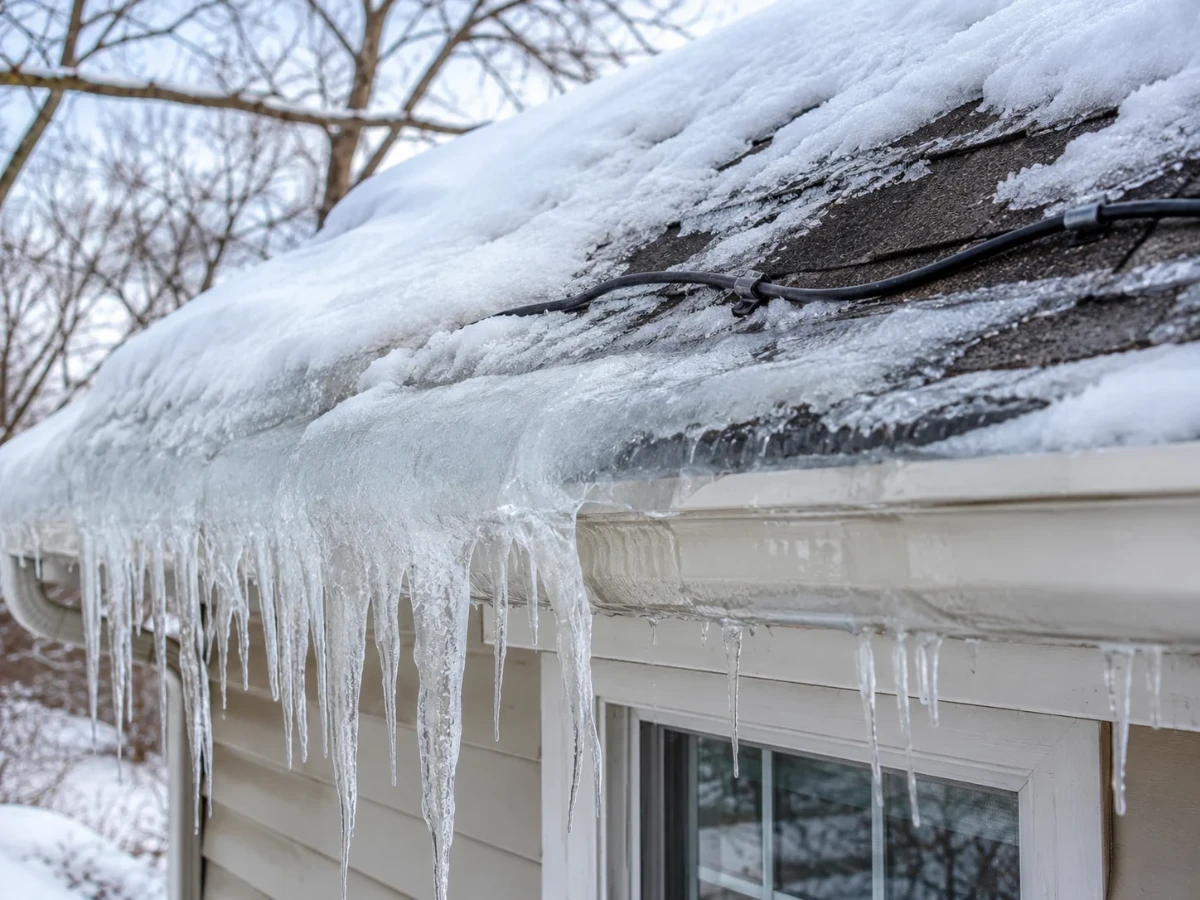
Ice dams form when warm attic air melts snow on the upper roof and the water refreezes at the cold eaves. The next round of meltwater then backs up under your shingles. Your roof heat cable (also called heat trace or de-icing cable) keeps a melt path open so water drains off instead. Older homes in St. Paul and Minneapolis with low-slope roofs and thin attic insulation rely on these cables, so check them every fall.
What You Can Check on Your Heat Cables
Unplug the cable first, and only do these checks from a ladder when the roof and gutters are dry.
- Jacket damage: Summer sun can dry out and crack the outer jacket. Look for cracks, fraying, scorch marks, or bare wire along the full run, including gutters and downspouts. Damaged cable should be replaced, not taped.
- Loose or missing clips: Fall winds and sliding snow can pop roof clips loose. Heavy snow can then drag the cable out of its zigzag pattern, leaving gaps where ice builds up.
- Debris in gutters: Clear out leaves, needles, and twigs before turning the cable on. Dry debris on a warm cable is a fire risk.
- Plug and connections: On plug-in cables, the plug and end seal should be tight, dry, and free of corrosion. For hardwired systems, leave the power connection to an electrician.
What an Electrician Can Test on Your Heat Cables
- Continuity and insulation resistance: An electrician meters the whole run and compares the readings to the manufacturer’s specs. This catches hidden breaks and moisture damage you can’t see from a ladder.
- Ground-fault equipment protection: Code requires it for fixed roof and gutter de-icing equipment, since a damaged cable in a wet gutter is a shock and fire hazard. Many plug-in cables have it built into the plug, while hardwired systems need it at the breaker.
Read our testing gutter heat trace cables guide to learn more about inspecting these cables for signs of damage, and how the GFCI outlets and breakers on their circuits are tested.
Outdoor Receptacles & Sub-Zero Weatherproofing
Cheap flat plastic outlet covers were never built to survive a Minnesota winter. Freeze-thaw cycles make them brittle until they crack, letting snowmelt and sleet into the outlet box.
What You Can Check on Your Outdoor Outlets
Look at every outdoor outlet, without opening the box or touching wiring, for:
- Cracked housings: Any crack in the cover or outlet face lets water in.
- Failed caulking: The seal between box and siding should have no gaps or peeling.
- Missing gaskets: The gasket behind the cover should be there and still flexible.
- Loose mounting: A wobbly box or cover usually means water is getting behind it.
What an Electrician Can Upgrade or Repair
Heavy-duty bubble covers can close fully over a plugged-in cord. They also hold up better in the cold, and are what current code calls for on standard outdoor outlets in wet locations. Whether you’re plugging in holiday lights, a block heater in a driveway, or a heated pet bowl on the deck, bubble covers are ideal for these outdoor outlets.
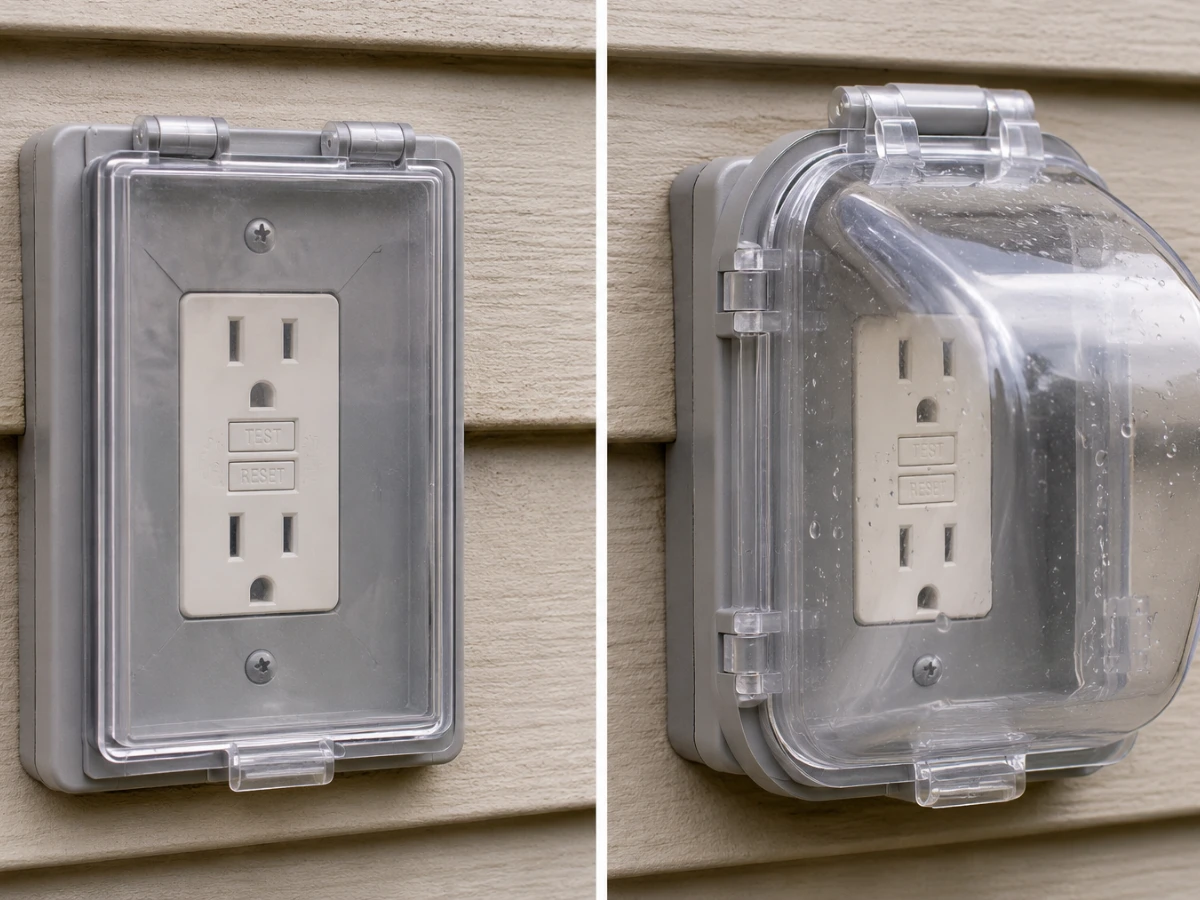
To learn more about why cheap plastic outlet covers fail during the freeze-thaw cycle, and what features make heavy-duty bubble covers better, read our sub-zero weatherproof outlet covers guide.
Exterior GFCI Safety & Grounding Pathways
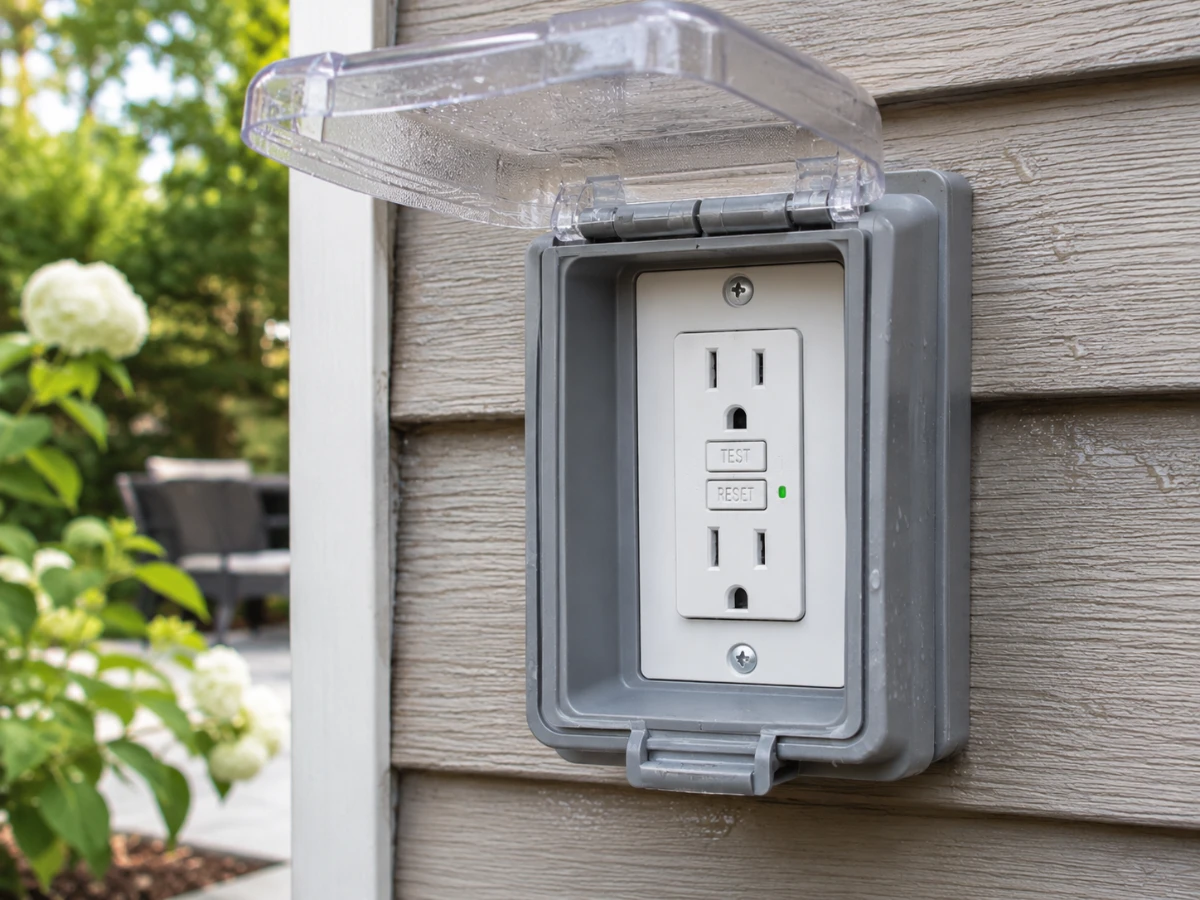
Outdoor GFCI outlets are key safety devices. If current leaks out through water or a person, these outlets can cut power in a split second. This is important around wet snow, slush, and metal ladders.
What You Can Check on Your Outdoor GFCIs
- Press TEST: The outlet should click off right away.
- Press RESET: Power should come back on. If it won’t reset, or TEST does nothing, the GFCI needs replacing.
- Find hidden GFCIs: Some outdoor outlets have no buttons because they’re protected by a GFCI outlet inside, often in the garage, basement, or a bathroom, or by a GFCI breaker in your panel. If an outdoor outlet has no power, check for a tripped GFCI in those spots and reset it.
- Ground wire and clamp: Look for a bare copper wire running into the ground near your meter or on the outside wall below your main panel. Without touching this wire, check that it isn’t cut, loose, or knocked out of place by edgers, trimmers, or digging. If anything looks off, call an electrician.
What an Electrician Can Fix
- Failed GFCIs: Units that won’t trip or reset can be replaced with weather-resistant GFCIs.
- Grounding repairs: A loose, cut, or corroded ground wire or clamp needs a professional repair.
- Nuisance trips: Older GFCIs often trip once moisture gets into the box. If yours trips whenever it rains or snows, our guide on
why your GFCI keeps trippingcovers common causes, safe troubleshooting, and typical repair costs.
Conduit Entry Seals & Detached Feeder Inspection
Overhead or underground wiring to a detached garage, shed, or workshop needs attention before winter too.
What You Can Check on Your Conduit and Feeders
- Exterior conduit: Look for cracks, broken straps, open fittings, and loose connections on PVC and metal conduit. Sun-aged PVC can get brittle.
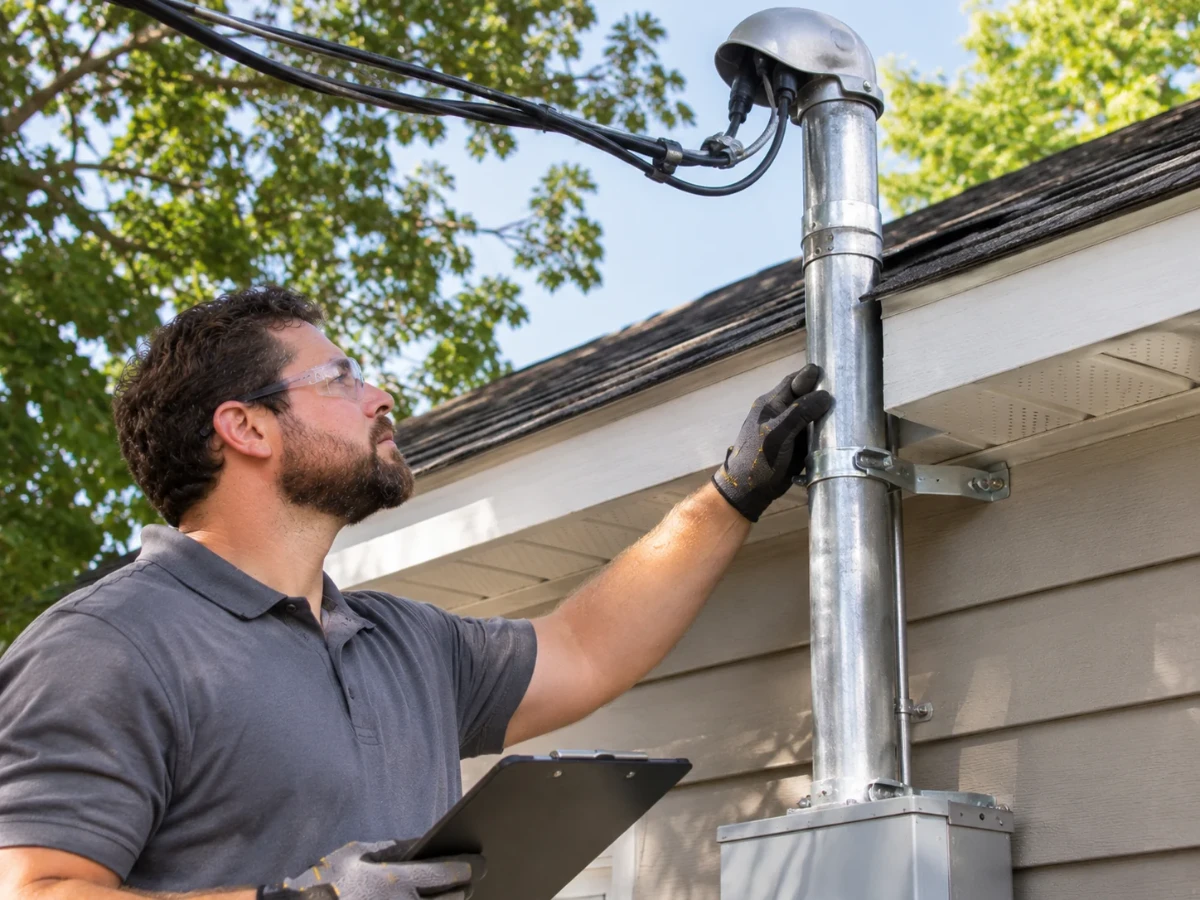
- Service mast and weatherhead: The pipe where power lines meet the house should be straight and firmly mounted. They can get bent by fall windstorms.
- Tree limbs: Branches rubbing on the service drop are common in mature neighborhoods like Roseville. Contact Xcel Energy before attempting any trimming near those lines.
- Buried line path: Frost heave, settling, and summer digging can expose underground lines. Walk the path and look for exposed conduit, sunken soil, or washouts.
What an Electrician Can Handle
- Sealing conduit openings: Open conduit lets in cold air, moisture, and mice. Then condensation forms where cold and warm air meet, which drips onto connections. Using duct seal compound blocks drafts, cuts condensation, and keeps pests out.
- Mast and conduit repairs: A bent mast, loose weatherhead, or cracked conduit can be fixed before snow and ice add more strain.
- Buried feeder repairs: If a line to your garage or shed is exposed or damaged, we dig it up, repair it, and re-bury it at the depth required by code, all before the ground freezes. We also call Gopher State One Call at 811 to mark utility lines and locate your private feeder ourselves.
For a full rundown of what inspectors look at, our electrical inspection checklist covers panels, wiring, grounding, GFCI and AFCI protection, and inspection prep.
Professional Pre-Winter Inspections with Loch Monster Electric
Some of these checks you can do yourself, but here’s what a licensed electrician adds:
- Safe, code-compliant testing: Heat cable testing, grounding checks, and work near live service equipment get done safely and up to code.
- Thermal imaging on your panel: It reveals hot spots on breakers and connections, including the double-pole breakers and dedicated circuits feeding your de-icing cables, before winter loads push them hard.
- Transparent Time & Materials pricing: Loch Monster Electric handles pre-freeze exterior electrical maintenance across Minneapolis, St. Paul, and surrounding suburbs like White Bear Lake and Plymouth. And importantly, you only pay for the work your home actually needs.
For a breakdown of pricing and what’s included, see our residential electrical inspection cost guide.
Ready for Pre-Winter Electrical Inspection and Maintenance?
Minnesota winter is coming either way, so it pays to be ready before it shows up. A little pre-freeze exterior electrical maintenance now, checking heat cables, outdoor outlets, GFCIs, conduit seals, and buried lines, saves you from frozen surprises and costly repairs later.
When you want it done right, Loch Monster Electric has licensed electricians ready to inspect, test, and fix your exterior electrical system before the deep freeze sets in. Give us a call today at 763-292-1191.
Frequently Asked Questions
Late September through early November is the best time for the Twin Cities. You’ll want it done before the first lasting snow and before the ground freezes, so that roof access is safe and any digging is still possible.
No, not around the clock. Running heat cable nonstop wastes electricity and wears the cable out faster. Most homeowners turn them on when snow and ice start building up, You can also use an automatic controller that senses temperature and moisture. Always follow the manufacturer’s instructions for your system.
Yes, for standard 15- and 20-amp outlets in wet locations. Minnesota follows the National Electrical Code, which calls for extra-duty, while-in-use covers there. If your outlets still have old flat covers, upgrading them is an inexpensive way to bring them up to date.
It should be a GFCI-protected outlet with an in-use cover, and you should use a heavy-duty, outdoor-rated cord. Block heaters pull a lot of power, so avoid sharing that circuit with heat cables or big holiday light displays. If breakers trip on cold mornings, a dedicated circuit may be the fix.
In most cases, yes. The Minnesota Department of Labor and Industry requires electrical permits and inspections for most new wiring work. Loch Monster Electric can pull the permit and schedule the inspection as part of the job.
It depends on what we find. A quick check of a few outlets costs far less than replacing a full roof heat cable run or repairing a buried feeder.
Turn off the affected circuit at the breaker if you smell burning, see sparks, or notice melted parts, and stay away from damaged wiring. Then call us at 763-292-1191. Loch Monster Electric offers emergency electrical repair across the Twin Cities metro.