
Why You Need Sub-Zero Weatherproof Outlet Covers to Stop GFCI Tripping in Winter
Updated: Nov 6, 2026
Outdoor GFCI tripping all winter? This guide explains how snowmelt and freeze-thaw cycles crack cheap outlet covers, what sets sub-zero weatherproof outlet covers apart, key bubble cover features, and how Loch Monster Electric repairs and seals outdoor outlets across the Twin Cities.
It’s a cold December evening in Maple Grove. The holiday lights went up last weekend, the timer is set, and the whole block is lit up except your house. So, you head out to the garage, find the outdoor GFCI, and press reset, … but nothing happens. You try again in the morning and it holds for an hour, then trips again right when the sun starts melting the snow off the eaves. Sound familiar?
In this article, we’ll explain why outdoor outlets trip so often during a Minnesota winter, how the freeze-thaw cycle wrecks cheap covers, and how sub-zero weatherproof outlet covers, paired with the right receptacle and a good seal, is the best way to fix this problem for good.
We’re Loch Monster Electric, licensed electricians serving homeowners across Minnesota and Wisconsin. We fix a lot of frozen, waterlogged outdoor outlets every winter, so if you’re ready to get started, call us at 763-292-1191 or fill out our contact form.
Why GFCI Outlets Keep Tripping During a Minnesota Winter
Homeowners across Minneapolis, St. Paul and the surrounding suburbs run into the same problem every late fall and winter. An outdoor outlet that worked fine all summer suddenly starts tripping for no clear reason. The patio lights go dark, the inflatable snowman sags, and worst of all, the car’s block heater stops getting power on a -10°F night.
What’s Really Causing the GFCI Tripping: Water
Most folks assume the GFCI outlet itself has gone bad, or that the breaker is acting up. This does happen, but in our experience, the real culprit is usually water. Snow melts, trickles down the siding, and sneaks past a cracked or warped plastic cover. Once moisture gets inside the box, even a tiny bit of current leaking to the ground is enough to make the GFCI do its job and shut things off.
Why Resetting the GFCI Doesn’t Work
That’s also why resetting the button often fails. As long as the box is still wet or icy inside, the fault is still there. For a deeper look at other causes, such as worn-out devices and wiring issues in older homes, check out our guide on why your GFCI keeps tripping, which also covers DIY troubleshooting and repair costs.
The Freeze-Thaw Cycle and Standard Outlet Failure
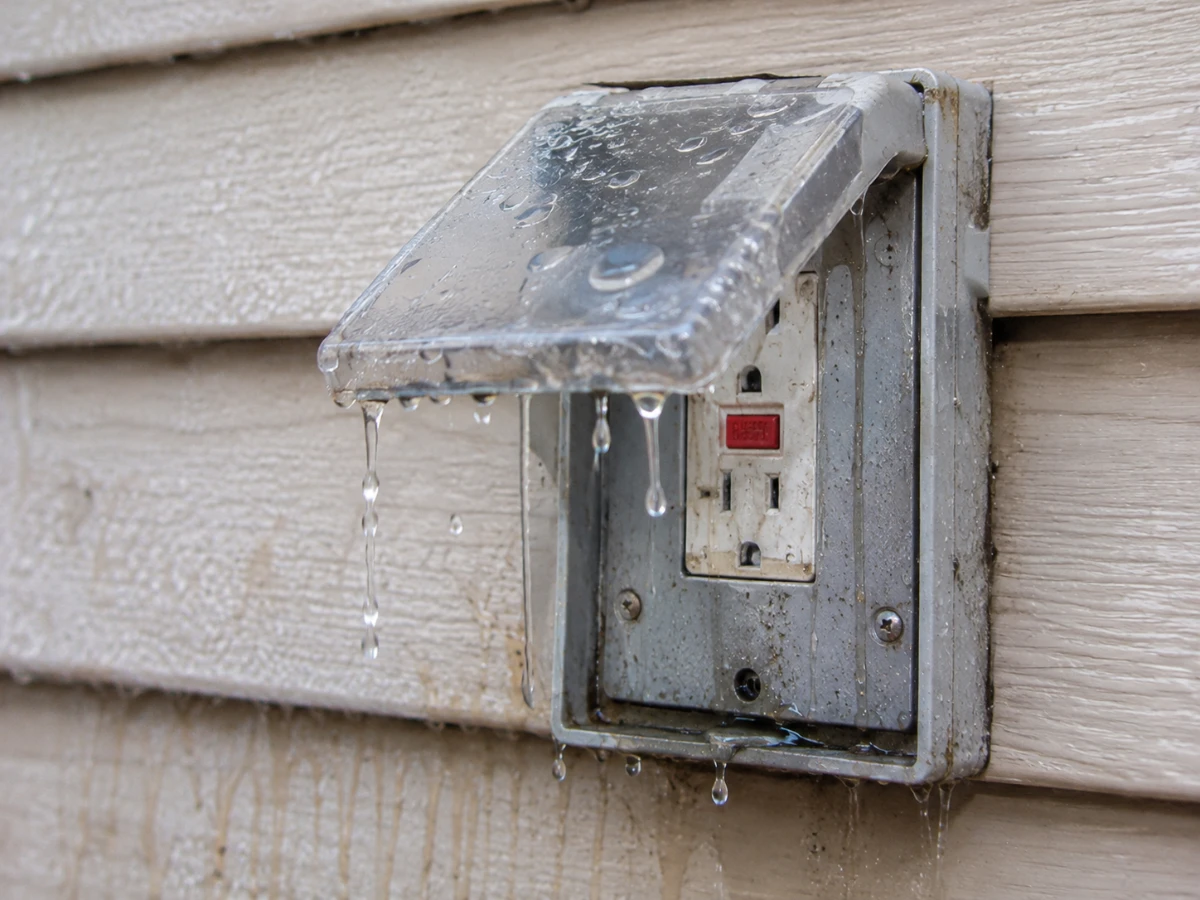
Most Twin Cities homes have the same outdoor outlet cover: a cheap, flat, flip-up plastic plate with a thin foam gasket. It looks fine on the installation day, but it isn’t built for a Minnesota winter.
Our weather swings hard in the late fall and early spring, from 15°F nights to sunny 40°F afternoons. Each swing makes the plastic and foam expand and shrink, and over a few seasons, that stress takes a toll:
- Cracked plastic plates: Thin, low-grade plastic turns brittle in deep cold, and small cracks form around the screws and hinge.
- Shrunken gaskets: Thin foam gaskets flatten, dry out, and pull away from the siding, leaving small gaps around the box.
- Lids that won’t close: Flat flip covers only seal when nothing is plugged in. With a cord in place, the lid sits open all season long.
Now picture snow melting off the roof in a White Bear Lake rambler. The water runs down the siding, finds those tiny gaps, and drips straight into the junction box. Moisture creates a path for the current to leak to the ground, and the GFCI trips instantly. When the temperature drops again that night, the water freezes, which can widen the gaps even more.
This is a big reason why we always recommend a fall inspection before the cold sets in. In addition to the outdoor outlets, our pre-freeze exterior electrical maintenance guide covers what else to check before winter including roof heat cables, grounding, conduit, and buried garage feeders.
The Extra-Duty Sub-Zero Weatherproof Outlet Covers
Sub-zero weatherproof outlet covers are heavy-duty, in-use outdoor outlet covers built for northern winters. Unlike flat flip covers, they stay sealed with a cord plugged in, which is a must when you need to plug in block heaters, holiday lights, and heat cables for months.
Unlike cheap plastic covers, a quality sub-zero cover is built to withstand:
- Deep cold: It stays tough and crack-resistant in subzero temps, and many models are cold-impact tested to -30°F or colder.
- Freeze-thaw swings: It holds its shape and seal as temps bounce between frigid nights and above-freezing afternoons.
- Snowmelt and driving rain: It keeps roof runoff, water dripping down the siding, and wind-blown rain out of the box.
- Heavy snow and ice: It handles drifts, ice buildup, and snow thrown by a shovel or snowblower without cracking.
- Strong winter winds: It stays shut and in place through gusty storms.
- Sun and UV exposure: It resists fading and turning brittle from summer sun and bright glare off the snow.
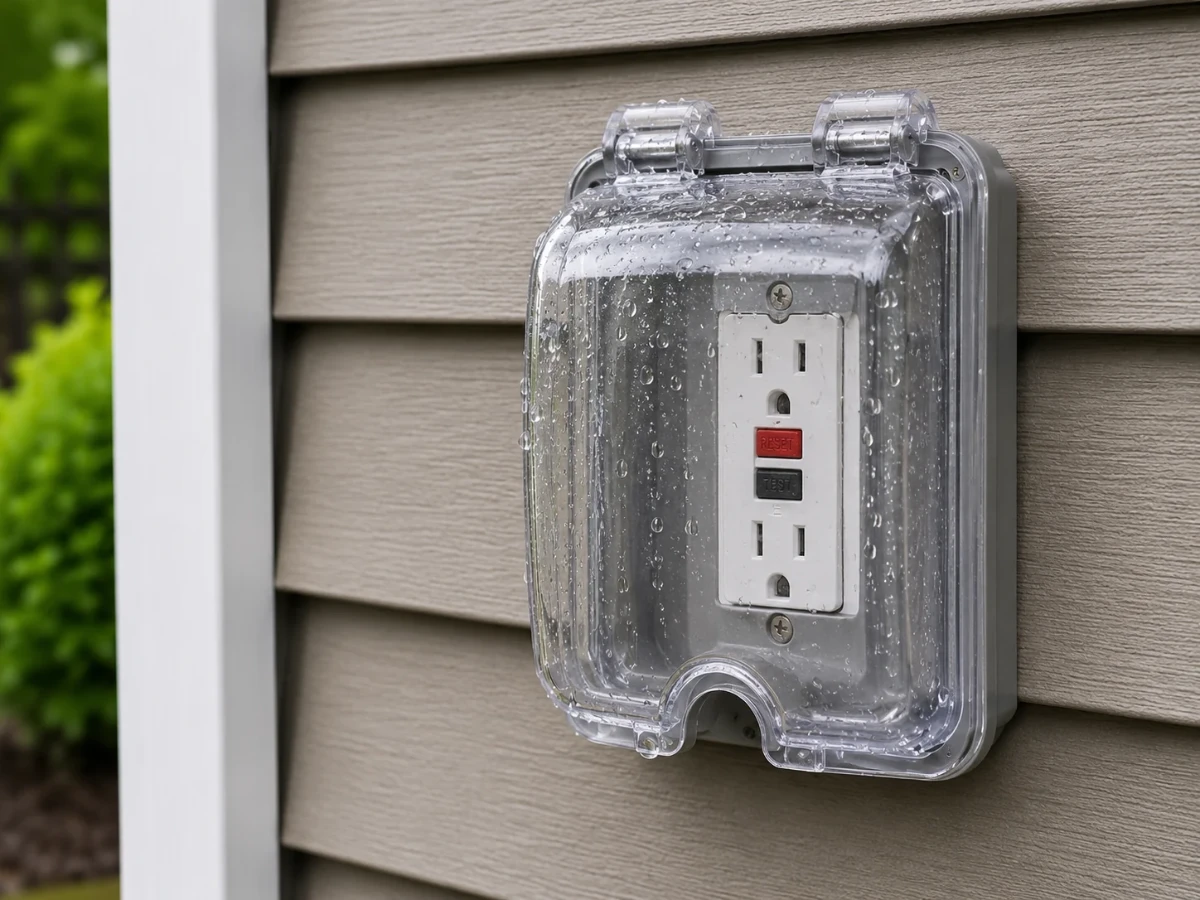
This type of bubble covers are also required by code. The National Electrical Code (NEC), which Minnesota follows, calls for extra-duty in-use covers on outdoor outlets in wet locations.
Key Features of Heavy-Duty In-Use Bubble Covers
Not every bubble cover is the same. When we upgrade your outdoor outlets, these are the features we look for:
- High-impact polycarbonate bodies: Polycarbonate stays flexible in the cold instead of shattering like cheap plastic.
- Heavy-duty rubber gaskets: Dense rubber, often neoprene or a similar material, presses firmly against siding, brick, or stone to form a tight seal around the box.
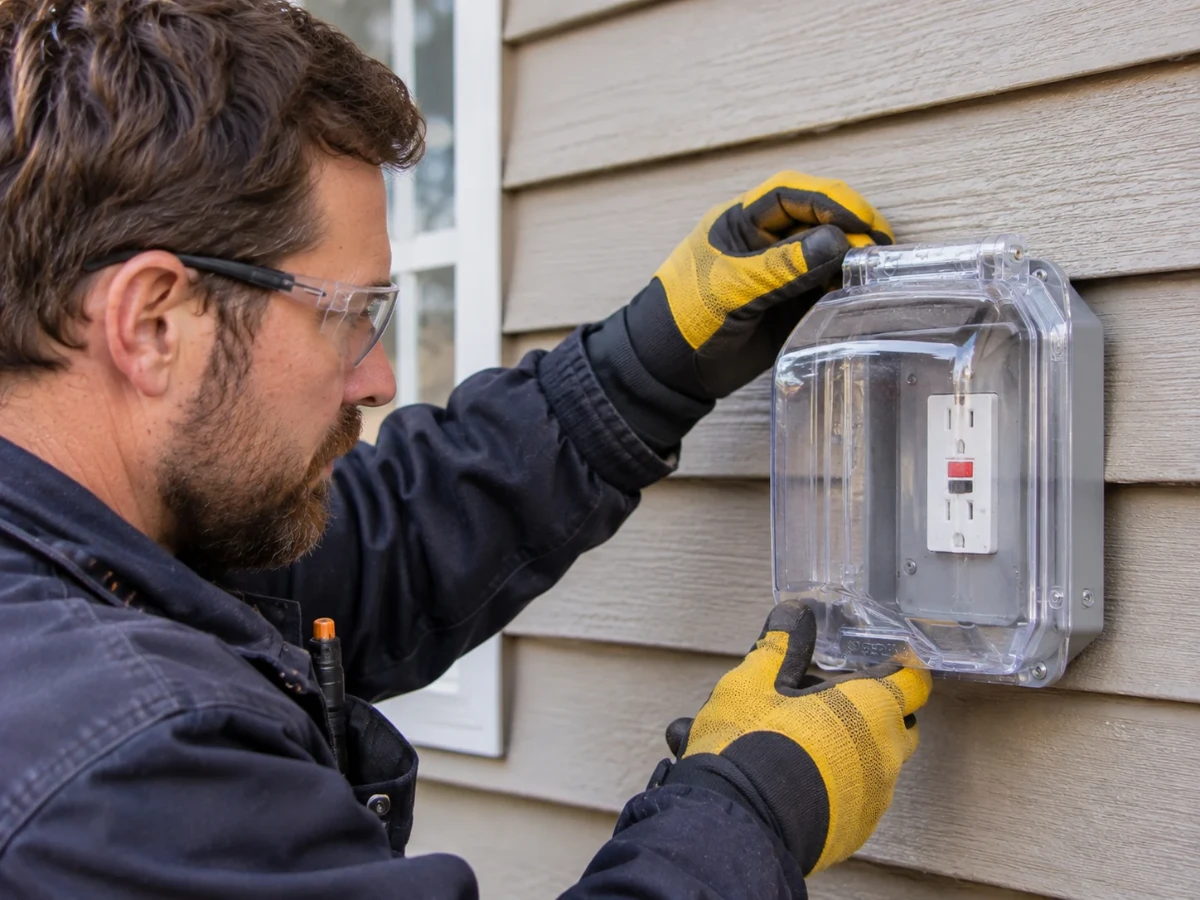
- Bubble hood with bottom cord exits: The raised hood closes fully over plugged-in cords. Cords exit through small openings at the bottom, so water runs off instead of in.
- Expandable cavities: Extra room fits heavy-gauge outdoor extension cords, outdoor timers, and smart plugs without forcing the lid.
- Lockable hasps: A small hasp lets you add a padlock or zip tie. That keeps the lid shut in high winds, stops heavy snow from popping it open, and keeps cords from getting yanked loose.
- Clear, UV-resistant housings: A see-through cover lets you check the outlet and the GFCI indicator light at a glance, without opening it up in a snowstorm.
These bubble cover features are necessary for outlets that power roof and gutter heat cables in places like Woodbury and Eagan, where ice dams are a regular winter headache. Our guide to testing gutter heat trace cables covers all the electrical checks you need to make sure the cables are working fine before winter.
Professional Installation with Loch Monster Electric
A new cover won’t help much if water has already damaged what’s behind it. That’s why our upgrades go beyond replacing the bubble cover:
- Inspecting and replacing damaged boxes: Cracked or rusted exterior boxes get replaced so the new cover has a solid base.
- Cleaning up or replacing wiring: We strip corroded wire back to clean copper so connections are tight and reliable. If the wiring is too damaged or outdated, or a new circuit is needed, we can replace it or run new wiring.
- Installing weather-resistant GFCI receptacles: These weather-resistant outlets are built to handle outdoor moisture and temperature swings.
- Sealing wall penetrations: We apply exterior-grade weatherproof sealant around the box to stop water and cold air from getting into the wall.
Learn more about our GFCI/AFCI installation service for outdoor and indoor upgrades.
Keep Your Outdoor Outlets Working All Winter
Upgrading to sub-zero weatherproof outlet covers, with a weather-resistant GFCI and a proper seal, keeps your holiday lights, heat cables, and block heater running when you need them most.
Loch Monster Electric is the licensed electrician that can make these upgrades happen. Give us a call at 763-292-1191 and we’ll get your outdoor outlets ready for whatever winter brings.
Frequently Asked Questions
This usually points to moisture. Water gets into the box past a worn cover or gasket and lets a small amount of current leak to ground. The GFCI senses that leak and shuts off power to protect you. Once the box dries out, it may reset fine, until the next thaw.
No. If it keeps tripping, it’s doing its job by warning you about a real problem. Repeated resets won’t fix water in the box, and the moisture can corrode the outlet and wiring over time. If the outlet trips again and again, have a licensed electrician take a look.
Yes. Under the NEC, 15- and 20-amp receptacles in wet outdoor locations need a listed extra-duty while-in-use cover, no matter how often they’re used. In Minnesota, outdoor outlets are also required to have GFCI protection and to be weather-resistant receptacles.
Changing an outlet cover is a fairly simple job for a handy homeowner. But if your outlet has already been tripping, water may have damaged the receptacle, box, or wiring behind it. In this case, it’s better to let a licensed electrician check what’s behind the cover, handle any permits, and make sure the repair passes inspection.
It can be, as long as the setup is right. Use a GFCI-protected outlet, an extra-duty in-use cover that stays closed with the cord plugged in, and a heavy-gauge outdoor extension cord rated for cold weather. Avoid running other heavy loads, like space heaters, on the same circuit.
Yes. Outdoor outlets and GFCI protection are a standard part of a thorough inspection.