Upgrading to a 200-Amp Service Panel: Costs, Process, and Why Your Home Needs It
Updated: Jun 23, 2026
Considering a 200-amp panel upgrade? Get the facts on what it costs, why your home might need it, and how to plan the process. We break down the pricing factors, from permits to modern electrical safety code requirements in the Twin Cities.
Many of our charming, historic homes in the Twin Cities and the surrounding suburbs, from the classic Craftsman bungalows in South Minneapolis to the mid-century ramblers in Richfield, were built during an era when a 60-amp or 100-amp electrical panel was more than enough. Today? Not so much.
If you find yourself constantly resetting tripped breakers, or if you are planning some exciting home improvements, it might be time for a heavy-duty electrical service. You’re ready for a 200-amp panel upgrade.
Let’s break down exactly why your home might need this upgrade, what the installation process looks like, and what you can honestly expect to pay.
Why Your Home Might Still Be Chugging Along on 100-Amps (Or Less!)
In the 1950s and 60s, a home’s electrical load was pretty light. You had a refrigerator, a few lamps, a black-and-white TV, and maybe a toaster.
Fast forward to today. We are charging smartphones, running high-efficiency washers, powering double ovens, and installing hot tubs. As a result, older systems are struggling to keep up with modern demands.
Signs You’re Maxing Out Your Current System
How do you know if your current panel is crying out for help? Here are a few telltale signs:
- Flickering lights: Your lights dim momentarily when the AC, microwave, or vacuum kicks on.
- Tripped breakers: You can’t run the hair dryer and the bedroom space heater at the same time without a trip to the basement in the dark. Read our guide on how to safely reset it, if your
circuit breaker keeps tripping. - Warm panel or funny smells: If your breaker box feels warm to the touch or smells like faint burning plastic, this is a safety hazard that requires immediate
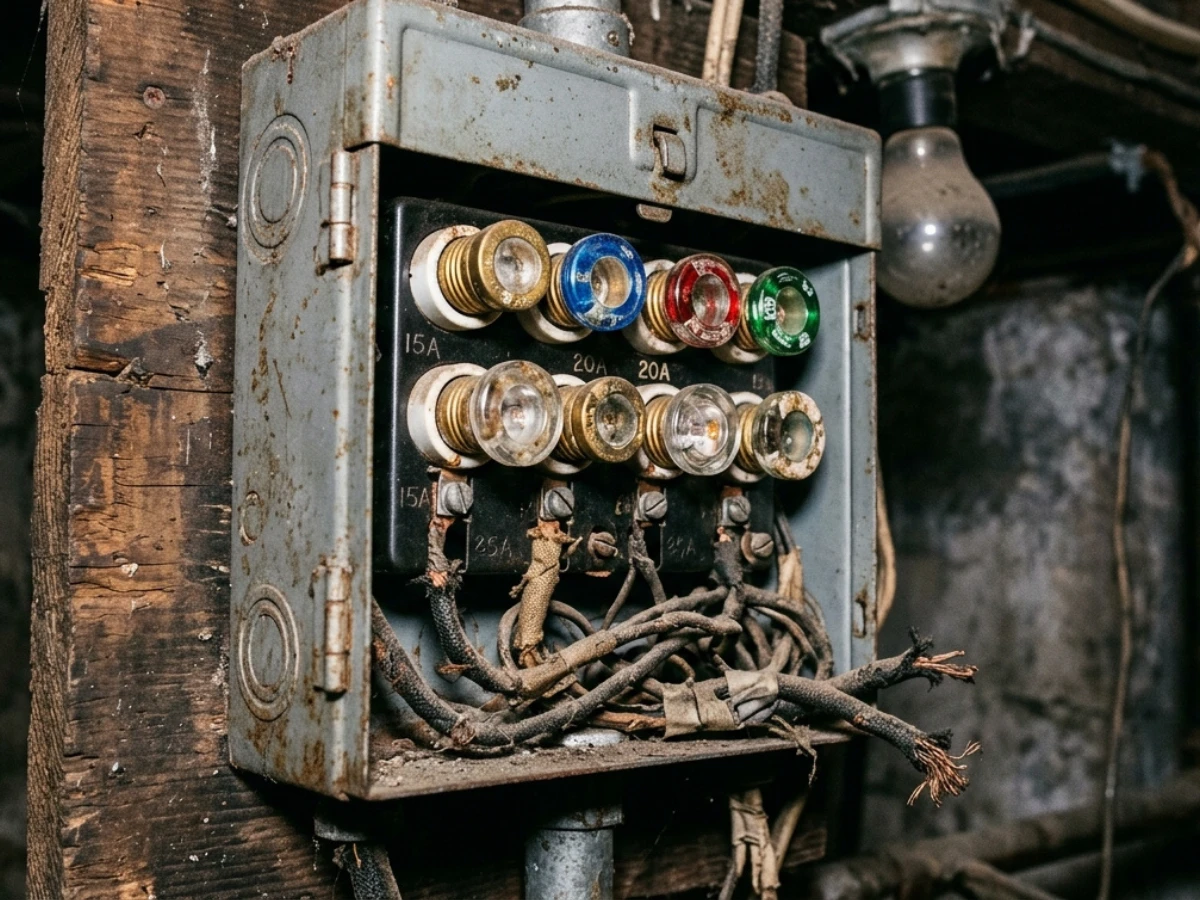
electrical repairsto prevent a potential fire. - Fuses instead of breakers: If you still have a screw-in fuse box, your system is vastly outdated and likely a major hurdle for homeowner’s insurance coverage.
The Modern Power Demand (EVs, Heat Pumps, and ACs)
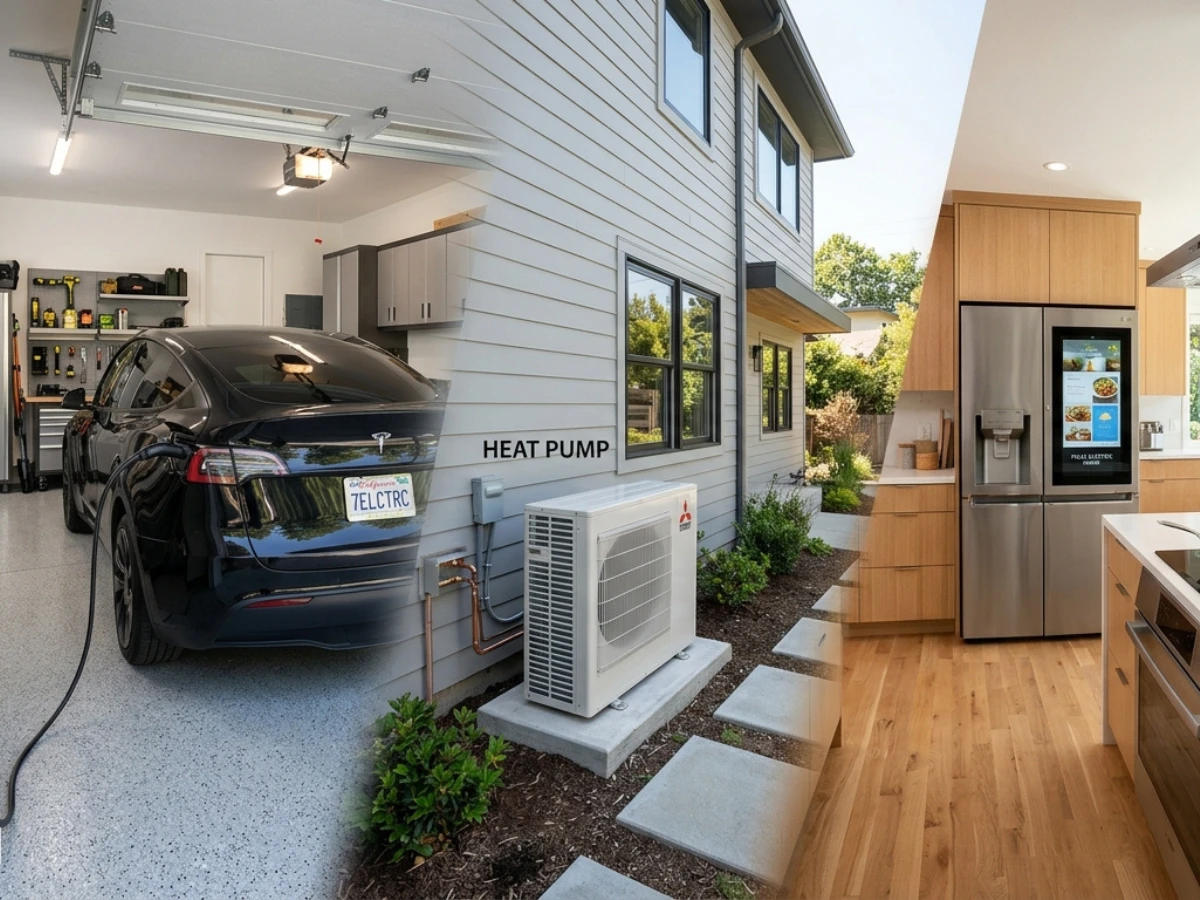
Minnesota is rapidly moving toward modern home electrification. Driven by excellent state incentives and a collective push for greener energy, our everyday power requirements are changing fast. Here are the primary high-power additions driving the need for more capacity:
- Electric Vehicle (EV) Chargers: Adding a Level 2 charger to your garage requires a massive, dedicated chunk of electrical capacity. If you are thinking about making this addition, your current panel might not have the muscle for it. Before you make the leap, we highly recommend reading our guide on
calculating the electrical panel capacity for an EV charger. - Cold-Climate Heat Pumps: Transitioning to electric heat pumps to assist or replace traditional gas furnaces demands a highly reliable, high-amperage power supply to keep your home cozy during bitter Minnesota winters.
- Electric Appliance Upgrades: Upgrading to modern induction cooktops, high-speed electric dryers, and tankless electric water heaters pushes older, lower-capacity panels past their safe limits.
What Is a 200-Amp Panel Upgrade and Why Do You Need It?
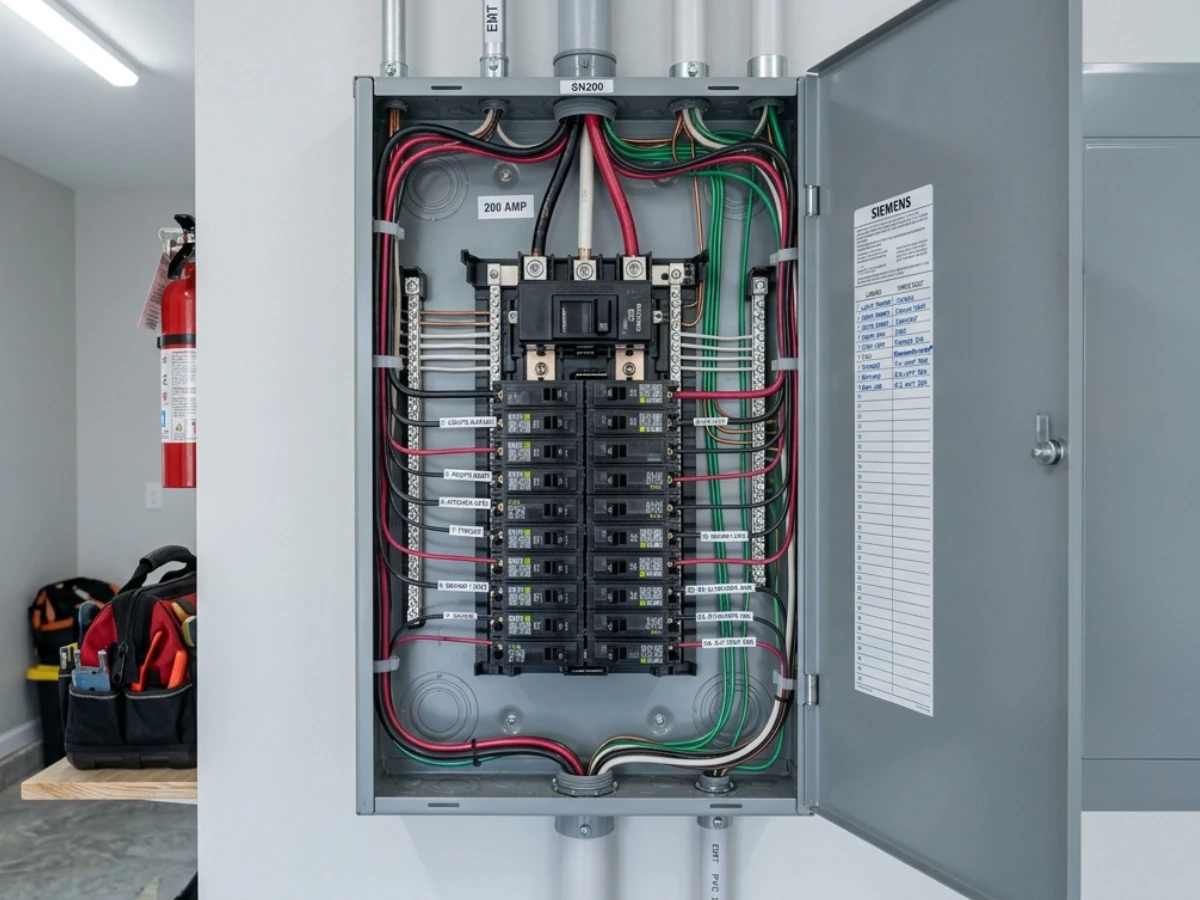
A 100-amp to 200-amp upgrade essentially doubles the electrical capacity entering your home. Think of your electrical panel like a water main. A 100-amp panel is like a 1-inch pipe, while a 200-amp panel is like a 2-inch pipe. It allows a much larger volume of "juice" to safely flow into your home simultaneously.
When you invest in an electrical service panel replacement, you aren't just buying a new metal box with switches. You are buying:
- Safety and Peace of Mind: Modern panels use state-of-the-art circuit breakers that trip instantly when an overload or short circuit occurs, protecting your family and electronics.
- Room to Grow: Want to finish your basement, add a sunroom, remodel your kitchen, or switch to an electric water heater? A 200-amp service gives you the headroom to expand without worry.
- Increased Home Value: Home buyers in the Twin Cities metro look closely at how a property measures up to local
home electrical inspection requirementsduring pre-purchase visits. A sparkling new 200-amp panel is a massive selling point and saves future buyers an immediate headache.
The Real Cost to Replace a Breaker Box
In the Twin Cities area, a comprehensive 200-amp service panel upgrade typically ranges from $1,500 to $5,000+. Why is there a range? Because every home is unique, several local variables dictate the final cost to replace a breaker box.
Let's look at the baseline essential additions that build our entry-level price, followed by the common old house structural complexities that can push the cost higher.
The Baseline Essentials (What Builds the Entry-Level Cost)
Even for a straightforward upgrade with no major structural challenges, basic equipment and labor (including the new service panel, breakers, and primary wiring), begin around $2,500. From there, these four unavoidable, code-required elements must be added to build out our entry-level price floor:
Factor 1: Permitting and Local Inspections
- The Issue: Operating legally, safely, and keeping your homeowner’s insurance valid means avoiding unpermitted, uninspected electrical work.
- The Cost: Every panel upgrade requires a municipal permit and a post-installation safety inspection by a state or city electrical inspector (such as those representing Minneapolis, St. Paul, or your specific suburban municipality). Permit and inspection filing fees generally add $150 to $300 to the project.
Factor 2: Utility Disconnects and Coordination
- The Issue: To safely replace your breaker box, the incoming high-voltage power feed from the street must be temporarily disconnected before our team begins work, and then safely reconnected once the install is complete.
- The Cost: We handle scheduling and coordination directly with your local electrical utility, like Xcel Energy, Dakota Electric, or Minnesota Power. Utility-specific fees and coordination logistics can vary depending on whether your service line is overhead (on poles) or underground, generally adding $200 to $600 to the bottom line.
Factor 3: Old House Surprises and Grounding Issues
- The Issue: When we open up walls and pull off an old electrical panel, we frequently run into legacy code violations that we are legally required to fix before we can safely hook up the new system. This includes finding ungrounded circuits, old knob-and-tube wiring, or double-tapped breakers.
- The Cost: Correcting these safety violations typically adds $300 to $1,500+ to the project. This involves safely separating double-tapped circuits and bringing the panel's grounding up to modern standards. If your home has old, ungrounded two-prong outlets, you can replace them with Ground Fault Circuit Interrupter (GFCI) outlets, which cost about $100 to $200 each. They cut power instantly during a surge, making it safe to use modern three-prong plugs, and are a code-approved alternative.
Factor 4: Arc-Fault (AFCI) Breaker Requirements
- The Issue: Under modern code, any time you upgrade a panel or modify existing circuits, those circuits must be protected by Arc-Fault Circuit Interrupter (AFCI) breakers. These breakers detect microscopic electrical arcing (sparks behind walls) to prevent house fires.
- The Cost: A modern AFCI breaker costs $50 to $70 each. If your home has 20 to 24 individual circuits, replacing all those standard breakers with code-mandated AFCI breakers instantly adds between $400 and $1,200, depending on your home's size.
Read more about how our GFCI & AFCI Installation services keep your Twin Cities home safe and fully up to code.
Historic & Structural Complexities (What Pushes Costs to $6,500+)
If your Twin Cities home has historic architecture, restrictive physical layouts, or unique structural hurdles, we will need to address these additional variables, which can quickly climb into the higher $6,500+ bracket.
Factor 5: Weatherhead and Mast Replacement — Overhead Service Only
- The Issue: If your home has overhead power lines, we must feed wires through an exterior weatherhead and conduit pipe (the mast) running down the side of your house. If this infrastructure is old, rusted, or too narrow to safely accommodate the thicker, heavier copper wire required for 200 amps, it fails to meet modern safety codes.
- The Cost: Completely replacing the old, undersized exterior conduit, installing a brand-new metal support mast, and replacing the weatherhead hood typically adds $800 to $1,800 for the project.
Factor 6: Underground Service Trenching — Underground Service Only
- The Issue: If your electrical lines feed into your home from underground rather than an overhead pole, upgrading to 200 amps requires physically laying thicker wire underground. If your existing underground conduit pipe is too narrow to hold the thicker 200-amp wires, a new trench must be dug from the property line/transformer to the house.
- The Cost: Digging a trench (especially in dense clay or frozen Minnesota soil) requires heavy equipment. If that trench has to cross a concrete driveway, a paved sidewalk, or a prized landscaped garden, the restoration costs for concrete pouring or landscaping can add $500 to $2,000+ quickly.
Factor 7: Panel Relocation
- The Issue: In many older Twin Cities homes, panels were originally installed in locations that violate modern National Electrical Code (NEC) clearance safety rules. Panels cannot be in closets, bathrooms, over stairways, or in tight, unventilated spaces.
- The Cost: If we have to move the panel to a code-compliant spot (like a utility room, garage, or open basement wall), we can't just move the box. We have to extend every single circuit wire in the entire house to the new location. This requires installing a massive junction box, running dozens of new wire extensions, and hours of tedious splicing, adding $800 to $3,000+ to your estimate.
Factor 8: Cosmetic & Wall Restoration
- The Issue: Electricians are masters of wires, not plaster. To route thick, heavy-duty copper lines from the new panel to the outside meter or up through the ceiling, we often have to cut access holes in finished drywall or lath-and-plaster walls.
- The Cost: Our electrical bids do not cover patching, taping, sanding, and painting. Homeowners are often surprised to find they need to hire a drywall contractor or spend a weekend doing cosmetic repairs to patch up the access holes we had to cut, which can add $200 to $1,000+ in secondary costs.
Note: Prices listed above are estimates, as every home features unique site conditions that can influence final project requirements. They include both professional, licensed electrical labor and all necessary high-quality materials. The only exception is Factor 8 (Cosmetic & Wall Restoration), as our specialty is safe electrical wiring, not drywall or plaster repair.
Minnesota Rebates and Tax Incentives to Soften the Blow
The great news for Twin Cities residents is that you don't have to shoulder this investment alone. You can often recoup a portion of your costs:
- Utility Rebates: Under programs like the Energy Conservation Optimization (ECO) Act, local utilities offer rebates for residential electrification upgrades. Check with your specific provider for active residential panel rebate programs in your ZIP code.
- State and Local Grants: Keep an eye out for Minnesota-based residential energy programs, which occasionally offer grants or low-interest financing for home electrification projects.
What to Expect During the 200-Amp Panel Upgrade Process
If you decide to partner with Loch Monster Electric for your residential electrical upgrades, here is what a typical day looks like:
- Preparation and Layout: Our team arrives in the morning, maps out the workspace, and preps your new panel board.
- The Big Disconnect: We coordinate with your utility provider to safely shut off the power to your home.
Note: You will be without power for most of the workday (typically 4 to 8 hours), so plan accordingly!
- Tearing Out the Old: We carefully remove your old breaker box, outdated wiring, and external meters if necessary.
- The Installation: We mount the new 200-amp panel, install modern, code-mandated AFCI breakers, run heavy-duty wiring to the outside meter socket, install new grounding rods (two 8-foot rods driven into the earth), and ensure proper grounding and bonding.
- Power Restored & Inspected: The utility turns the power back on, we test every single breaker to ensure your lights, appliances, and outlets are working flawlessly, and we clean up our workspace. We then handle the scheduling and coordination with the municipal inspector to officially sign off on our work.
Ready to Power Up Your Twin Cities Home?
Don’t let an outdated electrical panel hold your home back from the comforts of modern living. At LME, we treat your home like our own. We pride ourselves on clean, safe, code-compliant work and absolute price transparency. No surprise fees, and honest-to-goodness local service.
If you are ready to upgrade your service or have questions about your home’s electrical health, give us a shout! Let's get your home safely geared up for whatever a Minnesota winter or summer throws our way. Contact Loch Monster Electric today to schedule your service upgrade consultation!
Frequently Asked Questions
For most residential properties in the Twin Cities, the actual installation takes between 6 and 8 hours. We aim to arrive early in the morning so we can have your power turned back on by mid-to-late afternoon.
Absolutely. Upgrading to a 200-amp panel provides the necessary electrical headroom to safely install a Level 2 EV charger. Without this increased capacity, adding a high-power charger to an older 100-amp system can easily cause system overloads when combined with other household appliances. Read our guide on home EV charger installation to learn more.
While a subpanel is great for adding more spaces for breakers, it does not increase the overall capacity (amps) coming into your home. If your main 100-amp feed is already overloaded, adding a subpanel won’t solve the problem. You still need a full service upgrade.