How to Know If Your House Needs Rewiring: 7 Warning Signs
Updated: Aug 4, 2026
Discover how to know if your house needs rewiring with our expert guide for Twin Cities homeowners. We cover 7 common warning signs including how to identify and what to do, common questions about home rewiring, and how it can protect your home investment long-term.
More than 40% of homes in Minneapolis and St. Paul was built before 1940, and countless other neighborhoods like Bloomington and Maple Grove are filled with mid-century classics like 1960s ramblers and 70s split-levels. These houses give off a unique personality that today’s cookie-cutter homes simply can’t replicate.
But that vintage charm often comes with a hidden side: an electrical system that was designed for a different era. Back when these homes were built, a heavy electrical load meant a color television, an electric range, and maybe a single window AC unit. That is a far cry from the high-powered demands of today’s home offices, gaming rigs, smart kitchens, and electric vehicle (EV) chargers, all running at the same time.
Whether you want to protect your family’s safety for years to come, or negotiate the price on an older home you want to buy, it's important to know if your house needs rewiring. In this post, we’re breaking down the seven most common warning signs of an outdated electrical system. This will help you spot problems and call Loch Monster Electric on 763-292-1191 to fix them before they turn into costly deal-breakers or safety hazards.
Why Twin Cities Homes Have Quirky Electrical Needs
Our local housing stock is older than the national average, presenting unique challenges for modern homeowners:
- Age of the Home: From historic St. Paul bungalows and craftsmans to mid-century houses in suburbs like Robbinsdale, Columbia Heights, and South St. Paul, our local housing history is unique. These homes were wired for a different time.
- Legacy DIY Choices: When you buy an older home, you often inherit electrical shortcuts from previous owners that don't meet today's safety codes.
- Modern Demands: Old systems were built for a radio, a television, and a few lights. They weren't designed for the smart appliances, EV chargers, and professional home offices we use today.
Understanding your home’s electrical history helps you negotiate better pricing, budget for necessary upgrades, and ensure your family’s safety.

7 Warning Signs Your Home Needs Rewiring
If you suspect your home’s electrical system is struggling to keep up, look for these telltale signs.
1. Flickering or Dimming Lights
- What you notice: Your lights dim or flicker, particularly when a large appliance (like the refrigerator or AC) kicks on.
- The cause: This is usually a sign that your circuit is overloaded or there is a loose connection in your wiring.
- Temporary safety step: Unplug the appliance that causes the flickering and avoid using it until a pro can assess the circuit.
- The long-term fix: Have a licensed electrician inspect your wiring for loose connections and evaluate if your circuit capacity needs to be upgraded.
Read our electrical panel upgrade guide to learn all about the costs, rebates, and permit process.
2. Frequently Tripping Breakers
- What you notice: You are constantly visiting the basement to flip a breaker back into the ON position.
- The cause: Your circuits are overwhelmed by modern power demands, or you have a specific short circuit occurring.
- Temporary safety step: You need to manage your load properly. Don't run high-draw appliances (like space heaters or microwaves) on the same circuit simultaneously.
- The long-term fix: Have an electrician perform a load calculation to see if your panel needs an upgrade.
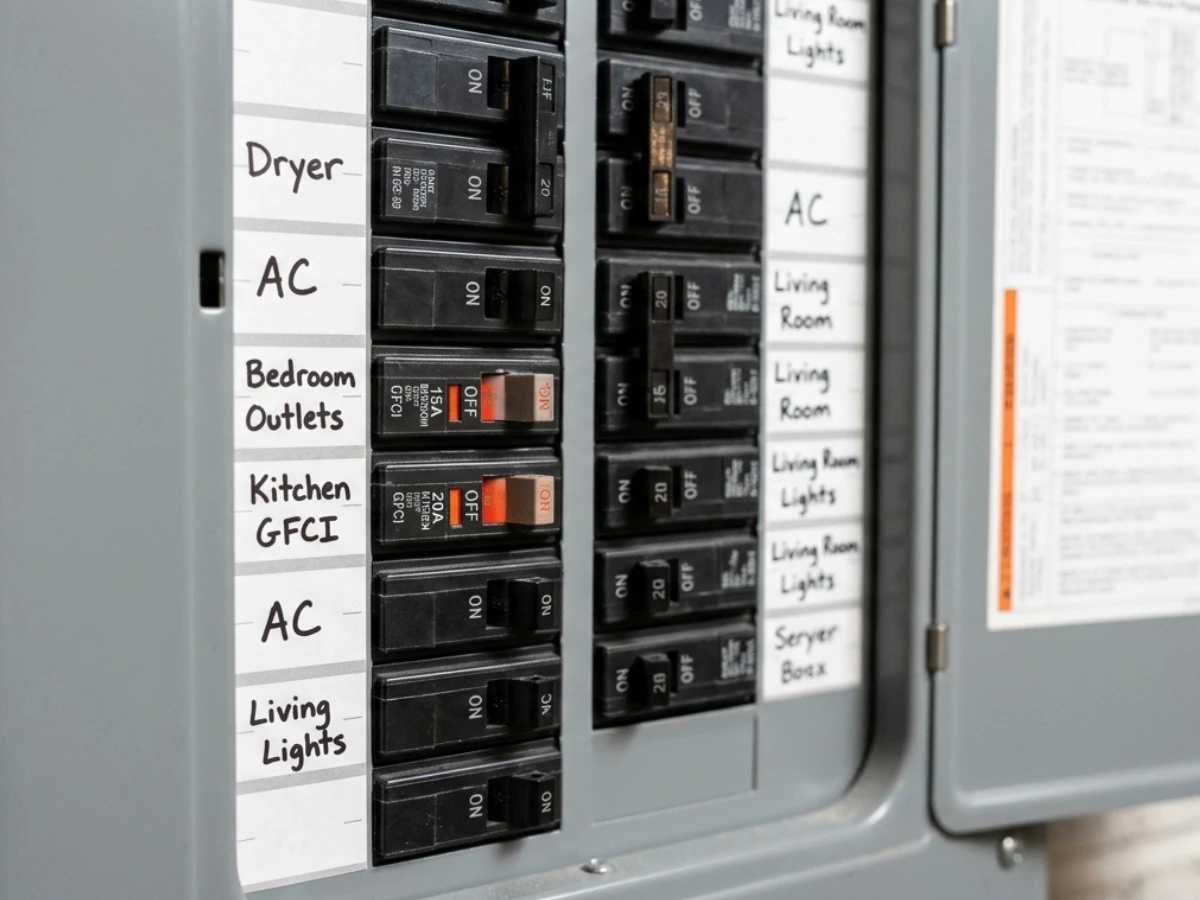
You can learn more about basic troubleshooting, and why your circuit breaker keeps tripping here.
3. Old Two-Prong Outlets
- What you notice: You have wall outlets with only two slots (no ground hole).
- The cause: Your home lacks modern grounding, which provides a critical safety path for excess electricity.
- Temporary safety step: Avoid using three-prong adapters, as they don’t provide a proper ground. If you must use a surge protector or power strip, treat it with extreme caution. This won't actually protect your electronics from surges without a ground, and you can easily overwhelm an old, ungrounded circuit.
- The long-term fix: Professional outlet replacement and grounding is necessary for safety.
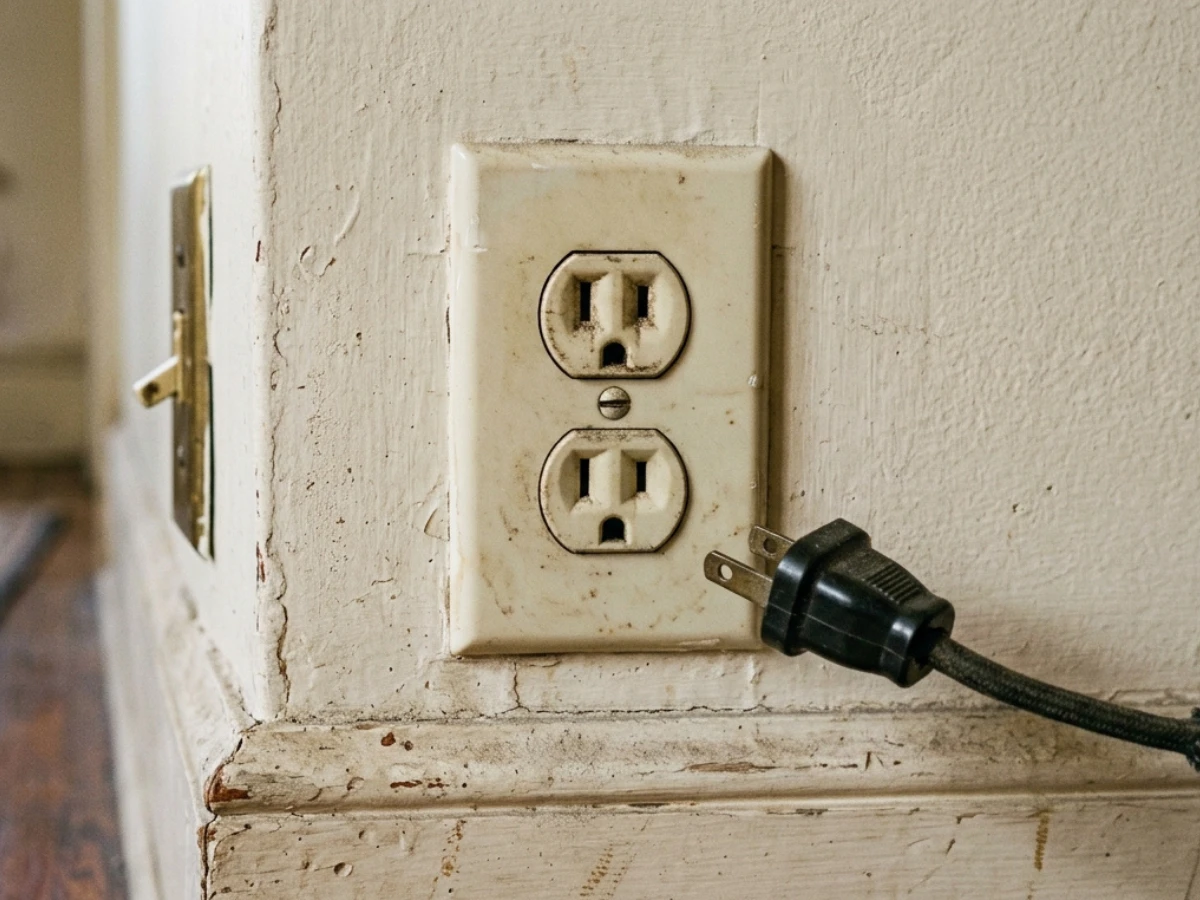
Read about four code-approved methods to handle this problem in our two-prong outlet replacement guide.
4. Immediate Danger Signs (Burning Smells, Sounds, or Sparks)
- What you notice:
- Burning Smells/Discoloration: A faint smell of burning plastic near an outlet or switch, or visible brown, yellow, or black scorch marks on the wall plate.
- Buzzing or Crackling: Strange sounds coming from outlets or switches.
- Sparks or Mild Shocks: Getting a small zap when touching a plug or switch.
- The cause: These are signs of intense, localized heat caused by arcing or loose connections. These are all direct fire hazards.
- Temporary safety step: Stop using the outlet or switch immediately! Turn off the power to that room at your electrical panel if possible, and call a professional right away.
- The long-term fix: A full inspection and replacement of the damaged outlet, wiring, and potentially the surrounding circuit.
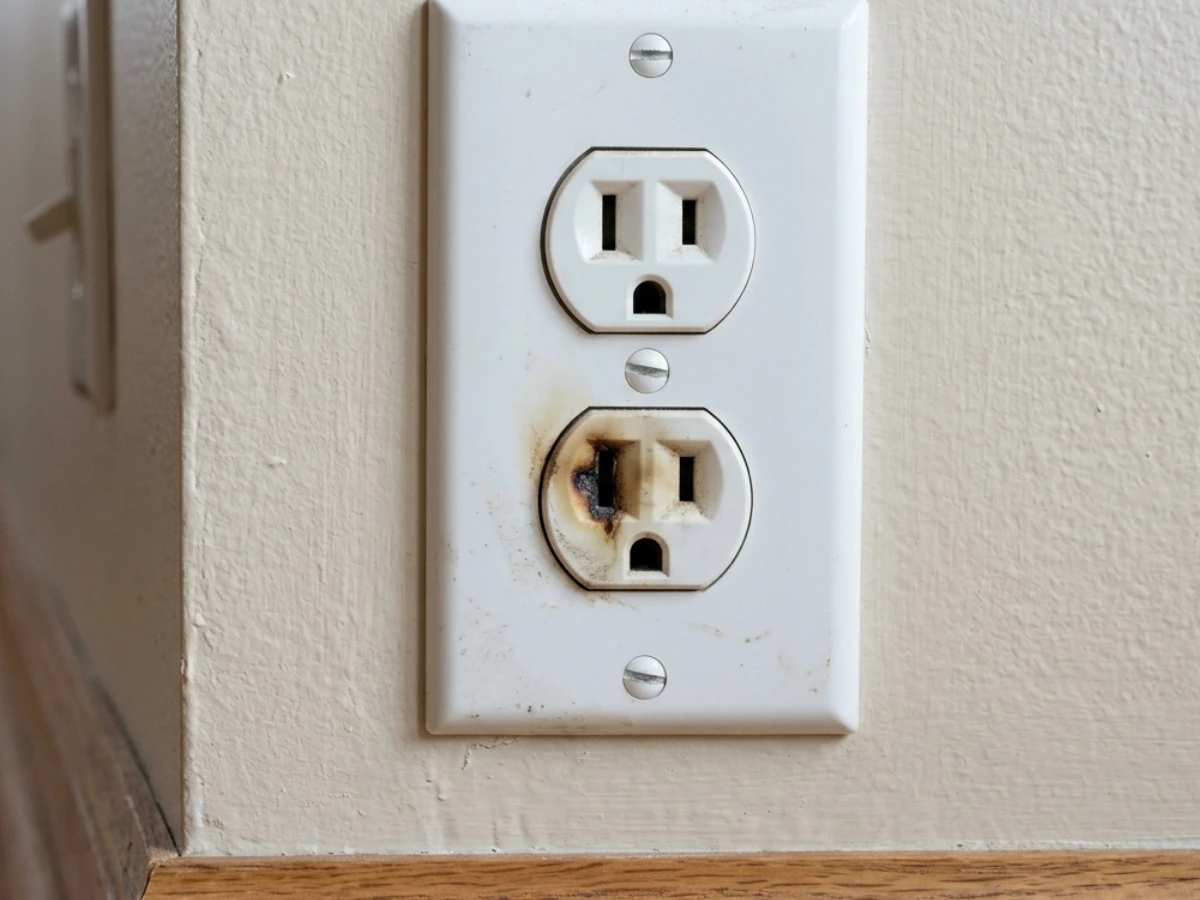
Learn more about our outlet and switch repair services provided by Loch Monster Electric to fix these troublesome issues.
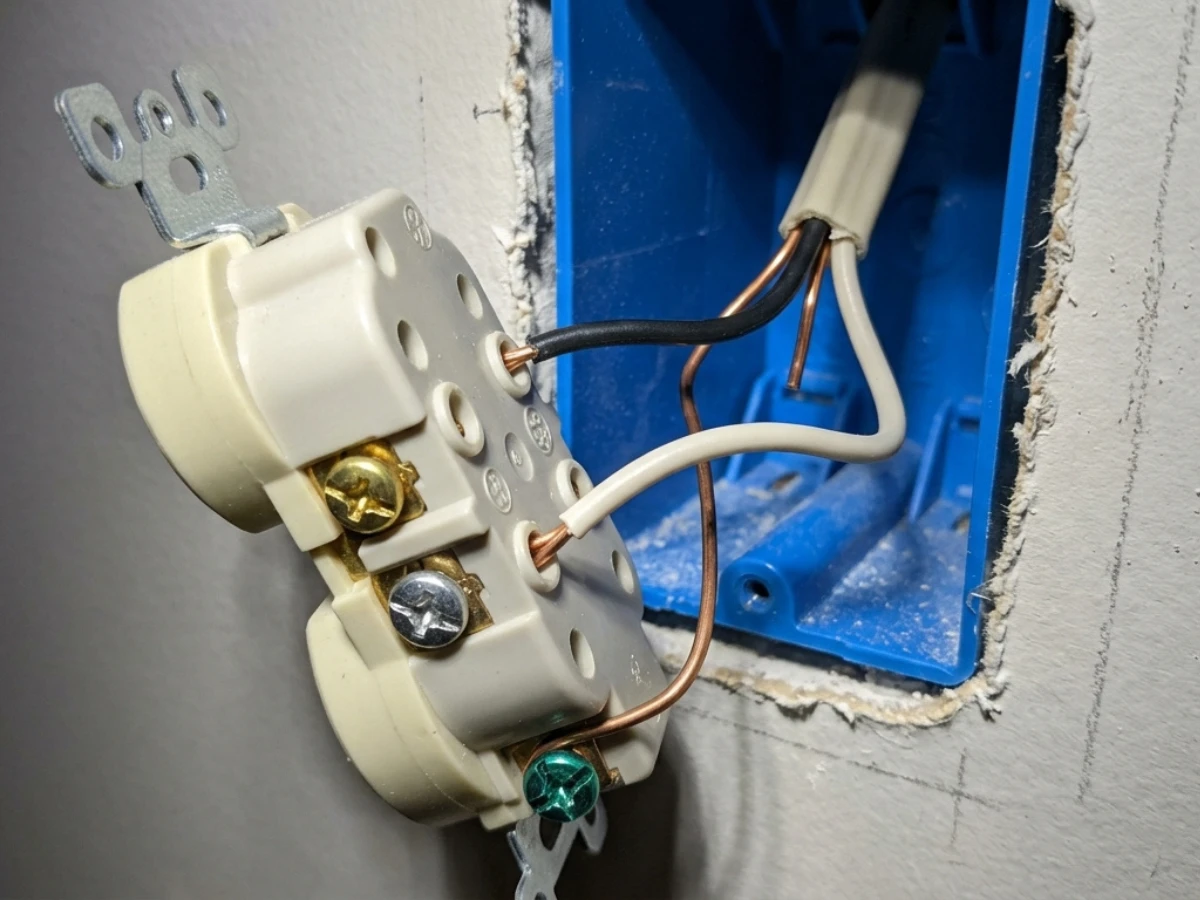
5. Backstabbed Outlets
- What you notice: If you open a switch or outlet plate, look at how the wires connect. If the wires are pushed into small, square holes in the back, they are ‘backstabbed’. If they are wrapped securely around the metal side screws, the connection is proper.
- The cause: Backstabbing is a shortcut where wires are held by a friction-fit spring rather than a screw. Over time, these spring-loaded connections loosen, causing arcing, heat buildup, and eventually, melting outlets. It’s a common, hidden hazard in homes renovated in the 80s and 90s.
- Temporary safety step: If an outlet looks backstabbed, avoid plugging high-draw items (like space heaters or portable ACs) into it. If the plate feels warm to the touch, stop using it immediately.
- The long-term fix: A professional can replace these cheap connection points with high-quality, screw-terminal outlets that provide a secure, long-lasting connection.
6. Old Knob-and-Tube Wiring (Pre-1950s)
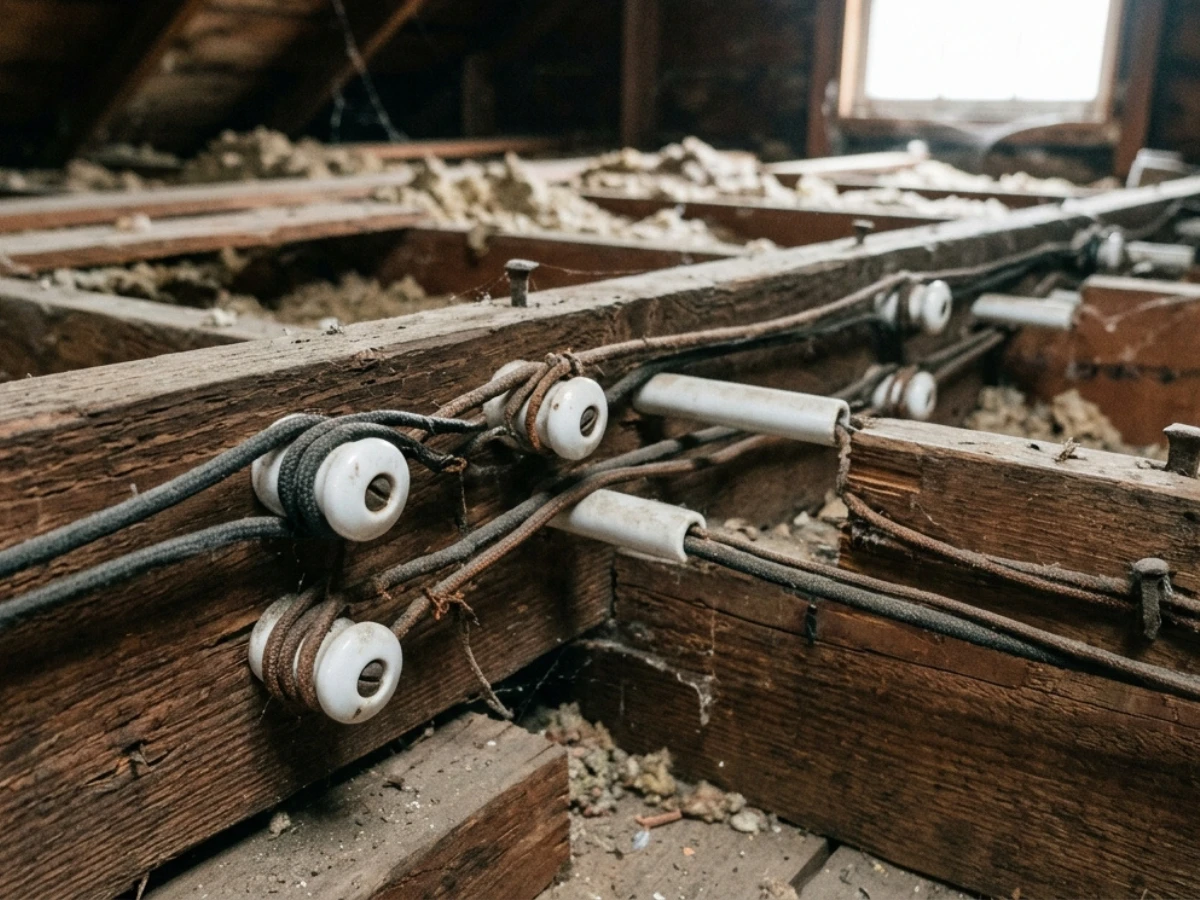
- What you notice: If your home is pre-1950s, you might see knob-and-tube wiring (wires run through ceramic knobs and tubes) in attics or basements.
- The cause: This is an obsolete wiring method with degraded insulation that cannot handle modern electrical loads.
- Temporary safety step: Do not disturb the wiring. Do not overload circuits in homes that have this system.
- The long-term fix: Professional replacement of this wiring is strongly recommended for safety and insurability.
Read more about the safety risks of this old wiring, benefits of upgrading, and what to expect during this process in our knob and tube wiring replacement guide.
7. Aluminum Wiring (The 1960s/70s Factor)
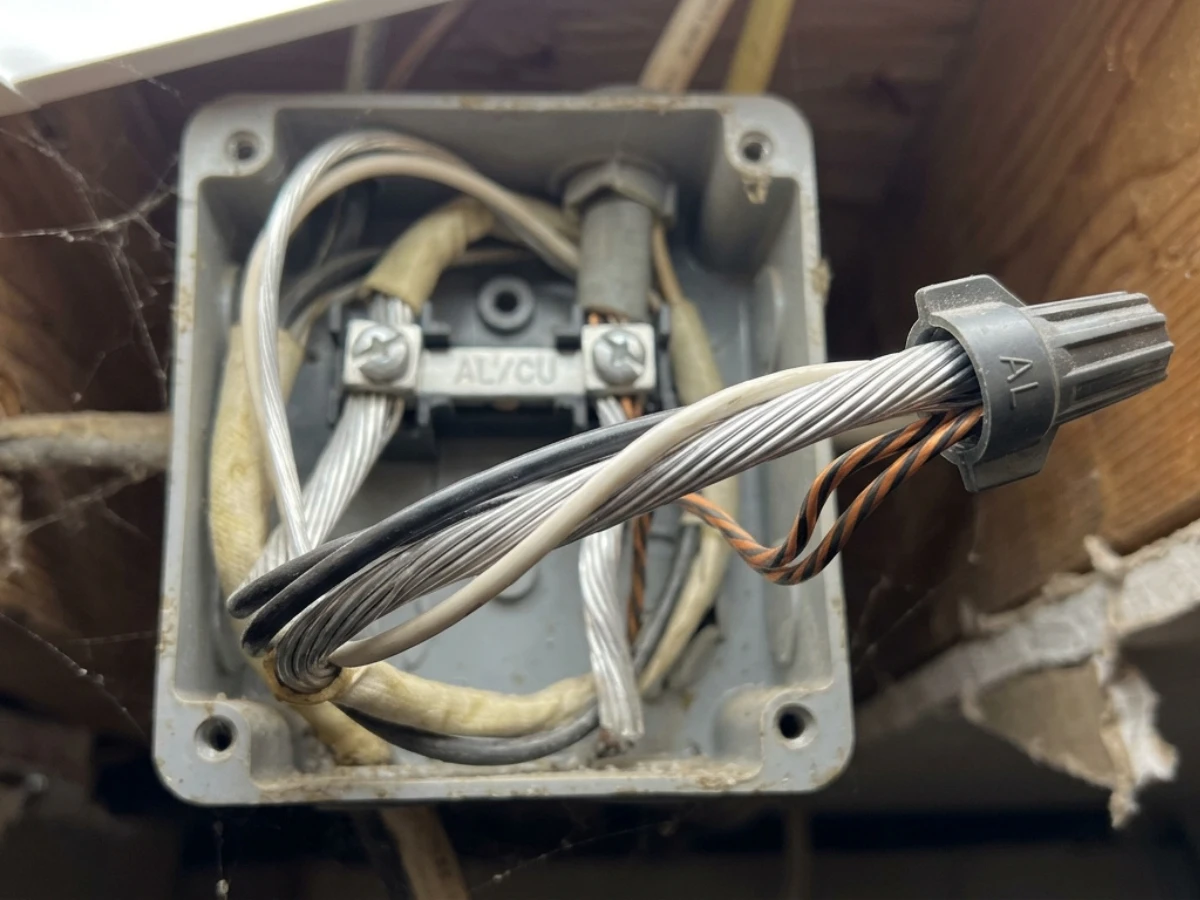
- What you notice: You may not notice anything directly, but if your home was built between the mid-60s and late 70s, it may contain aluminum wiring.
- The cause: Aluminum expands and contracts more than copper, leading to loose connections and fire risks.
- Temporary safety step: Have an electrician perform an inspection to identify if your connections have been properly treated or updated.
- The long-term fix: A professional pig-tailing service (where we install a specialized, code-compliant bridge to safely connect your aluminum wiring to copper-compatible outlets). The alternative is a home rewiring to replace the aluminum wiring with copper.
Note: This is a task that must be done by a licensed pro using specific connectors, and should never be attempted as a DIY project.
If you’ve spotted any of these red flags, or simply want to know the true condition of your electrical system, the best next step is to schedule a professional electrical inspection. Our team can help identify these issues and prioritize the necessary repairs to keep your home safe.
Why a Standard Home Inspection Isn't Enough
When you are buying or selling a home, a general home inspector does a great job with the big picture. However, their focus is broad, not specific. Relying on them alone for electrical safety has a few limitations:
- Limited Tools: General inspectors look for obvious red flags. They often don't have the special gear needed to find hidden problems, like faulty wiring inside your walls.
- Deep Code Expertise: Evaluating complex, older electrical systems requires specific training. Many general inspectors do not have the deep expertise in electrical codes needed to spot issues with an aging panel or outdated systems.
- Missing Warning Signs: It is easy to miss the small, early warning signs of dangerous wiring methods. These subtle issues can turn into serious fire risks later on.
Hiring a licensed electrician for a focused electrical audit is the smart move. It gives you a real, professional estimate of the work needed.
Understanding the Home Rewiring Process: Common Questions
If you discover that your home does need an upgrade, it is natural to feel a bit anxious about the process. We see these concerns every day in Minneapolis and St. Paul. Let's break down the most common questions we hear about home rewiring to put your mind at ease.
Does a 1970s House Need Rewiring?
The answer isn't a simple yes or no. While 1970s homes are more likely to be up to code than the turn-of-the-century homes, they often fall into the aluminum wiring era. If you are planning a major kitchen or bath renovation, or if you are dealing with frequent tripped breakers, it is wise to have a professional inspect your electrical system. It may not need a total gut, but it may need some key upgrades to handle your household's power needs.
Does a 1980s House Need Rewiring?
Generally, 1980s homes are in a better spot because they typically use copper wiring. However, the electrical needs of the 1980s were much lower than today. If you're adding modern luxuries like EV chargers, hot tubs, or home offices, your original panel might not be up to the task. It's less about danger and more about capacity and meeting present-day electrical demands.
How Disruptive is Rewiring a House?
Let’s be honest: it’s not a one-hour job. It involves accessing walls to run new copper wire. However, at LME, we pride ourselves on a minimal intrusion approach. We use specialized tools to snake wires through existing wall cavities. This helps us avoid massive drywall destruction. While you will need to plan for some time out of the specific rooms we are working on, it is rarely as chaotic as homeowners fear.
How Long Does it Take for a Home Rewiring?
For a standard Twin Cities single-family home, the process typically takes a few days to a week. We can provide a firm timeline after the inspection so you aren't left guessing, and can plan your days accordingly.
How Do I Prepare My House for Rewiring?
Preparation is mostly about access. We’ll need clear paths to your electrical panel, attic, and basement. We’ll also need you to clear away furniture from the walls where we’ll be working on outlets and switches. The more easy access our team can have, the faster and smoother the project goes.
Do I Really Need a Permit for This Work?
Yes. In Minnesota, electrical work is strictly regulated. Skipping permits or hiring a handyman who doesn't pull them is a major risk. Permitted work guarantees an inspector verifies that the job meets National Electrical Code (NEC) safety standards. If you have unpermitted work done, it can cause huge problems when you try to sell your home, potentially stalling your closing or forcing costly repairs later. LME handles all permits and inspections for you, keeping your home safe and fully documented.
Still have questions or wondering if your home requires a full system overhaul? Click here to learn more about our whole-home rewiring services and how we can bring your Twin Cities home up to modern safety standards.
How Rewiring Protects Your Real Estate Investment
While safety is the priority, an updated electrical system also protects your home as a long-term investment.
- Avoiding Surprises: Whether you are planning to sell or just want to maintain your home, knowing the state of your electrical system is key. If you ever decide to sell, having a working electrical system saves you from stressful, last-minute repairs during the closing process.
- Fair Insurance Rates: Some insurance companies charge higher premiums, or refuse to provide coverage if a home has knob-and-tube or outdated aluminum wiring. Getting your system up to code helps keep your rates fair and your coverage secure.
- Peace of Mind: A modern, safe electrical system is a major selling point. It gives you, and any future buyer peace of mind, knowing you won’t have to worry about the wiring behind the walls. It makes your home reliable, efficient, and ready for whatever technology you bring into it next.
Ready to Rewire?
Whether you are prepping your home for the market or looking to make your forever home safer for your children, you don't have to meet these difficulties alone.
If you’re ready to take the next step, the team at Loch Monster Electric is here to help. Call us at 763-292-1191 or fill the online contact form to get your home safe and up to modern standards.
Frequently Asked Questions
Costs vary significantly based on the square footage, the accessibility of the wiring (e.g., a single-story vs. a multi-story home), and the condition of the electrical panel. The best way to get an accurate number is to have us inspect your home so we can give you a fixed quote rather than a guesstimate.
Many insurance companies have strict requirements regarding these older wiring types. Some may refuse to cover a home with active knob-and-tube or aluminum wiring, or they may charge significantly higher premiums. Upgrading to copper is often the most reliable way to secure affordable, comprehensive coverage.
You can, but it may be difficult. If a potential buyer’s home inspection reveals these hazards, it can stall your closing or lead to significant price concessions. Being proactive with an inspection or repair can make your home much more attractive to buyers.