
Wiring 240V Dedicated Circuits for Garage Unit Heaters & Workshops
Updated: Oct 30, 2026
Learn why garage unit heaters need 240V dedicated circuits, how electricians size double-pole breakers and wire, protect cable runs, and feed detached garages. This guide covers NEC disconnect, grounding, and load calculation rules, plus the professional install process for Twin Cities homes.
The first real cold snap of winter rolls in, and your garage workshop instantly turns into a walk-in freezer. Your tools feel icy to the touch, and that tiny plug-in heater is struggling to warm up the space. Worse, it keeps tripping the same breaker that runs your garage door opener.
A proper garage unit heater fixes the cold, but only with the right wiring and power behind it. In this guide, we cover why 240V garage heater wiring needs its own dedicated circuit, how electricians size the breaker and wire, what the electrical code requires, and how a professional installation is done from start to finish.
We’re Loch Monster Electric, licensed electricians serving homeowners across Minnesota and Wisconsin. Ready to get started right away? Call us at 763-292-1191 or fill out our contact form and tell us what you need for your garage.
Why Homeowners Winterize Minnesota Garage Workshops
Minnesota winters don’t mess around. Whether you’re restoring an old truck in your Maple Grove garage, or running a woodshop in Eagan, these spaces are going to be freezing cold from November to March. That’s why so many Twin Cities homeowners add supplemental heat.
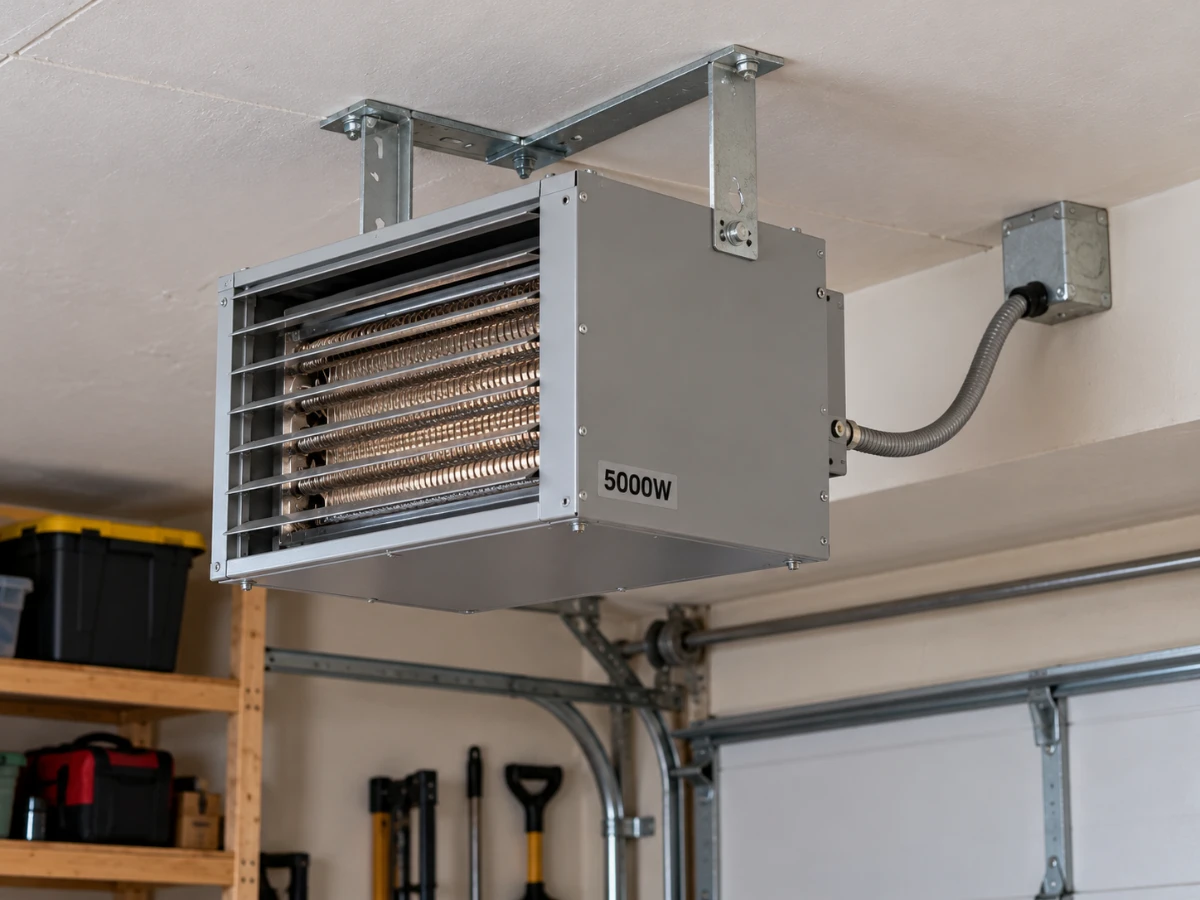
Electric garage unit heaters rated between 5,000 and 7,500 watts are a popular choice. They’re clean, with no fumes, no venting required, and no gas line to run. They also come with a built-in fan that pushes warm air across the space.
Why a 120V Line Can’t Handle a Garage Unit Heater
Unfortunately, these heaters can’t run on a regular 120V household line. A 5,000-watt heater on 120 volts would pull about 42 amps, more than double what any standard outlet circuit can carry. Even if you could connect it, the breaker would trip within seconds.
Running smaller plug-in heaters for hours to make up the difference can also damage ordinary outlets, especially ones with backstabbed wiring. Our guide to backstabbed wiring outlet hazards shows how push-in outlet connections overheat, and the warning signs for outlet failure.
Why Your Garage Needs a 240V Dedicated Circuit
Standard 120V branch circuits are capped at 15 or 20 amps. Because heaters can run for hours, the National Electrical Code (NEC) treats them as continuous loads and limits them to 80 percent of the circuit breaker rating. That works out to about 1,440 watts on a 15-amp line and 1,920 watts on a 20-amp line. A garage unit heater blows right past both these limits.
When it comes to wiring garage heaters, doubling the voltage cuts the current in half. This means that on 240 volts, a 5,000-watt heater draws about 21 amps, and a 7,500-watt heater draws about 31 amps.
That’s the kind of load a heavy-gauge wire on a dedicated 240V circuit can handle all day without overheating or tripping the breaker.
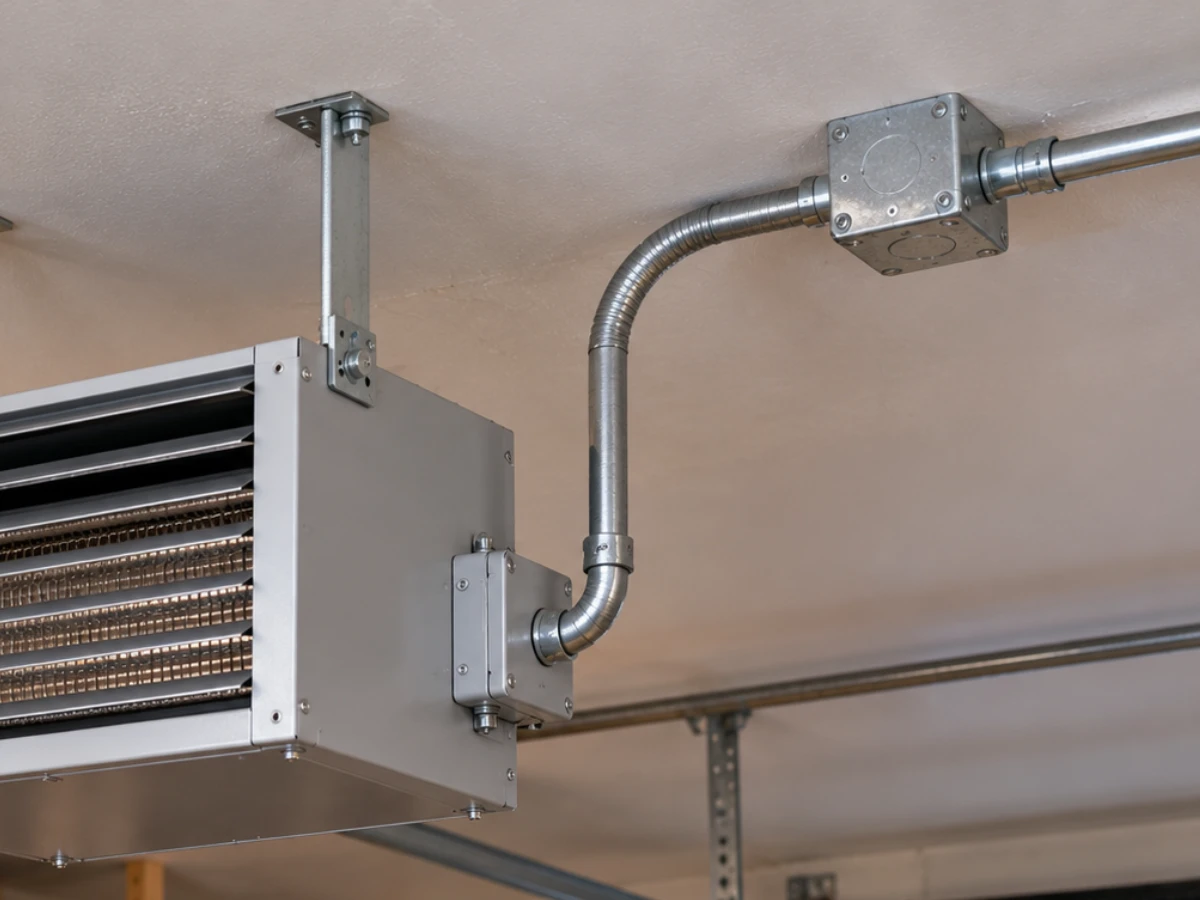
A dedicated circuit also brings a couple of extra benefits:
- Protects the heater itself: On a shared circuit or undersized wire, voltage drops every time a heavy load like the heater kicks on. That drop can strain the blower motor, confuse electronic thermostats, and reduce heating output. A dedicated circuit keeps voltage steady and reliable.
- Keeps other garage loads separate: A dedicated circuit gives the heater its own double-pole breaker at the panel. This means you can run the heater at full capacity while using heavy tools like a table saw on a separate 120V garage outlet without overloading circuits or tripping breakers.
If you just need heating for a bedroom or home office, our dedicated circuit for space heaters guide explains how a 20-amp, 120V line safely handles portable heaters.
How to Wire a 240V Electric Heater in Your Garage
Wiring 240 volt garage heaters is all about matching the breaker, the wire, and the route to the heater’s nameplate rating.
Here’s what needs to be done:
- Double-pole breaker: A 240V heater needs a double-pole breaker, usually 30 or 40 amps, installed in your main panel. It takes up two slots and feeds both hot legs of your service.
- Wire sizing with the 125% rule: We size heating circuits at 125 percent of the heater’s draw. A 5,000-watt heater (about 21 amps) needs a 30-amp breaker and 10-gauge copper, such as 10/2 NM-B with ground. A 7,500-watt heater (about 31 amps) needs a 40-amp breaker and 8-gauge copper, such as 8/2 NM-B.
- Protected cable routes: Exposed wire on finished garage walls and along ceiling joists can get damaged by ladders, tools, or car doors. We run the conductors in metal or PVC conduit to prevent this.
- Garage subpanels: If you also plan to run power tools, a welder, or a Level 2 EV charger, a dedicated garage subpanel is the smarter move. One larger feeder from the house gives you room for every 240V load in your workshop.
- Detached garage feeds: Many older homes in Minneapolis and St. Paul have detached alley garages. Getting a dedicated line for a 240V garage heater install here means an underground run in conduit from the house panel. Our guide on
trenching for outdoor EV chargerscovers burial depth, conduit choices that survive frost heave, and how crews cross driveways without tearing them up.
National Electrical Code (NEC) Compliance & Safety Standards for 240V Dedicated Circuits
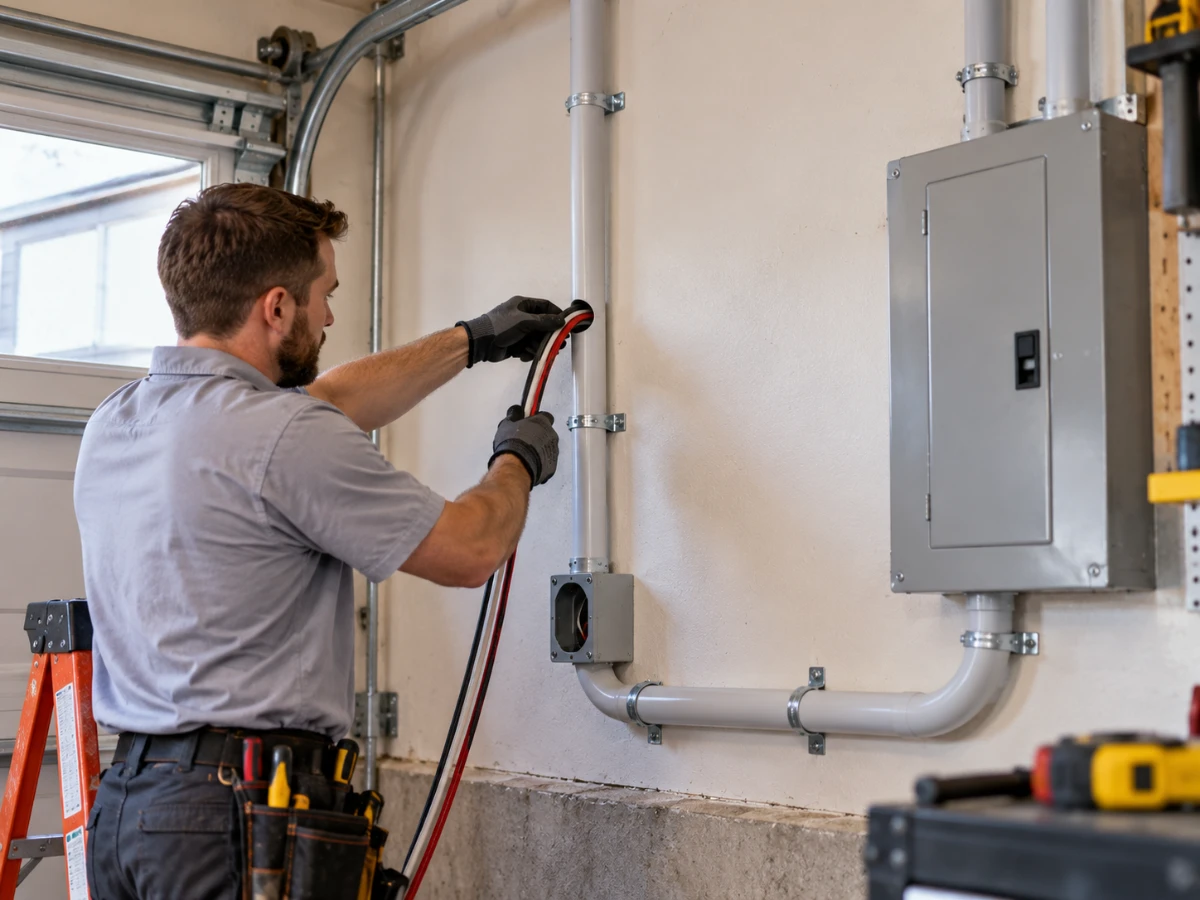
Every 240V heater install has to pass inspection, and these are the big items we plan for on every job:
- Disconnect switch: The NEC requires a way to cut power to a heater that’s mounted in place. Sometimes a breaker that locks in the off position is enough, but we often add a separate shutoff box near the heater, where you can see it, so whoever services the heater can shut off the power safely.
- Grounding and bonding: Snowmelt keeps concrete garage floors damp. If the heater’s metal case ever became live, standing on that wet floor could mean a bad shock. To prevent that, we run a ground wire to the heater, check the main ground connection at your panel, and keep the neutral and ground wires on separate bars in any garage subpanel.
- Load calculations: Before adding the new circuit, we add up everything your home already uses. This tells us if your main panel has room for another 30- or 40-amp double-pole breaker. If it doesn’t, our
electrical panel upgradeservice covers moving to a bigger panel.
Garage Heater Installation Workflow
Here’s how we handle a garage heater install from first visit to final inspection:
- On-site electrical audit: We check your main panel’s amp rating, open breaker slots, and the best path for the wire or conduit to reach the garage.
- Mounting and hardwiring: We install a ceiling joist bracket rated for the heater’s weight, keep the clearances the manufacturer calls for, and angle the airflow where you work. Then we hardwire the unit to its dedicated 240V leads.
- Thermostat controls: We connect a line-voltage thermostat or a low-voltage smart thermostat with a relay, so the garage holds a steady temperature. Our
smart home wiringservice covers smart thermostats and connected controls throughout your home. - Permit and inspection: We pull the electrical permit and schedule the inspection, so the job is fully on the books.
Ready to Keep Your Garage Warm?
A cold garage doesn’t have to sit empty all winter. The fix is a properly sized 240V dedicated circuit, the right breaker and wire, and an installation that meets code. Loch Monster Electric is the licensed electrician that can complete code-compliant 240V garage heater installations across Minneapolis, St. Paul, and the metro suburbs.
We work on a time & materials basis, so you only pay for what your job actually needs. Give us a call at 763-292-1191 and let’s warm up your workshop.
Frequently Asked Questions
No. Dryer outlets are usually in the laundry room, so you’d need an extension cord, and cords aren’t allowed for fixed heaters. It’s unlikely the plug type will match, and a garage heater needs its own circuit run to where it’s mounted.
For a 5,000-watt heater, it’s usually a 30-amp double-pole breaker with 10-gauge copper wire. For a 7,500-watt heater, it’s usually a 40-amp breaker with 8-gauge copper. Long runs or a different heater rating can change that, so check your heater’s manual.
Yes. A new 240V circuit needs an electrical permit and inspection. When you hire Loch Monster Electric, we pull the permit and schedule the inspection for you.
A hardwired heater generally doesn’t, but if your heater plugs into a 240V receptacle in the garage, the current NEC requires GFCI protection for garage receptacles up to 250 volts.
Minnesota does let some homeowners do electrical work on their own home with a permit, but 240V work leaves little room for mistakes. Wrong wire size, a missing ground, or an overloaded panel can lead to fires or shocks. It’s faster and safer to have a licensed electrician handle it.