Dedicated Circuit for Space Heaters: Why Minnesota Homes Need One This Winter
Updated: Oct 30, 2026
This guide covers why portable space heaters overload standard 15-amp lines, the risks of running heavy continuous loads on older Minnesota wiring, and subtle warning signs like warm faceplates or flickering lights. Discover how dedicated 20-amp circuits and 200-amp service upgrades provide a safe, permanent fix this winter.
You kick off your boots after a freezing commute, and turn on the living room lamps, the TV, and a phone charger. To knock off the chill, you plug a 1,500-watt space heater into the nearest wall outlet. Ten minutes later, the circuit breaker trips and the room goes pitch dark.
This is a sign your home wiring is working harder than it was built to. A dedicated circuit to plug in your space heater is the safest fix, and it is easier to add than most folks think.
This guide covers why space heaters put a strain on your home wiring, and the warning signs your circuits are being overloaded. We also walk you through the long-term solutions like installing dedicated circuits for space heaters, and electrical panel upgrades.
We are Loch Monster Electric, a licensed electrical contractor serving Minnesota and Wisconsin. We keep your home safe, code-compliant, and ready for winter. Ready to get started right away? Call us at 763-292-1191 or fill out our contact form to let us know what you need.
Why Space Heaters Overload Minnesota Circuits
When late October and November finally arrive, Minnesota homes get cold fast. The furnace keeps most rooms comfortable, but that back bedroom, basement office, or drafty garage never quite catches up. So many homeowners reach for portable space heaters and room warmers for additional warmth.
Then a new problem starts creeping up. The breaker trips, you reset it, but you keep the heater running because the room is still freezing. Maybe the lights flicker or the plug feels warm, but it is too cold to worry about it. And in the back of your mind, it begins to feel like a choice between a cold house and one on fire.
Most folks assume a regular wall outlet can power any plug-in heater without trouble, but it can’t. In older Minneapolis and St. Paul neighborhoods, a 1,500-watt heater on an aging or shared line pushes your wiring past its safety limits, which means repeated breaker trips and real overheating hazards.
The next section breaks down the math of why the circuits can’t keep up.
Can a 15-Amp Circuit Run a Space Heater?
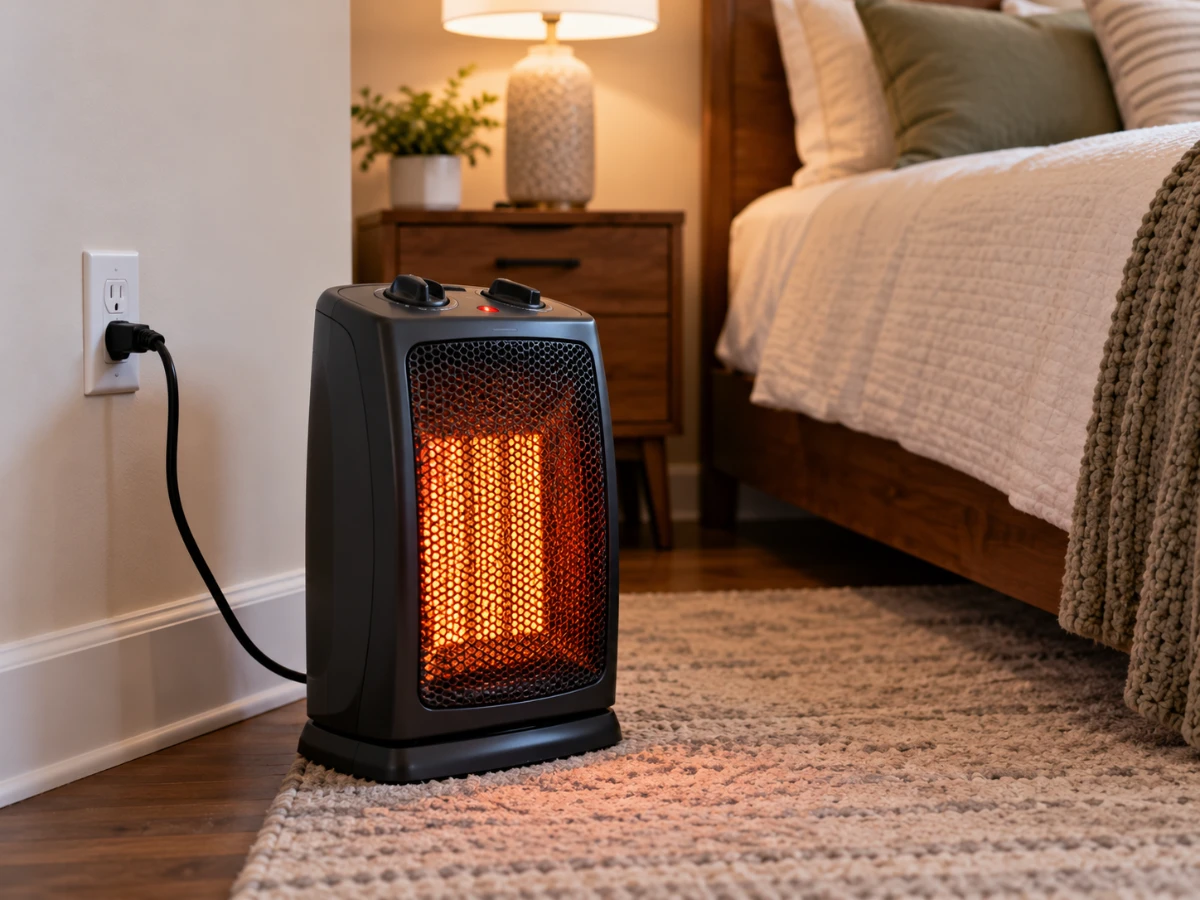
Standard outlets in living rooms and bedrooms are wired on 15-amp branch circuits using 14-gauge copper wire. Think of the wire like a pipe. Only so much current fits through the wire safely.
Amount of Current the Space Heater Draws
Now for the math. Amps equal watts divided by volts. A typical 1,500-watt portable space heater on a 120-volt outlet operates at 12.5 amps (1,500 ÷ 120 = 12.5) of continuous current.
The Safe Load for a Standard Circuit Breaker
The National Electrical Code (NEC) defines a continuous load as any draw that runs continuously for three hours or more. It caps safe circuit use at 80 percent of the breaker's total rating. For a 15-amp breaker, the safe continuous load threshold is exactly 12 amps (15 × 0.80 = 12).
Why the Space Heater Overloads Shared Circuits
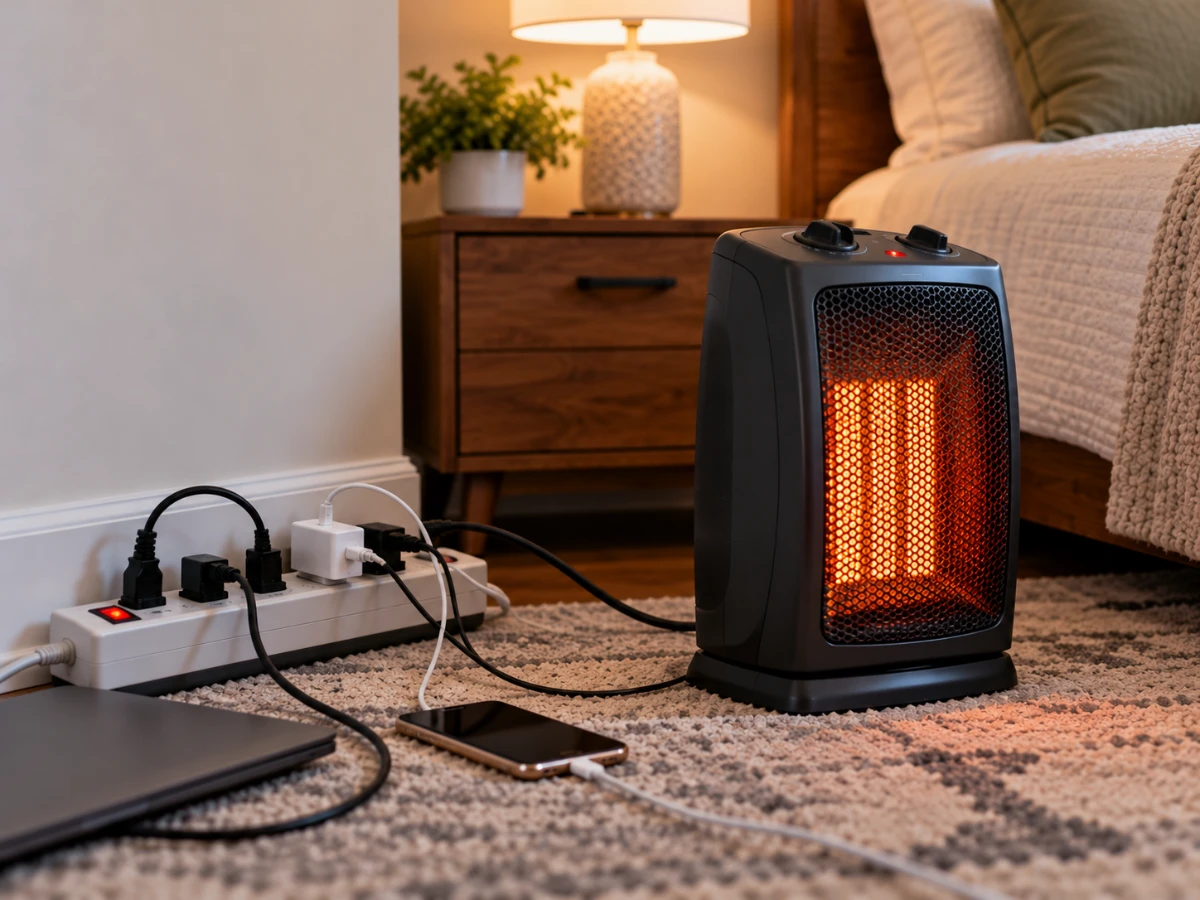
See the problem? A 12.5-amp space heater, all by itself, exceeds the entire safe continuous capacity of a 15-amp line. And the space heater rarely works alone. When it shares the line with lighting, televisions, gaming consoles, or laptop chargers, total demand quickly passes 15 amps, making the circuit breaker trip.
Our guide on why the circuit breaker keeps tripping explains how to reset breakers safely, the four common culprits, and warning signs it is time for a panel upgrade.
What Happens if the Circuit Breaker Doesn’t Trip
Here is the important part: a 12.5-amp heater will not trip a 15-amp breaker on its own. Because the heater uses just enough power to stay below the breaker's 15-amp shut-off limit, the electricity keeps running. In older Minnesota homes with worn or outdated wiring, running this heavy load for hours can cause the wires, outlets, and plugs inside the walls to get dangerously hot, all without triggering any warning from the breaker.
This heat buildup is especially dangerous in older Minnesota homes, where legacy wiring is already under stress.
Issues with Running Space Heaters on Older Minnesota Home Wiring
Older home wiring is a big issue across the Twin Cities and suburbs like Richfield and White Bear Lake. While legacy wiring is generally not required to match today’s code unless renovated, that does not mean it can safely handle today’s electrical loads. A space heater is one of the toughest tests it will face all winter.
Here is where the trouble starts:
- Older service panels: Many older homes rely on 60-amp or 100-amp panels built for simple lighting, radios, and small appliances. They were never designed for power-hungry space heaters, EV chargers, and air fryers. Running a heater for hours on these small panels leaves little safety margin.
- Aged wire: Running a space heater nonstop pushes heavy current through old wiring. Over time, that heat bakes rubber, cloth, or plastic insulation, making it brittle and cracked. Worn insulation leaves metal wires exposed, greatly increasing the risk of short circuits and fires.
- Loose screws and worn springs: Pulling continuous power through loose terminal screws or worn outlet springs creates high electrical resistance. Like a bottleneck in a hose, forcing current through a loose connection produces dangerous, localized heat you cannot see from the outside.
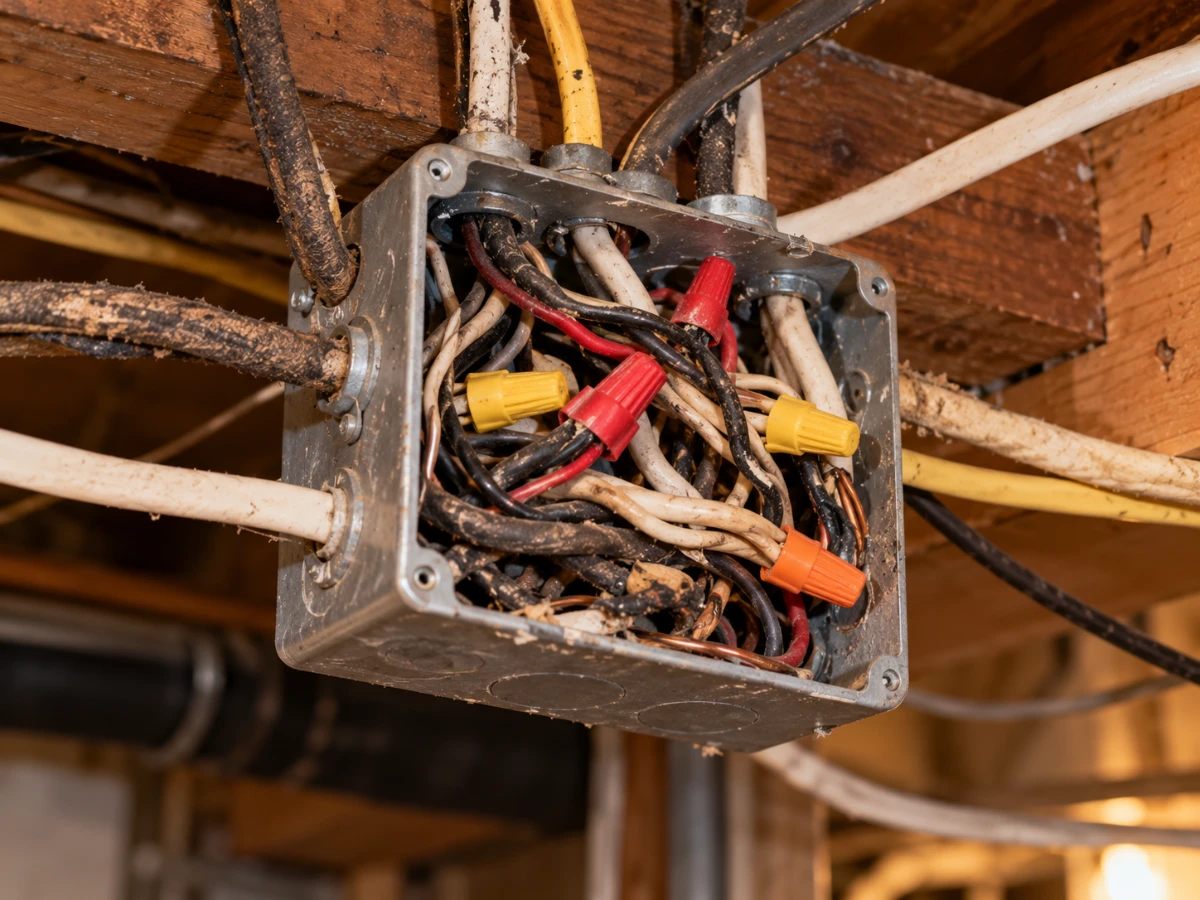
- Overfilled junction boxes: Undersized metal boxes inside old plaster-and-lath walls trap heat. Squeezing multiple cables into a tight space pinches wires and strains splices. Under a heater's constant load, a weak splice can become a hot spot, raising the risk of arcing and hidden fires behind your walls.
These problems build slowly, so you’re already into the winter season before the weak spots finally show. Because these issues are hidden inside your walls, you have to rely on physical warning signs rather than a tripped breaker to know when a circuit is failing.
Warning Signs Your Space Heater Is Overloading a Circuit
Since a breaker won't always trip to warn you of hidden overheating, your home gives other subtle hints when a space heater is overloading a circuit. Watch out for these signs:
- Dimming or flickering lights: Overhead or lamp lights that momentarily dim or flicker when the heater cycles on signal a localized voltage drop on an overloaded line.
- Warm faceplates: Plastic outlet faceplates or wall switch covers that feel noticeably warm or hot to the touch mean heat is building behind them. If one is scorched or melted, our
backstabbed wiring outlet hazardguide explains how backstabbed outlet wiring fails under heater loads. - Buzzing, crackling, or clicking: Faint sounds from behind a wall receptacle under continuous high load are a red flag. A loose connection or arcing is often the culprit, so it’s best to stop using that outlet immediately.
- A burning smell: A distinct metallic, acrid, or fishy chemical smell near wall outlets or junction boxes can mean overheating wiring or plastic. Unplug the heater, shut off that breaker, and call a licensed electrician right away.
- Repeated breaker trips: If your space heater circuit breaker keeps tripping at the main service panel whenever heating units run alongside other household electronics, the circuit is maxed out.
If you notice even one of these signs, stop running the heater on that circuit until an electrician checks it. You can call Loch Monster Electric on 763-292-1191 if you’re experiencing any of these electrical issues.
If you see smoke or flames, get out and call 911.
The Long-Term Solution: Dedicated Circuit for Space Heaters
The recommended fix is a dedicated circuit for your space heater paired with a full panel upgrade if necessary depending on your home.
20-Amp Dedicated Circuit with 120V Wall Outlet
Installing a 20-amp dedicated circuit is the single best way to power a portable space heater safely. Electricians run heavy-duty 12-gauge copper wire straight from your breaker panel to one specific 120V wall outlet. Because a 20-amp line safely handles up to 16 amps of continuous power (20 × 0.80 = 16), a 12.5-amp heater runs smoothly with plenty of safety margin. This means no extra devices, no shared wiring, and no more overloads from sharing a line.
200-Amp Service Upgrade
If your home still runs on an old 60-amp or 100-amp panel that’s already near its limit, upgrading to 200-amp service fixes the total power bottleneck. This upgrade gives your panel enough capacity to run a space heater alongside major electricity hogs like EV chargers, central AC, and air fryers without overloading your main service. While a bigger panel adds total capacity for the whole house, you still need a dedicated circuit to protect individual wall outlets from overheating.
Check our electrical panel upgrade services to learn how we do the installation and future-proof your home for years to come.
240-Volt Circuits for Baseboards and Garage Heaters
If you want to warm a drafty garage, workshop, or basement with built-in electric baseboards or garage heaters, standard 120-volt wall outlets won't cut it. These typically need a dedicated 240-volt circuit. Our 240V garage heater wiring guide covers wire sizing, subpanels, and local electrical codes for larger heater installations.
Need a Dedicated Circuit for Your Space Heater?
The fix is simple: watch for warning signs, and give your heaters their own dedicated circuits. Loch Monster Electric is the licensed Minnesota electrician that can get it done. We perform full load calculations to see what your panel and wiring can safely handle, complete code-compliant dedicated circuit installations, and provide transparent time-and-materials billing.
If your space heater circuit breaker keeps tripping, or you need a dedicated circuit installer in the Twin Cities or nearby suburbs like Maplewood or Roseville, call us today at 763-292-1191.
Frequently Asked Questions
If you run it for hours, yes, it is the safest setup. A 1,500-watt heater is over the 12-amp continuous limit on a 15-amp line.
Most likely, the heater shares a circuit with other devices, and the total passes 15 amps. Unplug everything else on that circuit. If it still trips, call an electrician.
No. The breaker protects the wire. A 20-amp breaker on 14-gauge wire lets the wire overheat before the breaker trips.
It gives the heater its own breaker and thicker 12-gauge wire, with a 16-amp continuous limit. That’s well above the heater’s 12.5 amps, and nothing else on the circuit competes with it. The wiring and outlet behind it still have to be in good shape, which an electrician checks during the install.
Yes, new circuits typically need an electrical permit and inspection, and a licensed electrician pulls it for you. Loch Monster Electric files the permit on your behalf.