
Why Space Heaters Melt Outlets: The Fire Hazard of Backstabbed Wiring
Updated: Oct 30, 2026
Space heaters can melt outlets when wires are backstabbed into weak spring clips. Learn why it happens, which warning signs to watch for, how a licensed electrician fixes it with screw-terminal outlets and a dedicated 20-amp circuit, and answers to common questions from Twin Cities homeowners.
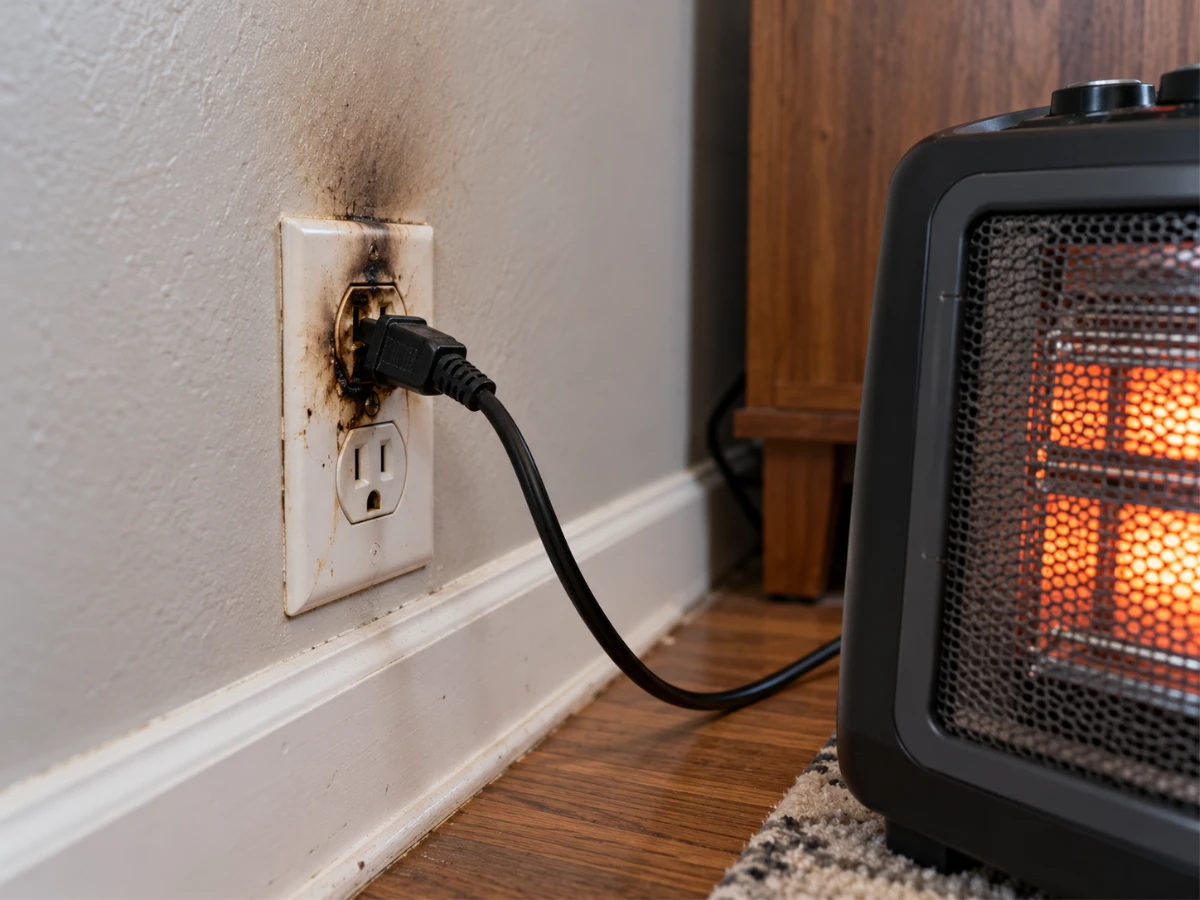
Next time you unplug your bedroom space heater, you might see an outlet that’s soft, brown, or even melted. This can be a scary sight, and it can happen as Twin Cities homeowners turn to plug-in heaters for additional warmth when heading into November.
Most folks blame the heater’s plug, but the real culprit is often hiding behind the wall plate. It’s called backstabbed wiring, and it becomes a serious problem when you leave a space heater running for many hours.
In this article, we’ll cover what the backstabbed wiring outlet hazard is, what warning signs to watch for, and what the professionals recommend to fix it.
We’re Loch Monster Electric, licensed electricians serving Minnesota and Wisconsin. If your outlet already looks scorched, call us at 763-292-1191 or fill out our contact form.
The Hidden Threat Behind the Outlet Cover
When cold November weather arrives, folks in Minneapolis and St. Paul quickly plug in their portable space heaters. These devices are great for fast, extra warmth in bedrooms, basements, and home offices that the furnace doesn’t reach properly.
The shock comes much later. After a few hours of heater use, many homeowners find the outlet faceplate soft, scorched, or completely melted. It’s natural to blame the heater’s plug, but the plug itself is rarely the problem.
The real trouble is usually an unseen flaw inside the wall called ‘backstabbed outlet wiring’.
If you’re seeing damage like this, our outlet switch repair services can replace the damaged outlet and check the wiring behind it. Until it’s inspected by a professional, it’s best to keep the heater unplugged, and if the outlet feels hot or smells burnt, shut off its circuit breaker as well.
What Is Backstabbed Wiring?
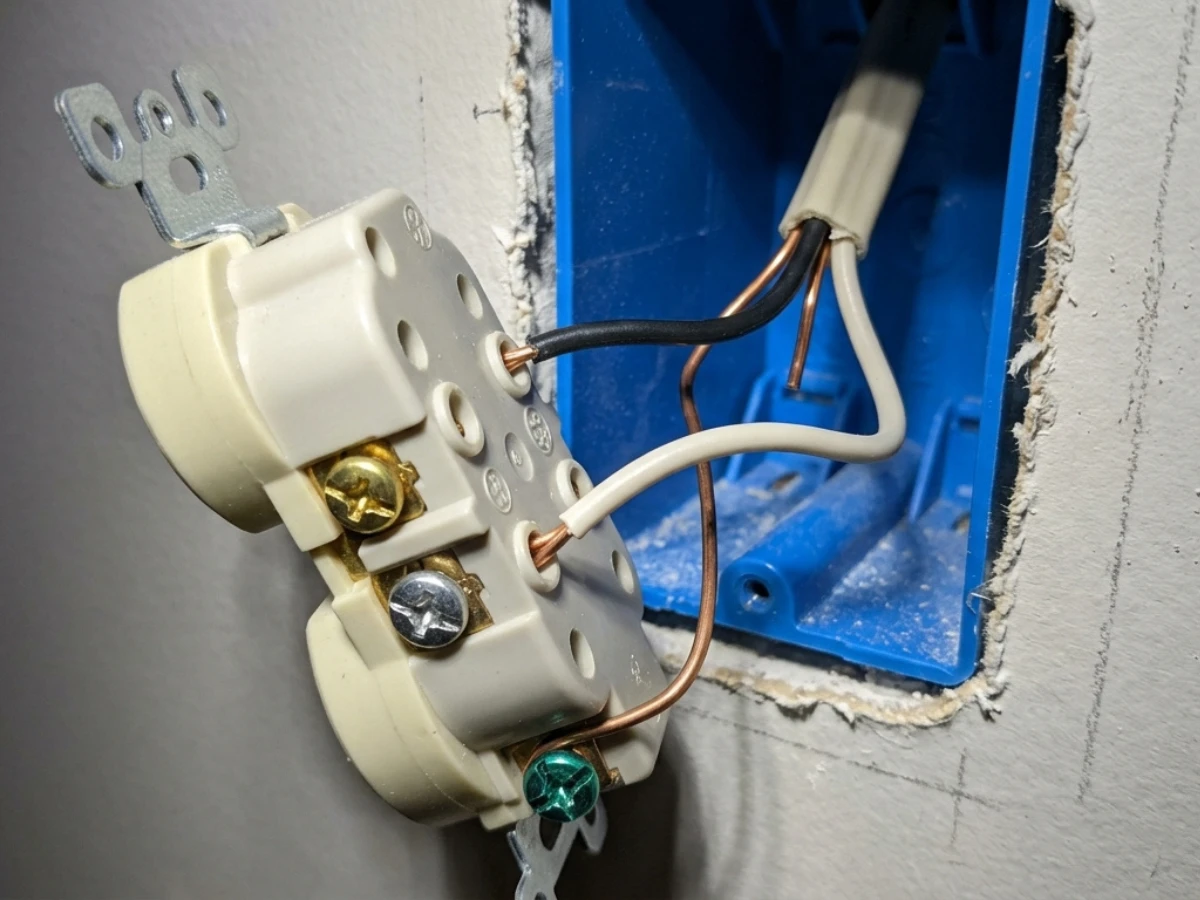
Backstabbing is an installation shortcut where the installer pushes the wire straight into a small hole on the back of the outlet. Inside, a tiny spring clip grips the copper. The recommended method is to wrap the bare copper wire around a side screw and tighten it down.
Builders have used the backstabbing method for years because it’s fast. It saves time per outlet, and those minutes add up across a whole house.
The catch is that a spring clip touches far less of the wire than a screw terminal does. For a phone charger or a table lamp, that’s usually fine. A space heater is a very different story.
Is Backstabbing Outlets Against Code?
Not outright. Still, professional electricians avoid backstabbing because screws grip better. Further, push-in terminals on standard outlets are made for 14-gauge solid copper wire on 15-amp circuits, and they’re not meant for thicker 12-gauge wire or aluminum. We run into backstabbed outlets all over Minneapolis, St. Paul, and Bloomington.
If you’ve got an outlet that just quit, our outlets not working: what an electrician checks guide walks through how we trace a dead outlet back to its cause.
Why Space Heaters Melt Backstabbed Outlets
A typical space heater pulls 1,500 watts. That’s about 12.5 amps of current, and it can keep pulling this for a few hours every day during winter. On a 15-amp bedroom circuit, that’s already above the 12 amps that electricians generally allow for loads that run three hours or more. And every bit of that current has to squeeze through a tiny spring clip if the outlet is backstabbed.
Here’s how a backstabbed electrical outlet goes bad:
- Heat builds up: A small contact area means high resistance, and resistance makes heat buildup right at the clip.
- Springs lose tension: The metal expands when hot and shrinks when it cools. After enough cycles, it bends out of shape. We call this ‘thermal creeping’.
- Gaps form: As the grip loosens, microscopic air gaps open between the clip and the copper.
- Arcing starts: Current jumps across those gaps as tiny, super-hot sparks.
- Outlet failure: The arcs can melt the plastic housing, char the wire insulation, and leave behind conductive carbon.
That carbon makes the next arc easier. Worst of all, it’s happening inside your drywall where you can’t see it.
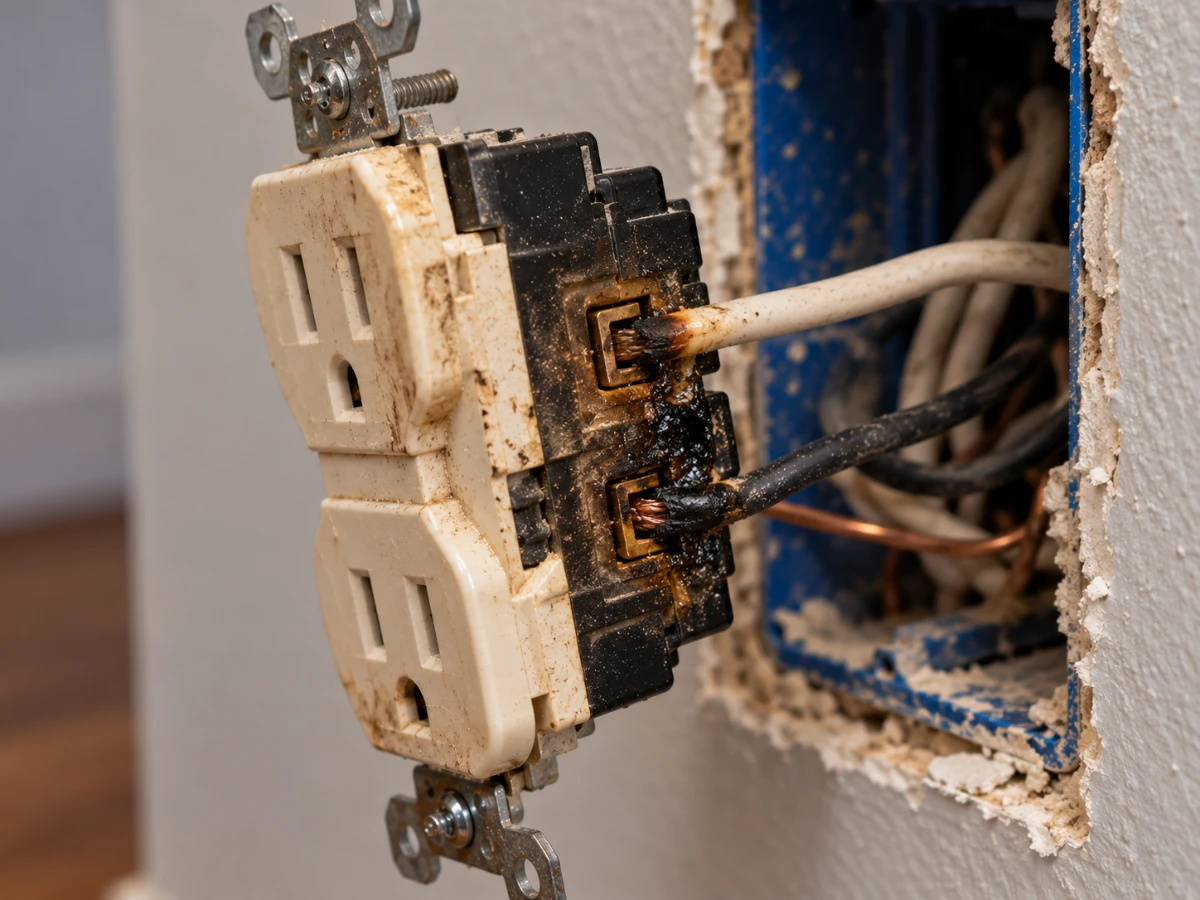
The best way to prevent this is giving the heater its own line, and wire the outlet properly. Our dedicated circuit for space heaters guide covers why high-watt heaters belong on a circuit of their own, and how this can be professionally installed.
Warning Signs of Backstabbed Outlet Overheating
Your outlet will usually warn you before it fails. Look and listen for these danger signs and call our emergency electrical repair team right away. Dial 911 if you see smoke or flames.
- Scorched faceplates: Brown, yellow, or dark marks around the plug slots.
- Hot or loose plugs: A heater plug that feels hot or wiggles in the slots.
- Smoke, bubbling, or odd smells: Bubbling plastic or a sharp, fishy, chemical burning smell near the wall box.
- Dead outlets down the line: Other outlets on the same circuit lose power when a backstabbed connection fails open.
Read our outlet and switch repair costs guide to find out what Twin Cities homeowners can expect to pay and how we complete the repairs to code.
The Professional Repair & Prevention Standard for Backstabbed Outlets
Here’s how we fix backstabbed outlets the right way:
- Better outlets: We swap in modern, heavy-duty 120V three-prong outlets and connect the wire to the side screw terminals, not the push-in holes. This gives far more contact area than a spring clip.
- Fresh wire ends: We cut back any heat-damaged copper and strip clean insulation inside the box. Arced copper is often dark or brittle, so we trim back to clean, bright wire.
- Dedicated circuits: We install a 20-amp dedicated circuit for high-draw space heaters so they skip the shared outlet chain. This circuit is wired directly from the electrical panel to a specific 120V outlet to plug in the heater.
Baseboards and garage unit heaters often run on 240 volts, and our 240V garage heater wiring guide explains what that setup looks like.
Ready to Fix Your Backstabbed Electrical Outlets?
Space heaters don’t melt outlets on their own. A weak, backstabbed connection does it when a heater asks too much. The fix is solid screw-terminal outlets, clean wire ends, and a dedicated circuit for your heater.
Loch Monster Electric is the licensed electrician that can solve it. We repair melted outlets and backstabbed hazards with clear time & materials billing across Twin Cities neighborhoods, including suburbs like Roseville and Maple Grove. Give us a call at 763-292-1191 and let’s get your home warm and safe.
Frequently Asked Questions
You have to look behind the outlet after shutting off the breaker first. If wires poke into holes on the back instead of wrapping around side screws, it’s backstabbed. If you’re not comfortable checking yourself, call us for a home electrical inspection.
Not fully. AFCI protection is built to spot dangerous arcing and may trip, but it doesn’t replace a solid connection. Our GFCI and AFCI installation service can add AFCI protection, a smart extra layer, but not a cure for loose wiring.
No. A warm outlet means heat is building at the connection. Unplug the heater, stay off that outlet, and have it checked before using it again.