How to Do Trenching for an Outdoor EV Charger in a Detached Garage or Driveway
Updated: Jun 16, 2026
Want to charge the new EV in your detached garage? Learn why underground trenching is essential for high-voltage Level 2 power, explore code-approved conduit options that survive Minnesota's frost heave, and discover smart sub-panel and driveway solutions.
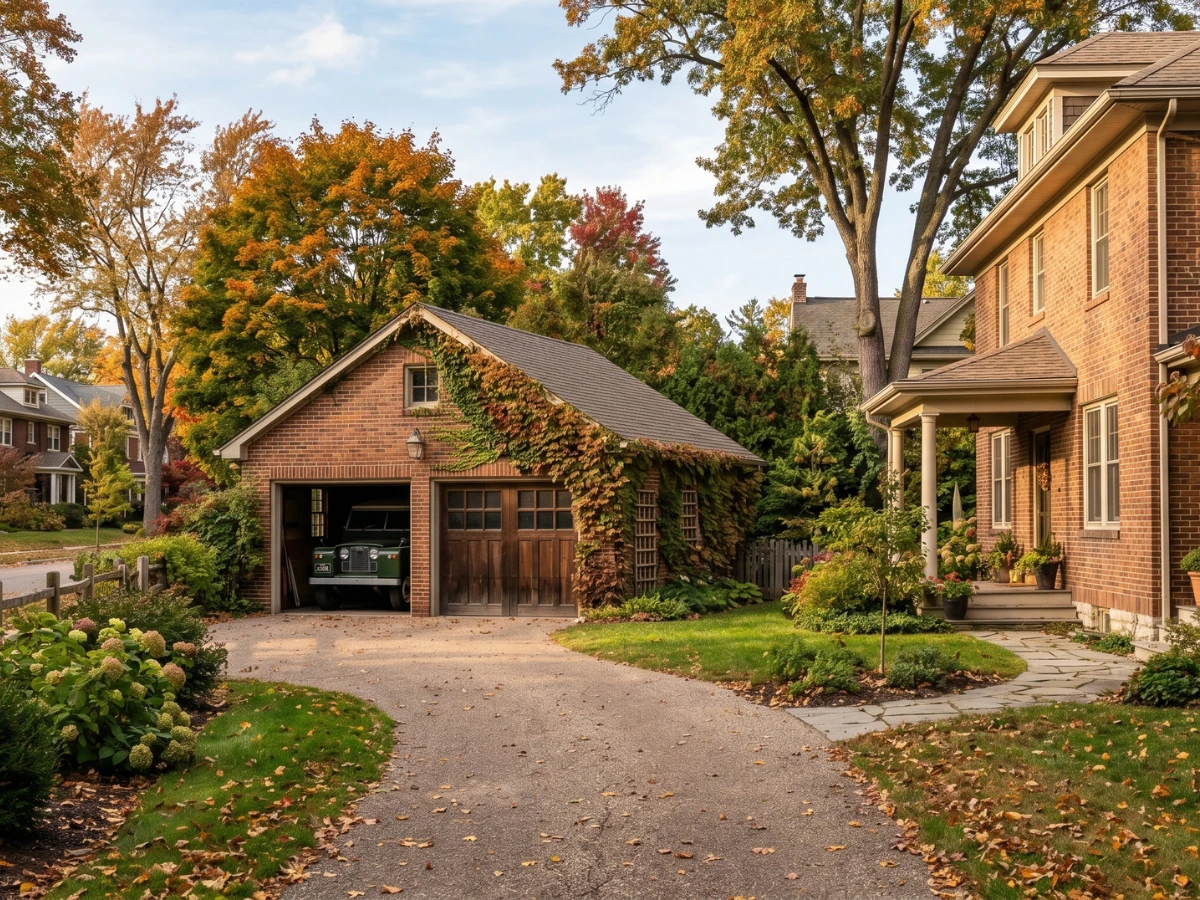
If you own an older home in a historic neighborhood like South Minneapolis, St. Paul, or Stillwater, you already know they come with some unique quirks. The biggest one? The detached garage.
Back in the day, those garages were built for Model T's, not high-tech electric vehicles. Most of them were wired with just a single 15 A circuit, which is enough to power a dusty lightbulb and maybe a radio, but definitely not enough to juice up a modern Rivian or F-150 Lightning.
Here at Loch Monster Electric (LME), we get asked all the time: "Can I actually get fast Level 2 charging out in my detached garage?"
The short answer is: Absolutely! But doing it safely and reliably in Minnesota’s extreme climate requires a bit of planning, some digging, and the right equipment. Let’s walk through what it takes to bring modern power to your older home.
Running Power to a Detached Garage for an EV
When you want to set up a Level 2 home EV charger installation, you need a 240-volt circuit. In a modern home with an attached garage, this is often a straightforward run through a basement or utility room. But when your garage is separated from your house by twenty, fifty, or even a hundred feet of yard, concrete, or garden beds, the logistics get a little more challenging.
To get high-voltage power to a detached structure, we can't just run an extension cord or string overhead wires like they did in the old days. Overhead lines are vulnerable to heavy snow, falling ice, and rogue tree branches.
Instead, running power to a detached garage for EV setups requires routing heavy-duty electrical conductors underground. This keeps your yard looking great and protects your electrical system from our legendary winter storms.
Trenching Through Minnesota Soil: Depth, Codes, and Frost Heave
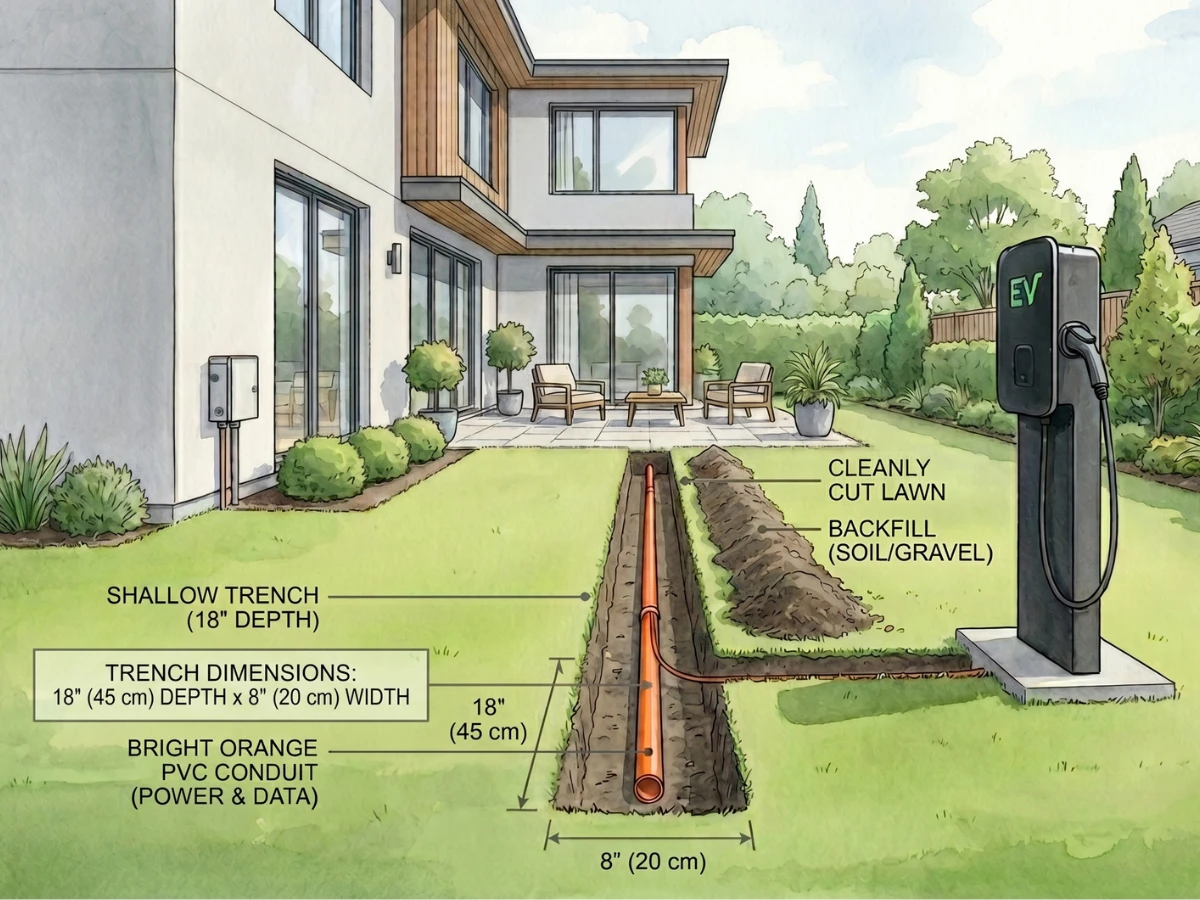
When performing trenching for outdoor EV charger installations, depth is everything. In Minnesota, the ground undergoes a massive freeze-thaw cycle every year. If cables are buried too shallow, the ground will push them up over time (a phenomenon known as frost heave), which can damage the conduit and the wires inside.
According to the National Electrical Code (NEC) and local Twin Cities building codes, you have three primary methods for routing electrical lines underground:
- Schedule 40 PVC Conduit: This is a heavy-duty, completely waterproof plastic pipe that houses individual electrical wires. It is the most common industry standard for underground lines.
- Rigid Metal Conduit (RMC): This is a thick, threaded steel pipe designed to provide maximum physical protection for the wires inside.
- Direct Burial Cable (UF): This is a specialized, moisture-resistant cable designed to be laid directly in the dirt without any protective pipe.
Comparing Your Trenching Options
Wiring Method | Required Minimum Cover | Pros | Cons |
Schedule 40 PVC Conduit | 18 Inches | Extremely durable, waterproof, budget-friendly, and allows you to easily pull new wires in the future. | Requires a moderately deep trench. |
Rigid Metal Conduit (RMC) | 6 Inches | Super strong, handles heavy impacts, and requires a very shallow trench (great for rocky soil or root systems). | Very expensive materials, highly labor-intensive, and can rust over time in wet clay. |
Direct Burial Cable (UF) | 24 Inches | Slightly cheaper upfront material cost because there are no pipes to buy. | Requires the deepest trench, traps heat under heavy charger loads, and is easily damaged by shifts or shovels. |
LME's Professional Recommendation: We strongly recommend installing Schedule 40 PVC conduit buried with at least 18 inches of soil cover. It provides the absolute best balance of safety, heat dissipation, and cost-effectiveness, and it allows us to easily pull new or larger wires through the pipe in the future if battery technology changes.
Critical Technical Rules Every Homeowner Should Know
There are three important code details we always plan for:
- "Cover" Depth vs. Trench Depth: The National Electrical Code measures burial depth by "cover" which is the distance from the very top of the buried conduit to the top of the finished soil. If we run a 2-inch PVC pipe, our actual physical trench needs to be at least 20 to 21 inches deep so that we still have a full 18 inches of dirt sitting on top of the pipe.
- The Driveway Exception: Under a residential driveway or parking area, the rules change. The crushing weight of heavy vehicles (and heavy winter snowplows) requires extra protection. No matter which method you use, even if it is a Rigid Metal Conduit, the line must have at least 18 inches of cover beneath the concrete.
- Expansion Joints and the MN Frost Line: In Minnesota, the winter frost line can penetrate between 42 and 60 inches deep. Because our ground freezes so deeply, the soil moves significantly. We must install specialized expansion fittings where the vertical conduit exits the ground and connects to your home or garage. These fittings slide up and down like a telescope, allowing the ground to shift without pulling the electrical boxes right off your walls.
Real-World Scenarios: Crossing Driveways & Walkways
In established neighborhoods, the path between the house and the detached garage is rarely a straight line of open, soft grass. Often, there is a concrete driveway, an asphalt parking pad, or a beautiful stone walkway right in the middle of the yard.
Homeowners are often worried that we will have to jackhammer up their entire yard or driveway. Here is how we actually handle these common obstacles:
- Trenchless Horizontal Boring (Tunneling): This is always our preferred, non-destructive method. Using specialized equipment, we can actually "tunnel" or bore horizontally beneath your existing concrete driveway or sidewalk. We dig a small pit on either side, push the conduit straight through beneath the concrete slab, and slide the wiring in. Your driveway, landscaping, and walkways remain completely untouched.
- Concrete Cutting and Patching: In rare cases where boring isn't possible, usually due to giant, historic oak tree roots or buried boulders, we may have to cut a clean, narrow channel through the driveway. We lay the conduit, backfill it properly to prevent settling, and then neatly patch the concrete or asphalt.
What Is the Cost to Trench an Electrical Line for an EV Charger?
It’s the question on everyone’s mind: What is the actual cost to trench electrical lines for EV charger systems?
If we are trenching through soft, open grass, the job goes quickly. If we have to cut through a concrete driveway, tunnel under a historic stone walkway, or work around mature oak tree roots, it requires specialized equipment and more labor.
Our team at LME always handles the crucial first step: coordinating with Gopher State One Call to map out underground utility lines (gas, water, sewer, fiber optic) before a single shovel touches your dirt.
Powering the Garage: Why a Sub-Panel Is the Smartest Move
Once we’ve trenched across your yard, we don’t just hook up a single outlet. We want to make sure your garage is ready for the future.
Garage Subpanel Installation in the Twin Cities
Rather than running a single dedicated line just for your charger, we highly recommend a garage subpanel installation that homeowners in the Twin Cities can rely on for years to come.
A sub-panel distributes power as a mini-breaker box inside your detached garage. By running a larger 100-amp or 125-amp feeder line from your main home panel to this new sub-panel, you accomplish three major things:
- Multiple EV Charging: You’ll have enough power to run a 50-amp EV charger today, with room to add a second charger down the road if your household goes fully electric.
- Convenience: You can run bright garage lighting, power tools, shop vacs, and even a garage heater for those freezing January mornings without tripping breakers inside the main house.
- Future-Proofing: It adds massive resale value to your property.
Note: While a sub-panel distributes power beautifully inside your garage, it doesn't increase the total amount of power entering your property. To see if your current system can handle this added load, check out our guide on How to Calculate Your Home's Load Capacity.
What If You Don't Have a Garage? Driveway & Outdoor Solutions
In neighborhoods like St. Paul's Mac-Groveland or Minneapolis's Linden Hills, some homes don't have garages at all, with just a narrow driveway running along the side of the house.
If this sounds like your home, don't worry. You can still charge your vehicle quickly and safely at home with an outdoor-rated EV charger installation. This involves installing a weather-resistant, robust pedestal mount right next to your driveway.
When going this route, we prioritize:
- NEMA 4X Rated Enclosures: This ensures your charger is completely sealed against rain, sleet, snow, and ice.
- Heavy-Duty Pedestals: Bolted securely into a small concrete pad so it remains stable through decades of winter freezes.
- Cold-Weather Cord Flexibility: We recommend chargers with high-quality cables that don't turn into stiff, unmanageable blocks of ice when the thermometer dips below zero.
Why Choose Loch Monster Electric for Your Installation?
Trenching, laying conduit, and pulling heavy sub-panel feeders isn't a weekend DIY project. It requires permits, inspections, and a deep understanding of local Twin Cities municipal codes.
At Loch Monster Electric, we love preserving the character of our historic neighborhoods while upgrading them for the 21st century. We treat your yard with respect, minimize disruption to your landscaping, and ensure that every connection is perfectly engineered to withstand the toughest Minnesota winters.
Ready to get your detached garage or driveway EV-ready? Get in touch with us at Loch Monster Electric today to schedule a site evaluation and get a clear, honest quote!
Frequently Asked Questions
Yes, absolutely. Twin Cities municipalities (including Minneapolis, St. Paul, and Stillwater) require electrical permits for any new circuit installation, trenching, or sub-panel additions. When you work with LME, we handle all the permitting, scheduling, and inspections for you so everything is 100 percent up to code.
Yes! We don't always have to tear up your entire concrete driveway. Depending on the layout, we can use specialized trenching techniques, horizontal boring, or tunnel underneath walkways to minimize damage to your hardscaping and preserve your beautiful landscaping.
High-quality, professional-grade outdoor EV chargers are built to handle temperatures down to minus 22 degrees Fahrenheit or lower. While the charging speed of your vehicle itself might slow down slightly in extreme cold to protect the battery, a properly installed, outdoor-rated charging station will operate safely and reliably year-round.
For most detached garage installations in the Twin Cities metro area, the process takes about 1 to 2 days. This includes digging the trench, laying the conduit, installing the new garage sub-panel, mounting the charger, and restoring the soil.