How Much Does It Cost to Fix Flickering Lights?
Updated: Jul 24, 2026
Does your house have flickering lights? Discover the three major issues that cause lights in your home to flicker. Find out troubleshooting insights and how much it costs to fix these flickering lights.
A flickering light isn’t a ghost in your house. It’s a warning sign for your home’s electrical system. But it’s something many homeowners ignore until a circuit drops out completely or creates a fire hazard. When a fixture or a receptacle glitches, it usually indicates loose circuit loops, aged contacts or hidden infrastructure strain.
Your best choice is to call one of our licensed electricians at 763-292-1191 for an emergency electrical repair.
But every homeowner asks the same question: “If I have lights flickering, how much will it cost to fix?” So, let’s get down to it.
What Is the Cost to Fix the Most Common Causes of Flickering Lights?
To give you a quick look at the cost to fix your electrical repair, we have mapped out the trade ranges based on our local experience.
Root Cause of Flickering | Typical Repair Scope & Hardware | Real-World Cost Range |
Failing Fixture or Receptacle | Swapping worn toggles, replacing backstabbed links, or upgrading standard junction boxes | $350 – $500 (Hardware dependent) |
Overloaded Circuit Hookups | Installing hard-start helpers, line rebalancing, or running dedicated copper branch lines | $600 – $1,000+ (Varies by wire run length) |
Loose Master Neutral Links | Master panel lug torque testing, bus bar rebuilds, or main structural mast reconstruction | $1000 – $2,500+ (Severity and storm damage dependent) |
Cause #1: Loose or Failing Fixtures & Receptacles
The Symptom: Clicks, Hums, and Localized Glitches
Have you noticed a single light fixture flickering randomly? Or maybe a small cluster of outlets on one wall makes a faint clicking or humming sound when you flip the switch. When a problem is confined to one small area of your home, it usually points to a failure inside the nearby fixtures, dimmers, or receptacles.
The Cheapest Fixes to Rule Out First
Before calling a local electrician, you can self-diagnose the problem with a few simple checks:
- Loose Bulbs: Ensure the bulb is screwed completely into the socket contact point.
- Incompatible Dimmers: If you upgraded to LED bulbs but kept an old incandescent dimmer switch, the mismatched voltage draw causes rapid blinking.
- Aging Ballasts: Older fluorescent tube fixtures use magnetic ballasts that click and cycle off as they fail.
If changing a bulb or replacing a dimmer doesn't solve it, the issue is likely hidden behind your drywall.
The Danger of Backstabbed Wires
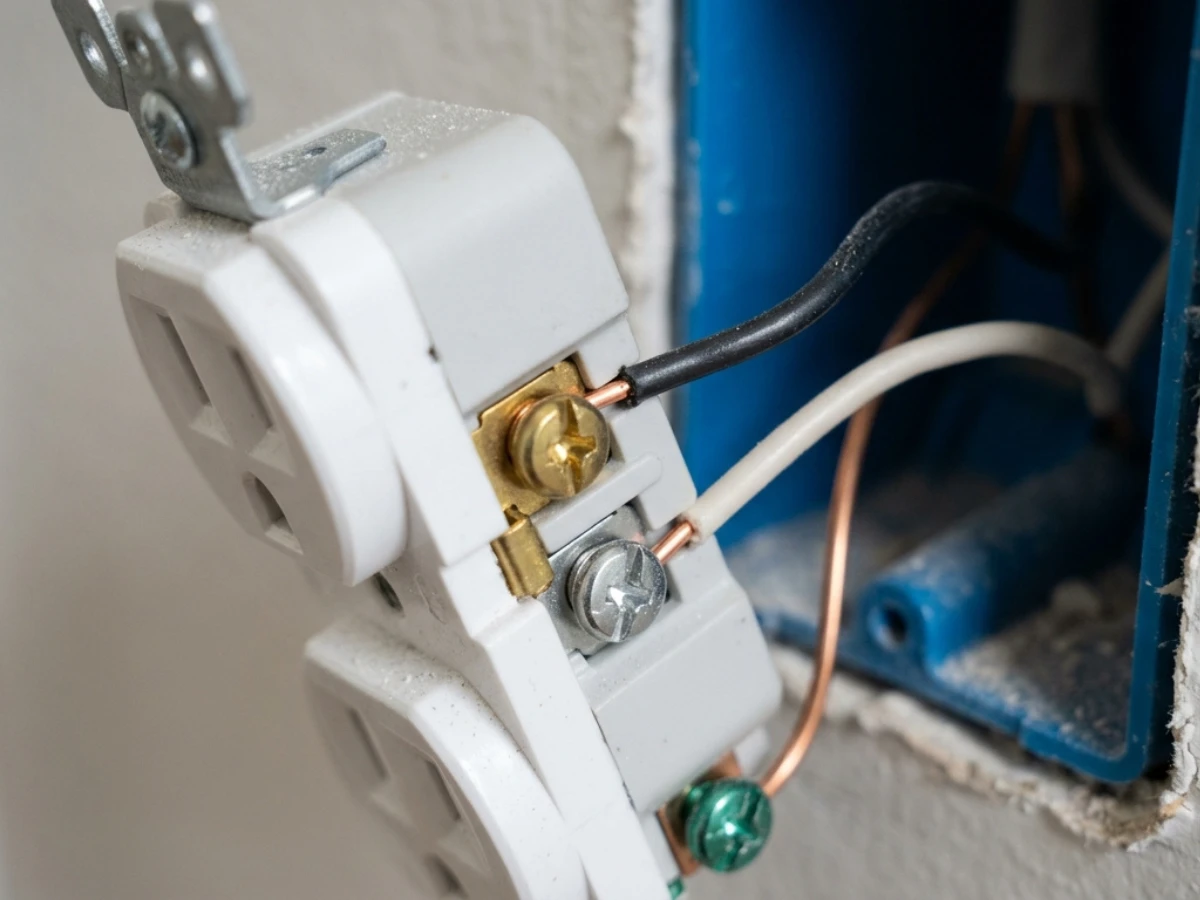
Inside your walls, electricity relies on continuous loops. Many mid-century or rapidly built homes in the Twin Cities feature outdated "backstabbed" push-in wiring behind switches and receptacles. Over time, these push-in spring connections lose tension.
When a copper wire becomes loose, current must jump across the gap. This is called electrical arcing. Arcing produces extreme localized thermal stress. This heat degrades conductor insulation and creates a serious micro-combustion fire hazard before a standard breaker can even trip.
Cause #2: Overloaded Circuits & Inrush Current Spikes
The Symptom: Sudden Voltage Dips When Motors Kick On
Do your lights momentarily dim or blink every single time your central air conditioner, microwave, or a basement space heater kicks on? If the flicker synchronizes perfectly with an appliance starting up, you are seeing an immediate infrastructure issue rather than a broken fixture.
Understanding Inrush Current
When large, motorized appliances cycle on, they require a massive electrical surge to break internal inertia and get their compressors or motors moving. This instantaneous draw is known as inrush current, and it can spike up to 5 to 6 times the appliance’s normal operating current. If that motor shares a circuit loop with your lighting branch lines, it momentarily starves the bulbs of voltage, causing a brief, visible drop in light intensity.
When Modern Twin Cities Homes Outgrow Legacy Panels
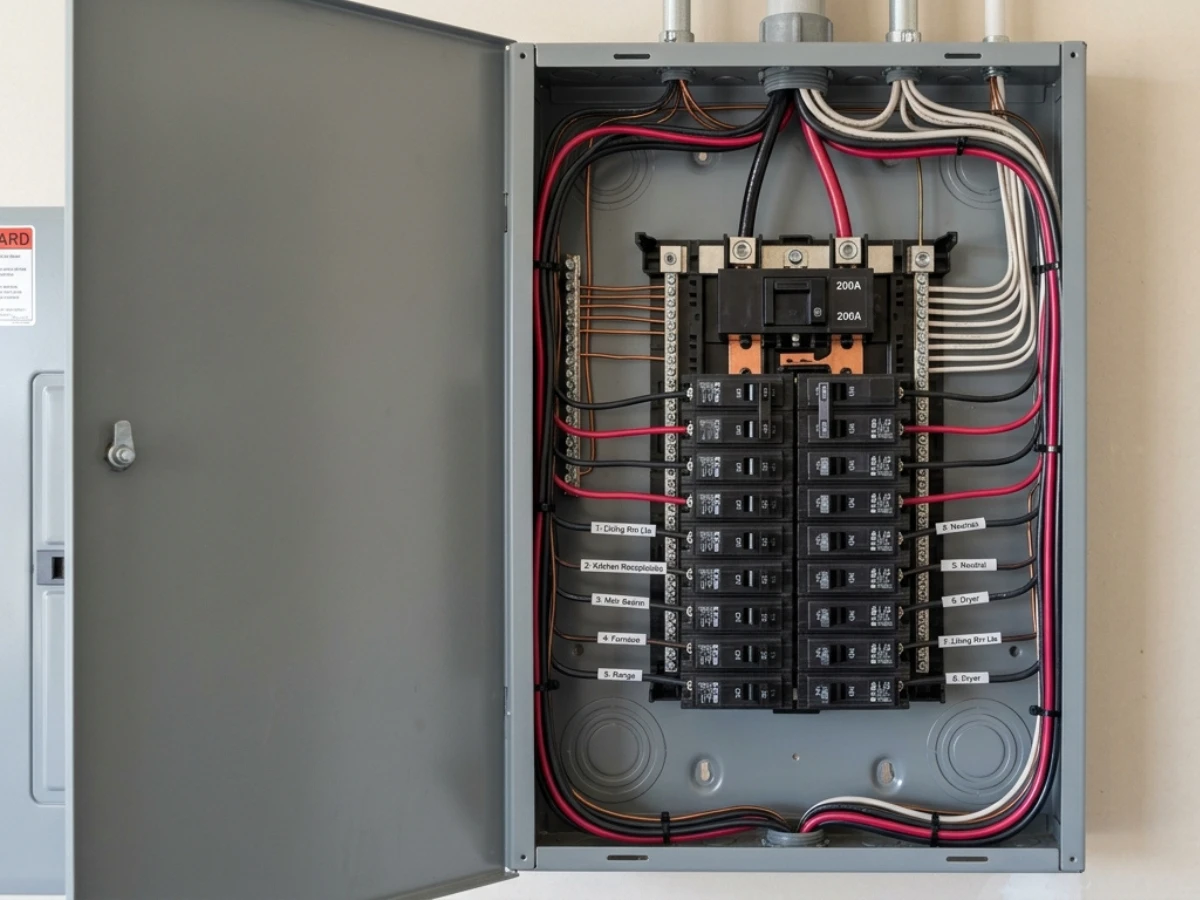
This issue is remarkably common in classic mid-century neighborhoods across Minneapolis and St. Paul, such as South Minneapolis, Como Park, and the post-war blocks of St. Louis Park. Many of these homes still operate on original 100-amp service panel boards.
While a 100-amp panel was plenty of power in the 90s, it quickly hits its physical limits when forced to handle modern high-draw electrical additions simultaneously:
Level 2 electric vehicle (EV) fast chargers- Multi-zone electric mini-split heat pumps
High-draw home office configurationsrunning concurrent server loops
Repeatedly subjecting an overloaded vintage panel to intense inrush spikes creates severe thermal stress, eventually loosening terminal breaker connections behind the cover plate.
Cause #3: Loose Neutral Connections: The Most Expensive Problem to Ignore
The Symptom: Whole-House Dimming and Multi-Room Flickering
If your lights are flickering across multiple random rooms, or if your entire house dims at once, you are facing a much deeper infrastructure failure. You might also notice your appliances acting erratically, or one set of lights getting dangerously bright while another set goes dark.
Understanding the Neutral Connection
To keep your home safe, electricity requires a complete loop. Hot wires deliver current from the main service panel board to your electronics, and the neutral wire completes the loop back to the utility grid. If a neutral wire slips loose, breaks, or corrodes, it disrupts this balance. Instead of a steady stream of power, voltage will dangerously spike and drop across your entire property.
A loose neutral is the absolute most dangerous issue to ignore. It is the leading cause of electrical arc faults and severe residential fires. When connections lose integrity, current forces its way across the physical gap, creating massive localized heat that can ignite nearby timber or drywall before a standard breaker even notices.
The Repair Scope and Minnesota Code
Fixing a loose neutral depends entirely on where the gap resides. A licensed electrician will use advanced diagnostic multimeters to test three primary areas:
- The Individual Junction Box: A single loose connection tucked behind a wall.
- The Main Panel Board: Loose master panel lugs or a corroded neutral bus bar.
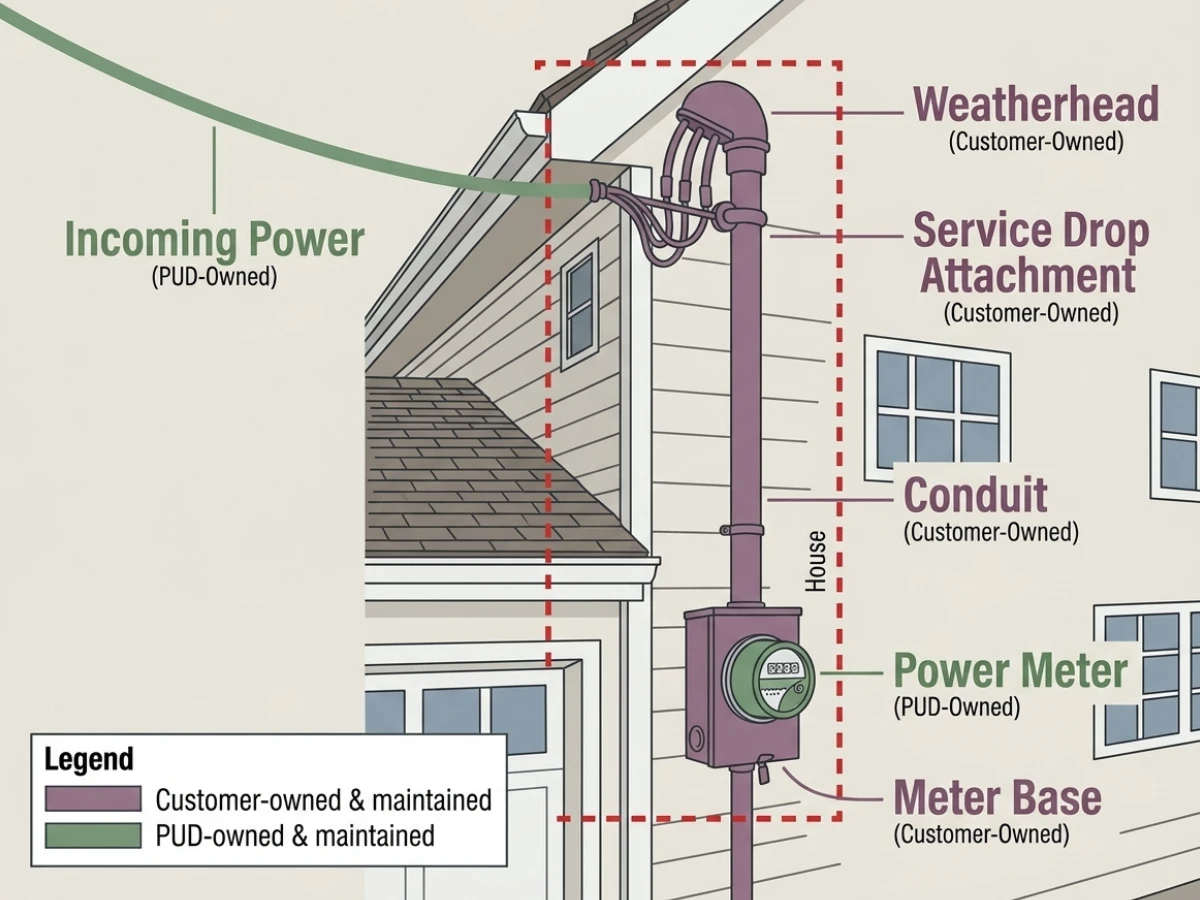
- The Utility Line: Damage to the physical connection at your outdoor weatherhead mast or meter socket.
Minnesota State Electrical Code Section 110 contains strict legal mandates regarding mechanical connection integrity. Under these rules, it must meet exact torque settings on all terminal blocks and panel lugs to ensure a permanent, low-resistance return path.
Don’t Trust Just Anyone to Do Electrical Repairs
Why Do You Need a Licensed Electrician to Fix Your Flickering Lights?
While the temptation to take a DIY approach or hire an unlicensed handyman exists, working with electricity demands a standard of precision that only a licensed professional can provide.
Efficient and Professional Execution
A licensed electrician doesn't guess; they diagnose. Equipped with specialized tools, they can pinpoint loose neutral loops, overloaded circuits, or thermal stress hidden behind your drywall without causing unnecessary damage.
They ensure every repair or installation is strictly code-compliant—adhering directly to National Electrical Code (NEC) guidelines. Doing the job right the first time protects your home from hidden arc faults, recurring voltage drops, and severe fire hazards, ultimately saving you extensive time and future budget headaches.
Your Trusted Local Experts: Loch Monster Electric
If you are dealing with vintage wiring bottlenecks or modern infrastructure demands, Loch Monster Electric is your go-to neighborhood electrical partner.
We proudly serve homeowners, businesses, and HOAs across the Greater Twin Cities metro and the first-ring historic neighborhoods of St. Louis Park. Whether it’s upgrading a legacy mid-century panel board to modern 200-amp service, trenching dedicated lines for a new backyard hot tub, or safely installing high-ceiling fixtures, we bridge classic architectural charm with safe, modern electrical capability.
The Time & Materials (T&M) Advantage: Straightforward Trade Billing
We believe in straightforward trade craftsmanship—which is why our business relies on a transparent T&M billing structure. Instead of using flat rates, we keep our pricing aligned directly with the clear, documented facts of your repair.
Our T&M billing model provides several key benefits:
- Hourly Trade Rates: You only pay for the exact field minutes it takes a licensed technician to systematically trace, diagnose, and repair your specific issue. If a fix takes 30 minutes, you only pay for 30 minutes.
- Itemized Components: All parts used during your service are cleanly itemized. You see exactly what code-compliant hardware went into your home grid, completely eliminating hidden markup packages.
It’s the old-school, honest way to do business, ensuring your home's electrical infrastructure remains reliable, safe, and efficiently maintained.
Conclusion
Resolving flickering lights isn't just about preserving visual comfort, it's necessary to protect your home’s electrical foundation and ensure long-term grid safety. Minor fluctuations are frequently indicators of localized code compliance issues, structural capacity limitations, or loose neutral lines behind your drywall.
At Loch Monster Electric, we back every diagnostic visit with an honest, transparent Time & Materials model. Let our team verify your residential infrastructure and keep your local grid operating efficiently.
Give us a call at 763-292-1191 or message us and schedule a visit.
Frequently Asked Questions
When large motorized appliances like HVAC compressors or blower motors start up, they require a massive surge of power (inrush current). This can draw 5 to 6 times the normal running current for a fraction of a second, causing a temporary voltage drop across shared lighting circuits. If the dimming is under a second, it is usually normal. If the lights dim significantly, it means an overloaded electrical panel.
Yes. While a simple incompatible dimmer switch or loose LED bulb is harmless, persistent flickering caused by loose wiring, overloaded circuits, or a failing neutral wire is a severe safety hazard. Loose connections cause electrical arcing—where electrical current jumps across physical gaps. Arcing generates localized temperatures exceeding 1,000°F behind your walls without drawing enough current to trip a standard circuit breaker. This extreme thermal stress can melt wire insulation and ignite nearby wall studs or insulation, making unresolved flickering a leading precursor to residential fires.
Yes, a loose neutral wire is one of the most dangerous electrical faults in a home. In a standard 120V/240V split-phase home system, the neutral wire balances voltage and provides the return path for current to the power grid. When a neutral connection breaks or becomes loose, voltage cannot balance properly. This causes voltage on one 120V leg to drop dangerously low while spiking to 200V+ on the other leg. These extreme voltage spikes overheat appliance transformers, destroy electronics, and create high-heat arc faults inside panel boards and junction boxes that can easily start a structural fire.