Landscape Lighting Installation Costs: Twin Cities 2026 Pricing Guide
Updated: Jul 28, 2026
Planning your Twin Cities landscape lighting installation? This 2026 guide covers realistic project costs, climate-specific installation tips for Minnesota winters, property considerations, electrical code requirements, and a checklist for vetting local contractors.
Living here in the Twin Cities, you know our landscape lighting needs are a little different than the rest of the country. We aren't just lighting for aesthetics. We are lighting for those long, dark winters, and the precious summer evenings we get to spend in our yards.
Do you want to highlight the historic woodwork of your St. Paul Craftsman, or add security to a new home in the suburbs? Either way, you need a system that can actually stand up to our extreme climate. At Loch Monster Electric, we help neighbors all over the metro area illuminate their properties every day.
In this guide, we’ve broken down everything you need to know about landscape lighting installations in 2026. From real price expectations to Minnesota electrical codes and climate-specific installation tricks, we’re here to help you make an informed decision for your home.
Call us on 763-292-1191 if you’re ready to light up your yard or leave your details on this contact form and we’ll get back to you.
What Does Landscape Lighting Installation Cost in the Twin Cities in 2026?
When searching for how much landscape lighting costs, you will find a wide range of prices online. The following estimate for an entry level landscape lighting system includes professional installation, and high-quality fixtures.
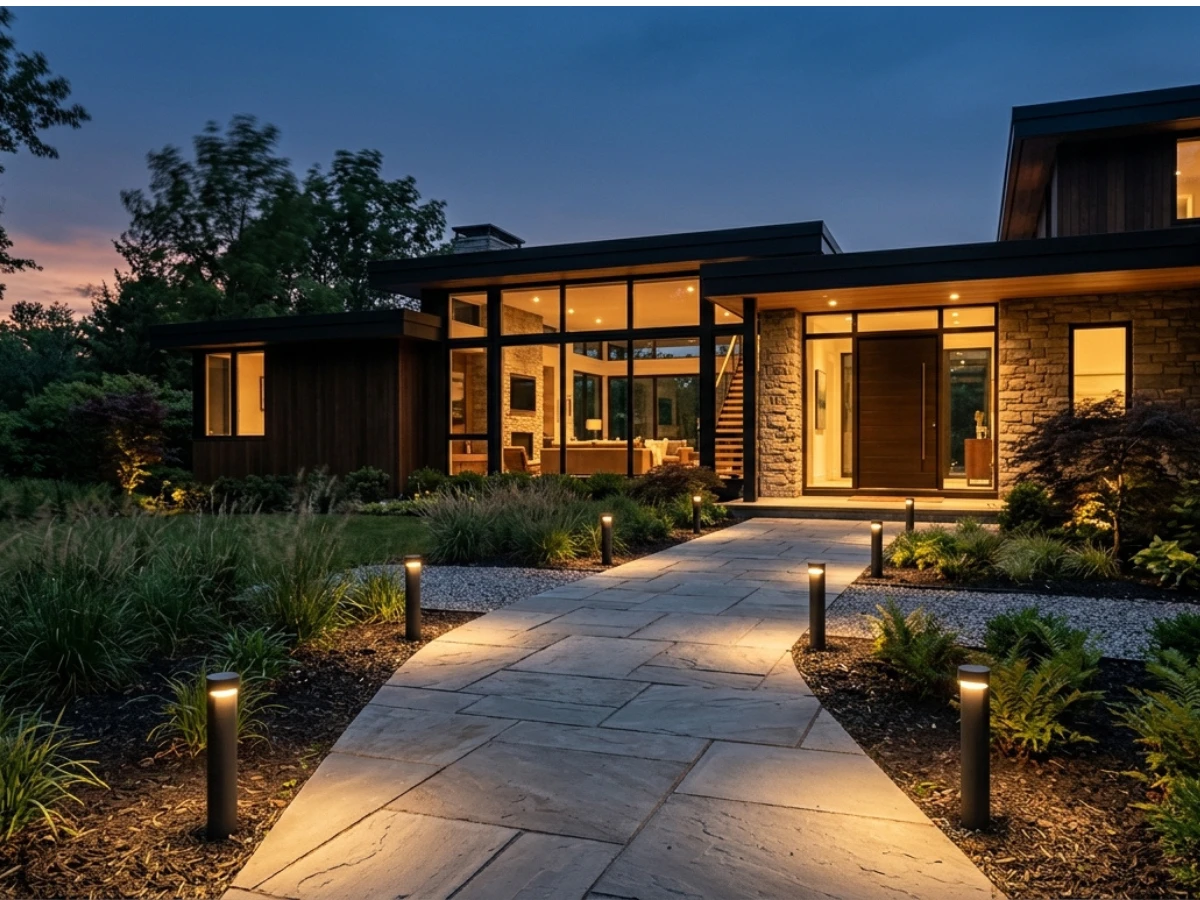
Ideal for: Homes with smaller yards or single-zone areas (like a front walkway) that need simple pathway lighting. This budget-friendly system typically includes a few adjustable uplights to accent the home's architecture, providing a great boost to safety and basic curb appeal.
Item | Estimated Cost |
Parts and Fixtures | $400 – $600 |
Professional Labor (3 to 5 hours) | $600 – $1,000 |
Total Project Estimate | $1,000 – $1,600 |
Important Note: These figures are estimates. Your final quote may vary based on the complexity of the landscape layout, the number and type of fixtures required, smart control systems, and transformer requirements. If your project involves extensive site preparation or complex designs, costs may exceed these estimated ranges.
7 Factors That Impact Your Outdoor Lighting Installation Cost
When you are comparing outdoor lighting installation cost estimates, it is important to remember that not all quotes are created equal. Here are the variables that typically impact your final price:
Linear Footage & Cabling
Every extra foot of cable adds both material and labor costs. The longer the distance from your transformer to the furthest light, the more trenching is required. Also, voltage drop must be managed. If the cable is too thin or the run is too long, the lights may flicker or look dim. Using higher-grade, thicker cable for long runs ensures consistent brightness, which increases the material cost.
Soil and Frost Conditions
In Minnesota, your yard's soil affects how hard it is to work. Heavy clay or rocky soil makes digging much slower and more difficult. It is essential to bury electrical lines deep below the frost line to survive our extreme freeze-thaw cycles. This prevents the ground from shifting and damaging the electrical system.
Lighting Fixture Grade
There is a big difference between cheap plastic fixtures and durable brass, copper, or powder-coated metal ones. Plastic can become brittle and crack during our cold winters. Metal fixtures resist corrosion and are designed to last for many years in the Minnesota elements.
Transformer Size
The transformer is the heart of your system. A larger property with more lights needs a stronger, more robust transformer to handle the total electrical load. It must be powerful enough to keep the system running without overheating across long distances.
Number of Lighting Zones
Do you want your path lights on a different timer than your accent lights? If you want to dim your tree lights but keep your patio lights bright, you need a more advanced, multi-zone transformer. This requires more complex wiring and a smarter control unit, which increases both parts and labor.
Electrical Panel Upgrades
If your current electrical panel does not have space for a new outdoor circuit (which is common in older homes), the panel itself may need an upgrade. A panel upgrade is a larger project, but it ensures your home's electrical system is safe for the new equipment.
Check out our electrical panel upgrade guide to learn all about the costs of upgrading, rebates, and permit requirements.
Automation
Adding smart controllers or Wi-Fi-enabled timers lets you manage your lighting from your phone, adjust schedules based on the sunset, or set custom scenes. While this adds to the starting price, it provides excellent convenience and can save energy.
Essential Landscape Lighting Fixture Types
Here are the primary fixture types that can be used to achieve a desired effect for your landscape lighting.
- Pathway Lights: These give off soft, downward pools of light. They blend into your landscape to safely light walkways and garden edges without creating blinding glare.
- Uplights (Spotlights): These fixtures highlight trees or unique masonry on your home. They create depth and dimension, drawing the eye to the best features of your property.
- Wall Washers: Unlike a focused spotlight, wall washers use a wider beam to graze across hardscapes, retaining walls, or the entire facade of a building. This creates a beautiful, soft glow.
- Step Lights: Critical for safety in the Twin Cities, these are recessed into stair risers or walls to highlight changes in elevation on your patio or front entry.
- Hardscape/Under-cap Lights: These are discreet fixtures tucked under the lip of stone walls, steps, or outdoor kitchen countertops. They provide subtle, functional light without revealing the source.
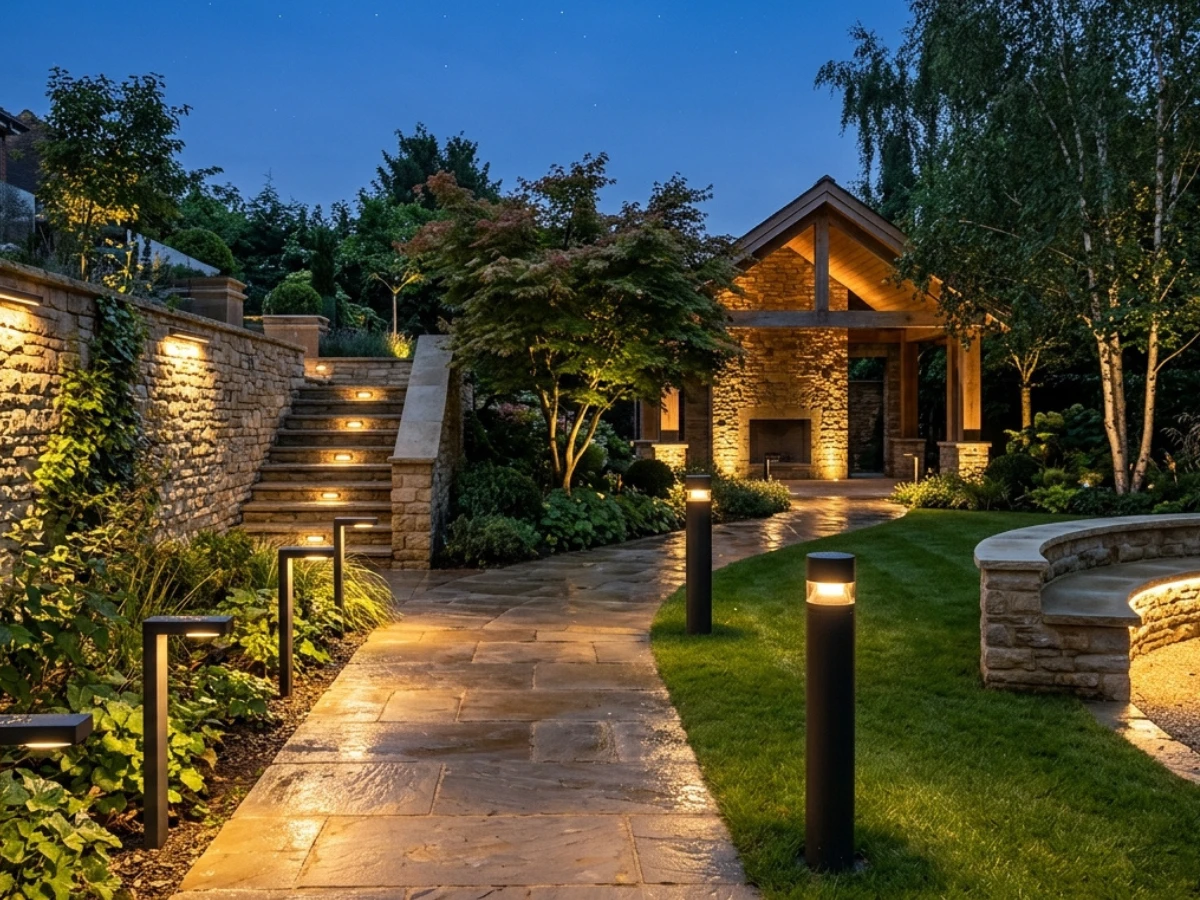
- Bollard Lights: These vertical, post-style lights are perfect for modern landscapes. They offer an architectural look while providing a wider spread of light for pathways or driveways.
- Security/Floodlights: These high-brightness, often motion-activated fixtures are about utility. They can be placed strategically to eliminate dark corners and deter intruders.
Low-Voltage Vs. Line-Voltage Landscape Lighting
When you start researching landscape lighting near me, you will hear two terms: low-voltage and line-voltage. Here’s the difference:
Low-Voltage (12V)
This is the standard used in 95% of suburbs like Edina, Eden Prairie, and Maple Grove. It needs a transformer for stepping down your home's standard 120V power to a safer, more efficient 12V. Because it is low voltage, the wiring doesn’t need to be buried as deeply as high-voltage lines. It is the perfect choice for garden beds, pathways, and tree lighting.
Line-Voltage (120V)
This option is reserved for commercial-grade curb appeal, large-scale HOA projects, or high-powered floodlighting. Unlike 12V systems, this setup does not require a transformer, as the fixtures run directly on your home's 120V circuit. While brighter, it demands stricter code compliance and deeper conduit burial to prevent damage from frost heave.
Because of the safety risks and complex NEC code requirements for line-voltage installs, this option is significantly more expensive due to the specialized labor and materials required.
Minnesota Electrical Permits and NEC Code Requirements for Outdoor Lighting
Minnesota electrical work follows the state’s specific amendments to the National Electrical Code (NEC). Many homeowners are surprised to learn that landscape lighting, specifically the line-voltage side of the transformer often requires a permit.
Why get a permit? Beyond being the law, a permit ensures a licensed inspector verifies the work. This is critical for:
- Safety Compliance: We ensure all outdoor circuits use GFCI (Ground Fault Circuit Interrupter) protection. This prevents shock in wet, outdoor areas. Any indoor work on that circuit must meet current AFCI (Arc Fault Circuit Interrupter) standards to lower the risk of electrical fires.
- Burial Depth: Minnesota frost lines are deep. The conduit must be buried at the right depth so that frost heave doesn't shift the ground and damage your lines.
- Resale Value: If you sell your home, unpermitted electrical work can create major problems during the inspection phase.
- Local Rules: Whether you live in Hennepin or Ramsey County, or in cities like Minneapolis or St. Paul, local building departments have their own specific rules and review processes. We handle these requirements to ensure your project is properly approved.
Our electricians are licensed and registered with the state of Minnesota.
Neighborhood and Property Style Considerations Across the Twin Cities Metro
Outdoor lighting needs vary across the metro based on home age, yard size, and local rules. These four property types show how project scope and costs can differ:
Older Craftsman Lots (St. Paul's Mac-Groveland)
Scope: These homes have smaller, tighter lots. A focused approach works better rather than broad floodlighting. Low-glare lights can be prioritized to highlight historic woodwork without bothering neighbors, and digging by hand is recommended to protect established tree roots.
Cost Impact: The total cost is often lower because the project size is smaller. However, labor costs per light can be slightly higher because digging by hand around old landscaping takes more time.
Newer Homes (Lakeville or Woodbury)
Scope: These properties have large yards and newer landscapes. These may need many path lights, tree spotlights, and smart systems that will connect to your home automation.
Cost Impact: The total cost is moderate to high. While it is faster to dig in large, open yards, the higher number of lights and the cost of smart control systems add to the total equipment budget.
Lakefront Properties (Wayzata or Minnetonka)
Scope: These are complex projects that must follow state Shoreland Ordinance rules. There are restrictions on how close lights can be placed to the water, and special lights are needed that shield the beam to prevent glare on the lake.
Cost Impact: The total cost is high due to the use of special, corrosion-resistant materials to handle damp environments, and the extra time needed to manage permits and environmental reviews.
HOA and Managed Communities (Plymouth or Chanhassen)
Scope: Projects in these areas are guided by community rules and often require approval from an Architectural Review Committee (ARC). These strict standards for light style, brightness, and placement must be followed.
Cost Impact: The cost is moderate and easy to calculate because the project scope is clearly defined by community rules. While unexpected additions can be avoided, the design process takes more time because plans must be approved by the HOA before starting work.
How to Install Outdoor Lighting That Lasts Minnesota Winters
If you install lighting like they do in Florida or Arizona, your system won't survive until spring. Unlike systems meant for mild climates, these are built to survive the harsh realities of a Minnesota winter:
- Frost-Depth Conduit Burial: Cables should not simply be laid on top of the soil. To combat severe frost heave, low-voltage lines must be buried at a minimum of 6 inches. For higher-voltage lines, rigid conduit is buried much deeper to ensure the system remains protected as the ground expands and contracts.
- Wet-and-Cold Rated Fixtures: Standard wet-rated fixtures may not withstand local climates. Dual-rated fixtures must be used for both moisture (snow melt) and extreme cold. While plastic housing can crack and shatter when temperatures drop to -20°F, professional-grade metal fixtures are designed to expand and contract without compromising their seals.
- Winterizing and Long-Term Maintenance: Transformers should be placed in easy-to-reach, dry locations inside NEMA 3R weather-resistant boxes. Using smart timers that automatically adjust to local sunset and sunrise times throughout the year is recommended. Additionally, applying dielectric grease to every connection stops corrosion and protects the lighting system from humidity, summer storms, and road salt.
Local Rebates That Can Offset Your Outdoor Lighting Cost
Important Note: Landscape lighting and standard outdoor wiring do not qualify for these programs. However, if your landscape work is paired with a larger, energy-efficient home upgrade that requires an electrical panel upgrade, you can still get these tax credits and rebates.
1. Xcel Energy
Xcel often provides rebates covering up to $1,500 of the project cost for upgrading your main electrical panel.
Requirements:
- Service Upgrade: This applies only when upgrading your service capacity (e.g., from 100A to 200A).
- Scope: Simple panel replacements or sub-panel additions do not qualify.
- Professional Standards: All work must be performed by a licensed electrician.
- Documentation: To apply for this rebate, your electrician must provide you with an itemized invoice that clearly lists the service upgrade, along with a copy of the closed electrical permit showing the successful inspection.
2. State-Managed Rebates (Save Energy Minnesota)
Minnesota is developing programs under the ‘Save Energy Minnesota’ initiative to provide rebates for energy-efficient home improvements. These programs are currently waiting for federal approval and are not yet available to homeowners.
DIY vs. Hiring a Licensed Outdoor Lighting Contractor
So, you like to DIY? You can absolutely install a plug-and-play, low-voltage kit from a big-box store. If it works, great. But there are risks:
- What you can safely DIY: Simple, low-voltage, plug-in kits that use an existing, outdoor-rated GFCI outlet.
- What requires a pro: Any system requiring new 120V line-voltage circuits, modifications to your electrical panel, or deep trenching near utility lines. These projects legally require a licensed Minnesota electrical contractor and a city-issued electrical permit.
- Hidden Costs of DIY: Beyond the risk of fire or injury, improper DIY electrical work can lead to failed home inspections when you try to sell, or your homeowner's insurance denying a claim if a fire is traced to unpermitted electrical work.
Why Choose Loch Monster Electric As Your Outdoor Lighting Contractor
For a system that adds real value to your home, hiring a licensed professional is the only way to ensure everything is safe, up to code, and actually works the way you want it to. When you choose LME, you get more than just lights, you get peace of mind:
- We are licensed professionals: We hold an active Minnesota Electrical Contractor License, ensuring we meet all state safety standards.
- We ensure necessary permits are pulled: We handle the entire permit process, so your project is legal, inspected, and code-compliant.
- We are fully insured: Your property and our team are protected with comprehensive liability and workers' compensation insurance.
- We warranty our work: We stand behind our installations with a clear, written warranty on both labor and materials, so you can enjoy your lighting without worrying.
What You Can Expect From Our Estimates
When you work with us, you aren't just getting a price, but a commitment to quality. We focus on safety to keep your project stress-free:
- A Consultative Design Approach: We start by listening to your vision. We walk your property with you to suggest which features to highlight, like trees, pathways, or architecture to ensure the result is exactly what you imagined.
- Transparent, No-Surprise Pricing: We provide detailed estimates that clearly show what is included. You will know exactly what you are paying for, with no hidden fees or unexpected costs.
- We Never Cut Corners: We avoid shortcuts like skipping permits, or undersized transformers and cabling. We invest in high-quality materials and robust designs to make sure your system lasts for decades, not just a few years.
Ready to Light Up Your Yard?
If you are ready to illuminate your home, take a walk through your yard and think about what features you’d like to highlight, whether it’s a specific tree, a pathway, or your home’s curb appeal. Once you have a vision in mind, contact Loch Monster Electric today for an estimate you can count on!
Frequently Asked Questions
Yes, if your installation includes any 120V line-voltage work, which is typically required for the transformer connection, an electrical permit must be obtained.
Low-voltage (12V) uses a transformer to lower the power, which is safer and easier to maintain. It is the standard for most homes. Line-voltage (120V) runs directly off your home’s power circuit. It is rarely used for landscape lighting because it has higher safety risks and needs stricter installation standards.
Hardwired systems are recommended because they are more reliable and brighter. Solar or battery lights often struggle to provide consistent performance, especially in Minnesota's extreme climate. Hardwired systems are built for year-round safety and use.
Yes, as long as you choose high-quality metal fixtures like brass or copper, and hire a professional to ensure they are buried deep enough and properly sealed against moisture.
Yes, you should hire a licensed electrical contractor. While landscapers are great at design, landscape lighting is actually an electrical project. A licensed master electrician ensures the system meets the Minnesota Electrical Code, is safe from fire hazards, and is built to last. Call Loch Monster Electric today for all your landscape lighting needs.