The Business Owner's Guide to Installing Workplace EV Charging Stations
Updated: Jun 17, 2026
Planning to upgrade your fleet to EVs? Employees asking for workplace charging? Learn the benefits of commercial EV charging, compare Level 2 and Level 3 options, and explore rebates to future-proof your business.
If you run a business or manage a corporate facility here in Minnesota, you’ve probably noticed more and more electric vehicles (EVs) parked in your lot. Maybe your employees are asking where they can plug in during their shift. Or perhaps you’re looking at your company’s line of delivery vans and wondering if it’s time to trade the gas pumps for charging plugs.
We get asked about commercial workplace EV charging installations all the time. Understanding the world of commercial charging can feel like trying to find your way through a blizzard without headlights. But don't worry, we’re here to break down the process, the costs, and the local perks so you can make the smartest decision for your property.
Why Minnesota Businesses Are Plugging In
Whether your office is tucked away in a quiet suburb or right in the heart of the metro, adding charging stations isn’t just about looking modern. It’s a practical business move that pays off in two major ways.
Powering Up Employee Retention and Attraction
Think of EV charging as the new corner office or free Friday donuts. Offering charging as an employee benefit is a massive retention tool. When your team can plug in at 8:00 AM and head home with a full battery at 5:00 PM, you’ve just solved one of their biggest daily logistical hurdles. It shows you care about their lifestyle and the environment we all share.
Fleet Electrification: Going Green
If your business relies on a fleet of service vans or delivery trucks, switching to electric can save you a bundle on maintenance and fuel. Because electric drivetrains have fewer moving parts, you'll spend less time dealing with oil changes and more time serving your customers.
Types of Commercial Workplace EV Chargers
Not all chargers are created equal. When planning your installation, you’ll need to choose the hardware that matches how long vehicles will actually be parked at your facility.
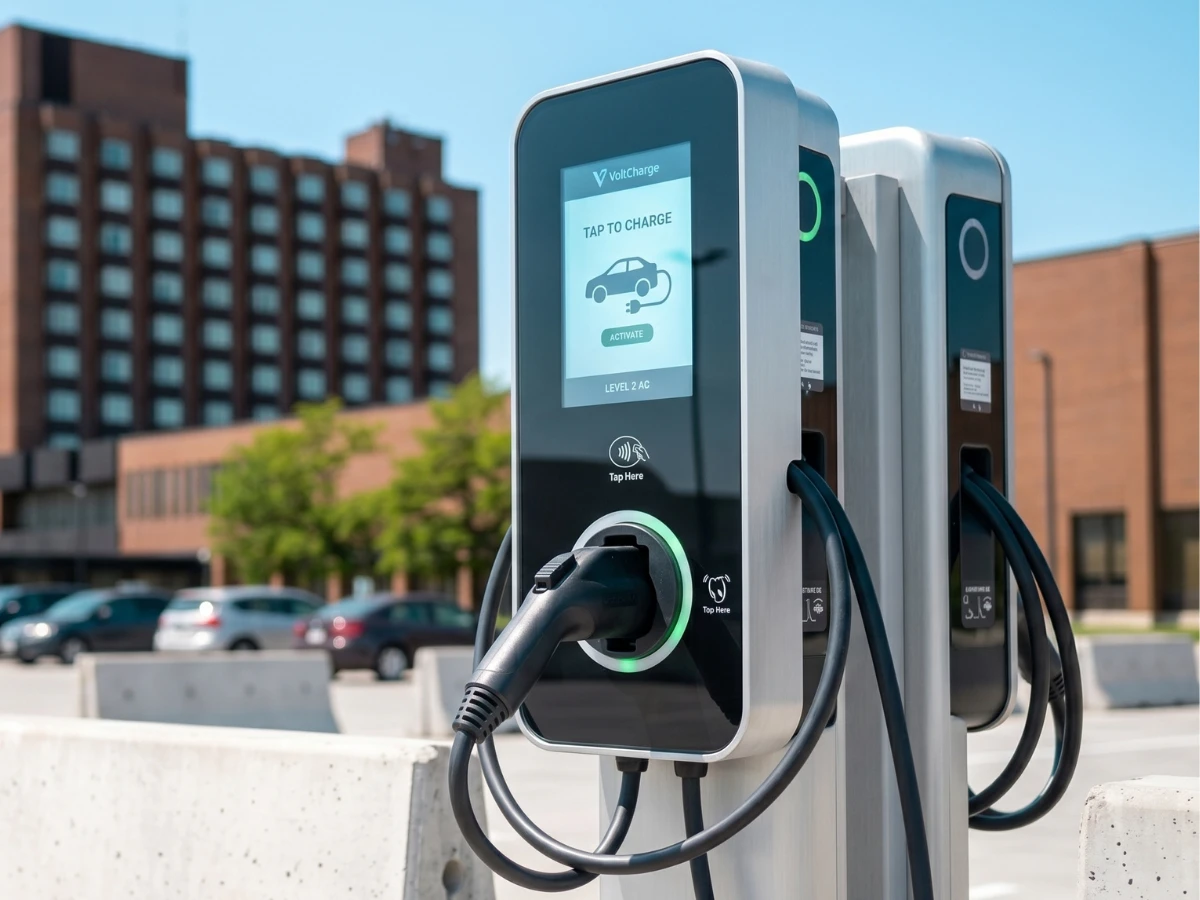
The Workplace Workhorse: Level 2 Charging
For most offices and corporate campus parking lots, Level 2 chargers are the sweet spot. Running on 208V or 240V power, they add about 15 to 25 miles of range per hour. Since your employees’ cars are sitting idle for eight hours anyway, a Level 2 charger will easily top them up by the end of the workday.
The Rapid Charge: Level 3 DC Fast Chargers
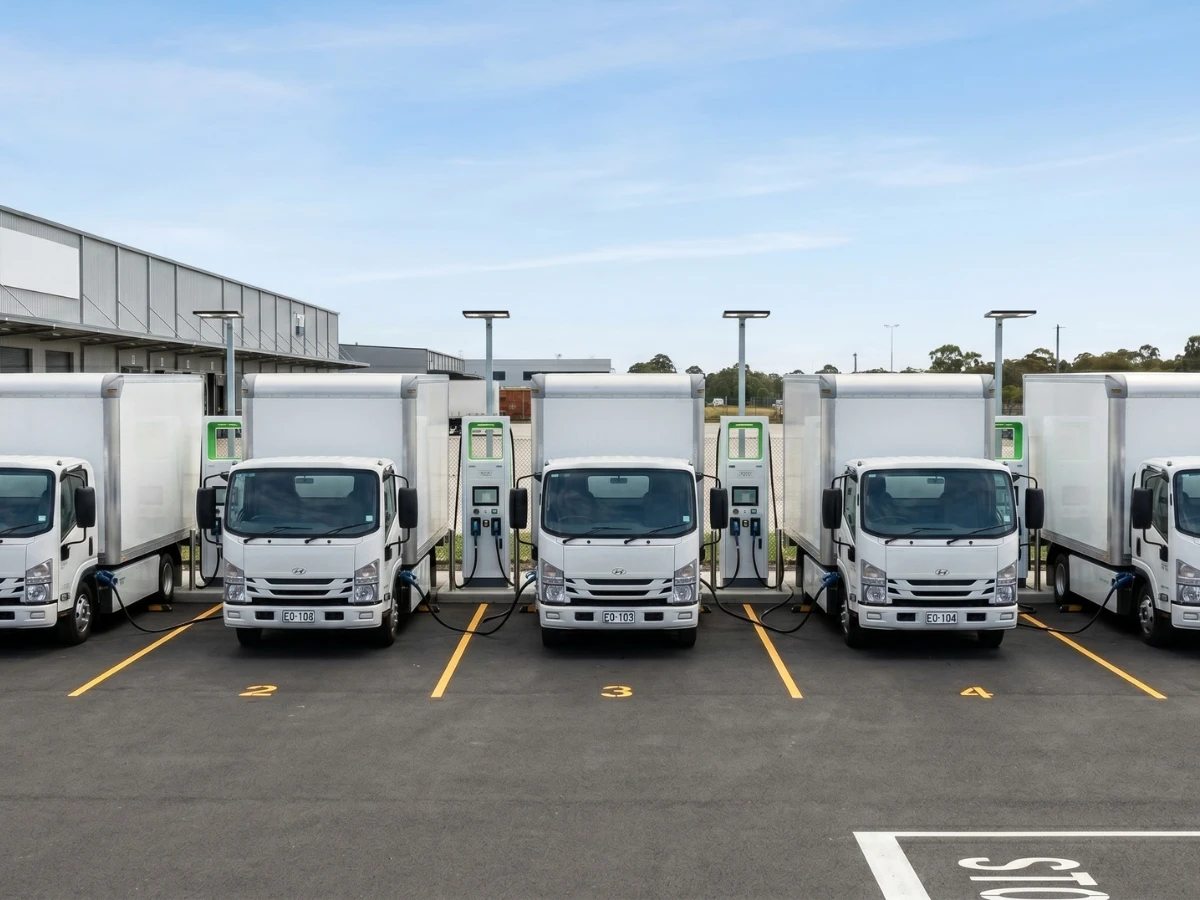
If you run a delivery business where trucks need to load up, head out, return, and charge up fast for a second run, you’ll want to look at Level 3. These systems require a robust 480V three-phase electrical supply.
However, speed comes with a price tag. The Level 3 DC fast charger installation cost is significantly higher than Level 2 due to the specialized equipment, utility coordination, and substantial infrastructure upgrades required.
Commercial EV Charger Comparison: Level 2 vs. Level 3
Feature / Consideration | Level 2 Charger | Level 3 DC Fast Charger |
Electrical Supply Required | 208V or 240V (Single-Phase or Three-Phase) | 480V (Three-Phase) |
Power Output (kW) | 7.2 kW to 19.2 kW | 50 kW to 350+ kW |
Charging Speed (Range) | Adds ~15 to 40 miles of range per hour | Adds ~100 to 200+ miles of range in just 15–30 minutes |
Utility Impact (Transformer Upgrades) | Low to Moderate: Usually fits within existing commercial panel capacity, or requires a simple panel upgrade. | High: Almost always requires a dedicated, utility-owned transformer upgrade out front. |
Operational Costs (Demand Charges) | Low: Steady, predictable draw. Low risk of triggering utility peak demand spikes. | High Risk: Instantaneous power draw is massive. Can heavily trigger utility peak demand charges if unmanaged. |
Best Suited For | - Offices & Corporate Parking Lots - Apartments / Condos - Employees on 8-hour shifts - Overnight company fleet vans | - Delivery fleets with tight turnarounds - Highway rest stops & retail centers - Short-stay commercial properties |
Commercial EV Charging Installation Process: What to Expect
An EV charger isn’t just a fancy outdoor outlet; it’s a high-draw electrical appliance. Getting it up and running safely requires a careful, step-by-step approach.
Site Assessment and Local Zoning
Before we turn a single screw, we have to look at your physical property and your current electrical capacity. First, we’ll map out where the chargers should go. This is ideally close to your existing electrical room to keep trenching and conduit run costs down. Best of all, we handle the permitting and paperwork so you can rest easy knowing your project meets all local zoning laws, parking requirements, and ADA accessibility guidelines.
Tackling Commercial Property Electrical Upgrades
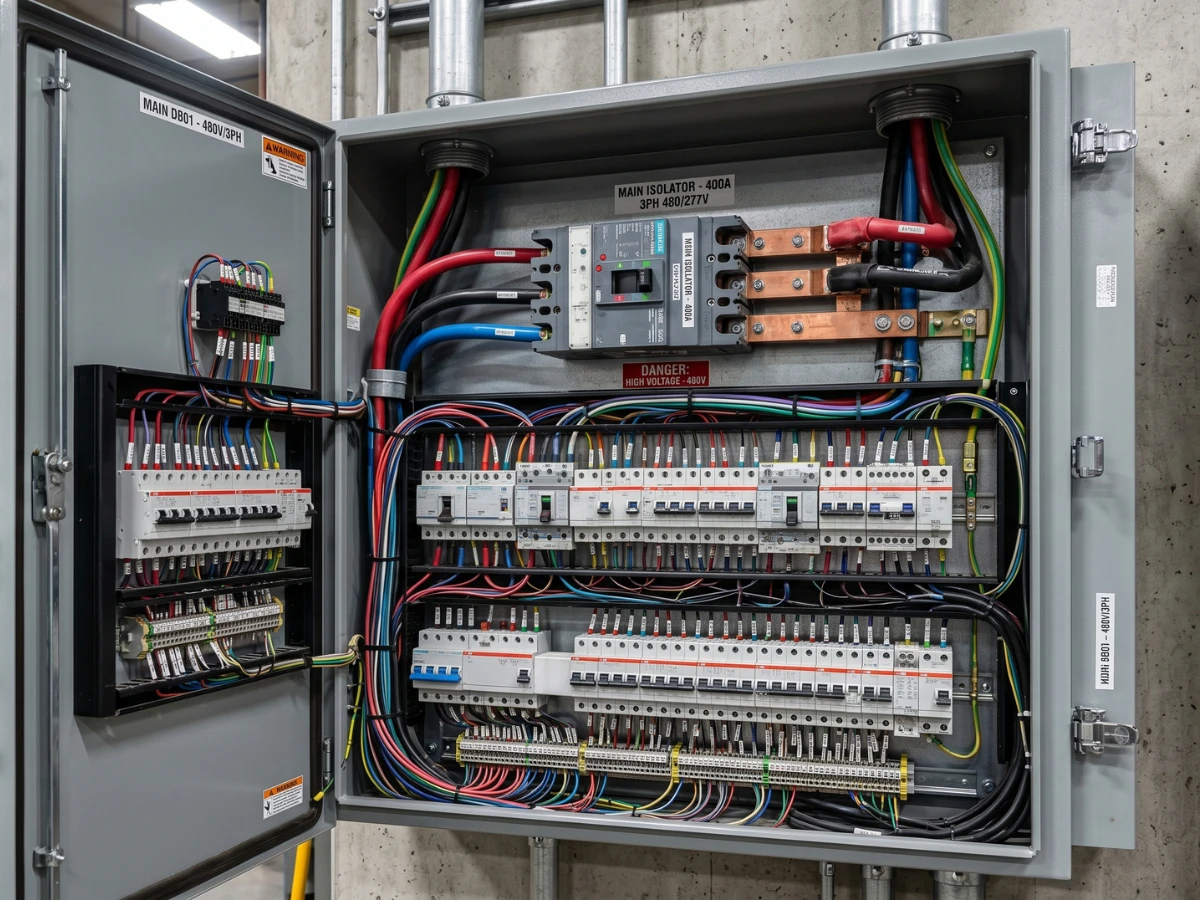
Your building's electrical panel is like a highway. If it’s already packed with traffic from your HVAC, lighting, and machinery, adding multiple EV chargers can cause a major traffic jam. To determine if your current system can handle the new load, we perform detailed load calculations to see exactly how much spare power you have.
If your building is an older classic, we may need to carry out commercial panel upgrades first. This gives your system the physical breaker space and beefed-up capacity it needs to handle a continuous, heavy electrical draw without tripping breakers or overheating.
Surviving Minnesota's Cold Winters
Let’s address the elephant in the snowbank: our Minnesota winters. Extreme cold can temporarily reduce an EV's battery efficiency, meaning cars will need to plug in more frequently during January and February.
When installing chargers, we make sure to use rugged, weather-rated commercial hardware (usually NEMA 4X rated) designed to withstand freezing temperatures, heavy snow, and blowing salt. We also recommend smart charging software (OCPP compliant) that helps manage power delivery smoothly, even when the wind chill drops below zero.
Incentives for Installing Commercial EV Charging
While the upfront investment for commercial charging can seem daunting, there are incredible financial incentives available right here in Minnesota to soften the blow:
- Federal Tax Credits: The Alternative Fuel Vehicle Refueling Property Credit can cover a substantial percentage of your installation costs.
- Utility Rebates: Twin Cities area utilities like Xcel Energy and Dakota Electric offer fantastic commercial rebates. In many cases, they will cover a large portion of the infrastructure costs (the wiring, conduit, and panel work needed to prep the site).
- State Grants: The Minnesota Pollution Control Agency (MPCA) periodically offers grant programs specifically designed to fund community and workplace charging infrastructure.
As experienced commercial EV charging contractors MN business owners trust, the team at Loch Monster Electric will help you identify and apply for these local incentives to maximize your return on investment.
Things to Consider Before Breaking Ground
Beyond the budget and electrical panels, there are three practical, real-world factors that will decide how smoothly your workplace chargers operate day-to-day.
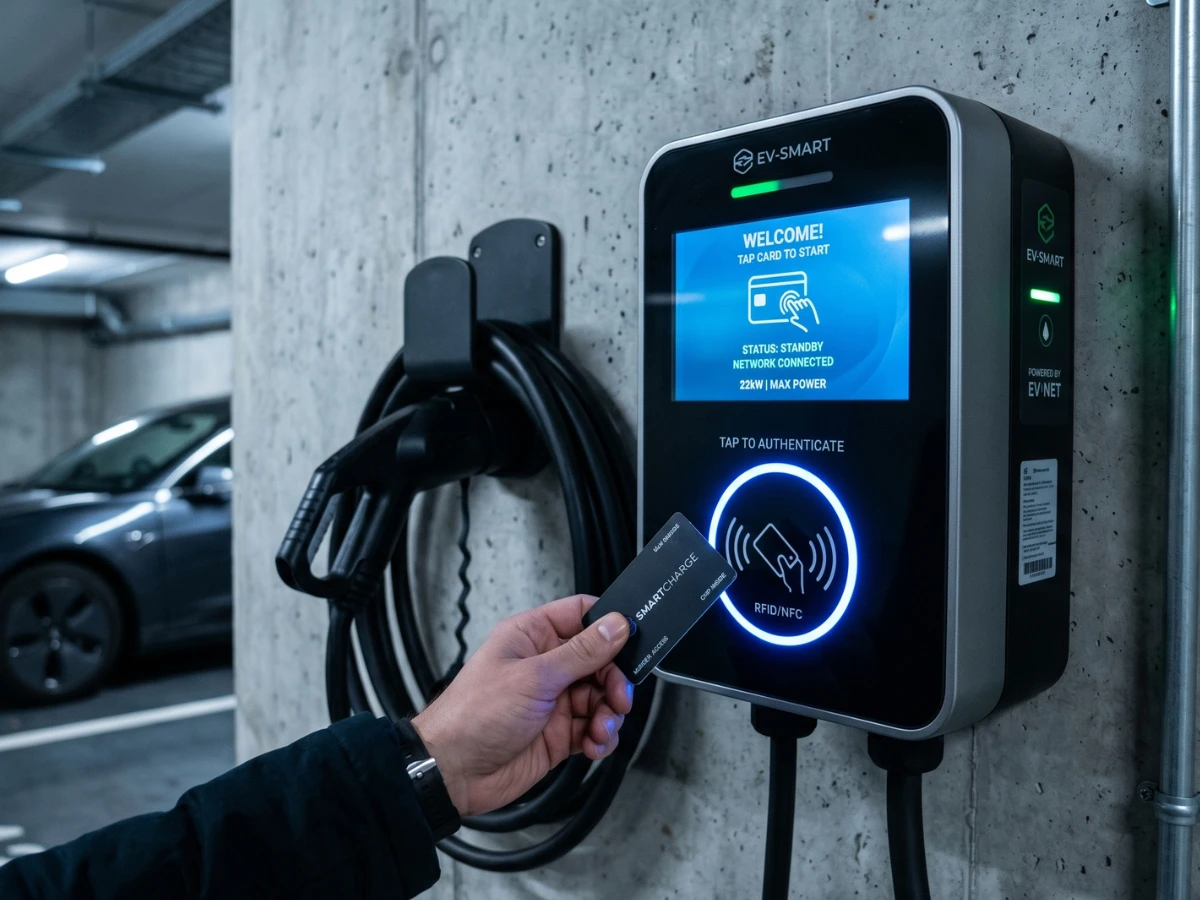
1. Smart vs. Dumb Chargers (Networked vs. Non-Networked)
Do you just want to plug a vehicle in and let it charge, or do you need to control who uses it and track the electricity?
- Non-Networked ("Dumb") Chargers: These operate like standard outlets. Anyone can plug in, and they charge at a fixed rate. They are cheaper upfront but offer no control or data tracking.
- Networked ("Smart") Chargers: These connect to cellular or Wi-Fi networks. They allow you to set charging schedules, charge employees or the public for electricity, and track environmental compliance data. For most businesses, smart chargers are essential for managing utility costs and restricting access.
2. Future-Proofing
If you only need two chargers today, don’t just plan for those two. Trenching and running conduit through asphalt is the most expensive part of the physical installation process. We always recommend future-proofing your property by laying down enough underground conduit today to support your long-term charging goals. This prevents you from having to tear up the parking lot twice.
3. Dynamic Load Management (DLM)
Dynamic Load Management does more than just monitoring how many cars are plugged in. DLM actively monitors the overall, real-time power draw of your entire building. If building demand spikes, it safely throttles power to the chargers. When the demand drops (such as after hours), it channels that freed-up energy back to the EVs, allowing you to maximize charging speed without overloading your electrical service.
Ready to Power Your Business Forward?
Installing EV chargers at your workplace doesn't have to be a headache. When you partner with local experts who know the Twin Cities area inside and out, the process is smooth, compliant, and tailored to your specific budget.
If you’re ready to chat about what an EV installation would look like for your property, drop us a line at Loch Monster Electric. We’ll come out, take a look at your panel, run the numbers, and help you get ready for the road ahead.
Give us a call today, and let's get your business plugged in!
Frequently Asked Questions
Absolutely! By installing smart networked chargers, you can set up a system where employees charge for free (or at a discounted rate) using an app or RFID card, while visitors or the public pay a standard rate to help you offset your utility bills.
The physical installation of the chargers usually takes just a few days. However, the planning phase, including pulling local permits, coordinating with your utility company, and sourcing any necessary panel upgrades, typically takes anywhere from 4 to 8 weeks.
No, it’s not strictly necessary. High-quality commercial chargers are sealed against rain, ice, and snow. However, keeping the charging bays plowed and clear of snow drifts is highly recommended so your team can easily access the cords during winter.