
Planning a Remodel? The Guide to Home Renovation Electrical Requirements
Updated: Jun 30, 2026
Before you hang drywall on your kitchen remodel or basement finish, make sure your hidden infrastructure is code-compliant. Find out the essential home renovation electrical requirements you need to know—from dedicated appliance circuits to life-safety GFCI boundaries. Learn how to clear your rough-in inspection the first time around.
Picture this: the drywall is down and your dream layout is perfectly studded out. It’s an exciting milestone, but behind those open walls lies the most critical phase of your project—the electrical rough-in.
Many self-managed remodelers assume they can simply extend existing wiring. In reality, modern NEC rules treat major renovations like brand-new builds. Before closing your walls, let’s break down the essential safety codes and specialized requirements protecting your investment.
Before moving ahead, call us at 763-292-1191 to schedule a service request.
The Foundation: The Service Panel Audit
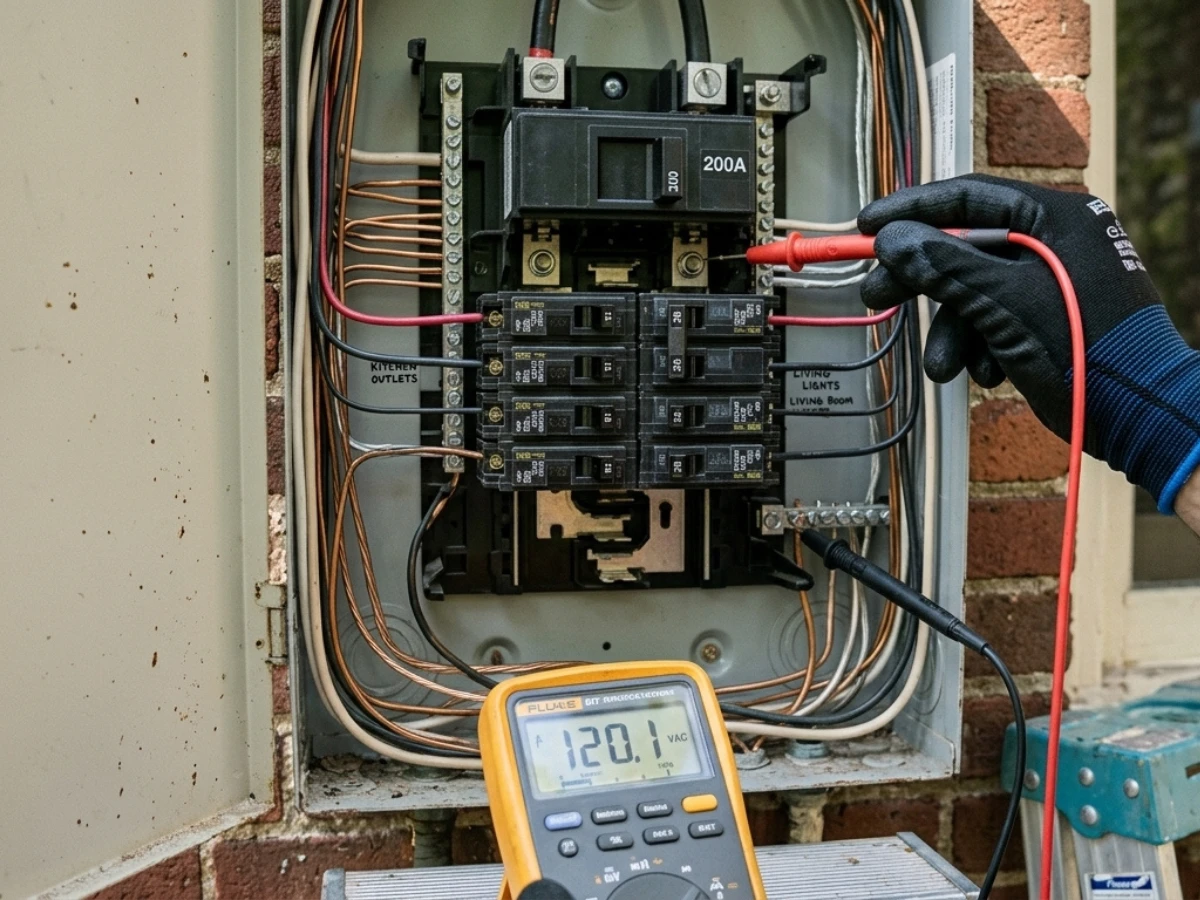
Before running a single foot of wire or mounting an outlet box, you must check the heart of the home’s power supply: the main electrical panel.
Knowing Your Amperage Limits
Every residential property has a strict mathematical limit on the volume of current it can safely distribute. Older homes throughout the Twin Cities metro or western Wisconsin border communities frequently operate on outdated electrical services:
- 100-Amp / 150-Amp Service: Common in historic or mid-century neighborhoods. These networks are often already pushing their limits before any remodeling begins.
- 200-Amp Service: The standard minimum requirement for modern living, necessary to handle expanded floor plans and high-draw equipment.
If your project involves a basement finish or a modern kitchen expansion, your existing panel infrastructure might already be completely maxed out.
The Danger of Empty Slots
A common pitfall for self-managed remodelers is looking inside a breaker box, seeing a few empty physical slots, and assuming they have plenty of room to grow. Physical space does not equal electrical capacity. A true code-compliant remodel requires an upfront calculation of the total electrical load to ensure your demand won't exceed safe parameters when introducing new features, such as:
- Heavy kitchen appliances
- Dedicated basement sub-panels
- Future EV charging stations
Real-World Risk: "Tandem" Breakers
In the field, while troubleshooting older panel boards, electricians routinely uncover situations where previous installers forced "tandem" or "twin" breakers into a panel to squeeze out a few more circuits. This shortcut bypasses safe design practices and pushes the internal busbars to dangerous thermal limits.
Why It Matters to GCs and Remodelers
For general contractors and self-managed remodelers, prioritizing this audit early saves your project timeline. Discovering that a system requires a full utility service upgrade midway through a project will bring production to a screeching halt while you wait weeks for utility disconnect schedules and municipal permitting. Inspecting the panel first ensures your skeleton can safely support its new skin.
Kitchen Renovations: Powering Modern Culinary Spaces
Opening up a kitchen wall to create an expansive, open-concept living area completely transforms how electricity must be distributed. Because kitchens are intensive energy environments where high-wattage heating elements and motorized units run simultaneously, safety codes are exceptionally strict.
The Small Appliance Branch Circuit (SABC) Mandate
You cannot simply branch your kitchen convenience outlets off a generic dining room or living room circuit.
- The Rule: The National Electrical Code (NEC) mandates a minimum of two independent, 20-amp Small Appliance Branch Circuits (SABCs).
- The Catch: These circuits must solely serve countertop receptacle outlets. No lighting loads are allowed.
This infrastructure design ensures that running a high-draw toaster and a premium espresso machine side-by-side won't instantly plunge your kitchen workspace into darkness.
Dedicated Circuit Requirements for Appliances
Beyond your standard countertop plugs, modern remodeling guidelines enforce strict dedicated circuit requirements for appliances. A dedicated circuit means a single home-run line goes directly from your main breaker panel to one specific appliance, eliminating downstream voltage drops.
- The Refrigerator: Best trade practice dictates giving your refrigerator its own dedicated 15-amp or 20-amp circuit. This prevents a nuisance trip from a countertop appliance from cutting power to your fridge while you are away, saving you from ruined food.
- The Dishwasher & Garbage Disposal: These units draw significant structural current. Modern code frequently requires individual dedicated circuits for each, especially if the dishwasher features a high-temperature sanitizing cycle.
- Over-the-Range Microwaves & Built-In Ovens: Built-in microwaves utilize high-frequency power spikes that demand an independent 20-amp line.
The Evolution of Kitchen Island Outlets
If your layout includes a large structural island, be aware of recent major shifts in island receptacle rules. Traditional codes mandated physical outlets on the sides of the island base, which frequently resulted in dangerous scenarios where children could pull on dangling appliance cords.
Modern guidelines have shifted focus away from forced side-mount plugs, leaning heavily toward flush countertop pop-up receptacles or keeping outlets tightly limited to specialized, protected work surfaces to reduce tripping hazards.
Flawless GFCI Code Compliance
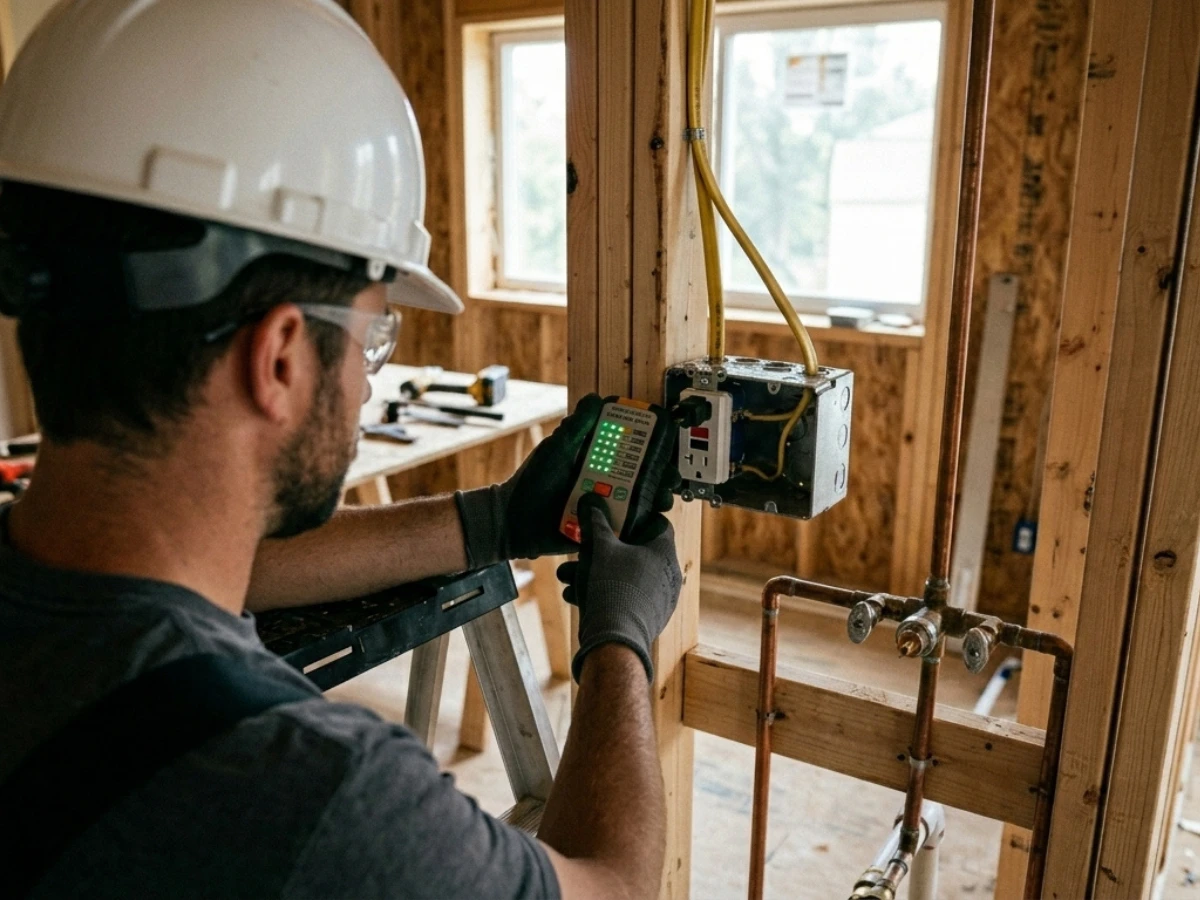
When dealing with open plumbing lines and countertop workspaces, achieving flawless GFCI code compliance is the centerpiece of your renovation safety plan.
- The Sink Boundary: Any outlet located within 6 feet of the outside edge of a sink, wet bar, or laundry basin must be GFCI protected.
- Countertop Surfaces: All receptacles serving kitchen countertop work surfaces require active shock protection.
Using experienced technicians ensures these units are not miswired downstream, saving your project from agonizing "phantom tripping" or failed compliance checks during your rough-in inspection.
The Basement Finish: From Raw Studs to Living Space
Transforming a cold, unfinished lower level into bedrooms, a family media room, or a custom wet bar is one of the fastest ways to expand your usable square footage. However, a safe, code-compliant basement finish electrical rough-in requires flawless execution before the studs disappear behind drywall.
The Rough-In Checklist
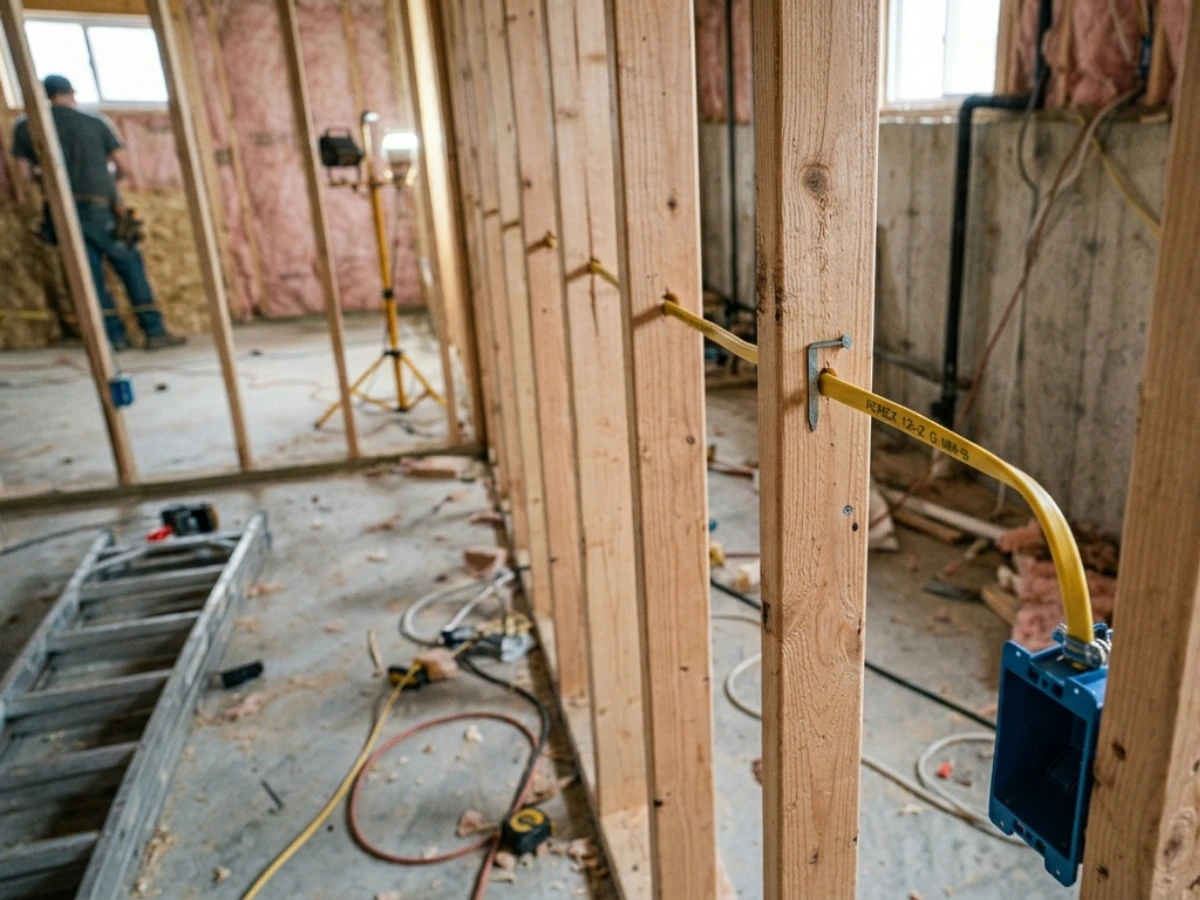
During a rough-in assessment, municipal inspectors across Minnesota and Wisconsin look for specific structural wiring parameters:
- Wire Pulling & Protection: Non-metallic sheathed cable must be routed through cleanly bored holes centered in structural wooden studs. This design prevents future drywall screws from puncturing live conductors.
- Box Depth & Positioning: Electrical boxes must sit flush with the anticipated depth of the finished drywall layer.
- Securing and Stapling: Cables must be physically anchored with approved trade staples within 12 inches of entering any electrical junction box, and supported at regular intervals along the structural framing.
The Arc-Fault Circuit Interrupter (AFCI) Rule
A major area where self-managed remodelers and general contractors get caught off guard is the universal application of Arc-Fault Circuit Interrupter (AFCI) technology.
Unlike a standard circuit breaker that only trips during a massive overcurrent surge, an AFCI breaker utilizes advanced internal microprocessor diagnostics to recognize erratic sparking patterns. These patterns are often caused by hidden hazards like a loose wire terminal wire or a wire pinched by a baseboard nail. Modern safety codes strictly mandate AFCI protection for virtually all newly established living spaces, including finished basements, dens, recreation rooms, and hallways.
Sub-Panels vs. Home Runs
If your layout is highly intensive—featuring multiple multi-way switch matrices, home theater equipment, or a wet bar—you face a choice: pull twenty separate wiring runs across the home or install a dedicated basement sub-panel?
If your main breaker box is located on the opposite side of the house, running a single, high-capacity feeder line to a local sub-panel is often the smartest configuration. This strategy limits voltage drop across your circuits, minimizes routing damage to overhead joists, and leaves future electrical modifications clean and accessible.
Interlinked Life Safety Alarms
If your basement expansion includes adding a legally recognized bedroom, code mandates adding an egress window alongside dedicated safety alarms. During the rough-in stage, newly placed smoke and carbon monoxide detectors must be physically or wirelessly interlinked with the home’s existing upper-floor alarm matrix. This ensures that if a hazard triggers an alarm in the basement utility room, every alarm throughout the upper levels sounds simultaneously.
Water and Electricity: Mastering GFCI Protection
When water and electrical systems closely interact, life-safety compliance is entirely non-negotiable. This is where achieving absolute GFCI code compliance becomes the centerpiece of your structural renovation strategy.
What Is GFCI Code Compliance?
A Ground Fault Circuit Interrupter (GFCI) is a smart safety system engineered to continuously monitor the balance of current moving between the hot and neutral conductors.
If the device senses a microscopic leakage of current as small as 4 to 6 milliamperes—indicating that electricity is escaping down an unintended path, such as through a damp floor or a human body—the mechanism severs active power in milliseconds.
Where Is It Mandated?
To pass local building inspections, individual receptacles must feature active ground-fault mitigation in all high-risk zones:
- Sinks & Wet Bars: Within 6 feet of the outside edge of any sink, faucet, or water basin.
- Kitchen Workspaces: All receptacles serving countertop work surfaces.
- General Safety Areas: All bathrooms, powder rooms, unfinished basements, crawl spaces, utility zones, and outdoor convenience outlets.
The Pitfall of "Daisy-Chaining"
A frequent field issue we encounter with DIY builds and rushed subcontractors is the improper "daisy-chaining" of GFCI units.
If you feed secondary, standard outlets downstream using the wrong line and load terminals on the master GFCI receptacle, you can introduce agonizing "phantom tripping" across the circuit. Worse, you might leave downstream plugs completely unprotected against fatal shock hazards.
Field Insight: Testing vs. Guessing
In the day-to-day troubleshooting experience across Minnesota and Wisconsin, our team systematically tests these circuits with digital multimeters and plug-in analyzers rather than guessing.
Remember, concrete basement walls are prone to condensation, and kitchens generate heavy ambient moisture. These environmental stresses pull hidden humidity into your framing boxes. Secure, expert wiring prevents that localized moisture from constantly blowing your breakers.
Why Outsourcing Specialized Electrical Work Protects Your Project
Remodeling is a complex exercise in logistics. Whether you are a general contractor keeping multiple crews on schedule or an ambitious homeowner managing your own project, your time is finite. Every hour you spend trying to interpret localized municipal code amendments in Minnesota or Wisconsin, or tracing a complicated three-way switch matrix, is money lost and production time wasted.
Your Protective Firewall
Partnering with a specialized residential remodeling electrician provides a protective firewall for your entire build. Instead of guessing your way through structural open walls, outsourcing your infrastructure needs ensures complete legal and operational protection:
- Permitting & Inspections: We pull the structural electrical permits and coordinate face-to-face with local municipal inspectors for both the rough-in and final reviews.
- Heavy Trade Execution: Our team handles the intensive structural physical work, from running high-capacity feeder lines to precision box placement.
- Master License Protection: Every foot of wire we secure is backed directly by our licensed master credentials, removing all personal liability from your plate.
The Loch Monster Electric Differentiator
At Loch Monster Electric, we don't buy into the predatory flat-rate pricing structures that dominate the modern home service market. We never subject our clients to high-pressure sales pitches, hidden administrative fees, or unnecessary upsells.
We operate strictly on a transparent Time & Materials model. You pay honestly for the exact elite trade precision, specialized diagnostic tools, and materials needed to execute your unique project safely and efficiently. We focus entirely on honest communication and uncompromised trade compliance, giving you absolute peace of mind behind your drywall.
Bring Technical Precision to Your Open Walls
Remodeling your kitchen or finishing a lower level adds massive long-term value to your residential property. However, those beautiful surface updates are only as reliable as the hidden infrastructure skeleton running behind your drywall. Executing your structural wiring correctly the first time eliminates the nightmare of reopening finished spaces down the road to correct an overlooked code failure.
- For Homeowners & Self-Managed Remodelers: Ready to ensure your upcoming basement finish or open-concept kitchen matches every local safety framework perfectly? Let our licensed team handle your rough-in with total trade precision.
- For General Contractors: Looking for an efficient, technical local subcontractor who respects your strict production schedule, communicates clearly, and takes the stress of municipal electrical code updates off your plate? Let’s partner on your next build.
Connect with Loch Monster Electric today to safeguard your residential investment.
Frequently Asked Questions
Modern electrical codes require dedicated circuits for high-draw kitchen appliances to prevent voltage drops. Your refrigerator, dishwasher, garbage disposal, and over-the-range microwave each need their own independent lines. A dedicated 15-amp or 20-amp run ensures these units operate safely without tripping breakers when other countertop appliances are running simultaneously.
If you are adding a finished basement or a modern kitchen expansion, your existing 100-amp or 150-amp service may lack the necessary capacity. A residential remodeling electrician will calculate your total structural electrical load to determine if a utility service panel upgrade is required to support the new demand safely.
Ground Fault Circuit Interrupter (GFCI) protection is legally mandated in high-risk moisture zones. This includes all kitchen countertop work surfaces, any receptacle located within 6 feet of the outside edge of a sink or wet bar, and all bathrooms, powder rooms, unfinished or finished basements, and outdoor convenience outlets.
GFCIs protect against fatal shocks by detecting current leakages near moisture sources. AFCIs (Arc-Fault Circuit Interrupters) use advanced microprocessor diagnostics to detect hazardous sparking patterns caused by loose or damaged wiring inside walls. Modern codes require AFCI protection for virtually all newly established living spaces, including finished basement rooms.
A code-compliant basement bedroom rough-in requires non-metallic sheathed cable to be routed securely through centered stud holes and stapled within 12 inches of flush junction boxes. Additionally, you must install AFCI protection and physically or wirelessly interlink new smoke and carbon monoxide alarms with the home's existing upper-floor alarm matrix.