How Much Does Home Surge Protection Cost in Minnesota?
Updated: Jul 23, 2026
Learn how much home surge protection costs in Minnesota and what changes the price in the Twin Cities. This easy guide breaks down average installation costs, common warning signs of power surge damage, key safety options, and simple tips to keep your household electronics safe.
One lightning strike or power glitch can instantly fry thousands of dollars in home electronics, from your smart thermostat to your kitchen fridge. In the Twin Cities, where summer storms and winter ice test our power grid, whole-house surge protection isn't an extra luxury. It is essential for your home.
At Loch Monster Electric, we talk to homeowners every week who ask: How much does home surge protection cost in Minnesota, and is it really worth the money? Let’s break down the real numbers, look at what drives the price, explore the type of protection your home needs, and spot the clear warning signs that show your home has already taken surge damage.
If you’re ready to speak with someone now, call 763-292-1191 or fill this contact form.
Home Surge Protection Cost in the Twin Cities
For a standard installation performed by a licensed Minnesota electrician, here is a typical home surge protector cost breakdown:
Item | Estimated Cost |
Home Surge Protector (Parts and Fixtures) | $250 – $300 |
Professional Labor (1 to 2 hours) | $350 – $500 |
Total Project Estimate | $600 – $800 |
Please note: These figures are estimates. Your final quote may vary based on your home's unique requirements.
This standard price covers a reliable surge protector mounted on a modern electrical panel with open breaker spots. If your home needs panel upgrades or grounding repairs before wiring the unit, those services will raise the total cost. However, for a simple setup on a healthy panel, you get instant protection against daily power drops and sudden voltage spikes.
To learn more about why power surges happen, how surge protectors keep your home appliances safe, and the installation process, read our whole house surge protector installation guide.
What Drives the Home Surge Protection Cost for Minnesota Homeowners
Your home surge protector installation cost depends on a few key factors. These include the type of device you pick, your electrical panel's condition, home size, and local city permits. Understanding these details shows why two quotes can differ:
1. Type of Surge Protector
The model you choose is a major driver of equipment and setup costs:
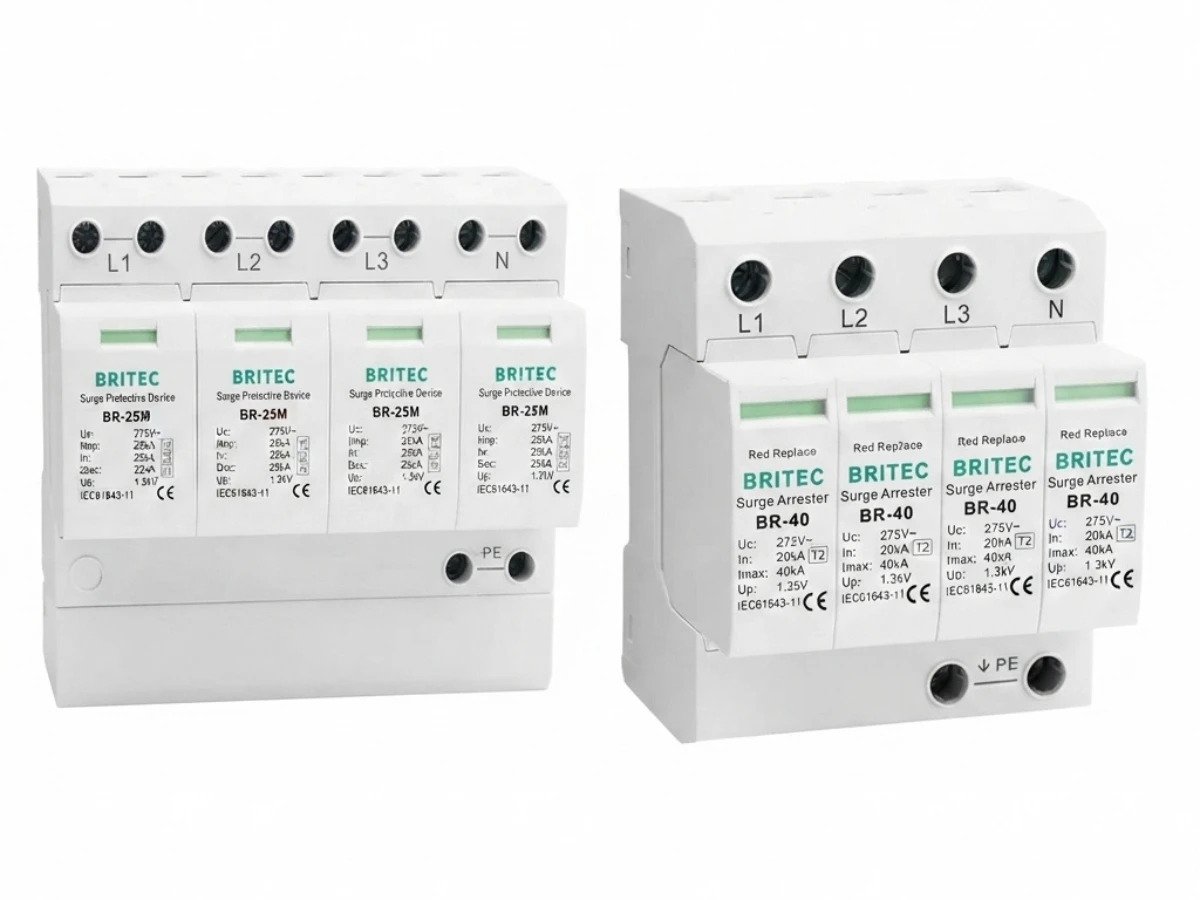
Type 1 Surge Protectors: These units attach outside your main panel on the utility side. They act as your first line of defense against big external surges, like lightning hits or power grid switches.
Type 2 Surge Protectors: These units mount directly inside or next to your main electrical panel. They are the most popular choice for homes. They stop internal spikes from heavy appliances like AC units and refrigerators, while also blocking outside surges.
2. Home Size and Subpanels
Larger homes often have extra electrical subpanels. You might find these in a detached garage, workshop, or finished basement. Protecting these extra panels requires buying and installing extra surge units, which adds to your total cost.
3. Electrical Panel Space and Capacity
To install a whole-house surge unit, your panel needs two empty, side-by-side breaker slots. The unit uses these slots to connect to both 120-volt lines feeding your home. In older homes with 100-amp panels, these slots are often full. If your panel lacks space or is overloaded, an electrician must add a subpanel or upgrade your service first.
To learn more about this upgrade process and why your home needs it, read our 200 amp panel upgrade guide.
4. Home Grounding System Requirements
A surge protector does not absorb excess power. Instead, it works like a safety valve that sends high-voltage spikes harmlessly into the earth. For this system to work, your home must have proper grounding, including dual ground rods and water pipe bonding. If an older home lacks a solid ground path, an electrician must install new grounding hardware first.
5. Local Permits and Safety Code
Most Twin Cities communities including Minneapolis, St. Paul, and Bloomington require an electrical permit for panel work. A permit covers local filing fees and an inspection by a licensed official. This step ensures your wiring meets National Electrical Code (NEC) standards and protects your home insurance coverage.
Minneapolis-Area Permit Requirements for Surge Protection
In Minneapolis, St. Paul, and Bloomington, licensed contractors must get an electrical permit for a surge protection installation. A permit means a local city inspector checks the final job. The inspector makes sure all ground wires, bonding, and panel connections follow safety rules.
Skipping a permit can cause big problems when you sell your home, as inspectors flag unpermitted panel work. Your insurance company may also deny claims if unpermitted work causes a fire or electrical damage.
Whole-House Surge Protector vs. Surge Protector Outlets: What MN Homes Actually Need
Many homeowners think that plugging electronics into a basic power strip offers total protection. In reality, keeping a Twin Cities home safe requires a two-part defense strategy.
Whole-House Panel-Level Protection
A whole-house unit guards your entire electrical system. Placed right at your main panel, it stops large voltage spikes before they reach your home's wiring. This protects built-in equipment that power strips cannot reach, such as your furnace circuit board, smart thermostat, kitchen appliances, and ceiling fans.
Point-of-Use Surge Protector Outlets
These are the quality surge strips and plug-in outlets you use for computers, TVs, and gaming consoles. They work as a final safety layer, catching smaller voltage shifts that make it past the main panel.
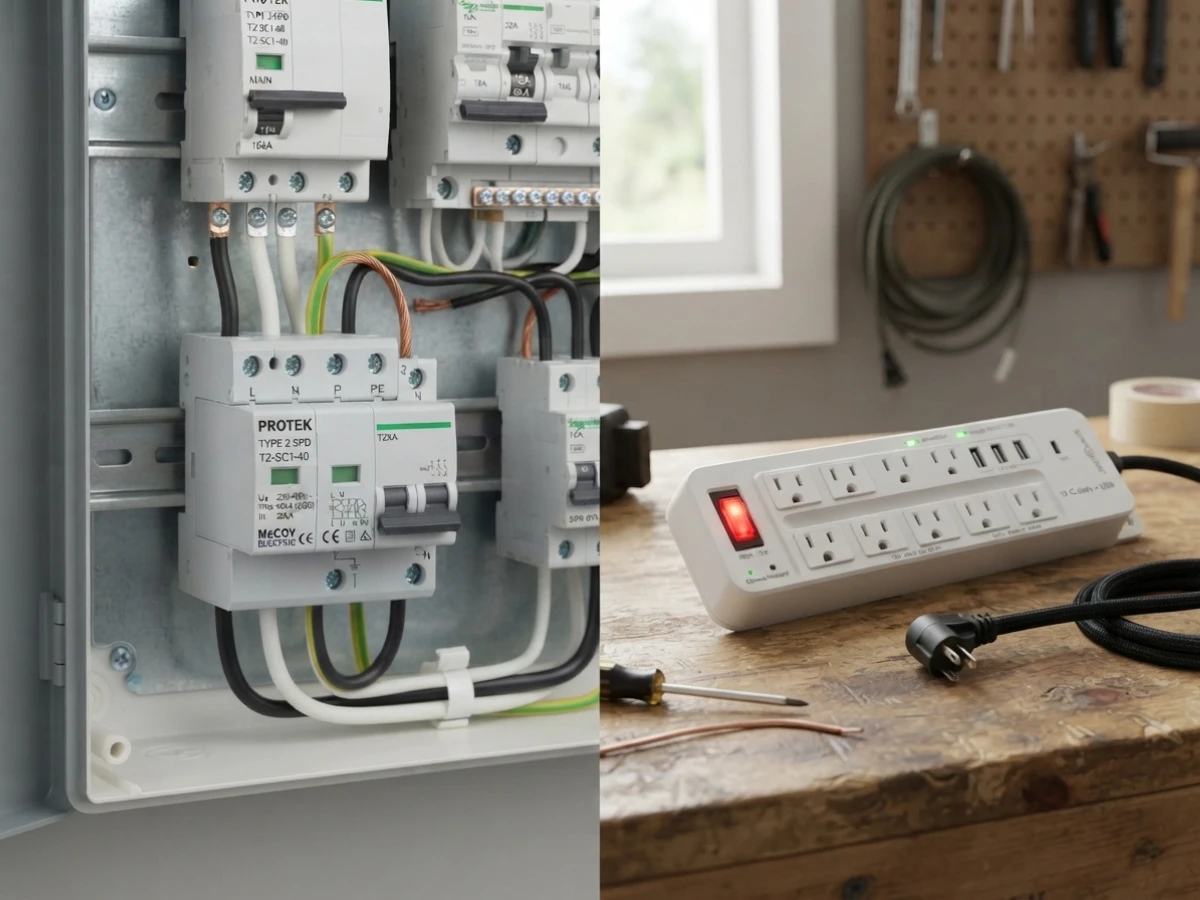
The LME Recommendation: Using power strips alone leaves your expensive appliances unprotected. For complete coverage, combine a whole-house unit at your panel with point-of-use surge outlets for your valuable electronics.
Why Twin Cities Homes Are Vulnerable to Power Surges
Since power surges threaten your Twin Cities home every day, learning what causes these voltage spikes is the first step to keeping your home safe.
Why Older Minneapolis and St. Paul Neighborhoods Face the Highest Surge Risk
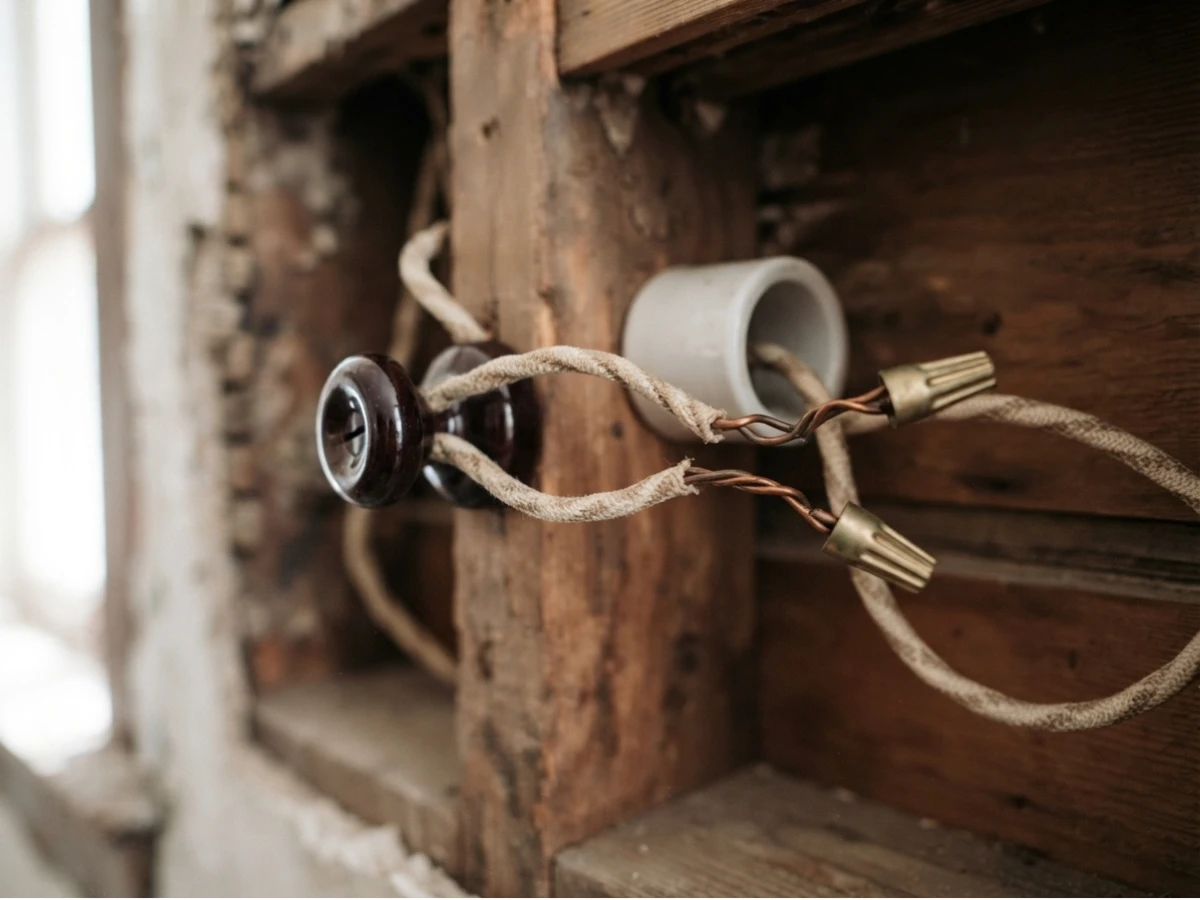
Homes built before 1970 face the highest risk from power surges. In historic neighborhoods like South Minneapolis, Highland Park, and Northeast St. Paul, many houses still use ungrounded two-wire systems. Without a proper ground path, voltage spikes from storms or grid switching cannot exit your home safely. This leaves your entire electrical system exposed.
Other Major Power Surge Drivers
- Modern Appliance Risks: Decades ago, appliances used simple switches that handled power shifts easily. Today, almost every home system from your fridge to your smart thermostat runs on sensitive circuit boards. Small, repeated power spikes slowly wear out these boards and cause early equipment failure.
- Internal Daily Surges: Up to 80% of power surges start inside your home. Every time your AC unit, furnace, or EV charger turns on, it sends small power shocks into your wiring. Over time, these daily mini-surges damage your electronics.
- Tree Canopies and Overhead Lines: Mature trees line many streets in older Twin Cities neighborhoods. During winter ice or summer storms, heavy branches fall onto power lines. This causes short circuits, power drops, and sudden high-voltage spikes.
- New Suburban Construction: In growing outer suburbs like Woodbury, Maple Grove, and Blaine, active construction puts extra strain on power lines. Heavy building equipment turning on nearby creates frequent power dips and spikes for surrounding homes.
Warning Signs Your Twin Cities Home Has Already Taken Surge Damage
Watch for these clear warning signs in your home:
- Flickering or Dimming Lights: If lights dim when your fridge or air conditioner turns on, your panel may be struggling with internal power shifts.
- Early Appliance Failure: If you replace microwave, dishwasher, or garage door circuit boards earlier than expected, small repeat surges may be damaging the electronics.
- Tripping Breakers: Frequent or unexpected breaker trips often point to worn circuit components or stressed wiring.
- Burned Outlets or Burning Smells: Dark spots on outlet covers or a faint burning smell near plugs show heat damage from past voltage spikes.
If you’ve already noticed these warning signs and need an expert to take a look, check our whole-home surge protection services.
Protect Your Twin Cities Home from Power Surges Today
Ready to protect your home's electrical system from harsh Minnesota weather and aging power lines? Keeping your household appliances safe and giving your family peace of mind is what neighborly electrical service is all about.
Our team of friendly, licensed local electricians is here to help keep your home safe year-round. Visit Loch Monster Electric today to connect with our local team and book your service visit.
Frequently Asked Questions
Yes. Cities across the Twin Cities metro require an electrical permit for panel work. This ensures your wiring meets National Electrical Code (NEC) and local safety rules.
Utility companies rarely offer direct rebates for just a surge protector. However, if your home needs a full panel upgrade to fit new equipment, Xcel Energy or local utility rebates may apply to that panel work.
A whole-house unit mounts directly at your main panel to block large voltage spikes from entering your home. A surge protector outlet (or power strip) protects specific electronics plugged directly into it.
If your home uses smart devices, lacks panel protection, or sees lights flicker during severe weather, your appliances are at risk no matter how old your home is.
An installation by a licensed electrician usually takes one to two hours. Your power will only be off for a short time while the electrician connects the unit to your main panel.