Generator Interlock Kits vs. Transfer Switches: A Comparison of the Budget-Friendly Backup Power Solutions
Updated: Nov 13, 2026
This guide compares generator interlock kits and manual transfer switches for Minnesota homes with portable generators. It covers backfeeding and extension cord dangers, how each option works, what using them looks like in an outage, and how they compare on cost, flexibility, and ease of use.
It’s a windy November night in Shoreview, and the lights just went out. You roll the portable generator out of the garage and fire it up, only to realize it can’t run your furnace since yours is hardwired into the panel. Now you’re running extension cords from the generator through a cracked patio door to keep the sump pump, Wi-Fi router, and a few lamps going, while 20-degree air pours into the kitchen and the house keeps getting colder. Sound familiar?
In this guide, we compare two budget-friendly backup power solutions for Minnesota homeowners: generator interlock kit vs transfer switch. We explain why backfeeding and extension cords are risky shortcuts, how each option works, what using them looks like during a real outage, and how they stack up on cost, flexibility, and ease of use.
We’re Loch Monster Electric, licensed electricians serving homeowners across Minnesota and Wisconsin. We help Twin Cities families hook up their portable generators in a safe and code-compliant way.
Ready to get started now? Call us at 763-292-1191 or send us a note through our contact us form.
Connecting Generator Power Without Breaking the Bank
Whether you live in Maple Grove or Woodbury, late-fall windstorms and tree branches taking out power lines is just part of life around here. These outages can last hours or even days, and once temperatures dip below freezing, a dead furnace and a silent sump pump turn a nuisance into a real problem.
Plenty of homeowners already own a portable generator. What they don’t want is to spend thousands on an automatic standby system just for backup power. They need a safe, permanent way to power the furnace, fridge, and lights straight from the panel.
For the bigger picture, our backup power options in Minnesota guide explains the risks of a winter blackout, why you need backup power, and the automatic standby generator option.
How Not to Connect a Backup Generator
Without a proper hookup, most folks fall back on one of two shortcuts.
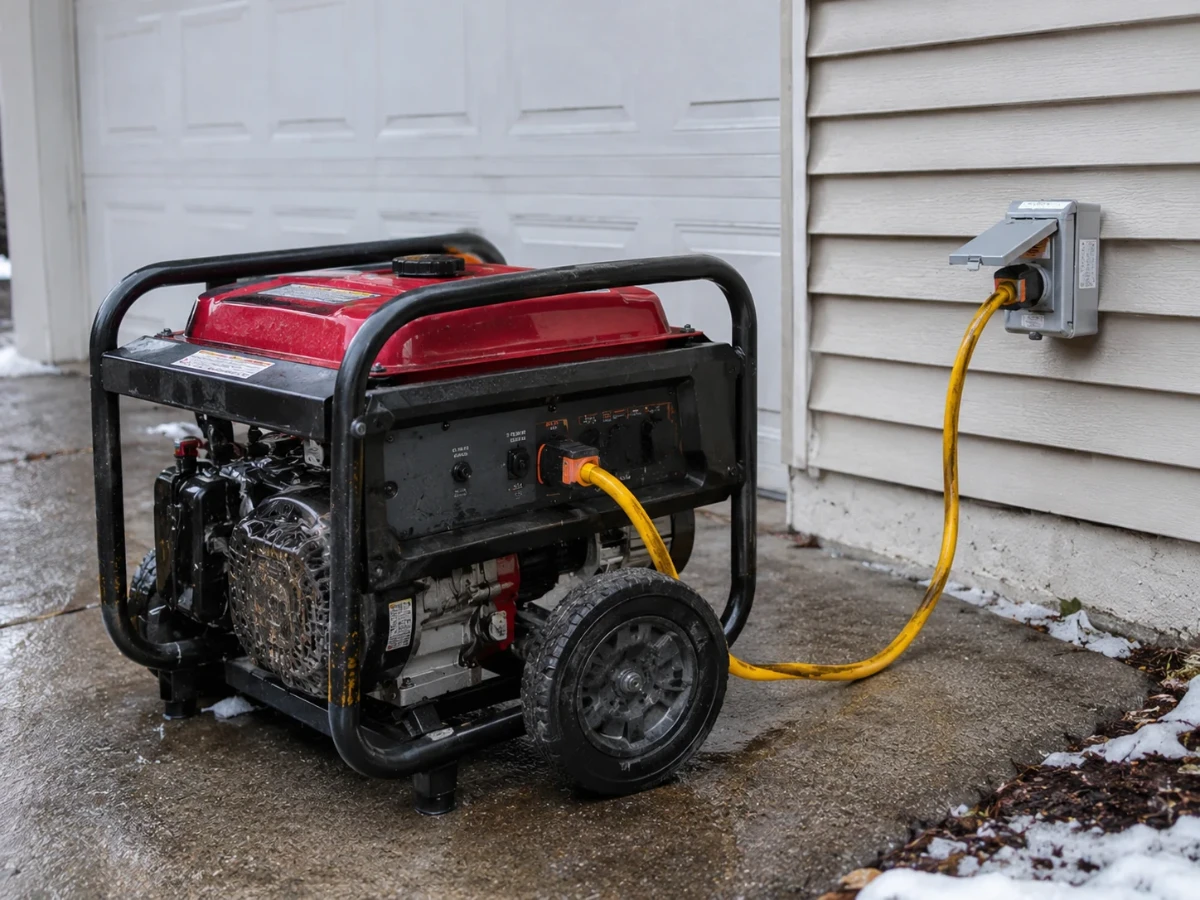
Generator Backfeeding Through a Wall Outlet
This shortcut involves a homemade cord with a plug on both ends, run from the generator into a dryer or wall outlet. Generator backfeeding is illegal, and it’s extremely dangerous.
If your main breaker is still on, generator power flows out of your house and into the utility transformer on the pole or in the green box in your yard. That transformer works in reverse and steps your 240 volts up to thousands of volts on the utility line, a deadly shock hazard for any lineworkers doing repairs. The cord’s bare prongs can shock you too, and when grid power returns, it can wreck your generator or start a fire.
Running Extension Cords Through the House
The other shortcut is running extension cords from the generator’s outlets through a door or window, then plugging appliances in one by one inside. It’s legal, but it’s far from a great fix:
- Cold air and fumes: Cords running through a cracked door or window let sub-zero air in, making your home colder. Generator exhaust fumes could also get in, which is unhealthy to breathe.
- Tripping hazards: Cords snaking across dark hallways and stairs are an easy way to get hurt during an outage.
- Overheating: Light-duty cords powering big loads can overheat, especially when they’re coiled up or pinched in a door.
If a storm has already damaged your home’s wiring, our power outage after storm repair guide walks you through the first safety steps, who’s responsible for which repairs, and typical Twin Cities repair costs.
Safe and Budget-Friendly Backup Power Options
The good news is there are two budget-friendly options that solve these problems. Both are code-approved ways to connect a portable generator to your home, and both make backfeeding impossible.
Generator Interlock Kit
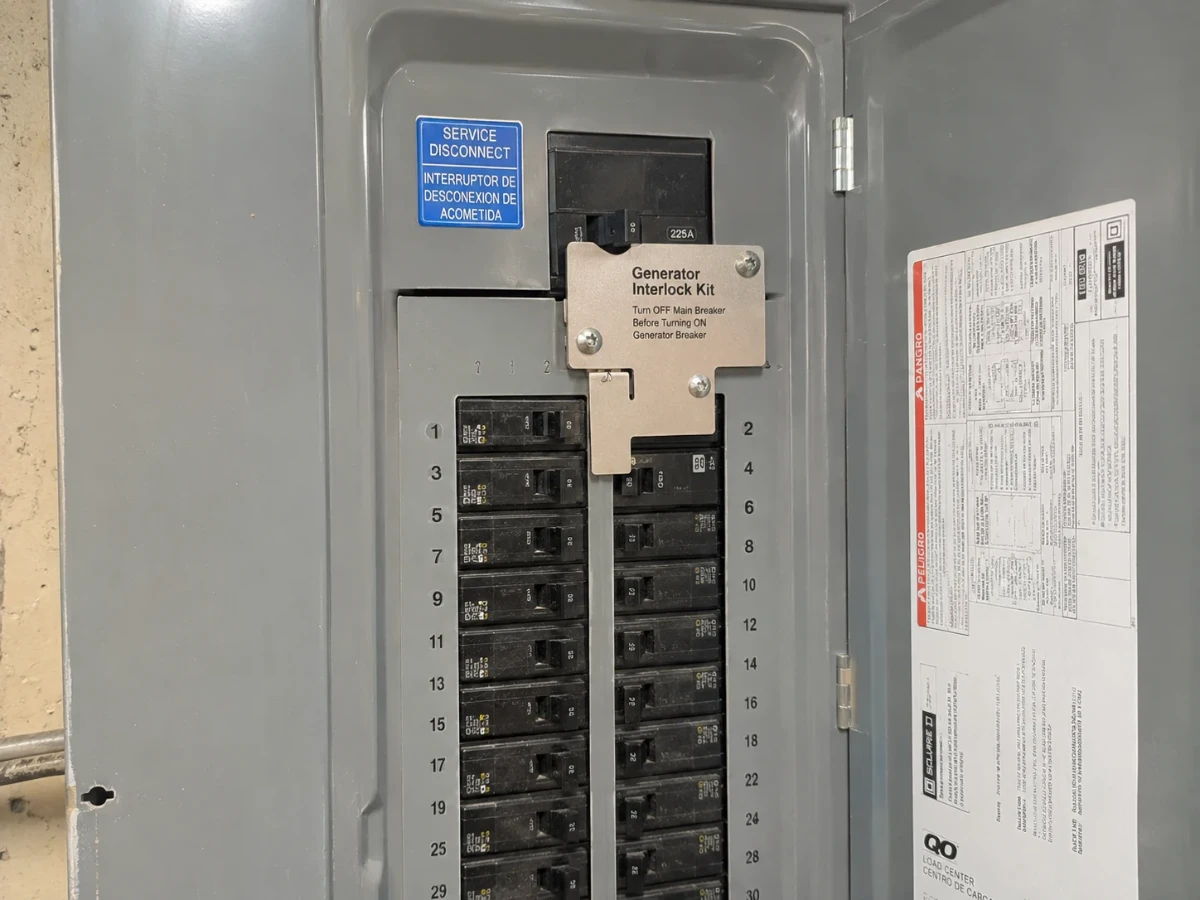
A generator interlock kit is a metal slider plate made for your exact panel model. It mounts on the panel cover between the main breaker and a generator breaker, which connects to an outdoor inlet box.
The plate locks one breaker off whenever the other is on, so generator power can’t backfeed onto utility lines. With the generator breaker on, power flows to the panel’s bus bar, and you flip on the breakers you need.
If your panel is full, worn out, or has no matching kit, our electrical panel upgrade service swaps in a safe, modern panel that is compatible with generator interlock kits.
Manual Transfer Switch
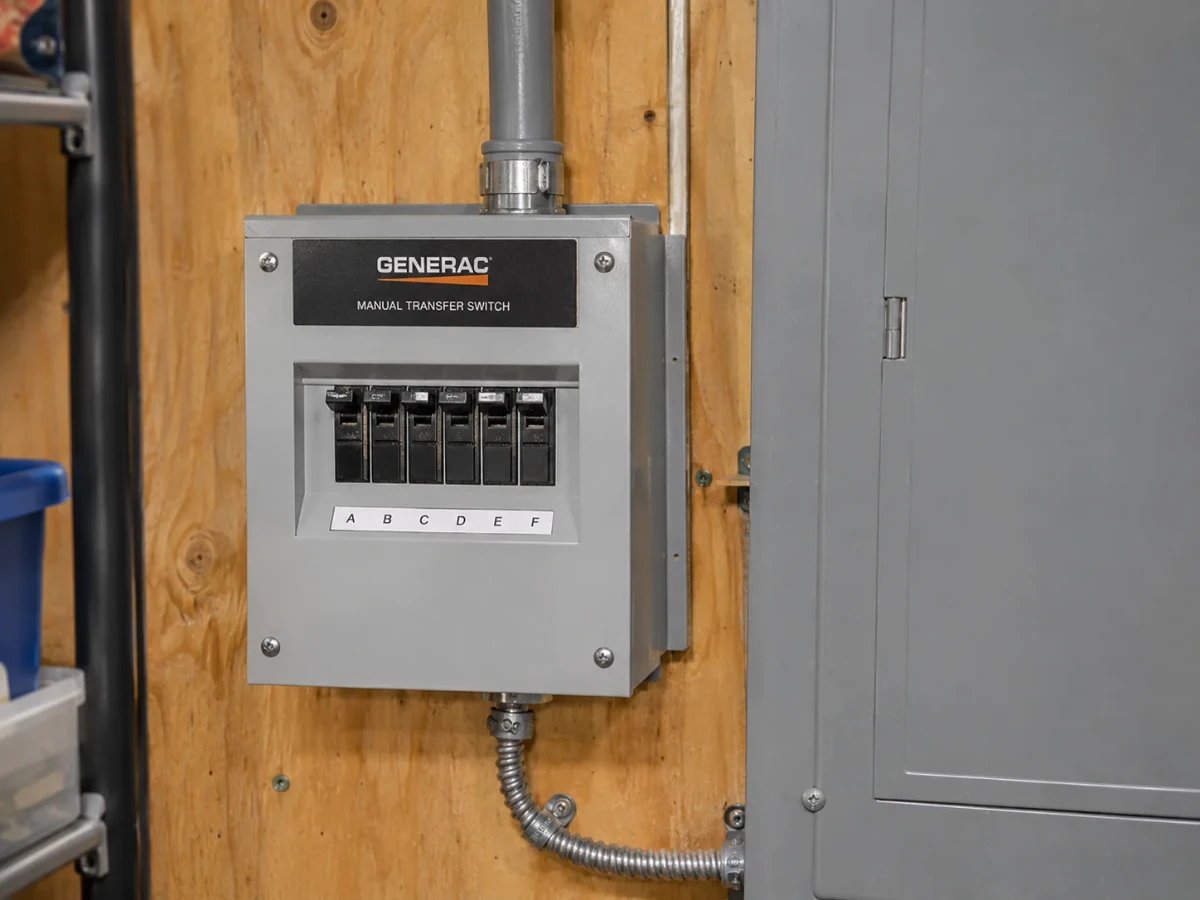
A manual transfer switch is a separate box next to your main panel, wired to an outdoor inlet box. An electrician connects 6 to 10 key circuits into it, like the furnace, fridge, and sump pump.
Each circuit has its own ‘Line’ and ‘Gen’ switch. During an outage, you plug the generator into the inlet box and flip those switches to generator power. Each circuit can only connect to one source at a time, so backfeeding is blocked.
What Generator Interlock Kit vs Transfer Switch Usage Looks Like in Real Life
Say you have a 7,500-watt portable generator.
With an interlock kit, you switch off heavy loads like central AC, an electric dryer, or an electric water heater, then keep the furnace, fridge, sump pump, and lights running. Need the microwave for supper? Shut something else off for a few minutes and cook your food. Need the home office or the garage freezer? Flip those breakers on too, as long as the generator can handle it.
With a transfer switch, that same blackout is simpler. You flip a few labeled switches, and the furnace, fridge, and sump pump are up and running. But if the microwave or the home office isn’t wired into the transfer switch, it stays off for the whole outage.
So the interlock gives you more freedom, but the tradeoff is that you become the load manager. Turn on too much, and you’ll overload the generator and trip its breaker. The transfer switch is far simpler to operate and harder to overload, so anyone in the household can handle it, even when you’re not home.
Interlock Kit vs. Transfer Switch: Side-by-Side Comparison
Feature | Generator Interlock Kit | Manual Transfer Switch |
What it is | A slider plate on your main panel cover | A separate subpanel box next to your main panel |
Circuits you can power | Any breaker in the main panel | Only the 6 to 10 pre-wired circuits |
Flexibility during an outage | High: change which circuits run anytime | Low: adding a circuit means rewiring |
Overload risk | Higher, since you manage the loads yourself | Lower, since choices are limited |
Ease of use for the whole household | Takes some know-how about which breakers to use | Simple, clearly labeled switches |
Electronics or batteries | None; purely mechanical, so there’s nothing to fail in a cold snap | None; simple mechanical switches |
Cost | Usually lower, since it meets National Electrical Code (NEC) rules without extra subpanel hardware | Usually higher, with more hardware and wiring |
Panel compatibility | Needs a kit listed for your exact panel | Works with most panels, even without a listed interlock kit |
Backfeed protection and code compliance | Yes, when listed and installed to code | Yes, when installed to code |
Best for | Homeowners who want whole-panel flexibility on a budget | Homeowners who want a simple, fixed setup anyone can run |
Before picking a generator, our generator installation in Plymouth guide covers load calculations, sizing for older homes, fuel choices, and Minnesota permit rules.
Get Your Backup Power Hookup Ready Before the Next Storm
Don’t wait for the next November windstorm to sort out your backup plan. The right choice comes down to your panel and how you want to handle an outage. An interlock kit gives you whole-panel flexibility at a lower cost, but you manage the loads yourself. A manual transfer switch costs more and limits you to a set list of circuits, but it’s harder to overload and simple for anyone to use.
Loch Monster Electric is a licensed electrical contractor in Minnesota and Wisconsin, and we install code-compliant interlock kits and manual transfer switches across Minneapolis, St. Paul, and nearby suburbs. We check your panel to see which option fits, pull required permits, and make sure the work passes inspection. We also price the job on a transparent time & materials basis.
Call us today at 763-292-1191 to get your home ready before the power goes out.
Frequently Asked Questions
Yes. An interlock kit is legal when it’s listed for your specific panel and installed according to the NEC, which Minnesota adopts as its electrical code. The work needs an electrical permit and an inspection.
Yes. Adding a generator breaker, inlet box, and interlock is new electrical work, so a permit is required. Minnesota does let homeowners pull their own permit for a single-family home they live in, but the work still has to pass inspection. Loch Monster Electric can handle both for you.
Usually, yes. An interlock needs less hardware and fewer hours of labor than a transfer switch subpanel. Your final cost depends on your panel, the distance to the outdoor inlet box, and whether the panel needs repairs or an upgrade first.
Neither one is better for every home. An interlock kit is a great fit if a listed kit exists for your panel and you’re comfortable turning breakers on and off to manage loads. A manual transfer switch is a better fit if your panel has no listed kit, or if you want a simple setup that anyone in the household can run safely.
We don’t recommend it. The job involves working inside a live panel, sizing the generator breaker and cable correctly, and securing the breaker the way code requires. A mistake can create the exact backfeed hazard the kit is meant to prevent.
Most portable generators with a 240-volt twist-lock outlet (typically 30 or 50 amps) will work. Your electrician will match the inlet box and breaker to your generator. They’ll also check how the generator’s neutral is set up, since some units need a small change to work correctly with a panel connection.
It depends on what you want running at the same time. Many gas-heated Twin Cities homes get by with roughly 5,000 to 7,500 running watts for the furnace, fridge, sump pump, and some lights. Motors need extra power to start, so a load check before you buy is worth it.
No. An interlock kit is fully manual. You start the generator, slide the plate, and flip the breakers yourself. If you want hands-free switching, you’ll need a standby generator with an automatic transfer switch.