
HOA Parking Area Lighting Maintenance: A Complete Year-Round Guide
Updated: Sep 15, 2026
Well-maintained parking area lighting helps HOAs keep shared spaces safe, functional, and welcoming year after year. This guide explains what ongoing maintenance should cover, from inspecting fixtures, poles, wiring, connections, and controls to identifying corrosion, weather damage, failing components, and dark spots before they become larger problems. It also explains why Minnesota weather can accelerate wear and why scheduled inspections are more effective than waiting for residents to report failed lights. The article should position Loch Monster Electric as a reliable electrical partner for HOA boards and property managers managing parking areas and other common-area lighting.
Parking area lighting has to perform through every season. For a homeowners association (HOA), that means more than replacing a fixture when it goes dark. Dirt can build up on lenses, electrical components can deteriorate, and winter weather can put stress on poles, fixtures and wiring.
A regular maintenance plan helps catch these problems before they affect visibility across the property. It also gives an HOA a clearer record of the condition of its lighting system and the work needed to keep it reliable.
For Twin Cities properties, maintenance should account for seasonal weather as well as normal wear. A combination of routine visual checks, scheduled professional HOA inspections and post-storm assessments can help protect the HOA's investment in its parking area lighting.
If your HOA needs help creating or maintaining a lighting maintenance plan, call Loch Monster Electric at 763-292-1191.
Build a Year-Round Lighting Maintenance Schedule
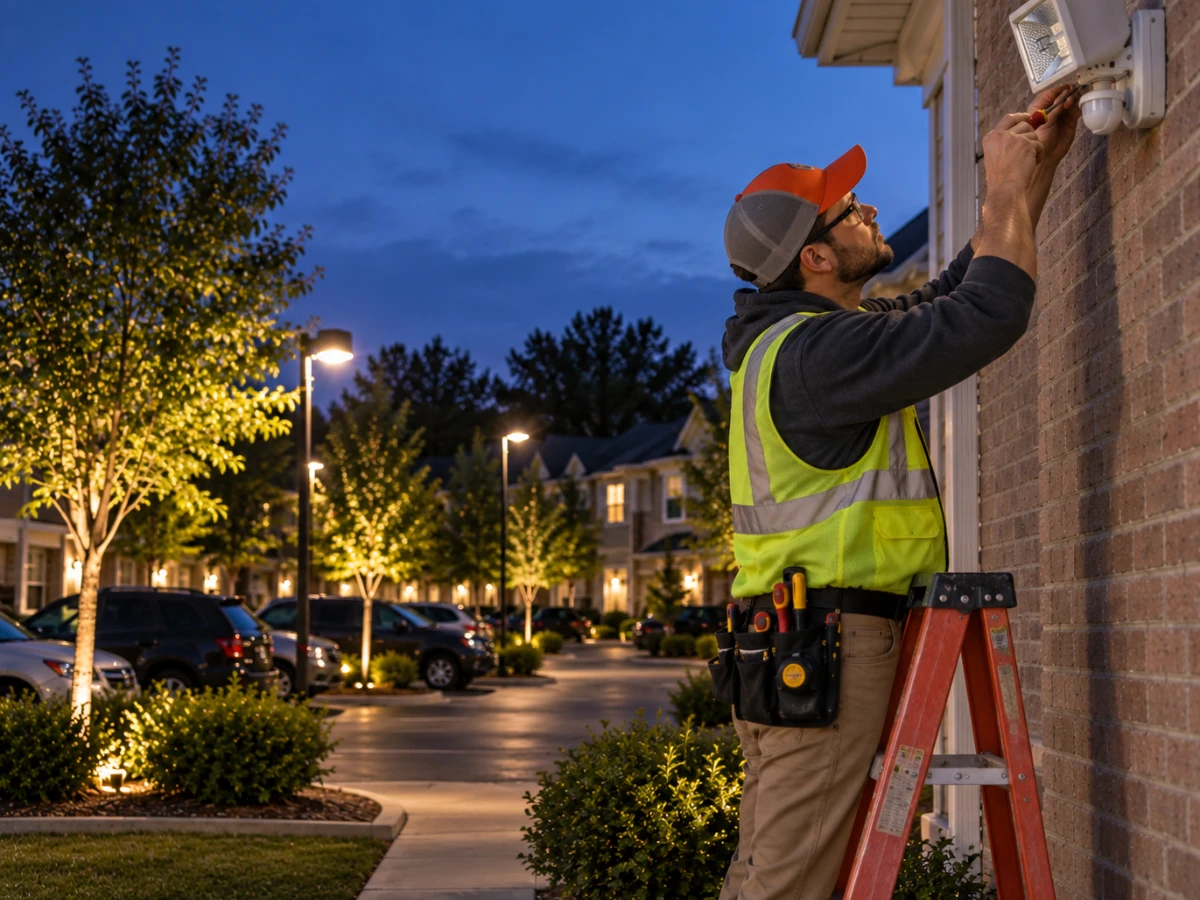
Lighting maintenance is easier when it is planned instead of handled only when residents report a dark fixture.
An HOA board or property manager can keep a simple record of lighting issues throughout the year. Routine visual checks can identify obvious problems such as lights that are out, flickering fixtures, damaged housings or lights that appear to operate at the wrong time.
A professional inspection should then include a closer look at the electrical and physical condition of the system. An annual schedule can include a spring inspection, a fall inspection and additional checks after severe weather.
Spring is a good time to assess the effects of winter. The inspection can identify damaged fixtures, loose hardware, moisture intrusion and other issues that may have developed during the colder months.
Fall maintenance can prepare the system for the longer hours of darkness ahead. This is also a practical time to clean lenses and make sure fixtures are operating properly before winter arrives.
Keep Light Lenses Clean and Clear
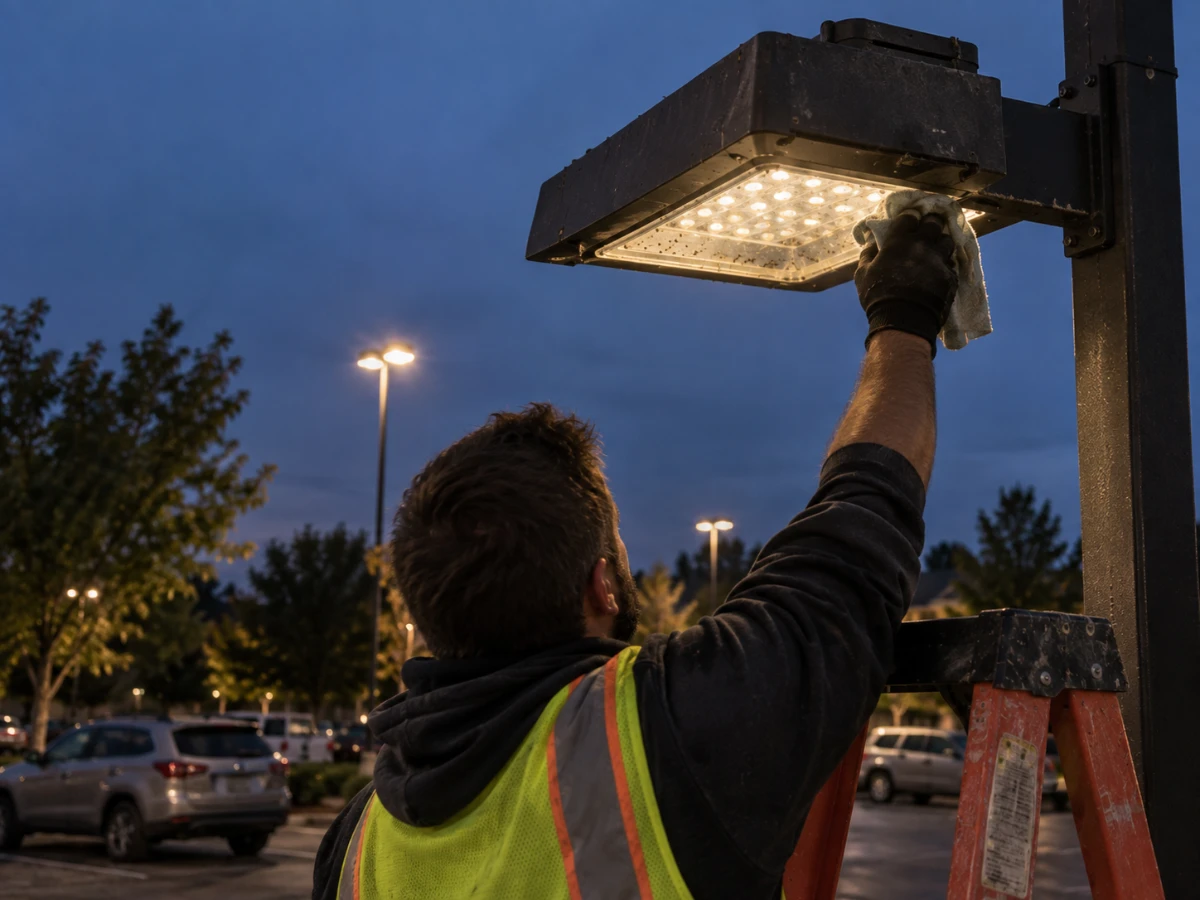
A fixture does not have to fail completely to become a problem. Dirt and debris can accumulate on an outdoor lens and reduce the amount of light reaching the parking area.
For many properties, cleaning lenses twice a year is a reasonable starting point. Spring and fall cleaning can remove accumulated dirt and give the electrician an opportunity to inspect the fixture at the same time.
Some properties may need more frequent cleaning. Parking areas near busy roads, construction or other sources of dust and debris can become dirty more quickly.
Cleaning also provides an opportunity to look for signs of damage. Cracked lenses, clouding, loose covers, damaged seals or moisture inside a fixture can indicate a problem that needs professional attention.
The goal is not simply to make the fixtures look cleaner. It is to make sure the lighting system continues to deliver useful illumination across the property.
Inspect LED Drivers and Other Electrical Components
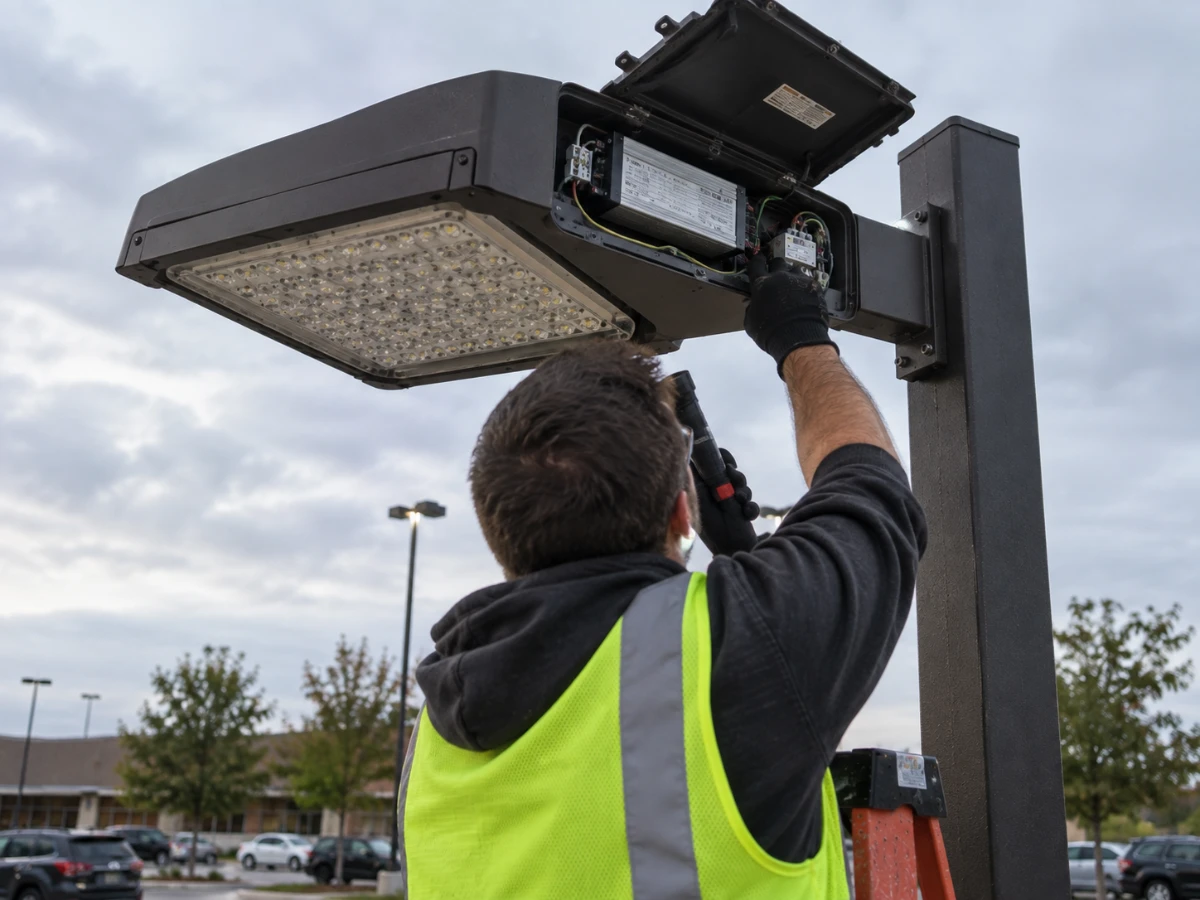
LED lighting generally reduces the need for routine lamp replacement, but its electrical components still need attention.
The LED driver regulates the power supplied to the light-emitting components. When a driver begins to deteriorate, the fixture may flicker, become dimmer, turn on intermittently or stop working altogether.
An annual professional inspection can help identify signs of overheating, moisture, physical deterioration or abnormal operation before a component fails completely. Fixtures that begin flickering or behaving differently should be assessed sooner rather than waiting for the next scheduled inspection.
The inspection should also consider the electrical connections, controls and other components serving the parking area lights. Looking at the system as a whole can help distinguish an isolated fixture problem from a larger electrical issue.
This is particularly useful for an HOA because recurring failures can point to an underlying problem. Replacing the same fixture repeatedly may not solve the reason it keeps failing.
Check Surge Protection as Part of Routine Maintenance
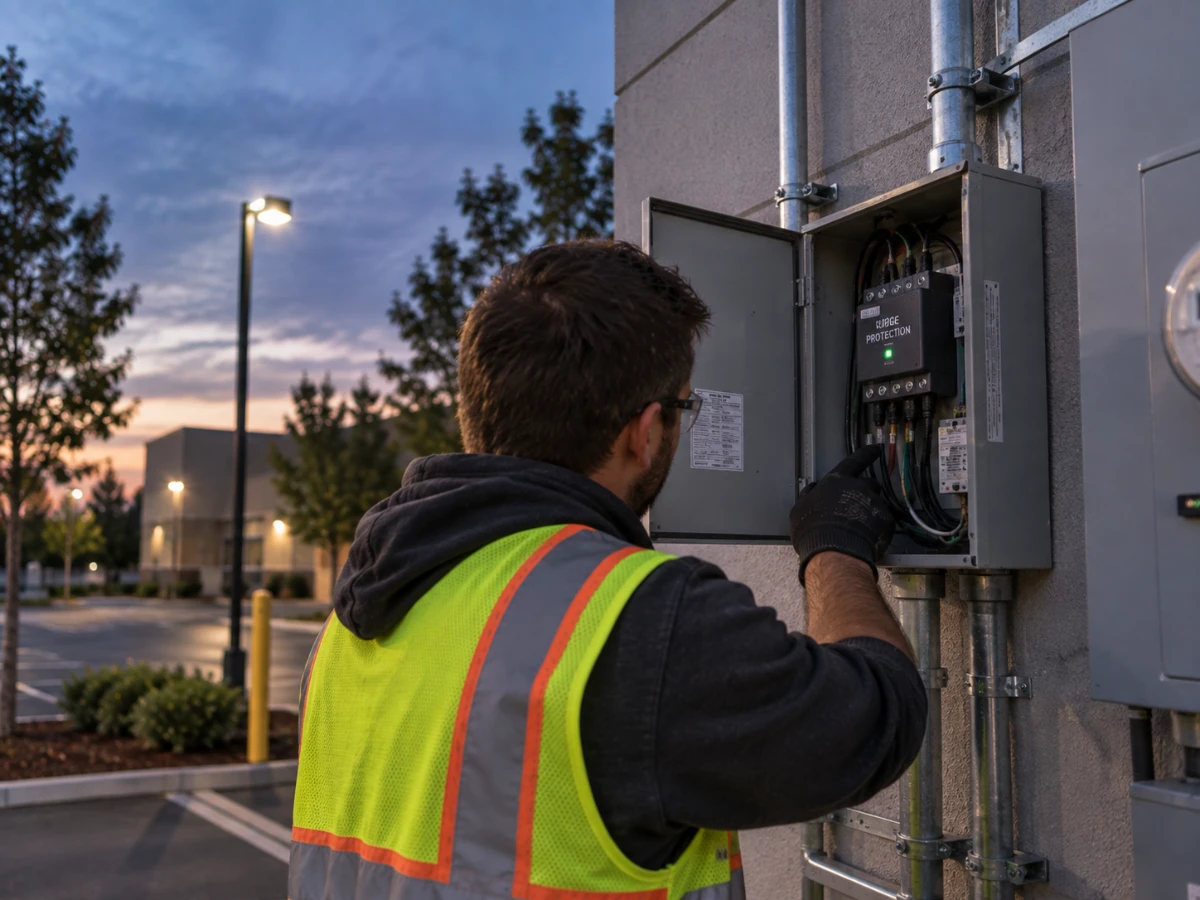
Outdoor lighting systems can be exposed to electrical surges, particularly during severe weather. Surge protection can help protect electrical equipment from damaging voltage spikes, but it should not simply be installed and forgotten.
During scheduled maintenance, an electrician can inspect the condition of the surge-protection equipment serving the lighting system and look for signs that it may have been affected by an electrical event.
An HOA should also consider an electrical inspection after a significant storm if multiple lights fail at once or other electrical problems appear around the property. A cluster of failures may indicate more than a collection of unrelated bad fixtures.
The important point is to include surge protection in the maintenance conversation rather than waiting until an electrical event has already damaged equipment.
Inspect Lighting Poles After Severe Weather
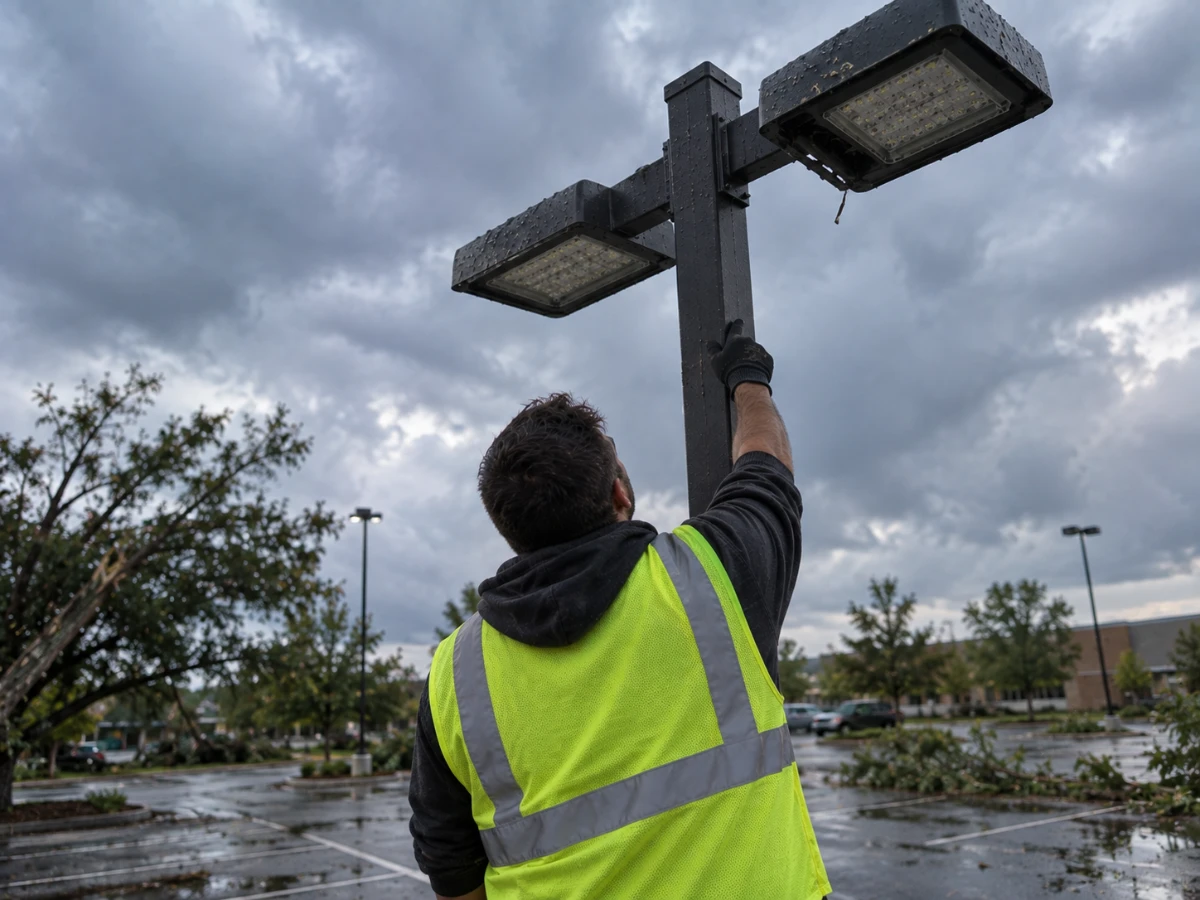
Twin Cities weather can be hard on exterior electrical equipment. Strong winds, heavy snow, ice and storms can affect lighting poles, fixtures and the equipment that supports them.
An HOA should visually check its parking area after significant weather and report anything that looks damaged or out of place. Warning signs can include a leaning pole, damaged fixture housing, loose hardware, cracked concrete around a pole base or exposed electrical components.
A pole that has shifted should not simply be left until the next routine inspection. Movement can indicate damage that needs professional assessment.
The same applies to fixtures that have been struck by debris or show signs of water intrusion. Electrical components can sometimes sustain damage that is not immediately obvious from the ground.
Loch Monster Electric provides storm-damage electrical repair for HOAs and multifamily properties across the Twin Cities Metro, including assessment of damage to exterior electrical infrastructure.
Know What Your HOA Maintenance Agreement Should Cover
A maintenance agreement can make it easier for an HOA to stay ahead of lighting problems. Instead of calling an electrician only after a fixture fails, the association can establish a recurring schedule for inspections and maintenance.
The agreement should clearly explain what will be inspected and how often the work will take place.
At a minimum, an HOA should consider asking for coverage that includes:
- Scheduled inspections: Establish regular visits rather than relying entirely on emergency service calls.
- Exterior and parking lighting: Include fixtures, controls and related electrical components serving common areas.
- Lens and fixture checks: Identify dirt, physical damage, moisture intrusion and other visible problems.
- Driver inspections: Check LED drivers and other components for signs of deterioration or abnormal operation.
- Surge protection: Include an assessment of relevant surge-protection equipment.
- Pole and mounting checks: Identify visible damage or concerns that may require further structural assessment.
- Post-storm service: Establish how the contractor will respond when severe weather damages the lighting system.
- Documentation: Keep records of inspections, identified problems, completed repairs and recommended follow-up.
- Emergency response: Make sure the HOA understands how urgent lighting and electrical problems will be handled.
Loch Monster Electric's HOA services include annual inspections, code compliance checks and ongoing maintenance contracts, while its emergency services include 24/7 response for power outages, storm damage and urgent electrical failures.
A clear agreement also helps the board understand what happens when an inspection identifies a problem. The contractor should explain whether an issue requires immediate attention, routine repair or continued monitoring.
Keep a Record of Every Inspection and Repair
Maintenance records may seem like administrative paperwork, but they can be valuable for an HOA.
A simple record can show when each inspection took place, which fixtures or poles were checked, what problems were identified and what work was completed. It can also help the board identify recurring issues.
For example, if the same area repeatedly experiences lighting failures, maintenance records can make that pattern easier to see. The HOA can then ask the electrician to investigate the underlying cause rather than continuing to address each failure separately.
Records are also useful when board members or property managers change. A new board should not have to reconstruct the property's electrical maintenance history from scattered invoices and resident complaints.
The maintenance record does not need to be complicated. A basic property map, inspection dates, repair notes and recommendations can provide a useful reference for future work.
Protect Your HOA's Investment With Preventive Maintenance
Parking area lighting works best when maintenance happens before residents start noticing failures.
Regular lens cleaning keeps fixtures clear. Scheduled inspections give an electrician an opportunity to identify deteriorating drivers, electrical components and surge-protection concerns. Seasonal checks help prepare the system for Twin Cities weather, while post-storm inspections can identify damage that may not be obvious from the ground.
For an HOA, the best approach is to make these tasks part of a documented maintenance plan. A service agreement with a local electrician can provide a consistent schedule and a clear process for handling problems when they appear.
Loch Monster Electric works with HOAs and property managers across the Twin Cities on common-area electrical systems, including exterior and parking lighting, annual inspections and ongoing maintenance.
Call 763-292-1191 to discuss ongoing electrical maintenance for your HOA parking area lighting.

Frequently Asked Questions
A professional inspection at least once a year gives an electrician an opportunity to assess fixtures, electrical components and other parts of the lighting system. Monthly or quarterly visual checks can help identify obvious failures between professional visits.
Spring and fall are practical times to clean outdoor lighting lenses for many HOA properties. Areas exposed to significant road dust, construction debris or other contaminants may need more frequent cleaning to maintain useful light output.
An annual inspection can help identify signs of overheating, moisture, deterioration or abnormal operation. A fixture that flickers, becomes dim or operates intermittently should be inspected rather than waiting for the next scheduled maintenance visit.
Poles should be included in routine property checks and professionally assessed when there are signs of damage. An additional inspection is appropriate after severe winds, heavy storms, ice or other weather events that could affect poles or their foundations.
A maintenance agreement should clearly define inspection frequency, fixture and electrical component checks, documentation, post-storm response and emergency procedures. It should also explain how repairs identified during routine inspections will be handled.