Home EV Charger Installation: What Twin Cities Homeowners Actually Need to Know
Updated: Jun 11, 2026
Tired of waiting ages to charge your EV during freezing winters? Discover why a Level 2 home charger is essential, learn about crucial garage infrastructure like panels and hardwiring, and find local rebates to offset installation costs.
So, you finally pulled the trigger on a new EV. Congratulations! But if you're currently plugging it into a standard 120V wall outlet, the honeymoon might be wearing off. Watching that battery percentage tick up at the speed of a snail crawling through Minnesota snow gets old fast.
We get asked the same question almost every single day: "Can I just plug this thing in, or do I need a serious electrical upgrade?" The truth is, getting your garage EV charging setup ready isn't as simple as buying an appliance and plugging it in. There are real infrastructure, safety, and capacity rules we have to think about.
Before you click "Add to Cart" on that shiny new charger, let’s walk through what a successful home EV charger installation in the Twin Cities actually requires.
The Reality of Charging EVs in the Twin Cities: Why Level 1 Just Won't Cut It
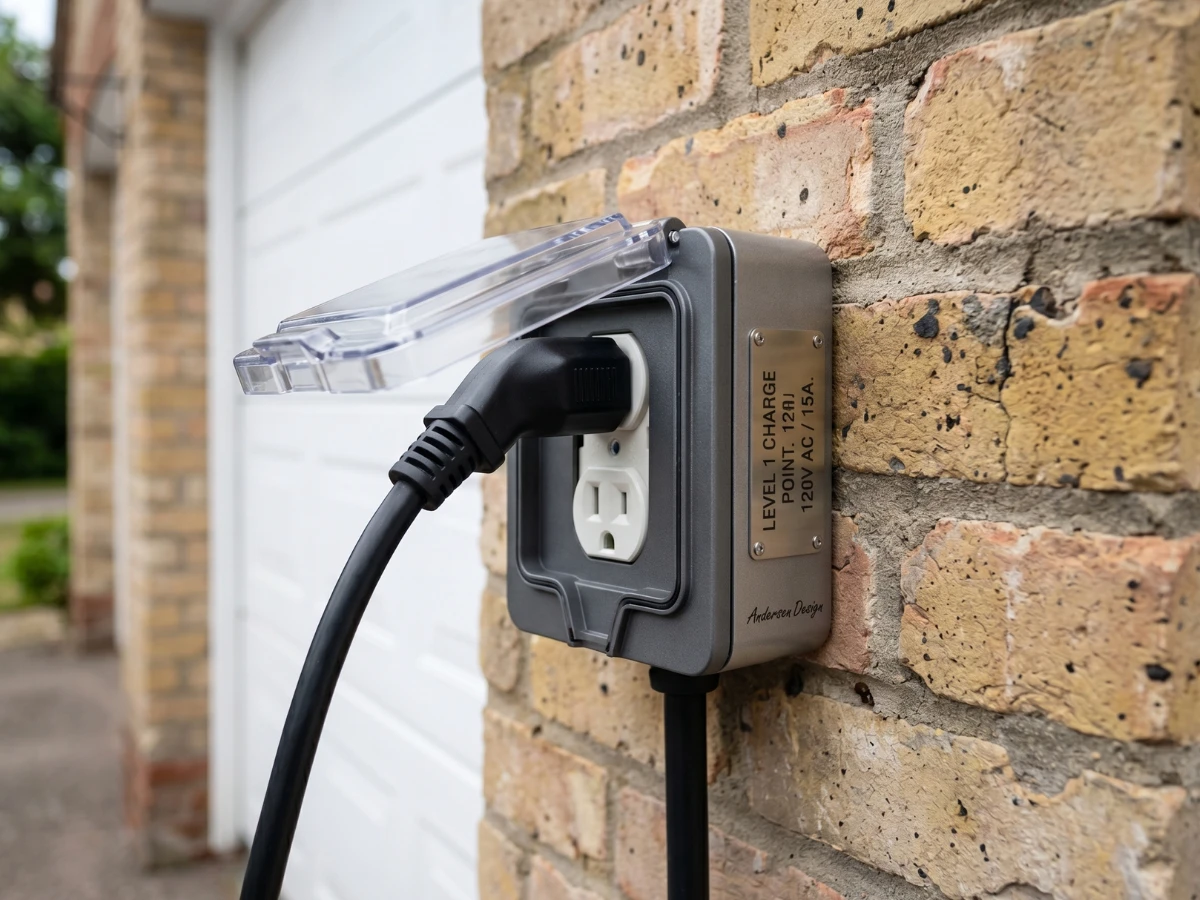
If you’ve tried charging your new ride using the cable that came in the trunk, you’re using Level 1 charging.
Level 1: The "Snail’s Pace" Trickle Charge
Level 1 charging uses your standard 120-volt household outlet. It gives you about 3 to 5 miles of range per hour. If you only drive to the local grocery store once a week, maybe that works for you. But for the average commuter running from St. Paul to Minnetonka, it’s painfully slow.
Worse yet, we live in Minnesota. When our winters hit, EV batteries have to work harder just to stay warm, which eats into their range and slows down charging times even further. A trickle charge in January might barely keep up with the cold, let alone fill your battery.
Level 2: The Gold Standard for Home EV Charging
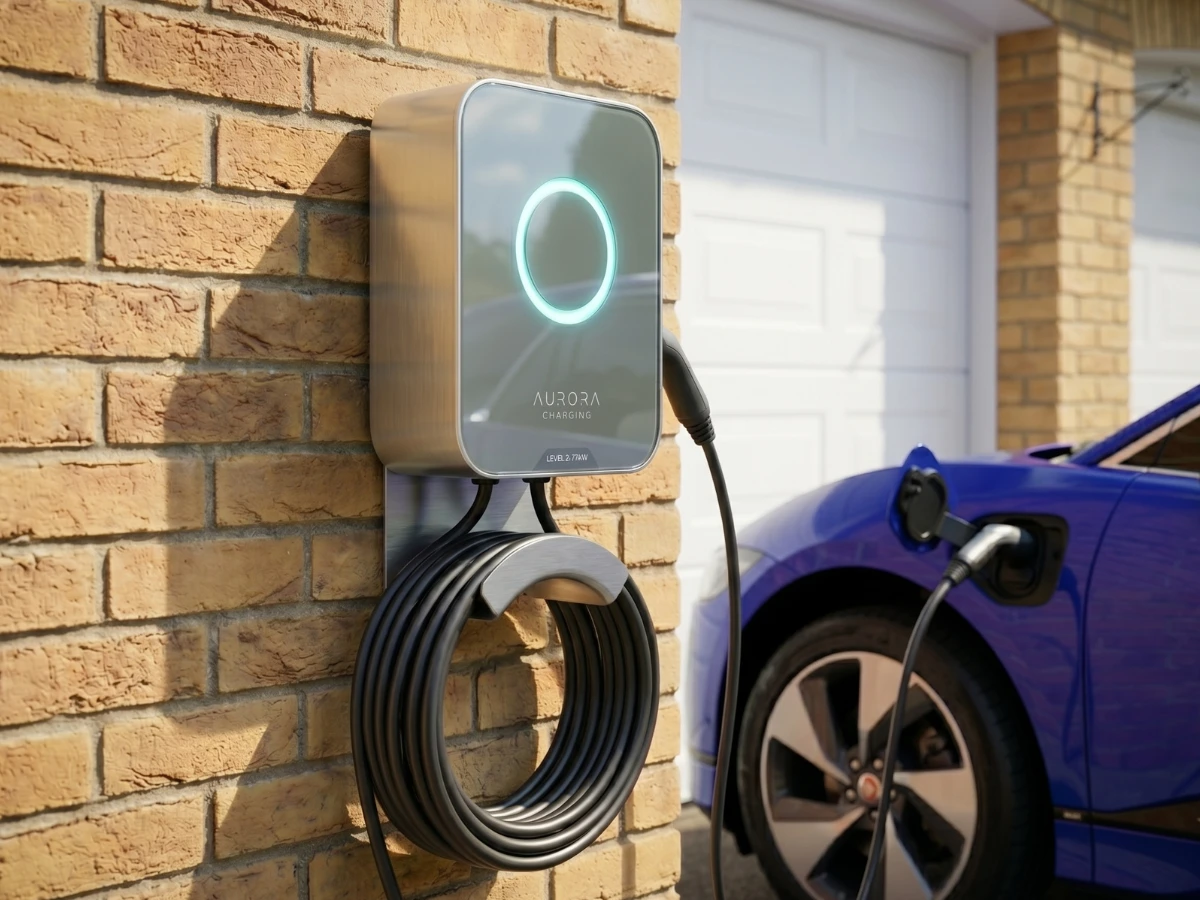
To get real utility out of your electric vehicle, you need a Level 2 EV charger installed. Running on 240 volts (the same heavy-duty power your electric clothes dryer or central A/C uses), a Level 2 charger can juice up your car up to 5 to 7 times faster than a standard outlet.
In ideal weather, it delivers roughly 25 to 40 miles of range per hour of charging. Now, let’s be real, this is Minnesota we’re talking about. When a January polar vortex rolls through, your battery efficiency drops, and you might see that real-world winter yield dip closer to 18 to 25 miles per hour. But even with this factored in, we’re still talking about going from empty to a 100% full battery overnight while you sleep.
What Does Your Garage Actually Need? EV Charger Infrastructure 101
Before we pull any wires, we need to look at the bones of your home's electrical system. This is where many homeowners run into surprises. Here is the physical checklist we run through during a professional assessment.
1. The Heart of the System: Your Electrical Panel
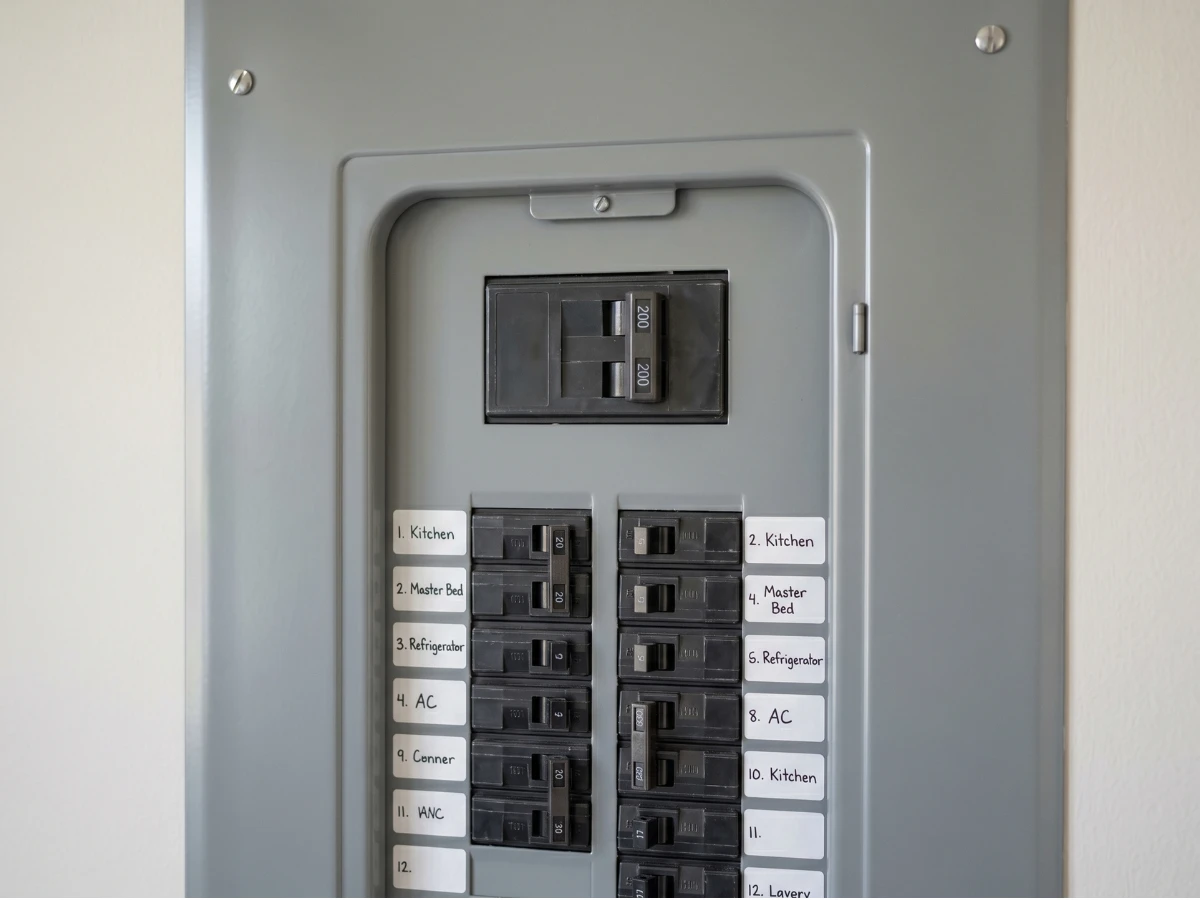
Your home's electrical panel distributes power to all your lights, appliances, and outlets. It has a limit on how much total power it can handle at once (measured in amps).
- 100-Amp Panels: Common in older Minneapolis and St. Paul homes. If you have a 100-amp panel and try to add a 40- or 50-amp EV charger alongside your electric range, A/C, and dryer, you’re going to trip your main breaker. You will likely need a panel upgrade to 200 amps first.
- 200-Amp Panels: The modern standard. If your home has a 200-amp panel, you usually have plenty of breathing room for a dedicated EV charging circuit.
Unsure if your system has enough breathing room? Check out our step-by-step guide on how to calculate your home's load capacity for an EV charger to find out if your panel is ready.
2. Double-Pole Breaker
A Level 2 charger requires its own dedicated circuit, which means we have to install a "double-pole" breaker in your main electrical panel. "Dedicated" means those heavy-duty wires run directly from that specific breaker straight to your charger—no sharing allowed. Because an EV charger draws an intense, continuous flow of electricity for hours at a time, sharing that line with even a garage shop vac or a space heater would instantly overload the circuit and trip the breaker.
3. Conduit Runs
From the panel, we run heavy-duty wiring inside protective metal or heavy PVC conduit all the way to your vehicle. If your electrical panel is already in the garage, this is a quick, straightforward run. But if your panel is on the other side of the house, it becomes a bit of a journey through crawlspaces, joists, or finished basements. Either way, that conduit ensures the wires are completely safe from accidental bumps, nicks, or garage mishaps.
4. NEMA 14-50 Outlet vs. Hardwired Installations
You have two main choices when setting up your garage EV charging setup:
- The Plug-In Option (NEMA 14-50): We install a heavy-duty 240V outlet (similar to an RV plug), and you plug your charger into it. This is great if you ever move and want to take your charger with you.
- The Hardwired Option: We wire the charger directly into your home's electrical system. This is highly recommended for Minnesota garages. Hardwired connections can handle higher amperages (translating to faster charging), are more weather-resistant, and eliminate a point of failure (the outlet plug itself).
Why DIY Is a Dangerous Game with EV Chargers
We get it, DIY culture is huge in the Twin Cities. But a home EV charger installation is not a Sunday afternoon project you should tackle with a YouTube tutorial.
EV chargers pull a massive, continuous electrical load for hours at a time. This isn’t like running a microwave for two minutes; it’s like running your clothes dryer on high for eight hours straight.
- Fire Hazards: If a connection is even slightly loose, or if the wrong gauge wire is used, the extreme continuous heat can melt components and start an electrical fire.
- Permitting and Code Compliance: Cities across the metro area (from Bloomington to Woodbury) require electrical permits and inspections for EV installations. If you don't pull a permit and have a licensed electrician sign off, your homeowner's insurance might refuse to cover any damages if something goes wrong.
Ultimately, the risks of a faulty setup far outweigh the savings of doing it yourself, making professional EV charger installation the only reliable way to power your vehicle safely.
Twin Cities Rebates and Incentives (Get Paid to Go Electric!)
Here is the good news: you don’t have to shoulder the entire cost of upgrading your infrastructure alone. There are fantastic local incentives available to Twin Cities homeowners.
- Local Utility Rebates: If Xcel Energy is your provider, you can apply for a rebate of up to $500 (or up to $1,200 if income-qualified). To get the cash back, Xcel requires you to enroll in an off-peak charging program like Optimize Your Charge or EV Accelerate at Home. Other regional providers like Dakota Electric, Wright-Hennepin, and Connexus offer their own independent off-peak discounts and rebates.
- Federal Tax Credits: You may be able to claim a federal tax credit for up to 30% of your total hardware and installation costs, capped at $1,000. The catch: The system must be fully installed and active by June 30, 2026, and your home must be located in an eligible low-income or non-urban census tract. The deadline is right around the corner, so don’t wait to schedule your installation.
- Automaker Purchase Perks: Many manufacturers (like Chevy, Ford, Hyundai, and Kia) run promotions offering a free Level 2 home charger or an installation credit ranging from $500 to $1,000 when you buy or lease a new vehicle. Be sure to ask your dealership how to redeem their specific corporate perks before your installation day.
Ready to Power Up Your Home? Let Loch Monster Electric Handle the Heavy Lifting
At Loch Monster Electric, we don't believe in guesswork. We treat your home’s electrical system with the respect it deserves, ensuring your Level 2 EV charger install is safe, code-compliant, and optimized to save you the most money on your energy bills.
Don’t risk your family's safety or your vehicle's warranty on a subpar installation. Let a certified, local master electrician do it right the first time.
Ready to get started? Request an estimate online or call us today to chat about your home EV charging needs!
Frequently Asked Questions
No. Simply buying the charger online or signing an installation contract is not enough. To claim the 30% federal tax credit, the IRS requires the equipment to be fully "placed in service". This means the charger must be mounted, completely wired to your electrical panel, and fully operational on or before the cutoff date. Because municipal permitting and electrician schedules fill up quickly, it is critical to book your installation with Loch Monster Electric well ahead of time.
No, eligibility is strictly location-based. Under federal rules, the property must be located within a census tract defined as either "low-income" or "non-urban" (rural). While many suburban and specific metro areas across Minneapolis and St. Paul qualify, others do not.
Yes! Local utility programs are completely separate from the federal tax credit. Even if your address is ineligible for the federal incentive, you can still qualify for hundreds of dollars in local rebates and discounted off-peak charging rates by installing an approved smart charger.
It depends on your home’s existing electrical capacity. A Level 2 charger typically requires a dedicated circuit, which pulls a significant amount of power. If your home has an older main service panel, it may be maxed out. Loch Monster electricians can perform a load calculation on your home to see if your current system can safely handle the new demand or if a panel upgrade is necessary to support fast charging.