The Property Manager’s Guide to Multi-Family & HOA EV Charging Station Installation
Updated: Jun 15, 2026
Flooded with resident requests for EV charging? Discover Minnesota's updated HOA rules, explore four billing models to fairly distribute power costs, and learn how smart load management keeps your building safe and compliant.
Let’s be honest: electric vehicles aren’t just a passing trend anymore. Even here in Minnesota, where our sub-zero winters put car batteries to the ultimate test, EVs are filling up parking lots fast. If you’re on an HOA board or managing a multi-family property in the Twin Cities, you’ve probably already had a resident (or five) ask, “Hey, when can I plug in my car?”
If that question makes your board sweat, don't panic. You’re definitely not alone. Between tight budgets, protecting your property’s older electrical panels, and solving the ultimate riddle of "who pays for the electricity?", getting started can feel like a massive headache.
Let’s break down how to handle an HOA EV charging station installation without starting a neighborhood war, losing your mind over paperwork, or blowing your budget.
The Minnesota HOA Landscape: Rules, Rights, and "Minnesota Nice"
Before we look at wires and conduits, let’s talk about the legal side of things. There is currently a major advocacy push across the state to pass a formal "Right-to-Charge" law. While Minnesota hasn't officially signed a statutory Right-to-Charge law into the books yet, the writing is already on the wall.
The state has recently mandated that new multi-family developments and townhomes must be built "EV-ready" under updated building codes. On top of that, Minnesota’s landmark HOA Bill of Rights (SF 1750), which was signed into law in May 2026, explicitly mandates that all HOA rules and restrictions must be "reasonable." Under this, trying to flat-out ban a resident from installing a charger at their own expense is an expensive legal risk for any board.
Instead of fighting the current, many HOAs are looking at this as a massive opportunity. Offering smart multi-unit dwelling EV charging solutions is one of the best ways to boost your property values. Today's home buyers are actively looking for properties that are future-proofed. If your townhome or condo community offers charging, you're immediately attracting high-quality, tech-savvy buyers and keeping your property incredibly competitive in the Twin Cities market.
The Million-Dollar Question: Who Pays for the Power?
When HOA boards sit down to talk about EVs, this is almost always where the conversation grinds to a halt. "If Joe plugs in his Tesla, is the whole building paying for his daily commute?"
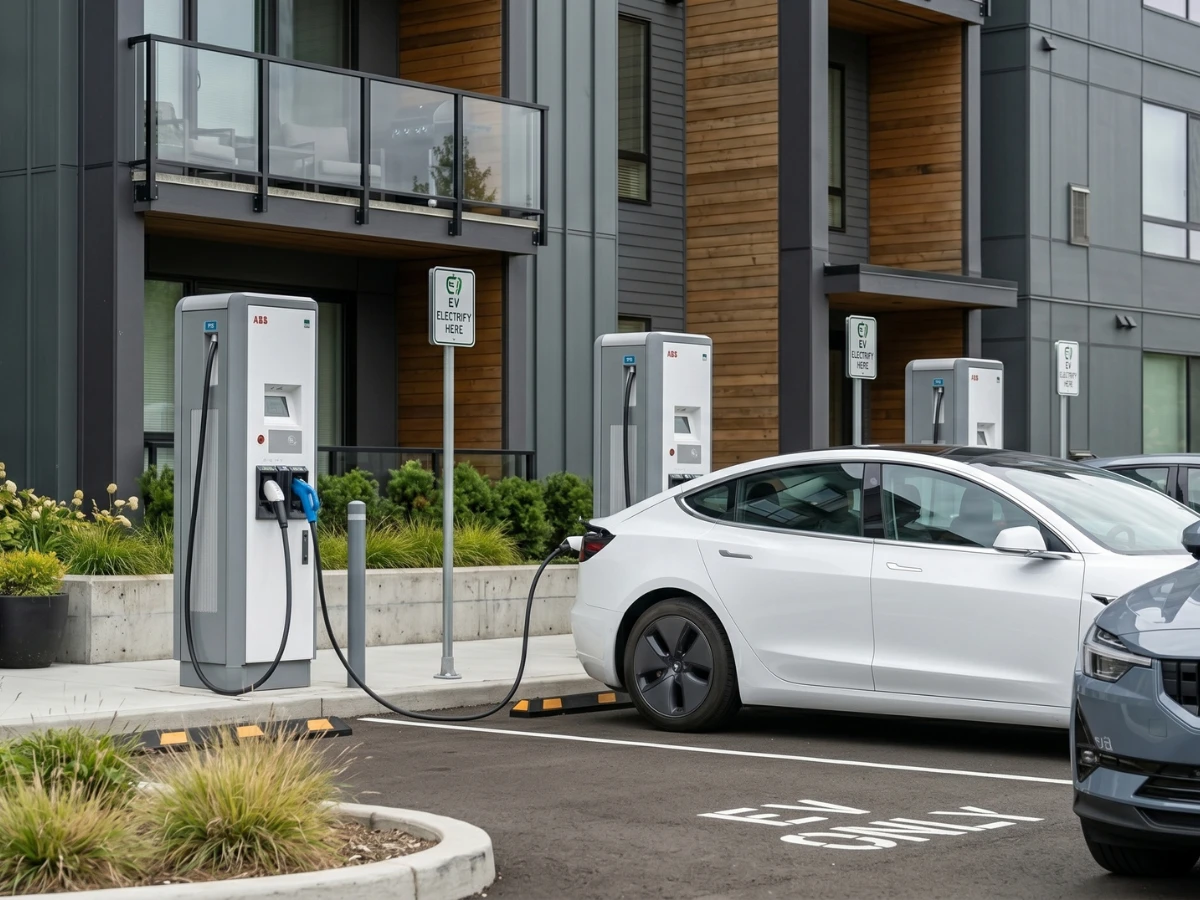
It's a valid worry! Nobody wants to see their monthly HOA dues spike to cover someone else's driving habits. If you use a shared meter EV charging HOA setup without a clear plan, the entire community ends up subsidizing those EV drivers, which is a quick way to ruin the "Minnesota Nice" vibe.
Fortunately, you have highly reliable options to choose from. Here is a clear breakdown of the four primary billing models we set up for Twin Cities properties:
Option 1: Subscription Service (The "Flat-Rate" Monthly Subscription)
With this approach, the HOA charges EV-driving residents a flat monthly fee (for example, $50 or $75 a month) to access the community's chargers.
- How it works: The HOA estimates average usage and charges a flat rate, which is added directly to the resident's monthly assessment.
- The Pros: Super simple to set up. There is no need for complex software, physical network integrations, or cellular data plans.
- The Cons: It’s rarely fair. Someone who only drives 5 miles a day to work pays the exact same amount as a resident who commutes 60 miles daily. It also fails to account for fluctuating seasonal utility rates.
Option 2: Individual Direct-to-Unit Metering (The "My Power" Approach)
If you live in a townhome community with attached private garages, we can often set up an individual EV charger installation that taps the charger directly into that specific resident’s individual electric panel.
- How it works: Our team routes the physical conduit from the resident's personal breaker panel directly to their parking stall's charger.
- The Pros: The electricity flows through the resident's personal home meter. They get billed directly on their standard monthly utility bill from Xcel Energy or Dakota Electric. The HOA stays completely out of the billing loop.
- The Cons: This is usually impossible in multi-story condo buildings or shared underground parking garages, where individual panels are hundreds of feet away from the parking stalls. Running heavy-duty conduit that far can be cost-prohibitive.
Option 3: Physical Sub-Metering (The Traditional Way)
Under this model, we install secondary, physical utility-grade sub-meters alongside the HOA's main common electrical panel, dedicated solely to the EV charging stations.
- How it works: The chargers run on the shared common meter, but a physical sub-meter sits on the line to measure the electricity flowing specifically to the EV stalls.
- The Pros: Highly accurate, physical tracking of utility-grade power. There are no ongoing software subscriptions or cellular network costs.
- The Cons: The HOA board or the property management team still has to manually walk the property to read these physical meters every month, do the math, and manually add the charges to the residents' monthly bills. It adds a major recurring administrative task to your team's to-do list.
Option 4: Smart Pay-Per-Use & Third-Party Billing Networks (The Hands-Off Approach)
This is our favorite solution for shared parking garages. We install smart, network-connected (OCPP-compliant) commercial chargers.
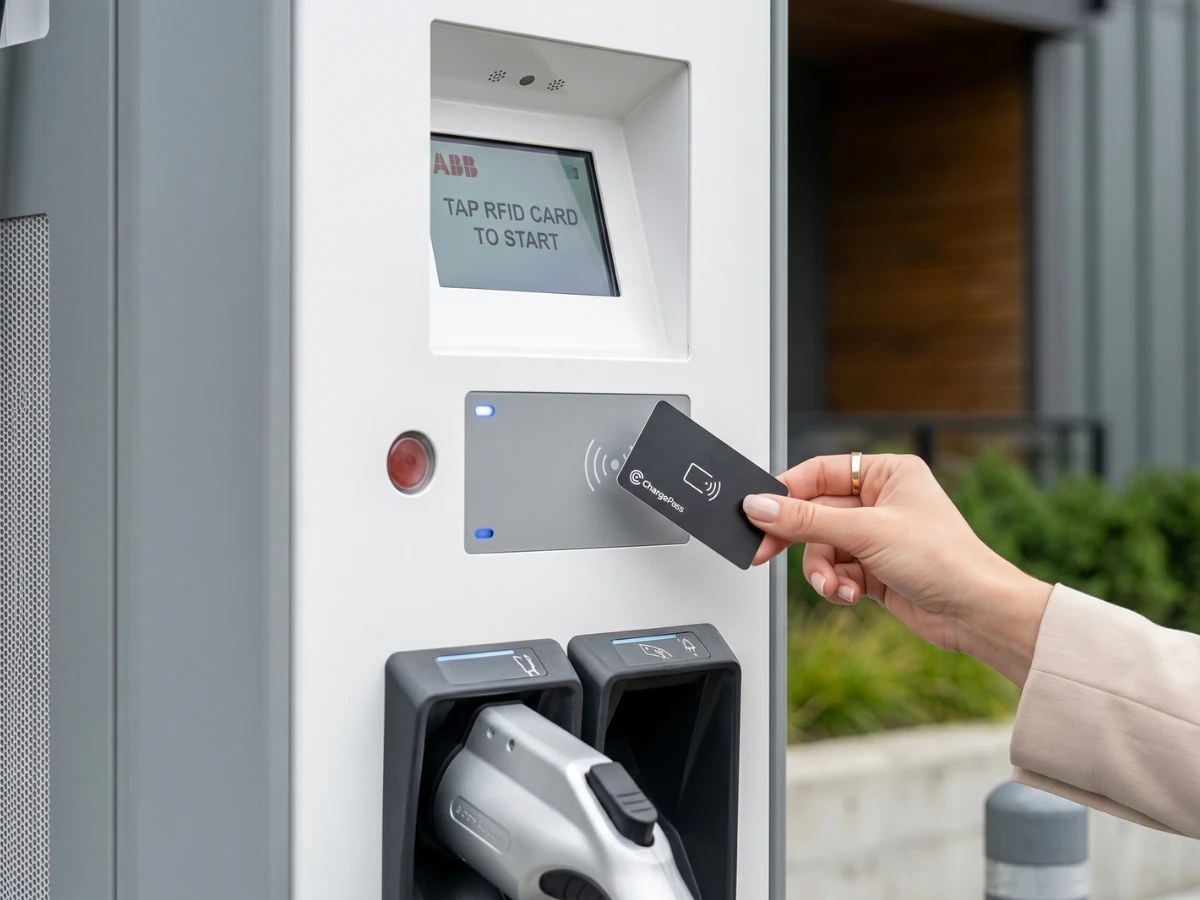
- How it works: When a resident wants to charge, they tap their personal RFID key fob or use a smartphone app. The third-party billing network registers who they are, measures the exact kilowatt-hours (kWh) they pull, and automatically bills their credit card on file. The software provider then automatically deposits those collected funds back into the HOA's bank account to reimburse you for the utility bill.
- The Pros: It is completely fair, completely transparent, and 100% hands-off for the board and property manager. You can easily set off-peak charging times to save money on utility rates.
- The Cons: There is a small monthly software subscription fee, but this is easily offset by adding a tiny markup per kWh to the user's charging cost.
HOA EV Billing Options Comparison
Billing Model | Administrative Effort | Fairness to Residents | Best Suited For | Key Drawback |
|---|---|---|---|---|
Option 1: Subscription Service | Low | Low | Small communities with uniform driving habits | Subsidization (high-mileage drivers underpay) |
Option 2: Individual Metering | None (Zero HOA involvement) | High (Direct billing) | Townhomes with attached private garages | Cost-prohibitive or physically impossible for condos |
Option 3: Physical Sub-Metering | High (Manual monthly tracking) | High (Usage-based billing) | Mid-sized communities wanting to avoid software fees | Adds manual recurring work to property managers |
Option 4: Smart Third-Party Billing | None (Fully automated) | High (Usage-based billing) | Shared parking garages and multi-story condo buildings | Small recurring software fee (paid by users) |
Power Problems: Will EV Chargers Overload Your Building?
The short answer is: not if you design the system with smart technology.
It’s a very common worry for older properties in the Twin Cities. If multiple residents plug in high-powered chargers at 6:00 PM when everyone gets home, a building's electrical panels can easily overload. But you do not need to spend big bucks on a massive utility upgrade to prevent this.
As experienced electrical contractors in MN, we prevent overloads by setting up smart EV load management. This technology constantly monitors your building's overall power levels. If electricity demand spikes (like on a hot summer evening when everyone's air conditioning is running), the system automatically balances the energy and temporarily slows down the EV charging. Once the building's overall energy use drops, full charging speeds resume automatically.
By dynamically sharing the power you already have, you get a fully EV-ready building without the risk of blown fuses or costly utility grid upgrades. Next, let’s look at how we take you from analyzing your building's current capacity to a fully functional setup.
The Game Plan: A Step-by-Step Installation Roadmap
Want to know what a successful rollout looks like? Here is the simple playbook we use to get communities up and running:
Step 1: The Site Audit (The "Can We Do It?" Phase)
Our master electricians check your existing panels, calculate how much power capacity your building has left, and map out the easiest, cleanest installation routes to minimize any digging, drilling, or trenching.
Step 2: Policy & Rules (The "How Do We Run It?" Phase)
We sit down with your board and property managers to explain the technical mechanics of each billing option. While we leave the legal drafting to your legal team, we will gladly provide technical recommendations and guidelines to help you outline clear, fair rules for charger access, parking limits, and cost-recovery rates.
Step 3: Permitting & Utilities (The Commercial Coordination)
LME manages the necessary municipal commercial electrical permits and coordinates the service load inquiries directly with utility providers like Xcel Energy or Dakota Electric to make sure your system is fully approved.
Step 4: Install & Activation (Go Time)
We securely mount the hardware, run the heavy-duty commercial wiring, configure the smart billing software, and show your team exactly how the simple management dashboard works.
Why Partnering with a Local Commercial Pro Matters
Multi-family electrical work is a completely different beast from standard residential jobs. You aren't just running a wire; you’re dealing with structural concrete, commercial fire codes, property-wide communication networks, and cloud software.
When you partner with a dedicated commercial EV installer in the Twin Cities like Loch Monster Electric, you get a licensed team that bridges the gap between rugged, code-compliant physical installations and smart energy-management tech. We design systems built to scale. When you need to expand from two chargers to ten down the road, you won't have to tear up your parking lot, core drill your concrete walls, or rebuild your infrastructure all over again.
Ready to make your property's transition to electric driving smooth, fair, and stress-free? Let's chat! Head over to our website at Loch Monster Electric to schedule an on-site consultation, and let's get your Twin Cities community ready for the future.
Frequently Asked Questions
Not yet. While there is a strong ongoing advocacy push to pass a formal Right-to-Charge law in Minnesota, it is not yet a statutory mandate. However, under Minnesota's latest HOA Bill of Rights, all HOA rules must be "reasonable." An outright ban on resident-funded EV chargers would likely fail this test, meaning boards should proactively establish clear architectural policies rather than attempting to enforce a ban.
Absolutely. If a resident is requesting a personal, dedicated charger for their exclusive parking spot, the HOA can require them to pay 100% of the costs. This includes their private residential EV charger installation, city permits, future removal if they move, and any necessary liability insurance.
Level 2 chargers run on 240V power (just like your clothes dryer) and can fully charge a car overnight in about 4–8 hours. This is the modern standard for multi-family properties, where cars are parked overnight anyway. Level 3 chargers (DC Fast Chargers) can charge a car in 20 minutes, but they cost tens of thousands of dollars, require industrial-grade power, and are generally overkill for residential buildings.
With smart commercial chargers, they stay completely locked and inactive until an authorized resident taps their RFID key fob or uses the smartphone app. If a non-resident pulls into your lot and tries to plug in, no electricity will flow.
Yes, and they are awesome! Utility providers like Xcel Energy and Dakota Electric offer great commercial rebate programs that can cover a massive chunk of your infrastructure upgrades, panel installations, and even the smart chargers themselves. Our team at LME will help you track down and apply for every single local incentive you qualify for!