MONDAY–FRIDAY: 8:00 AM – 5:00 PM |
EMERGENCY SERVICE AVAILABLE 24/7
CALL NOW!  763-292-1191
PRICINGJOURNALMEDIAGLOSSARYABOUT USCONTACT US

HOA EV Charging

EV LOADMANAGEMENT

Add More Chargers Without Upgrading Your Service.

Every Level 2 EV charger draws 7 to 11 kilowatts of power while in use. In a multifamily parking area where multiple residents charge overnight, that load adds up fast — and without any coordination between chargers, simultaneous charging sessions can push a building's electrical service past its capacity limit. The result is tripped breakers, frustrated residents, and a service upgrade conversation nobody budgeted for.

A dynamic load management system solves this by monitoring total building load in real time and automatically distributing available capacity across active charging sessions. More chargers on the same infrastructure — without the risk of overloading your service.

Phone Is Usually The Fastest Way To Reach You, But We're Happy To Follow Up However Works Best.
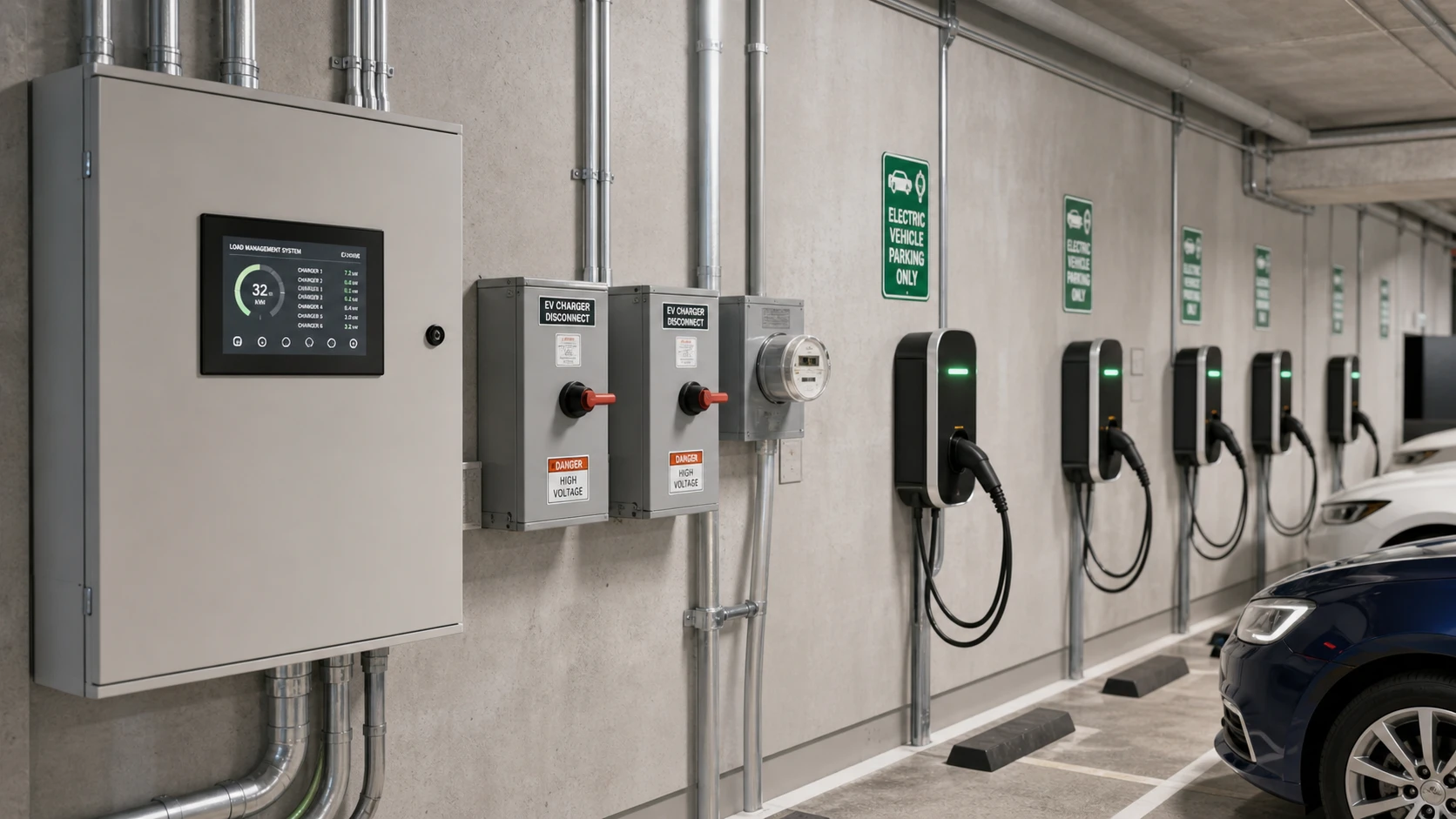
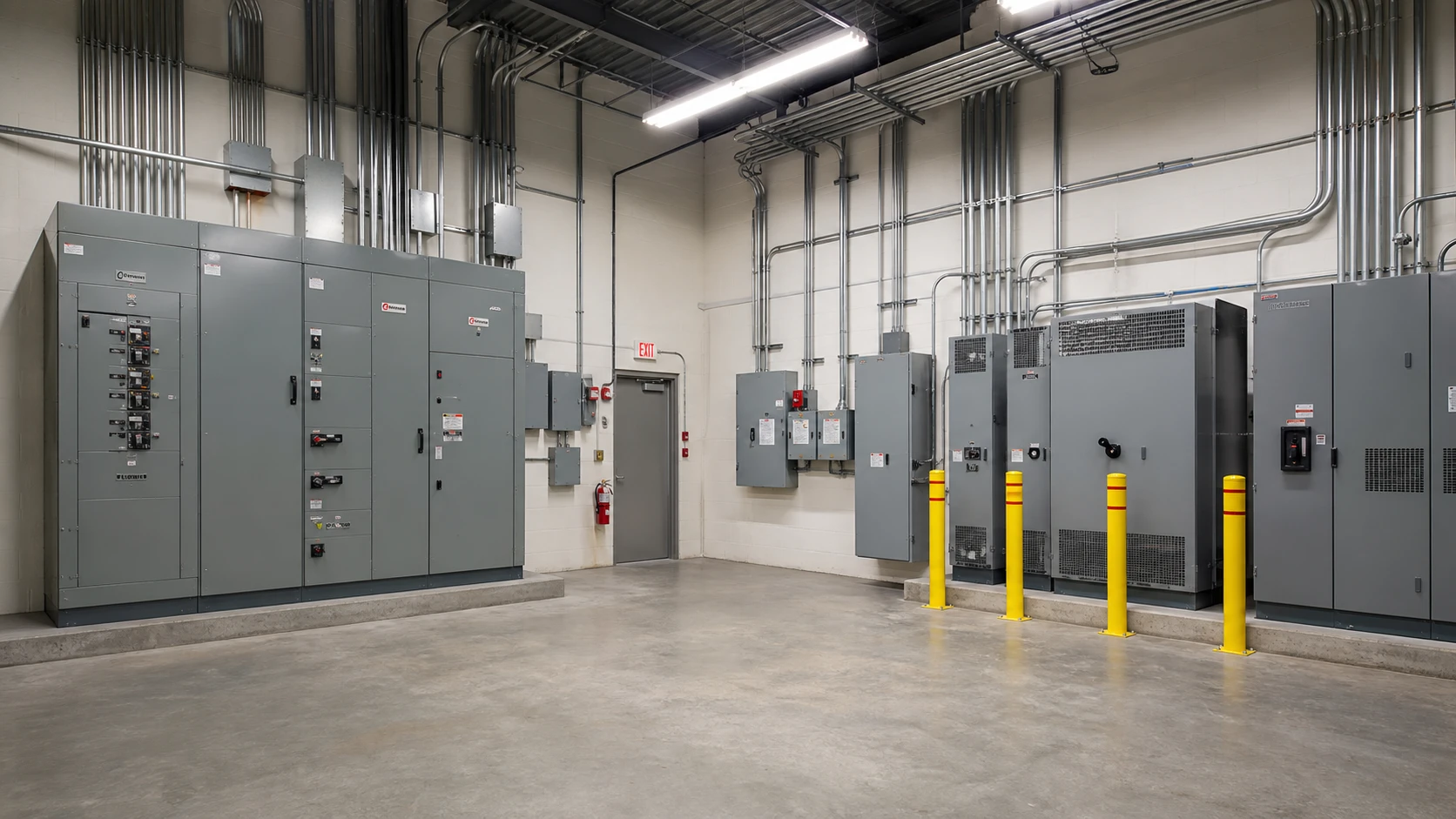
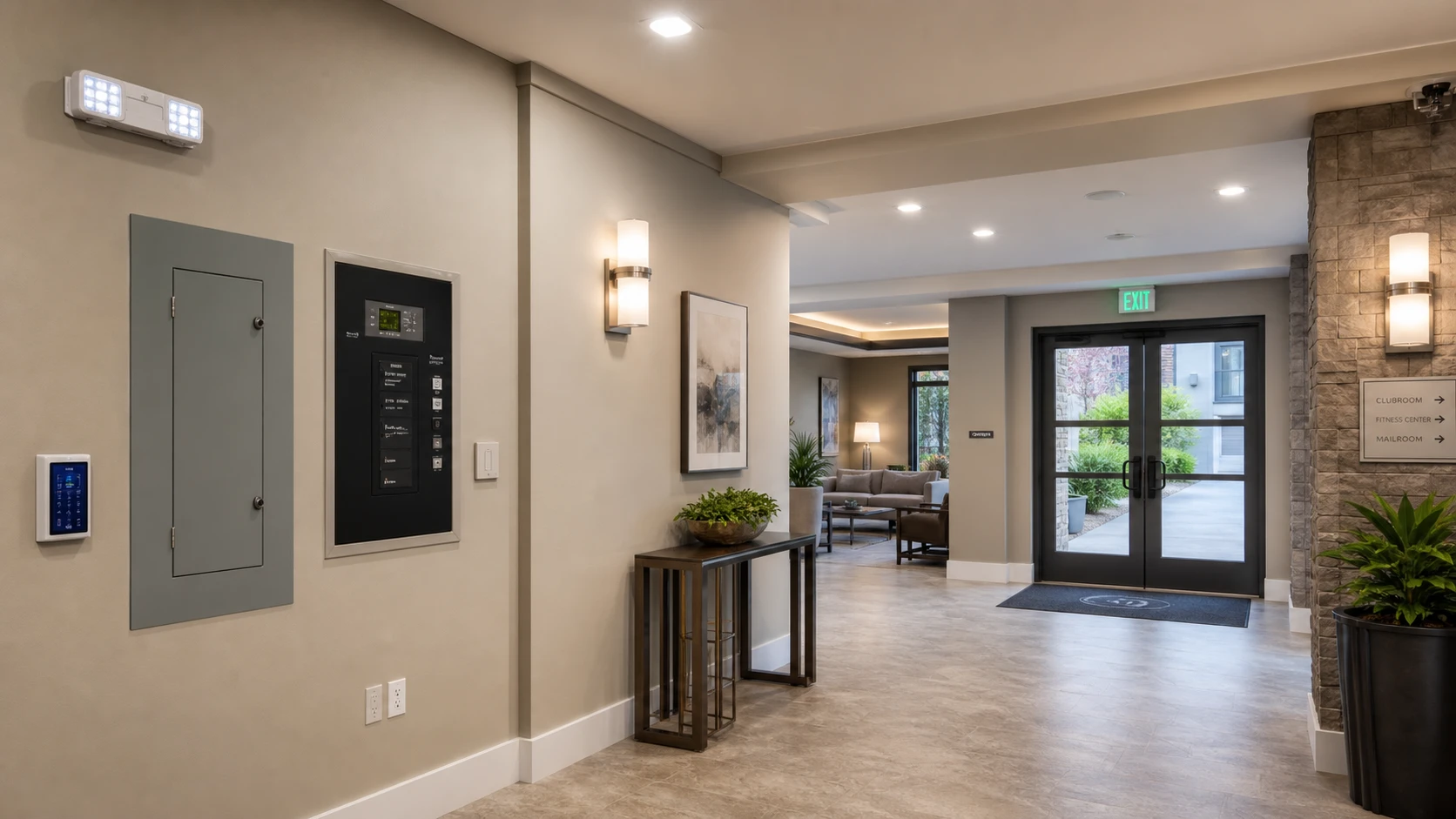
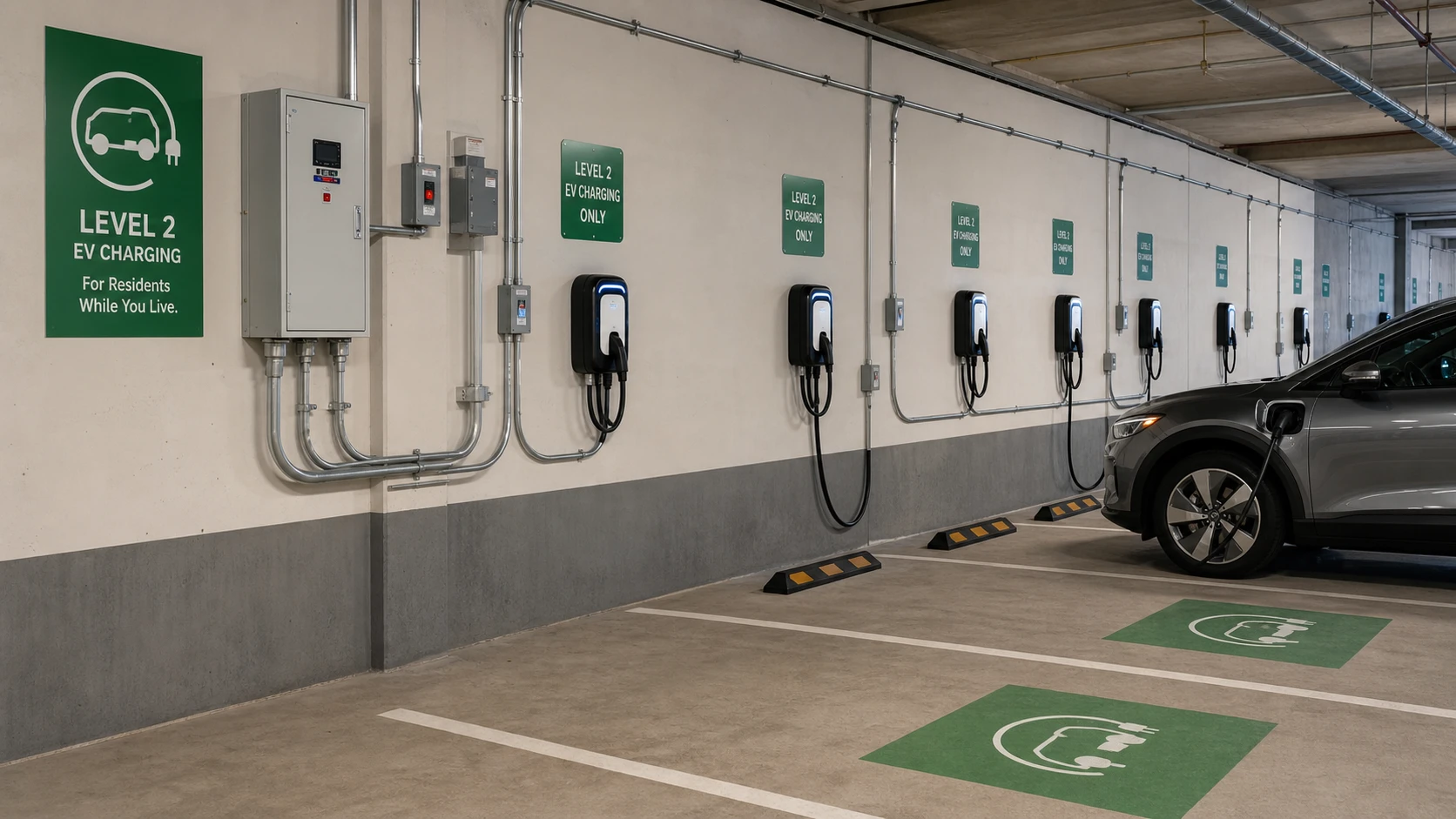
EV load management panel and shared Level 2 chargers for a Minnesota HOA parking garage.

When Do You Need EV LOAD MANAGEMENT?

YOU WANT TO ADD MULTIPLE CHARGERS WITHOUT A SERVICE UPGRADE

A multifamily building service upgrade to support unmanaged EV charging can cost tens of thousands of dollars — new service entrance conductors, a larger panel, utility coordination, and permits. For many HOA boards, that cost makes an EV charging program feel financially out of reach before it starts. A properly designed load management system allows 4 to 8 chargers to share the capacity that would otherwise support only 1 to 2 unmanaged stations — by distributing available power intelligently across active sessions rather than reserving full capacity for each one simultaneously. The result is more charging availability at a fraction of the infrastructure cost, and a system that scales as resident adoption grows without requiring another infrastructure investment.

YOUR EXISTING CHARGERS ARE CAUSING DEMAND CHARGE SPIKES

Utility demand charges are calculated based on the highest level of power your building drew at any single point during the billing period — not on total consumption. A cluster of unmanaged EV chargers all starting sessions at the same time, typically when residents return home in the evening, can create a sharp spike in peak demand that drives up your utility bill every month, regardless of how little charging happens at other times. Load management systems control the rate at which each session charges and stagger the demand across sessions to flatten that spike. For buildings already seeing unexplained increases in utility costs after adding chargers, load management retrofitted onto an existing installation often pays for itself within the first year through demand charge reduction alone.

YOU NEED TO ALLOCATE CHARGING COSTS FAIRLY BETWEEN RESIDENTS

In a shared charging system without energy metering, the HOA absorbs all charging costs in the common area utility bill — regardless of how much individual residents use the chargers. That arrangement works temporarily, but becomes contentious as adoption grows and the cost differential between heavy and light users becomes harder to ignore at budget time. Load management systems with integrated energy metering track kilowatt-hour consumption per session and per user, giving the HOA accurate data to bill residents for exactly what they used. We configure the system to match your billing model — cost per kWh billed to residents, subscription access, or consumption included in HOA fees with usage caps — so the financial structure is clear before the first charger goes live.

Want Ev Load Management?

WHERE MINNESOTA & WISCONSIN
LIVE, WORK & MANAGE—WE'RE THERE

If you've got an emergency—sparking wires, no power, or something that just doesn't feel right—call our 24/7 emergency line. We'll get someone out as soon as possible.

WE RESPOND FAST. NO RUNAROUND.

CALL NOW! 763-292-1191

Who We Are

WHAT YOU CAN EXPECT

Time And Materials Pricing—So You Only Pay For What Your Job Actually Needs.

Licensed And Insured Electricians Who Treat Your Home Or Building With Respect

Clear Communication—We'll Walk You Through What We're Doing And Why

Local Folks Who Care About Doing Things The Right Way—Not Just The Fast Way

FREQUENTLY
ASKED
QUESTIONS

Unmanaged charging means each charger operates independently at its full rated power whenever a vehicle is connected, with no coordination between stations. Managed charging means a central system monitors total load and automatically adjusts each session's charge rate to keep the building's total draw within a defined limit. Unmanaged works fine for one or two chargers with ample electrical headroom. For any property with multiple chargers sharing a service, managed charging is what makes the system reliable as more residents start using it.

Without load management, simultaneous charging sessions draw their full rated power independently. On a building service that was not sized for that cumulative load, the result is tripped breakers during peak hours — typically evenings when residents return home and plug in at the same time. Resetting a tripped breaker restores power temporarily, but the same situation repeats the next evening. The only permanent fix at that point is either a service upgrade or retrofitting the load management system that should have been part of the original installation.

In most cases, yes — though the ease of retrofitting depends on the charger brand and model installed. Some manufacturers support load management through a software update and a monitoring device added to the panel. Others require replacing the chargers with models that support networked load management. We assess your existing installation and tell you what is required before you commit to anything. If a retrofit is practical, we configure the system for your building's capacity and your residents' billing requirements.

Dynamic load management systems monitor total building load — not just the chargers — and adjust available charging capacity in real time based on what the rest of the building is consuming. During periods of lower overall demand, chargers can run at higher rates. During peak demand periods, charging sessions are throttled to protect the building's service capacity. The result is that residents get as much charging as the available headroom allows at any given time, rather than a fixed allocation that wastes capacity when building demand is low.

It can, depending on how many sessions are running simultaneously and what the building's available capacity is at that time. In practice, most EV owners plug in overnight and need a full charge by morning — and even a throttled Level 2 session delivers enough range for typical daily driving in that window. We model the charging scenarios for your specific property — number of chargers, expected simultaneous sessions, available capacity — so you understand the real-world charging experience before the system is installed.

Why Choose Us

WE OFFER A WIDE RANGE OF ELECTRICAL SERVICES,
FROM NEW CONSTRUCTION TO TROUBLESHOOTING.

Review Us On

GOOGLE

Our Electrical Services

Where We Work

WE SERVE THE ENTIRE TWIN CITIES METRO FROM MINNEAPOLIS AND ST. PAUL TO MAPLE GROVE, WOODBURY, EDEN PRAIRIE, AND EVERYWHERE IN BETWEEN.

VIEW OUR SERVICE AREA

THE ELECTRICAL JOURNAL

EXPLORE