Whole-Home Surge Protection (Type 2 SPDs): Guarding HVAC Control Boards
Updated: Nov 17, 2026
Learn how late-autumn storms and grid switching send surges into Twin Cities homes, why furnace control boards and smart thermostats fail, why power strips can’t protect hardwired HVAC gear, and how a Type 2 whole home surge protector at your panel keeps your heat running.
It’s 6 a.m. on a late November morning in Shoreview. The wind howled all night, and the lights blinked around midnight. Now the house is cold, and the furnace won’t fire. Your HVAC tech’s verdict? A fried control board, with the replacement part on backorder until next week.
In this article, we’ll explain why late-autumn storms and grid switching spike your power, why heating controls are so fragile, and why power strips can’t help. Then we’ll show you how a Type 2 whole home surge protector at your panel shields your furnace control board and keeps your heat running all winter long.
Loch Monster Electric are a team of licensed electricians serving homeowners across Minnesota and Wisconsin. Ready to get started? Call us at 763-292-1191 or fill out our contact form.
Late-Autumn Storms & Grid Switching Spikes
November is rough on the Minnesota power grid. Windstorms knock branches onto lines, especially in older, tree-lined neighborhoods like White Bear Lake and Richfield. Fast temperature drops also make heating demand jump overnight.
To keep up, utilities perform frequent grid switching and load transfers, rerouting power around damaged lines. Each switch can send a burst of high voltage down your service line. Late-season lightning adds even more spikes.
Modern furnaces and heat pumps run on sensitive 24V microprocessor control boards that don’t handle overvoltage well, so one bad spike can leave you without heat on a freezing night.
If a storm has already knocked out your lights, our power outage after storm repair guide covers the first safety steps, who fixes what at the meter, and typical repair costs.
Why HVAC Circuit Boards & Smart Controls Fail
Older furnaces used simple mechanical switches. Today’s heating equipment is basically a small computer, which makes it efficient but fragile. These parts take the hardest hits:
- Furnace control board: This is the brains of the operation. It runs the inducer, igniter, gas valve, and blower. When it fails, your furnace won’t start.
- 24V transformer: It steps 120 volts down to 24 volts for the controls. One surge can burn it out or blow the board’s fuse.
- Smart thermostat: It shares the furnace’s low-voltage loop, so smart thermostat surge protection matters just as much as protecting the furnace.
- Heat pump and blower electronics: Inverter drives and ECM blower motors use solid-state chips that don’t tolerate spikes well.
Furnace control board surge damage leads to an instant emergency heating shutdown. Replacing a board during a sub-zero cold snap is costly, and model-specific parts can take days to arrive.
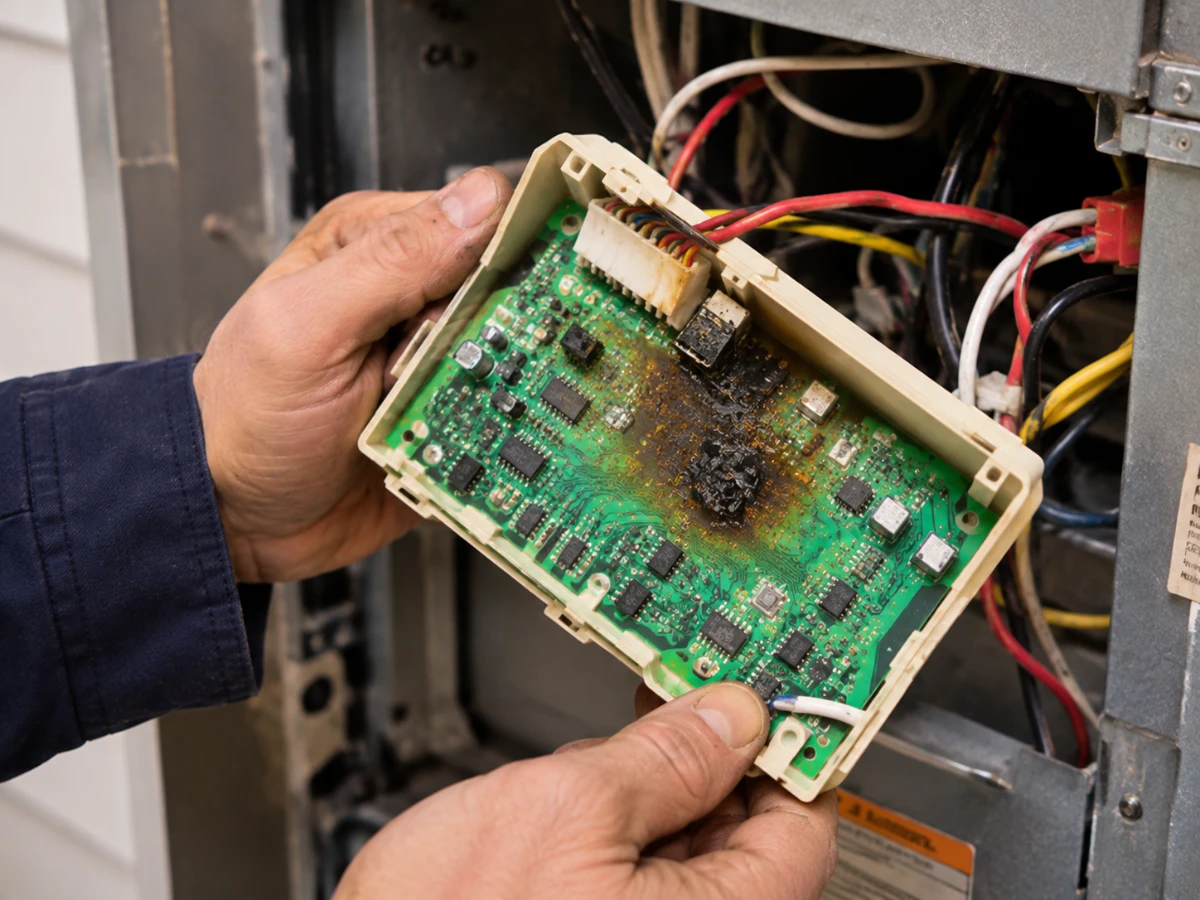
Not every dead control board is surge damage, though. A short in the thermostat wiring can blow the same fuse or fry the same board. Our article on safety red flags in thermostat wiring covers melted insulation, wrong wire gauge, corrosion, and other problems worth ruling out.
The Internal Surge Reality: Why Power Strips Fall Short
Up to 80% of daily surges start inside your own home. Every time a heavy motor cycles on or off, it sends a voltage ripple through your wiring. Common culprits include:
- Refrigerators and freezers: Their compressors cycle on and off all day long.
- Sump pumps: They run hard during fall rains and spring thaws.
- Furnace blower motors: Your own furnace adds to the problem every time it cycles.
These daily micro-surges work like an electrical version of high blood pressure. One spike won’t do much, but thousands of them slowly wear down microchips over time. That’s why a furnace board can quit on a calm, clear day even without a lightning strike.
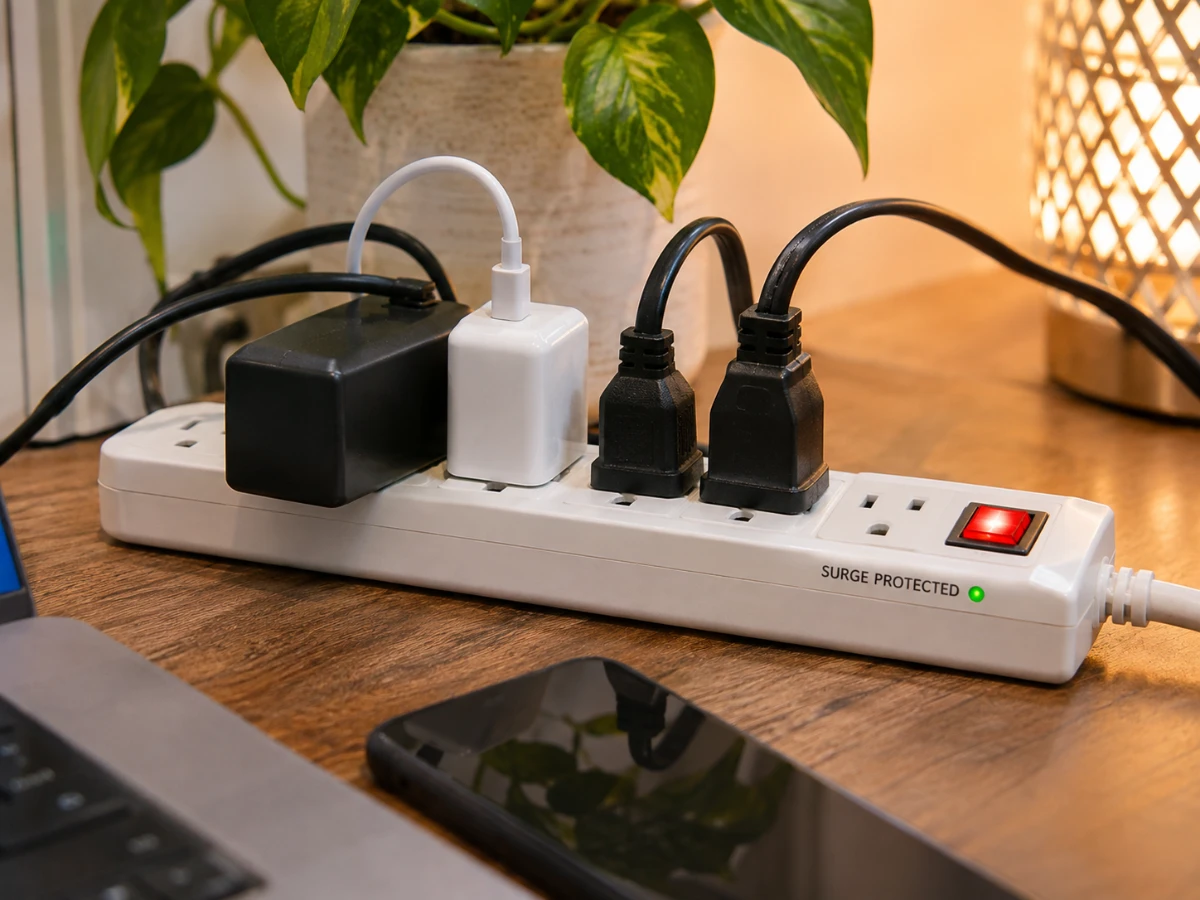
Plug-in surge strips are Type 3 surge protection devices (SPDs), and they only protect what’s plugged into them. Your furnace is hardwired, your thermostat is wired into the wall, and your breakers sit in the panel. A power strip can’t reach any of them, so real HVAC surge protection has to start at your electrical panel.
Our whole-home surge protection services can install panel-level Type 1 and Type 2 devices to cover your breakers, outlets, and hardwired equipment all at once.
Whole-Home Surge Protection: How Type 2 SPDs Protect Your HVAC Control Boards
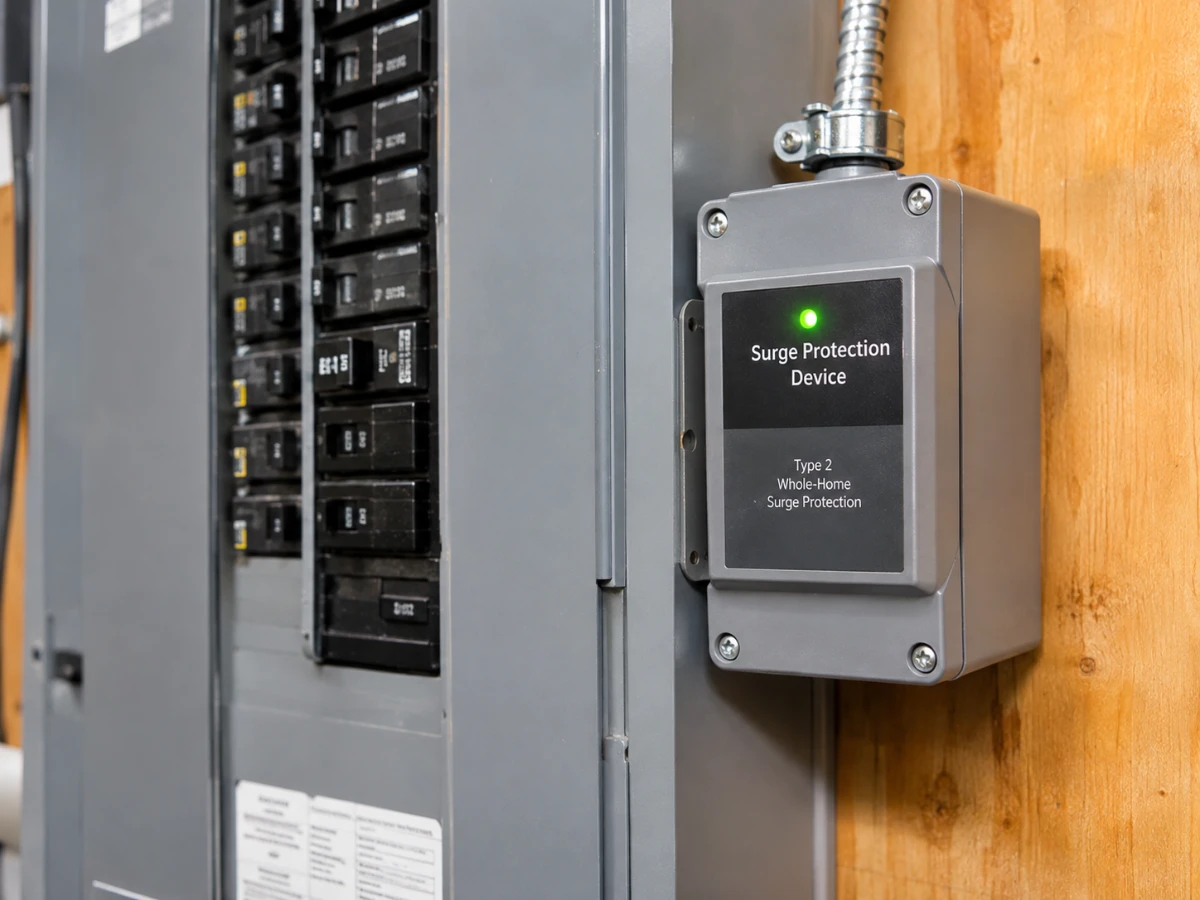
A Type 2 surge protective device, often called a whole-home SPD, mounts inside or right next to your main electrical panel. Most units connect through a two-pole breaker that ties into both 120-volt legs feeding your home.
It acts like a gatekeeper, watching incoming utility power and your internal circuits at the same time. When voltage jumps too high, it clamps down in nanoseconds. The extra energy goes safely down your grounding path, long before it can reach your furnace control board. Type 2 SPDs come with status lights that show that protection is still active or not.
Our home surge protection cost guide breaks down Twin Cities pricing, panel space and grounding factors, and local permit rules.
Code Mandates & Loch Monster Electric Installation
According to section 230.67 of the National Electrical Code (NEC), enforced in Minnesota, a Type 1 or Type 2 SPD is mandatory on every new home service. It also applies when service equipment is replaced, so a panel swap in an older rambler home has to be done with surge protection installed.
Our licensed electricians check a few things before mounting any unit:
- Ground path integrity: We test the ground rods, grounding conductor, and water pipe bond.
- Busbar and panel health: We look for heat damage, loose lugs, and open breaker space.
- Permit and inspection: We pull the permit and make sure the work passes inspection.
Our whole house surge protector installation guide explains why professional installation is key to keeping your home safe. From Eagan to Plymouth, we install panel-mounted surge protectors with transparent time & materials billing, so you only pay for the time and parts your job actually needs.
Keep Your Furnace Running All Winter
A furnace that won’t fire on the coldest night of the year is useless. A Type 2 whole-home surge protector at your panel guards your furnace control board, smart thermostat, and every appliance in your house.
Loch Monster Electric has the licensed electricians to get yours installed to code. Call us today at 763-292-1191.
Frequently Asked Questions
Yes. A big spike from a storm or grid switching event can burn out the board, its fuse, or the 24V transformer right away. Smaller daily surges can also wear the board down over time until it fails without warning.
No surge protector can promise full protection from a direct lightning strike on your home. A Type 2 SPD greatly lowers the risk from nearby strikes and utility spikes, which are far more common. Good grounding and plug-in strips for sensitive electronics add extra safety layers.
Some homeowners add a small surge device at the furnace or outdoor heat pump for extra coverage. Even so, the panel-mounted unit is the foundation, since it protects every circuit in the house, not just one appliance.
Under the NEC rules Minnesota follows, new home services need a Type 1 or Type 2 SPD, and so does any home where the service equipment is replaced. If you aren’t replacing your panel, it isn’t required, but it’s still a smart upgrade.
No. A surge protector can’t repair a damaged board, so you’ll need your HVAC tech to replace it first. Adding a whole home surge protector afterward helps make sure your new board doesn’t meet the same fate.
Most units have indicator lights on the front. If the lights go out or change color after a big storm, the protection may have failed, and it’s time to have an electrician check or replace the unit.