
Pre-Freeze Underground Electrical Trenching for Detached Garages and Post Lights
Updated: Nov 19, 2026
This guide explains why Twin Cities homeowners should finish underground electrical trenching before the ground freezes, how frozen soil adds time and cost, which projects to plan now (garage subpanels, EV chargers, post lights, hot tubs), NEC burial depths, and frost-heave protection.
It’s a dark November evening in Roseville, and you’re walking out to your detached garage with a flashlight because the driveway post light hasn’t worked since the Clinton years. The single bulb in the garage has burned out again, and you’d really like to run a heater in there during winter. But once the ground freezes, getting new power out to that garage turns into a whole different job.
In this guide, we’ll walk you through why pre-freeze underground electrical trenching matters so much in Minnesota, how frozen soil drives up digging costs, which outdoor projects are worth doing now, and what the code says about burial depth and frost protection.
We’re Loch Monster Electric, licensed electricians serving homeowners across Minnesota and Wisconsin. Ready to beat the frost? Give us a call at 763-292-1191 or fill out our contact form.
How Frozen Soil Inflates Trenching Time and Excavation Costs
Across Minneapolis, St. Paul, and the surrounding suburbs, autumn topsoil stays soft and easy to work for a while. But once late-November temperatures take a nosedive, that top layer can freeze solid in just a few cold nights. After that, frost keeps creeping deeper all winter. In a hard Twin Cities winter, it can reach three to five feet down.
That gives you a real deadline if you plan on adding underground power to a detached garage, a backyard workshop, or a dark driveway post light.
Here’s how digging compares before and after the ground freezes:
Digging Before the Ground Freezes
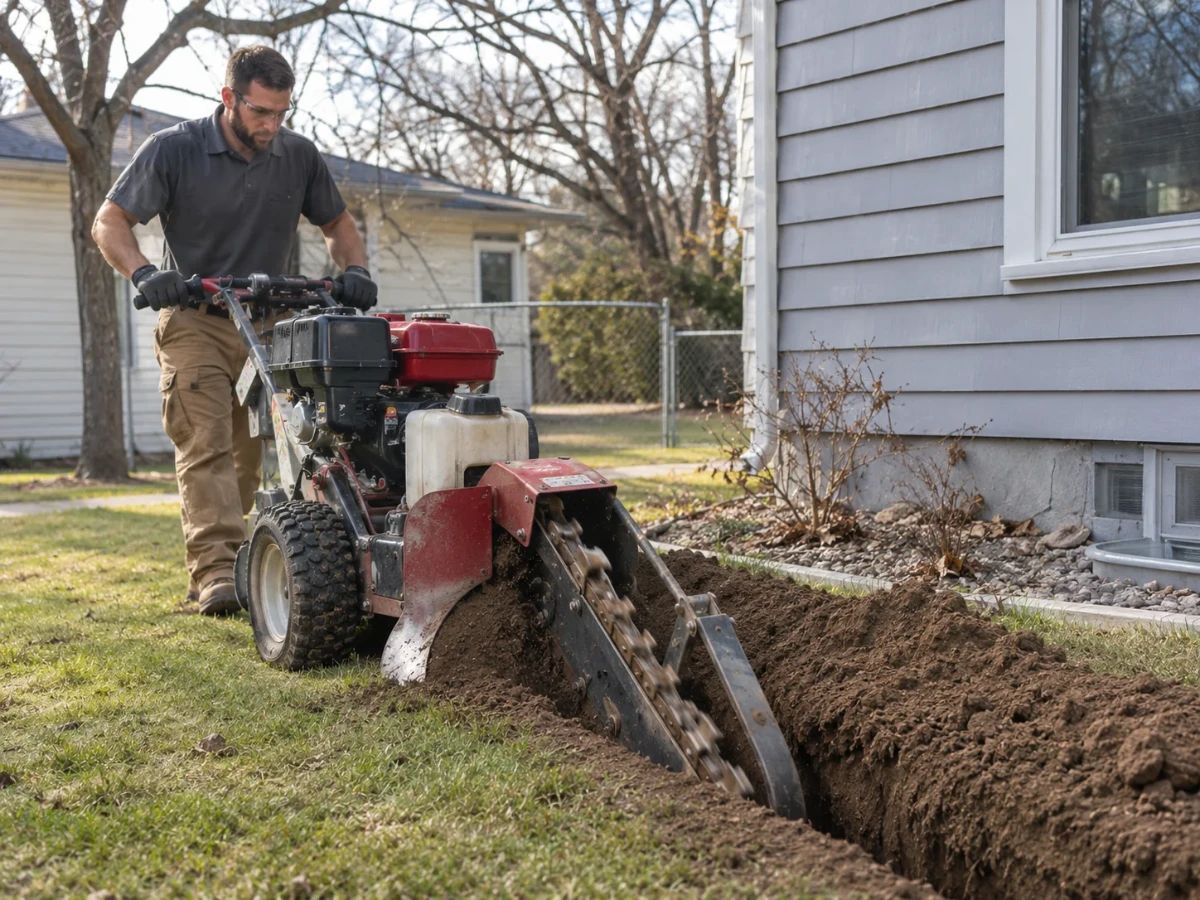
- Unfrozen soil digs clean: Digging through unfrozen fall dirt is pretty straightforward. A walk-behind trencher or a careful crew with spades can cut a clean, narrow trench across most yards in a few hours.
- Easy backfill: The soil comes out easy, sets aside neatly, and goes back in without a fuss.
Digging After the Ground Freezes
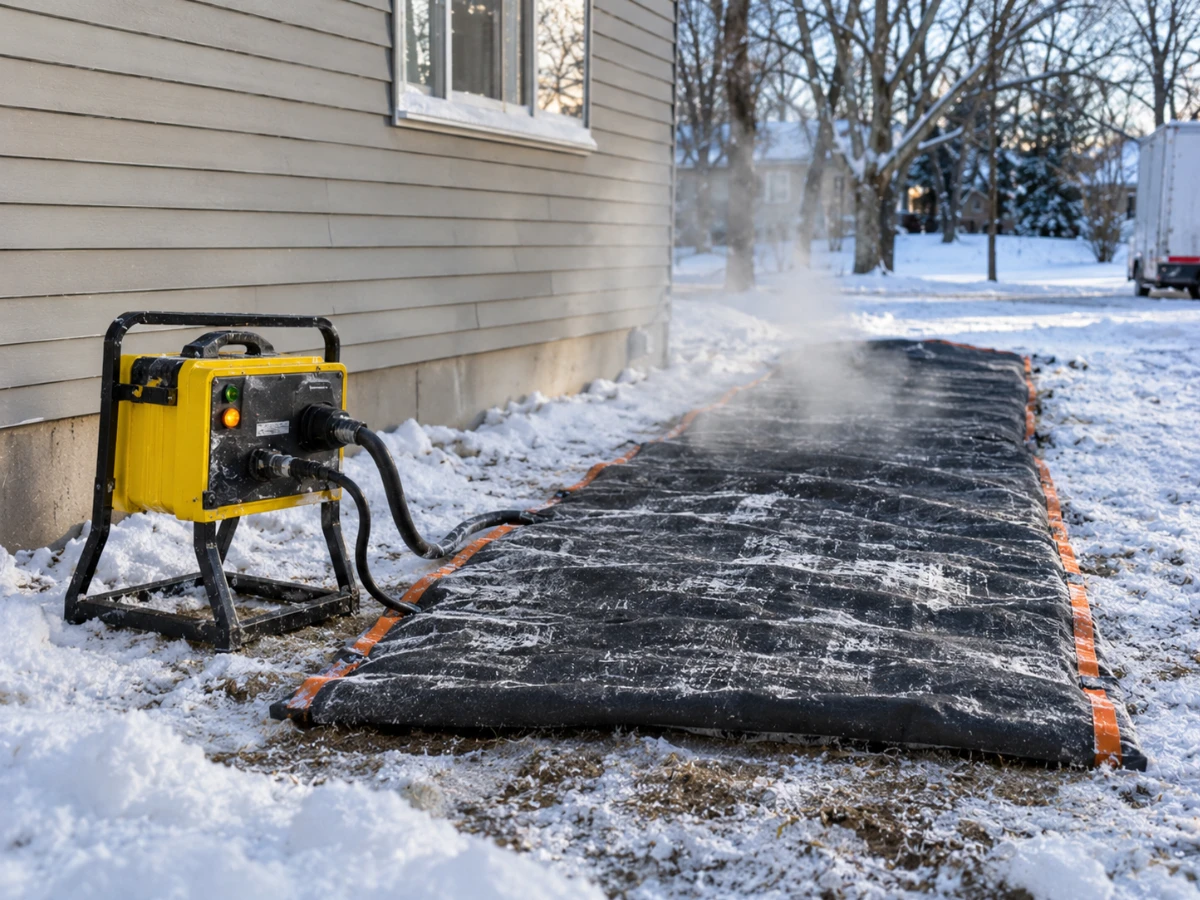
- Frozen ground acts like concrete: Once frost works its way down, the soil acts more like concrete than dirt. Standard trenchers bounce right off it.
- Extra equipment and labor: To get through, crews need frost-cutting teeth, ground-thawing blankets or heaters, and a lot more labor hours. All of that shows up on your bill.
- Spring settling: Frozen chunks don’t pack back down well, so the trench can settle and leave a sunken scar in your lawn come spring.
Why You Should Complete Trenching Before the Freeze
Scheduling your project before the hard freeze pays off in a few ways:
- Protects your landscaping: Soft soil lifts out cleanly, so sod and garden edges go back in place with far less damage.
- Speeds up inspections: City inspectors in places like Bloomington and Woodbury need to see open trenches. That’s easier to schedule when the weather isn’t fighting everyone.
- Avoids winter excavation surcharges: Getting your underground conduit trenching done while the ground is still workable means no thawing equipment, no surprise hours spent chipping at frozen clay, and no extra fees for frozen-ground digging.
- Gets your power running before the snow: Your new circuits are up and running before the first big snow buries the yard until April.
If your trenching project is for lighting up the yard, our landscape lighting installation cost guide breaks down fixture types, transformer sizing, and realistic price ranges for Twin Cities homes.
Trenching Projects to be Finished Before the Freeze
These are the outdoor jobs we see most often this time of year, and they all depend on getting a trench dug before the ground freezes.
Detached Garage Subpanels
Plenty of classic detached garages in South Minneapolis and St. Paul still run on one tired 15-amp circuit, sometimes on an old overhead wire. That’s barely enough for a light and a garage door opener. A new 60-amp to 100-amp detached garage subpanel fed by an underground line gives you enough capacity for an electric unit heater, an air compressor, and proper workshop tools.
If heat is your main goal, our 240V garage heater wiring guide explains breaker and wire sizing, disconnect rules, and how a garage unit heater gets installed.
Level 2 EV Charger Feeder Lines
Cold weather is hard on EV batteries, and their range can drop a lot during winter. A Level 2 charger in a detached garage or on a driveway pedestal helps you start each day with a full battery. That means running heavy-gauge 240V wire in an underground conduit, and it’s much easier to lay that pipe now than to fight frozen ground in February.
Our EV charger installation service covers everything from panel load checks and the dedicated 240V circuit to city permits and the paperwork for Minnesota utility rebates.
Driveway & Walkway Post Lights
Winter sunsets leave front steps, sidewalks, and yard edges dark for hours. Trenching for post lights lets us bury a dedicated 120V circuit or a low-voltage lighting run, so you can actually see that icy patch before you step on it.
Backyard Hot Tub Feeds
Most backyard hot tubs need their own 240V circuit, which usually runs underground in a conduit. If the tub sits away from the house, getting that trench dug now means you can fill it and fire it up before the deep cold hits.
Our hot tub wiring installation cost guide walks through Twin Cities pricing, Minnesota safety code rules, and what to expect from permits and inspections.
NEC Burial Depth Standards for Electrical Conduits
Underground electrical conduit requirements exist to ensure your wires are safe from shovels, aerators, fence posts, and shifting soil. The National Electrical Code (NEC) sets minimum cover depths for each wiring method.
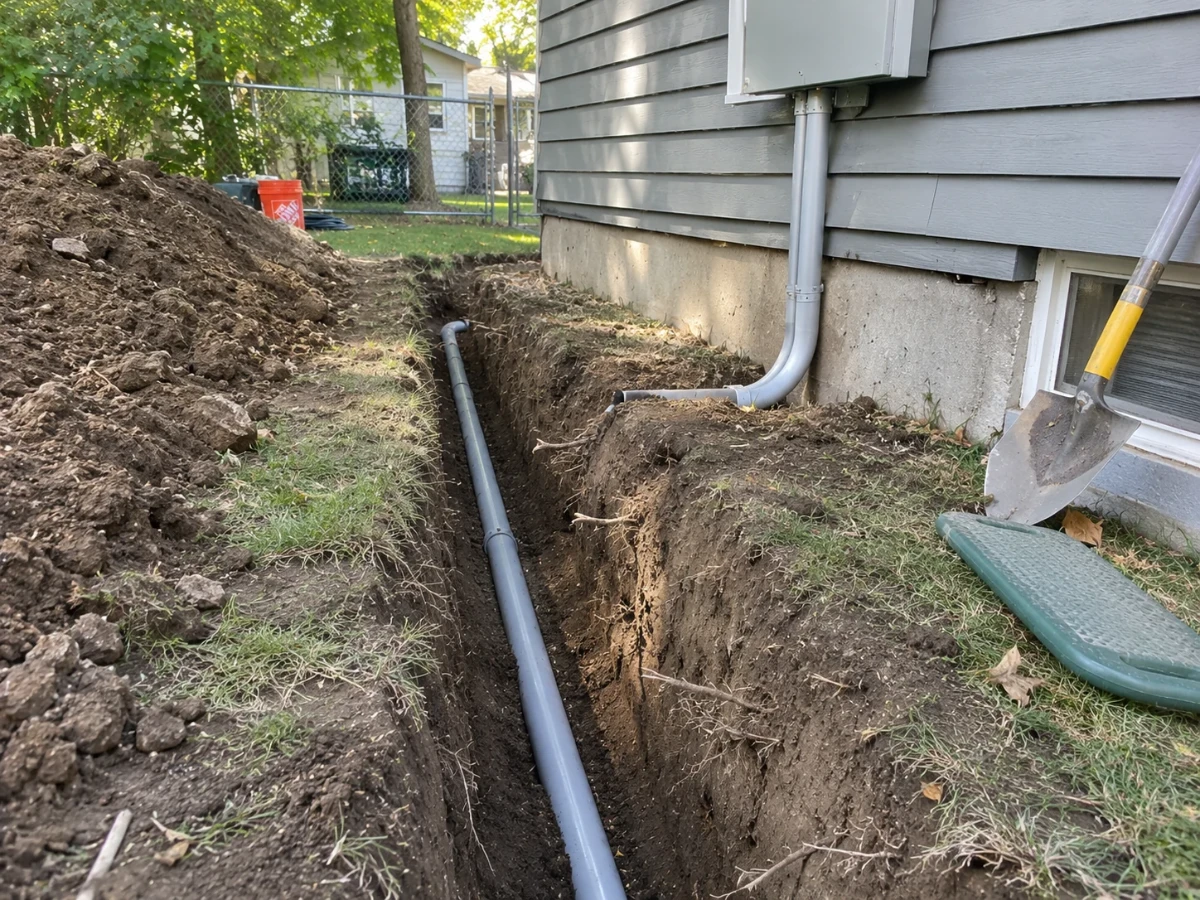
- Schedule 40 PVC conduit, 18 inches: This is the go-to choice for most homes. It’s corrosion-proof, affordable, and lets us pull new wire later without digging again.
- Direct-burial UF cable, 24 inches: No pipe is needed, but it requires the deepest trench and offers the least physical protection.
- Rigid metal conduit, 6 inches: This thick steel pipe can sit shallow, but the material and labor cost more.
- Low-voltage landscape lighting, 6 inches: Systems running 30 volts or less can be buried shallow because the shock risk is much lower.
Note: Electrical conduit burial depth is measured from the top of the pipe or cable to the finished grade, not from the bottom of the trench.
Got a driveway or sidewalk standing between your house and garage? Our trenching for outdoor EV charger guide covers how crews bore under concrete without tearing it up, plus how wiring methods compare for detached garage runs.
Professional Trenching & Frost-Heave Protection with Loch Monster Electric
Good underground electrical conduit installation goes beyond depth. Here’s how we handle every trenching job, start to finish:
- Locate utility lines first: Before anyone puts a shovel in the ground, we contact Gopher State One Call (811) at least 48 hours ahead. Utility companies can then visit your property to mark buried gas, power, water, sewer, and fiber lines with color-coded paint and flags.
- Checking for private lines: Private lines, like sprinkler pipes or an old garage feed, won’t get marked, so we check for those too.
- Permits: We pull the local electrical permit before the work starts.
- Choice of conduit: Every winter, freezing soil swells and lifts, then settles back down in spring. That frost heave can crack pipe or yank conductors right out of a junction box. To prevent that, we use Schedule 40 PVC underground and switch to tougher Schedule 80 where the pipe comes up out of the ground and could get bumped.
- Expansion fittings: We add expansion fittings on vertical risers at the house and garage. These slide like a telescope, so the ground can move without pulling anything apart.
- Inspection and proper backfill: We get the open trench inspected, then backfill and tamp the soil properly before the snow flies.
- Code-compliant work across the metro: Loch Monster Electric handles code-compliant underground trenching, garage subpanels, and outdoor lighting feeds across Minneapolis, St. Paul, Eagan, and the rest of the Twin Cities metro.
Beat the Frost Before It Beats You
Getting your trench dug, your conduit laid, and your inspection passed while the soil is still soft is the easiest way to get power to a detached garage, EV charger, or post light without paying winter digging prices.
Loch Monster Electric is the licensed electrician that can handle your pre-freeze underground electrical trenching from start to finish. Call us today at 763-292-1191 and let’s get it done before the ground locks up.
Frequently Asked Questions
It depends on the weather, but most Twin Cities yards stay workable until a stretch of hard freezing nights hits, usually in late November or early December. Once the top few inches freeze solid, digging gets slower and more expensive. Booking in October or early November is the safest bet.
Yes, it can be done, but it takes frost-cutting equipment or ground thawing, more labor, and often a messier yard in spring. Many homeowners decide to wait until the ground thaws instead.
Yes. New underground circuits and subpanels need an electrical permit and an inspection in Minnesota cities. The inspector usually checks the open trench before it gets backfilled. When you hire Loch Monster Electric, we handle the permit and inspection for you.
Yes. Minnesota law requires a locate request through Gopher State One Call at least 48 hours before digging, not counting weekends and holidays. The service is free, but it only marks utility-owned lines, not private ones.
We usually recommend PVC conduit. It protects the wires better, handles frost movement with the right fittings, and lets you pull bigger wire later if you add an EV charger or heater down the road.