

HOW TO GET PANEL UPGRADE REBATES IN MINNESOTA
This guide covers all panel upgrade rebates and grants available in Minnesota for 2026. Learn how to save with Xcel Energy, Minneapolis bonuses, and Otter Tail Power to offset costs.
READ MOREHOA Common Areas
The Electrical Behind the Amenities Residents Expect.
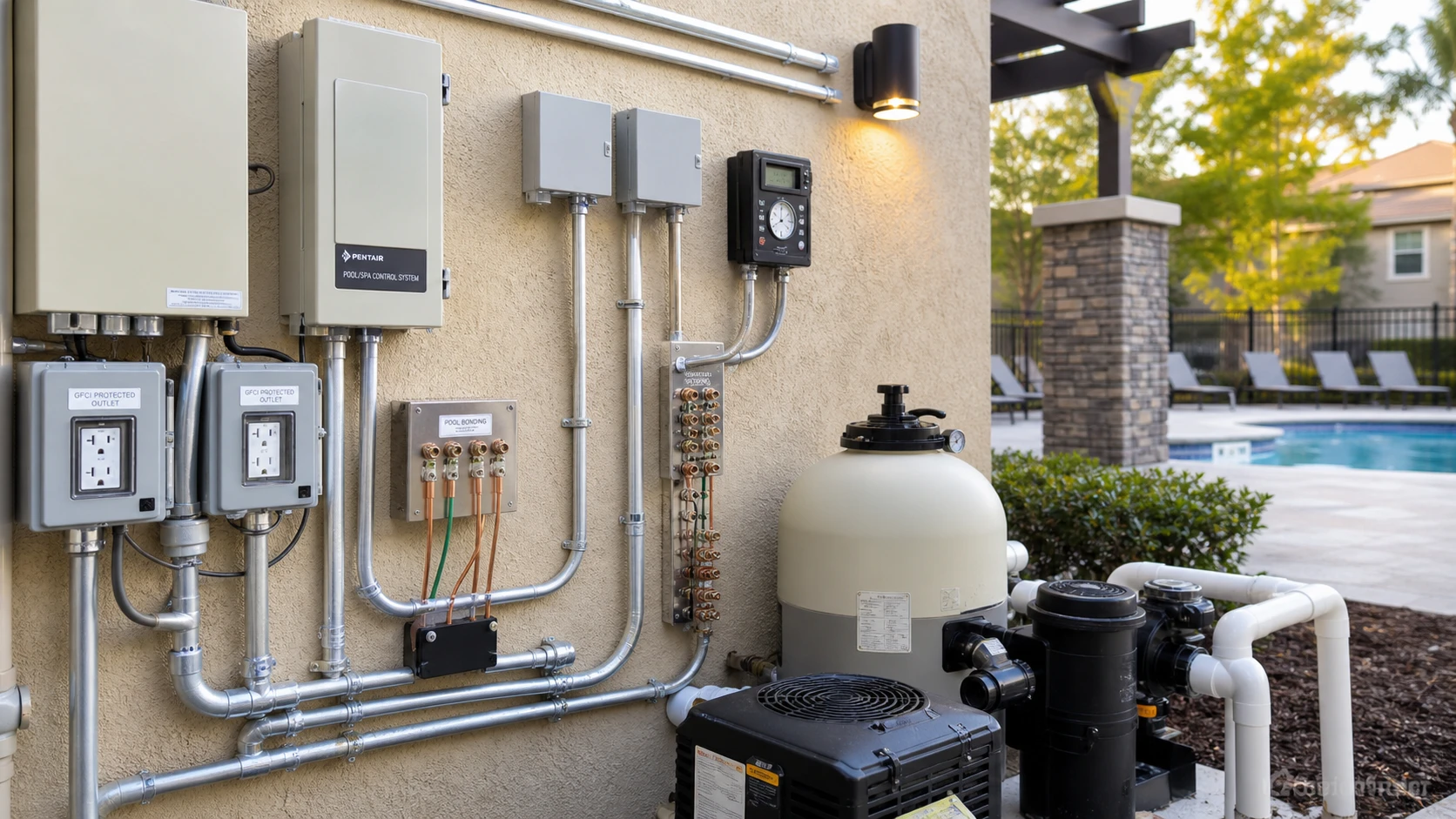
Pool equipment, fitness centers, clubhouses, and outdoor kitchens carry electrical requirements that go well beyond standard residential wiring — and the consequences of getting them wrong go beyond a failed inspection. Pool and spa areas in particular are subject to NEC Article 680, which governs bonding, GFCI protection, and equipment grounding in ways that most general electricians are not equipped to handle correctly.
Loch Monster Electric handles the full scope of HOA amenity electrical across the Twin Cities Metro — from new amenity builds and renovations to compliance inspections and outdoor electrical repairs — permitted, inspected, and done to the code standards that protect residents and limit board liability.

New pool equipment, a fitness center expansion, or a clubhouse renovation involves electrical loads and installation requirements that need to be sized and permitted correctly from the start. Commercial-grade fitness equipment draws significantly more current than residential equipment. Pool and spa equipment requires specific bonding and grounding configurations. Outdoor kitchen circuits need weatherproof construction and GFCI protection throughout. We design and build the electrical system for your amenity from rough-in through final inspection, coordinating directly with your general contractor and pulling the permits that protect the HOA if the work is ever questioned. The right installation the first time is always less expensive than correcting an unpermitted one after the fact.
Pool and spa areas carry the most demanding electrical code requirements of any residential amenity — bonding, GFCI protection, and equipment grounding configurations that go well beyond what a standard electrician is trained to install. When bonding is incomplete or missing entirely, the risk is serious, and the liability exposure for the HOA is significant. We perform pool and spa bonding inspections, identify deficiencies in GFCI protection and equipment grounding, and bring non-compliant systems up to current code. If your pool has not had a formal electrical inspection recently — or if you have no record of one — that is worth addressing before your next pool season opens, not after something goes wrong.
Outdoor electrical in a pool area, courtyard, or patio is exposed to moisture, freeze-thaw cycles, UV degradation, and physical damage from landscaping and cleaning equipment. Standard indoor devices and enclosures fail quickly in these conditions — which is why the NEC requires weatherproof-rated devices, in-use covers, and appropriate conduit methods for all outdoor installations. We diagnose outdoor amenity electrical problems at the source — whether it is a failed GFCI device, damaged conduit, a corroded connection at a junction box, or a circuit that was never correctly rated for outdoor use — and repair or replace with components appropriate for the exposure. A fix that holds up is worth more than one that needs to be redone next season.
Want Hoa Amenity Electrical Service?
Who We Are
Time And Materials Pricing—So You Only Pay For What Your Job Actually Needs.
Licensed And Insured Electricians Who Treat Your Home Or Building With Respect
Clear Communication—We'll Walk You Through What We're Doing And Why
Local Folks Who Care About Doing Things The Right Way—Not Just The Fast Way
NEC Article 680 governs electrical installations for swimming pools, spas, hot tubs, and fountains. It covers bonding of all metal components within the pool and within a specified radius around it, GFCI protection for all receptacles and equipment within 20 feet of the pool edge, specific requirements for underwater lighting, and clearance distances for overhead wiring. These requirements are more detailed and more strictly enforced than most other sections of the electrical code because the consequences of a non-compliant pool installation can be fatal. We are familiar with Article 680 and installing pool and spa electrical to its current requirements.
Pool bonding connects all metal components in and around the pool — pool shell reinforcement, ladders, handrails, light fixtures, pump and filter equipment, and any metal within five feet of the pool edge — into a single continuous electrical path. The purpose is to equalize the voltage across all of those surfaces so that no current flows through the water between them. Without proper bonding, voltage differences between metal components can cause electric shock for anyone in contact with the water. It is one of the most safety-critical electrical requirements in the NEC and one of the most commonly deficient in older multifamily installations.
Commercial-grade fitness equipment — treadmills, ellipticals, weight machines with integrated electronics, and especially cardio equipment with power requirements — typically requires dedicated circuits sized for the specific equipment load. Most fitness centers also require GFCI protection on all receptacles, adequate general lighting to IES standards for fitness occupancies, and emergency lighting for egress. If the fitness center was built out without permits or by a contractor unfamiliar with commercial occupancy requirements, there is a reasonable chance the electrical system does not meet current standards.
Yes, in virtually all Twin Cities municipalities. Any new circuit, new sub-panel, or new wiring installation in a clubhouse or outdoor kitchen requires an electrical permit and inspection. Outdoor kitchen installations in particular involve GFCI protection, weatherproof-rated devices and enclosures, and in many cases a dedicated sub-panel for the outdoor space — all of which require permits. We pull the permits, complete the work, and coordinate the inspection so the installation is documented and the HOA has a clear record that it was done correctly.
Why Choose Us
Review Us On
GOOGLEOur Electrical Services
From panel upgrades and rewiring to EV chargers and modern lighting, we help homeowners keep their electrical systems safe, reliable, and ready for their unique life inside.
From office buildouts and lighting retrofits to panel upgrades and code compliance, we keep your business powered and protected.
We work with HOAs and property managers to keep common areas, amenities, and residential units safe and up to code.
Where We Work
This guide covers all panel upgrade rebates and grants available in Minnesota for 2026. Learn how to save with Xcel Energy, Minneapolis bonuses, and Otter Tail Power to offset costs.
READ MOREExplore 2026 Twin Cities GFCI outlet repair costs, pricing factors, replacement reasons, and Minnesota electrical codes. Learn common failure patterns, troubleshooting steps, and when to call Loch Monster Electric for safe service in Minneapolis and St. Paul.
READ MOREThis guide covers Twin Cities EV charger installation costs, Level 1 vs. 2 comparisons, pricing factors, local permits, electrical panel upgrades, Minnesota utility rebates, HOA rules, and a step-by-step installation timeline.
READ MOREWondering why your outlets suddenly stopped working? This guide walks Twin Cities homeowners through the first troubleshooting steps, including checking GFCI outlets, resetting circuit breakers, and identifying common causes of dead outlets. Learn when it's safe to fix the problem yourself, when Minnesota electrical code requires a licensed electrician, and the warning signs that mean it's time to stop troubleshooting and call a professional.
READ MOREPlanning a home remodel? Learn the essential motorized blinds wiring requirements for your space. We cover why hardwiring is the recommended option, how to pre-wire for success, and the best ways to control your new automated shades for a smarter, more convenient home.
READ MOREIs your smart thermostat constantly rebooting or losing Wi-Fi? You likely have a missing C-wire. This guide explains what a C-wire is, how to safely check your home’s wiring, and why calling Loch Monster Electric is the best way to ensure your heating system stays reliable all winter.
READ MOREDiscover 2026 hot tub wiring installation costs, local permits, and Minnesota safety codes in the Twin Cities. Learn about the hot tub wiring process and mistakes to avoid.
READ MOREStruggling to upgrade your older home’s lighting? This guide explores the challenges of installing a smart switch without a neutral wire. Learn about the risks of older electrical systems, DIY workarounds, and why professional rewiring adds long-term value.
READ MOREConfused about your hot tub breaker size? Our guide explains how to determine the right amperage, avoid fire hazards, and stay code-compliant in the Twin Cities. We cover data plates, safety inspections, and what you need for a safe, worry-free soak every time.
READ MOREExperiencing electrical damages after a storm? Learn essential safety steps, how to identify damage responsibility, and what to expect regarding repair costs and permits. Plus, discover how Twin Cities homeowners and HOAs can storm-harden their electrical systems for the future.
READ MOREDiscover how to know if your house needs rewiring with our expert guide for Twin Cities homeowners. We cover 7 common warning signs including how to identify and what to do, common questions about home rewiring, and how it can protect your home investment long-term.
READ MOREPlanning your Twin Cities landscape lighting installation? This 2026 guide covers realistic project costs, climate-specific installation tips for Minnesota winters, property considerations, electrical code requirements, and a checklist for vetting local contractors.
READ MOREAdding a ceiling fan to a room with no existing wiring requires specialized electrical work, not just a simple hardware swap. Master electricians evaluate power sources, fish NM-B wire through closed walls using minimalist drywall cuts, and lock expandable steel braces between joists for dynamic weight support. This precise, code-compliant retrofit guarantees safe, vibration-free, long-term performance.
READ MOREDoes your house have flickering lights? Discover the three major issues that cause lights in your home to flicker. Find out troubleshooting insights and how much it costs to fix these flickering lights.
READ MORELearn how much home surge protection costs in Minnesota and what changes the price in the Twin Cities. This easy guide breaks down average installation costs, common warning signs of power surge damage, key safety options, and simple tips to keep your household electronics safe.
READ MORENeed an electrical panel upgrade in the Twin Cities? Our guide covers everything you need to know: current cost ranges, local permit requirements, available utility rebates, and how to spot when you need to upgrade.
READ MOREInstalling a vaulted ceiling fan requires careful structural, mechanical, and safety considerations beyond standard installations. Proper downrod lengths ensure optimal airflow, while specialized sloped adapters prevent joint binding and motor strain on steep pitches. To handle kinetic vibration, National Electrical Code standards mandate fan-rated steel support boxes. Because high-altitude setups demand specialized staging equipment, hiring a licensed electrician ensures precise dynamic balancing and safe, code-compliant installation.
READ MOREDiscover 2026 pricing for outlet and switch repairs in the Twin Cities. Learn how MN code affects your costs, why historic homes face unique electrical challenges, and how Loch Monster Electric ensures your home stays safe and up to code.
READ MOREThinking about upgrading your home with smart lighting? This guide explores the technical realities of smart switches, including neutral wire requirements, home infrastructure assessments for Twin Cities homes, and the safety benefits of hiring a professional.
READ MOREBefore you hang drywall on your kitchen remodel or basement finish, make sure your hidden infrastructure is code-compliant. Find out the essential home renovation electrical requirements you need to know—from dedicated appliance circuits to life-safety GFCI boundaries. Learn how to clear your rough-in inspection the first time around.
READ MOREThis guide explains why power surges happen inside your home, how whole-house surge protectors defend your expensive electronics, and why professional installation is essential to keep your home safe.
READ MORELearn about knob and tube wiring in Twin Cities homes. We cover safety risks, why insurance companies worry, the benefits of upgrading to modern electrical systems, and what to expect regarding costs, timelines, and the renovation process for your historic property.
READ MOREConsidering a 200-amp panel upgrade? Get the facts on what it costs, why your home might need it, and how to plan the process. We break down the pricing factors, from permits to modern electrical safety code requirements in the Twin Cities.
READ MOREWorried a failed electrical inspection will stall your home sale? Discover the six most common red flags local inspectors flag, from missing GFCI protection to fake grounds, and learn how a pre-listing inspection and quick repairs can keep your closing on track.
READ MORETired of your AC or microwave suddenly shutting off because of a tripped breaker? Learn how to safely reset your electrical panel, identify the four common culprits behind a trip, and discover warning signs that mean it's time for an upgrade.
READ MOREFrustrated by old two-prong outlets that can’t power modern tech? Discover why these ungrounded outlets threaten your safety and devices, explore four code-approved solutions, and learn why historic homes make DIY dangerous.
READ MOREPlanning to upgrade your fleet to EVs? Employees asking for workplace charging? Learn the benefits of commercial EV charging, compare Level 2 and Level 3 options, and explore rebates to future-proof your business.
READ MOREWant to charge the new EV in your detached garage? Learn why underground trenching is essential for high-voltage Level 2 power, explore code-approved conduit options that survive Minnesota's frost heave, and discover smart sub-panel and driveway solutions.
READ MOREFlooded with resident requests for EV charging? Discover Minnesota's updated HOA rules, explore four billing models to fairly distribute power costs, and learn how smart load management keeps your building safe and compliant.
READ MOREWorried plugging in your new EV will plunge your home into darkness? Find out if your electrical panel can handle the extra load, learn how to calculate your home's capacity step-by-step, and understand why a 200-amp service upgrade is required.
READ MORETired of waiting ages to charge your EV during freezing winters? Discover why a Level 2 home charger is essential, learn about crucial garage infrastructure like panels and hardwiring, and find local rebates to offset installation costs.
READ MOREFlickering lights aren't just a nuisance — they're often an early sign of electrical issues. Learn what causes light flicker in Minnesota and Wisconsin homes, from loose bulbs to wiring or panel problems, and when to call a licensed electrician.
READ MOREOlder panels weren't built for modern loads — EVs, heat pumps, induction ranges, hot tubs. We'll walk through how to spot the signs your panel is at its limit and what a clean, code-compliant upgrade looks like.
READ MORELevel 2 charging changes how you live with an electric vehicle. Here's the real-world breakdown of circuits, panels, permits, and pricing for installing a home EV charger in the Twin Cities metro.
READ MOREOutdated outlets, missing GFCIs, scorched switches — small things that quietly become big problems. Use this homeowner-friendly checklist to spot what needs attention before it turns into an emergency call.
READ MOREA little planning during a remodel saves a lot of patching later. Here's what to wire for — from smart switches to networked lighting — so your home is ready for whatever you add next.
READ MOREStep into an older home in Stillwater, Baldwin, or Marine on St. Croix, and you can feel the history the moment you walk through the door. The original hardwood floors creak in familiar places, the trim work has character you just can’t find in new construction, and the wide front porch invites you to sit and watch the neighborhood go by. These homes carry stories — families raised, holidays celebrated, and generations of life lived within their walls.
READ MOREMost homeowners never think about their electrical panel until something goes wrong. But the truth is, millions of panels in homes across Minnesota and the U.S. are recalled, obsolete, or flat-out unsafe — and many have been linked to electrical fires or insurance claim denials.
READ MORE