Landscape Lighting in White Bear Lake: Outdoor Design That Fits Your Home
Updated: Oct 13, 2026
A guide to landscape and outdoor lighting in White Bear Lake, covering realistic costs, design styles for local homes, low-voltage vs. line-voltage systems, Minnesota permit and code rules, winter-proof installation, LED savings, and safety and dark-sky considerations for lakeside properties.
The sun sets early in Minnesota for half the year, and by the time you're pulling into the driveway after work, your yard's already gone dark. On the other hand, you’re wishing you could enjoy those golden summer evenings with a patio that has more than a single porch light and a couple of mosquito coils.
This guide will help you understand what professional landscape and outdoor lighting in White Bear Lake actually looks like. You’ll find out what it costs, which design styles fit our local homes, the code rules Minnesota requires, and how to build a system that survives our freezing winters.
That's where Loch Monster Electric comes in. We're a team of licensed electricians in Minnesota and Wisconsin, and we handle outdoor lighting around White Bear Lake's neighborhoods. If you already know you want to get started, give us a call at 763-292-1191 or fill out our contact form and we'll get back to you.
Why White Bear Lake's Neighborhoods Are Ideal for Landscape Lighting
There are many reasons why White Bear Lake makes such a great candidate for real outdoor lighting design.
- Cottage Park and Matoska Park: The converted lakeside cottages in these neighborhoods sit on mature, tree-covered lots. This is exactly the kind of canopy that uplighting is built for.
- Downtown and Podvin Park: The classic post-war and mid-century homes here come with real character. They have brick facades, contoured yards, and decades-old oaks and elms that a brand-new build simply doesn't have yet. This gives a lighting designer a lot more to actually work with.
- Lake-adjacent Character: Walkable blocks near the lake itself and wooded lots around Birch Lake and Manitou Island give this city a natural fit for path lighting and shoreline accents in a way flatter, newer suburbs just can't match.
- Owner-occupied Homes: Roughly two out of three homes in White Bear Lake are owner-occupied. Homeowners here tend to stay put, invest in their properties over time, and care about how their block looks from the street. This is a different mindset from a rental-heavy area, and part of why lighting design pays off. You're improving a home you plan to enjoy for years, and not flipping it next spring.
We handle everything in White Bear Lake from historic cottage rewiring to dock circuits around the lake.
What Landscape Lighting Actually Costs in White Bear Lake
Landscape lighting cost depends on how big your project is, and there are two general tiers most homeowners fall into.
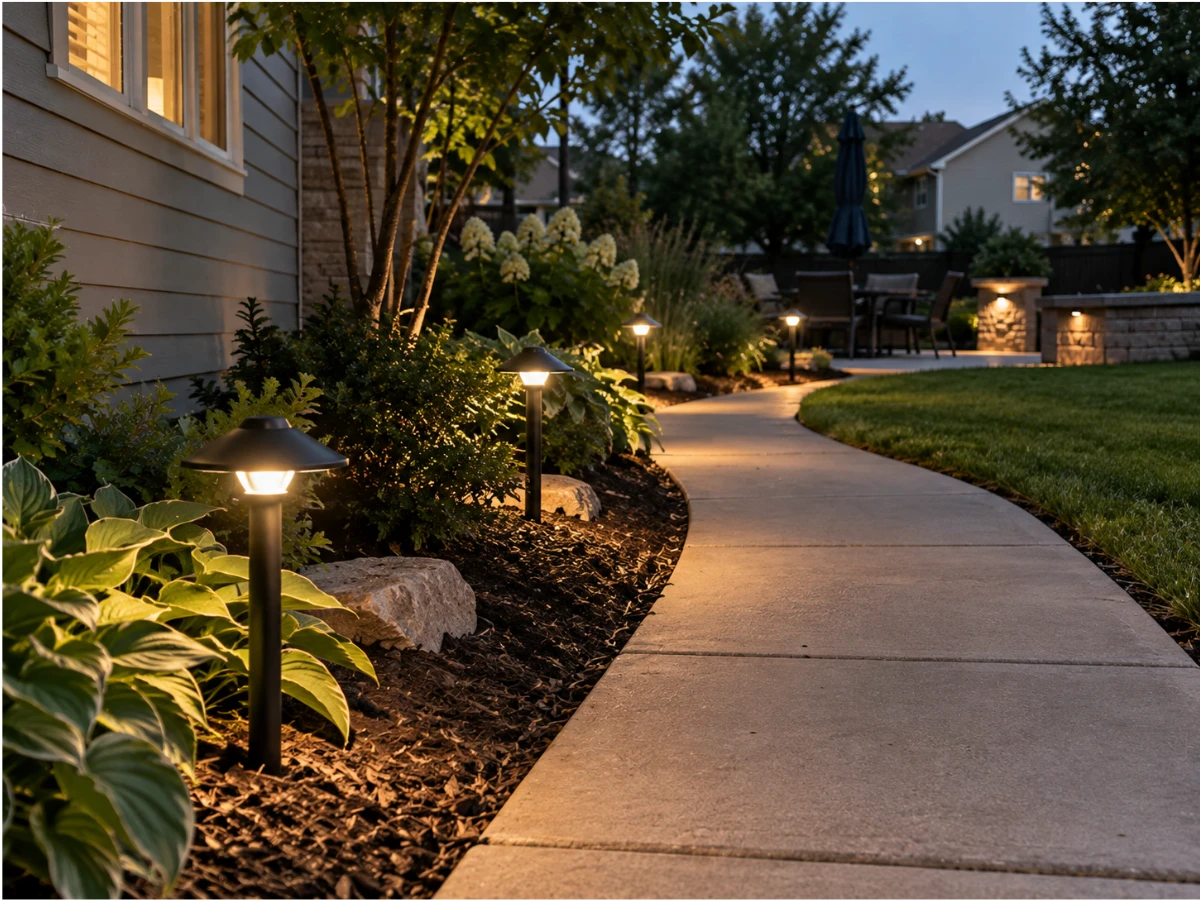
A simple refresh: A handful of path lights along an existing walkway plus one or two uplights on the front of the house. This is the smallest and most affordable option. You're mostly paying for fixtures and a few hours of labor, with minimal digging involved.
A premium system: This comes with multiple zones, a proper transformer, trenching to reach trees and beds across the yard, and maybe some deck or dock accent lighting. Naturally this costs more because it involves more cable, more labor, and sometimes a look at whether your electrical panel has room for a new circuit.
A few things push the price up or down on any White Bear Lake property specifically:
- Root zones: Mature trees mean careful hand-digging in spots, which takes longer than trenching through an open lawn in a newer suburb.
- Lot layout: Lakefront and wooded lots often need longer cable runs than a flat, open yard.
- Voltage type: Low-voltage systems generally cost less to install than line-voltage work, which needs deeper, code-compliant conduit.
For a full cost breakdown with real number ranges, the different fixture types available, a low-voltage vs line-voltage comparison, and other factors that move your quote up or down, check out our landscape lighting installation cost guide.
Outdoor Lighting Design Styles That Fit Homes in White Bear Lake
Good outdoor lighting design is about matching the fixtures to your garden features.
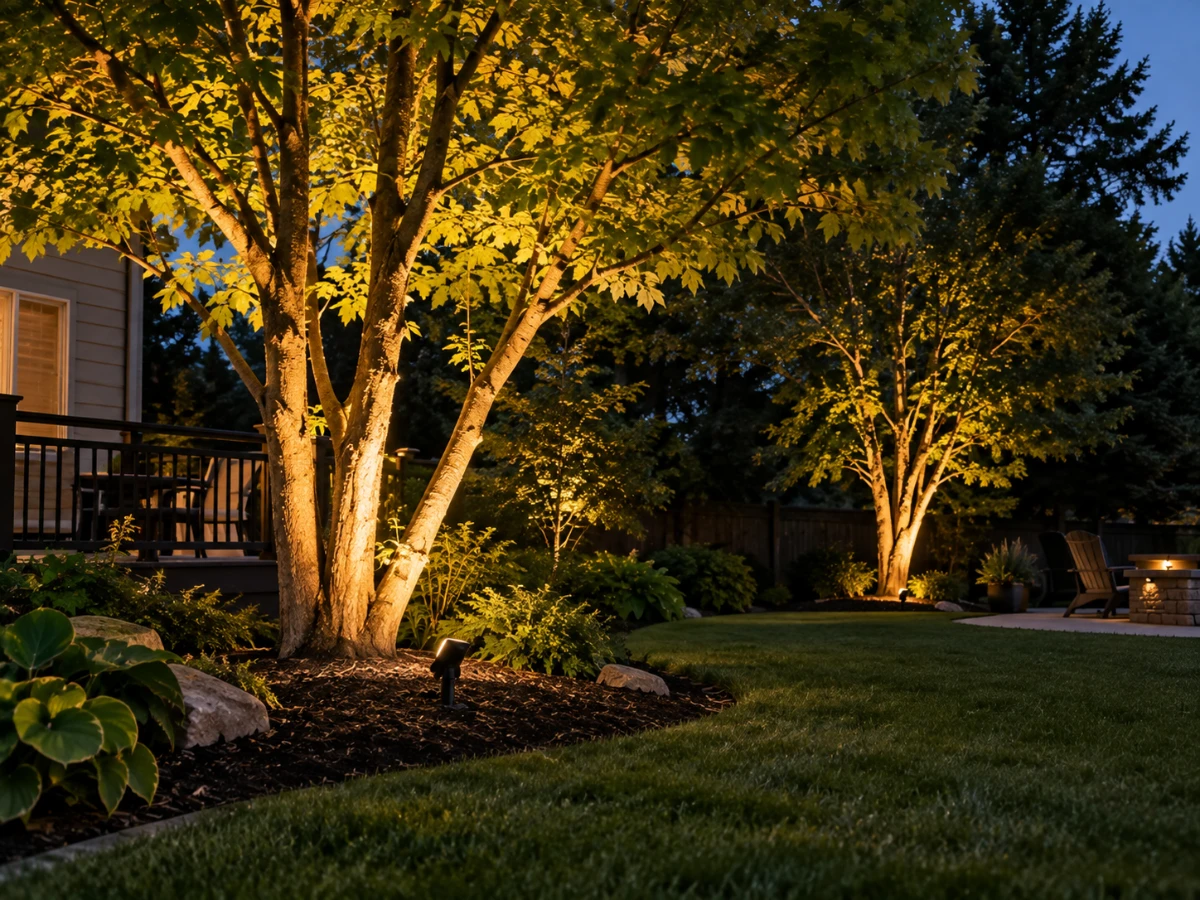
Uplighting Mature Trees
White Bear Lake's oaks and elms are the neighborhood's best asset after dark. A well-placed uplight at the base of a big tree throws dramatic shadow patterns through the canopy.
Path and Walkway Lighting
If your home already has a flagstone or brick walk (common in the older parts of town), soft path lights along the edges make it safer to navigate after dark without washing out the material underneath.
Deck and Patio Accent Lighting
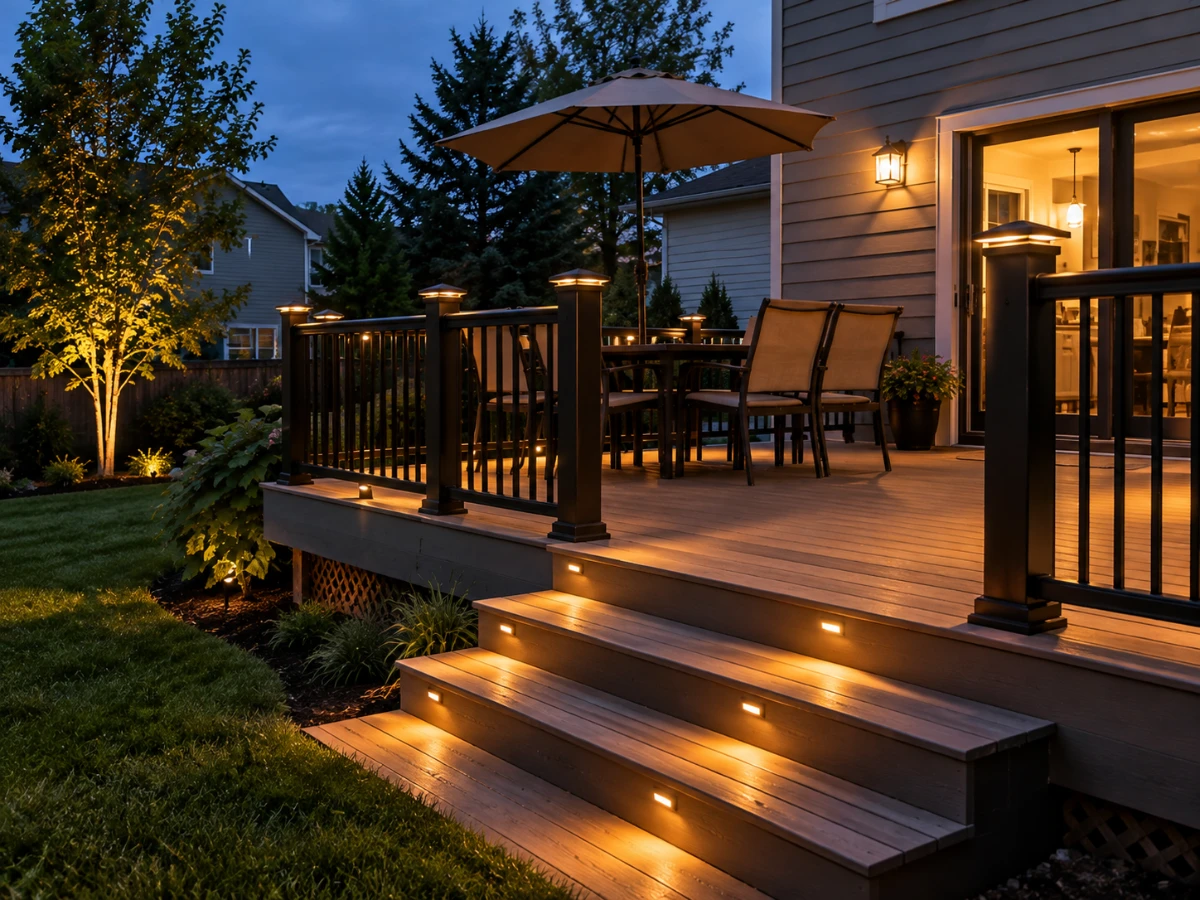
For those glorious Minnesota summer evenings, subtle lighting under deck rails or along patio steps extends the time you get to actually enjoy outside instead of heading in as soon as the sun drops.
Dock and Shoreline Lighting
For lake-adjacent properties around Birch Lake or Goose Lake, dock and shoreline lighting adds both safety and a genuinely beautiful effect on the water. This work also needs to account for local shoreland rules, which we'll cover below.
Garage and Driveway Entry Lighting
A well-lit driveway and garage entry isn't just about the looks, but one of the simplest ways to make coming home on a dark January evening feel safer.
Designing Outdoor Lighting to Survive Minnesota Winters
A landscape lighting system designed for a mild climate will not make it through a White Bear Lake winter. Freeze-thaw cycles can shift buried wiring, and a transformer in the wrong spot can get taken out by the first snowplow of the season. Here's what a system actually needs to be ready for:
- Design for frost-depth burial: Wiring laid too shallow gets shifted and stressed as the ground freezes and thaws, which is exactly how connections fail. The system has to be planned around the right depth from the start, not adjusted after the fact.
- Fixture ratings built for our climate: We spec fixtures rated for both wet and cold conditions. Plastic housings can crack when temperatures drop well below zero, so brass or copper fixtures are used instead since they hold up far better through repeated freeze-thaw cycles.
- Transformer placement that accounts for winter hazards: Transformers get placed off the edge of the driveway or path, out of reach of a snowplow or shovel. They are also housed in a weather-resistant enclosure.
Security, Safety, and Dark-Sky Considerations for White Bear Lake Properties
Beyond building an outdoor lighting system that holds up through winter, there are a few other important details you should keep in mind:
- Security: Motion-activated lights near side yards, alleyways, and detached garages are one of the easiest ways to keep trespassers away from the property.
- Safety: Low-glare lights along walkways, steps, and entrances help prevent people from tripping during dark winter mornings.
- Being a Good Neighbor: Bright, unshielded floodlights aimed directly at a neighbor's house cause blinding glare and push unwanted light onto their property. A good design respects neighbors instead of just focusing on your own front door.
- Lake Rules: When a home is near the water, shoreline lighting requires extra care. Depending on where the lights are placed, specific Minnesota shoreland rules may apply to protect the lake environment.
How We Design and Install Your Outdoor Lighting System
A straightforward system can usually be installed in a day or two of on-site work, with larger multi-zone projects taking longer depending on the scope. Here's what the process usually looks like for typical landscape lighting in White Bear Lake:
- Site walk and design consultation: We walk the property with you and talk through what you want highlighted, whether it's a tree, a walkway, or the whole facade. Here we note the specific challenges of your lot, like root zones or lake proximity, and start sketching out where each fixture and zone will go.
- Load calculation and capacity check: We confirm your electrical panel or transformer can handle the new load without overloading anything. If your panel's already maxed out, we'll flag that early so there are no surprises once work starts.
- Trenching: We dig to the correct code depth, working carefully by hand around established root systems where needed. This protects your mature trees while still burying the cable deep enough to handle Minnesota's freeze-thaw cycles.
- Laying conduit or direct-burial cable: We choose the right method based on voltage and location. Low-voltage runs typically use direct-burial cable, while line-voltage work gets routed through rigid conduit for extra protection.
- Fixture mounting and wiring: Fixtures are installed and wired to weatherproof, GFCI-protected connections. We test each zone before calling it finished, so you're not left troubleshooting a dead light after we leave.
- Final inspection: The city inspector signs off, and your permit closes out clean. That's your paper trail showing the work was done safely and to code. This matters if you ever decide to sell the house.
Read our landscape lighting installation services to learn more about how we handle this.
Minnesota Electrical Permits and Code Requirements for Outdoor Lighting
Under the National Electrical Code and Minnesota's amendments, a few key requirements apply to exterior lighting:
- GFCI protection: Exterior outlets and circuits usually need GFCI protection which helps prevent shocks in wet conditions. Read our
GFCI and AFCI installation servicespage to learn more. - Permits: New electrical circuits, sub-panels, and major outdoor trenching or wiring usually need a permit, along with any buried wiring.
- Cable burial depth: Low-voltage lines without conduit need to sit at least 6 inches deep. Higher-voltage direct-burial cable needs about 24 inches. Lines inside conduit (PVC) need about 18 inches. Minnesota's frost line runs deep, and skimping on depth is how a system gets torn up by ground movement the next winter.
White Bear Lake Electrical Permits
White Bear Lake handles its own electrical permits through the city's building department. Homeowners in a single-family home can pull their own permit if they qualify, but hiring a licensed electrician is a much safer bet for a job like outdoor wiring.
Loch Monster Electric can handle this whole permit process for you. We get the right city permits, follow all the safety codes, and schedule the rough-in and final inspections with the White Bear Lake inspector.
Skipping these steps can lead to city fines. It can also mean digging up or tearing out wiring later because it was never inspected. This can be an expensive, frustrating problem to fix later.
Ready to Light Your Yard?
Landscape lighting done right adds real curb appeal, extends your usable outdoor season, and makes your property safer. However, it must be designed for White Bear Lake's specific trees, lots, and Minnesota winter conditions. And it has to be installed by someone who pulls the right permits and follows the code.
Loch Monster Electric is a licensed Minnesota electrical contractor with real experience working in White Bear Lake's cottages and lakeside neighborhoods. We'd be glad to help you plan a system that actually lasts. Call us at 763-292-1191 to get started.
Frequently Asked Questions
In most cases, yes. This is especially true for new circuits or buried wiring. White Bear Lake handles its own electrical permits, and a licensed electrician usually pulls the permit and sets up the inspections for you.
Low-voltage (12V) systems run through a transformer. They're the standard choice for path lights, uplighting, and accents. Line-voltage (120V) systems run straight off your home's power and are usually reserved for floodlighting or larger installations. Most residential projects in White Bear Lake use low-voltage.
Yes, with the right approach. Hand-digging around root zones, instead of machine trenching, protects mature oaks and elms common on older White Bear Lake lots.
Professional, permitted outdoor lighting is usually seen as a value-adding upgrade. It shows the work meets code, instead of looking like a patched-together DIY job that could complicate a home sale.
Metal fixtures, like brass or copper, hold up best. Look for ones rated for both wet and cold conditions. Plastic housings crack more easily in sub-zero temperatures, and proper frost-depth burial matters too, no matter how good the fixture is.
Yes. LED fixtures use a fraction of the power that older halogen landscape lights burn through, and that adds up fast on a system running every night from dusk to dawn for half the year. A halogen-based setup can cost noticeably more per month to run than an equivalent LED system. Pairing LEDs with a smart timer saves even more, since your lights only run during actual dark hours instead of burning through a summer morning because someone forgot to flip a switch.
Not directly. Landscape lighting itself isn't eligible for rebates in Minnesota. Xcel Energy's residential lighting program only offers instant, point-of-sale discounts on regular ENERGY STAR certified screw-in LED bulbs. This covers just the bulb, not landscape fixtures or installation. Panel upgrades done alongside a larger electrical project may qualify for separate Xcel incentives.