
Can You Rewire a House Without Removing Walls?
Updated: Sep 25, 2026
Learn whether you can rewire your Twin Cities home without removing walls, the methods electricians actually use, when a wall opening becomes necessary, Minnesota permit and code rules, whole-home rewire costs, and the risks of DIY or unlicensed electrical work.
If you own an older Twin Cities home, you've probably had this question: can you rewire a house without removing walls? The good news is that in most cases, the answer is yes.
A licensed electrician can run new wiring through most homes using small access points instead of a full demolition job. At Loch Monster Electric, we do this kind of work all over the metro, from bungalows in St. Paul to ramblers in Bloomington.
Let's go through the methods electricians use to rewire, when a small wall opening really is the better call, and what Minnesota permits and code requires. If you’re ready to rewire or have any questions, give us a call at 763-292-1191 or fill our contact form, and let us know what you need.
Can You Rewire Your House Without Tearing Out Walls?
Short answer: yes, in most cases. Whether it's a full or partial job, the method depends on your home's age, wiring type, and construction style.
Twin Cities bungalows, ramblers, and older Victorian-style homes each pose different access challenges. A one-story rambler in Richfield with an open attic is usually a breeze. A two-story Victorian in St. Paul with plaster-and-lath walls takes more careful work with special tools. Either way, your electrician's first move is almost always to fish new wire through existing spaces, instead of opening a wall.
So yes, you can rewire a house without removing drywall, and usually without removing plaster either, using the same access-point approach. The real question isn't whether it can be done, but how much access work your home will need.
Not sure if your home even needs rewiring? Our how to know if your house needs rewiring guide covers seven warning signs that deserve a closer look.

Three Methods Electricians Use to Rewire Inside Existing Walls
Here's how electricians get new wire from your panel to your outlets without opening every wall, from least to most involved.
1. Fish Tape and Flexible Drill Bits
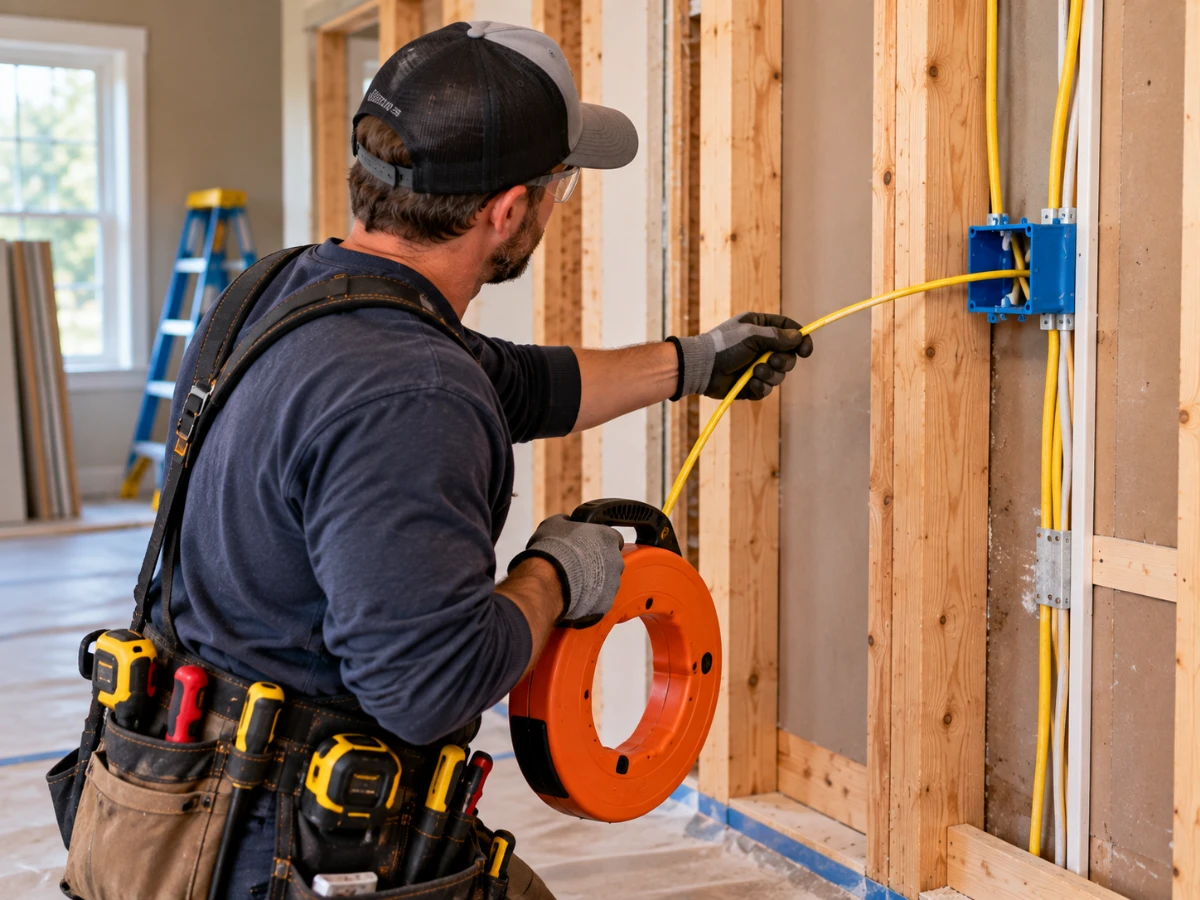
Fish tape is a long, flexible line fed through a wall cavity, often from an outlet opening up to the attic or down to the basement. New cable gets taped to it and pulled through.
Flexible drill bits work a bit like a long, bendy straw with a drill tip on the end. An electrician feeds one through a single small opening and steers it to drill through the wood studs inside your wall. That lets new wire pass from one stud bay (the gap between two studs) to the next, without cutting the wall open to see what's there.
2. Retrofit Boxes and Cable Fishing
For new outlets or switches, electricians cut a small, palm-sized hole where the device will go. From there, they fish the new cable through the wall cavity, usually feeding it down from the attic or up from the basement, until it reaches that opening. Once the wire is pulled through, a retrofit (old-work) box goes into the hole. Unlike a standard box, it clamps onto the drywall itself instead of needing a stud behind it, which is what keeps the opening so small.
3. Flexible Conduit Through Existing Chases
A chase is a framed space built into a wall or floor next to plumbing pipes or HVAC ducts, not inside them. Code doesn't allow wiring inside a duct or pipe run, but the framed space beside them is fine. Where a chase like this exists, an electrician can run flexible conduit through it, then pull the new wire through the conduit, the same way cable gets pulled through fish tape. Since the pathway is already there, no new opening or drilling is needed. This is more common in newer construction or additions.
Attics and basements do most of the heavy lifting. As open, unfinished spaces, wiring can travel across the whole house through them, then drop into individual wall cavities only where needed. That's how to rewire a house without breaking the wall in more than a few small spots.
Surface Wiring and Exposed Conduit: When Fishing Cable Isn't Feasible
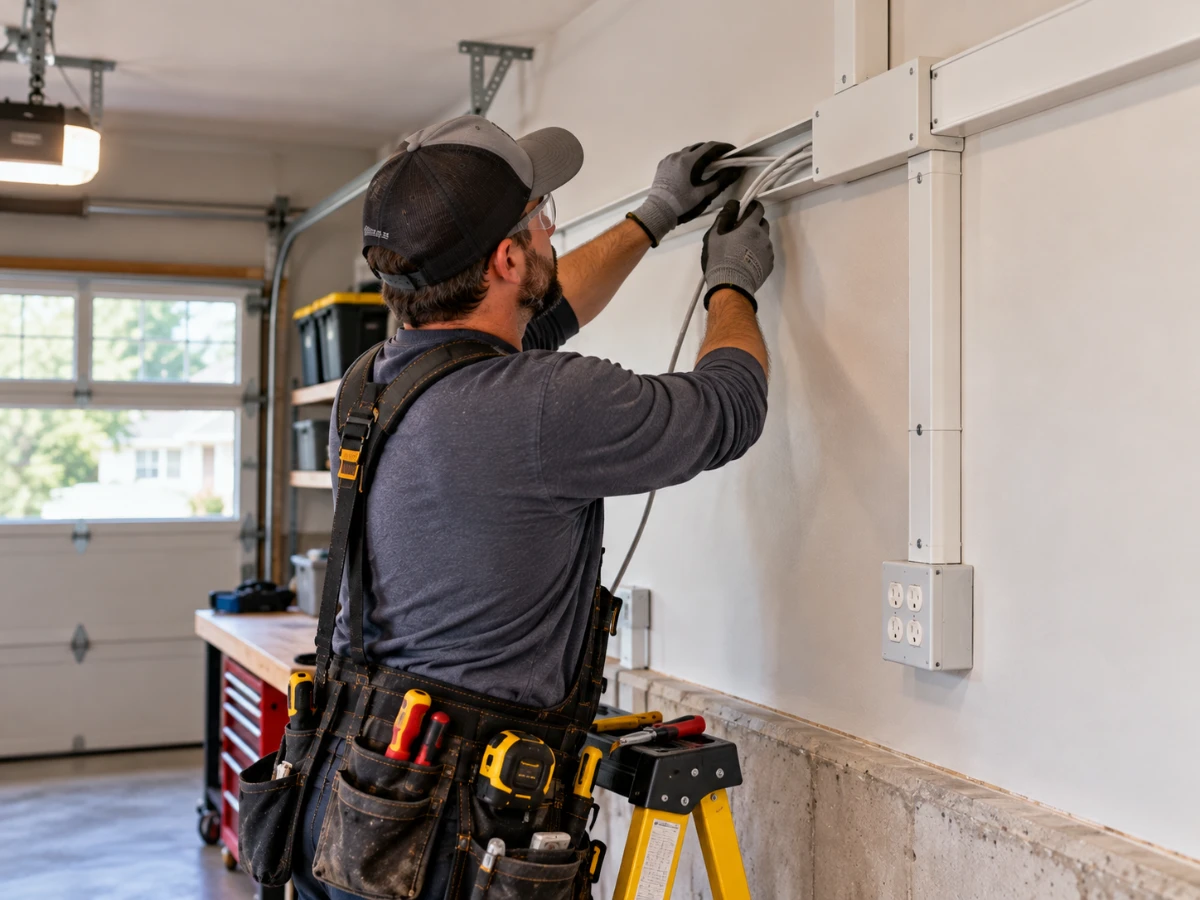
Sometimes a wall is just too packed, with thick insulation, tight framing, or other utilities, to fish wire through it. When that happens, surface-mount raceway or exposed conduit is a good, code-compliant option.
A surface raceway is a paintable channel that mounts on the wall or ceiling and hides the wire inside it. Exposed EMT or PVC conduit works the same way, and it holds up well in basements, garages, and utility rooms.
Inspectors in Hennepin and Ramsey counties generally allow both in unfinished spaces. However, most homeowners prefer to keep them out of their living areas, since it might visibly clash with the interior decor.
When Wall Removal Becomes Unavoidable and Why
A few situations call for opening a section of wall:
- Load-bearing diagonal bracing: Some older homes have angled boards built into the wall frame for structural support. These can block standard wire-fishing paths. Opening the wall provides the visual access needed to route wires safely without damaging structural supports.
- Dense blown-in insulation: Many 1950s–1970s ramblers around the metro had insulation added later. That packed-in insulation can block a wire from sliding through the cavity.
- Buried knob-and-tube junctions: Old splice points, where wires were joined together, are sometimes hidden deep inside a wall. An electrician needs direct access to safely disconnect them.
- Multi-floor panel runs: Running a new circuit from a basement panel up to a second-floor bedroom sometimes means there's no open path, like an attic or wall chase, to follow the whole way.
Even here, our electricians will open only the specific section blocking the run, not the whole wall. If your home needs a full overhaul, check out our whole-home rewiring services which cover the entire process from permits through final inspection.
Knob-and-Tube, Aluminum Wiring, and What MN Inspectors Look For
Two legacy wiring types show up often in pre-1980 metro housing, and both change the no-demo calculation.
Knob-and-Tube Wiring
This was common in homes built before 1950. It has brittle, cloth-based insulation and no ground wire. Because it's often buried in original plaster, replacing it usually takes more careful, hands-on access work. Our knob and tube wiring replacement guide covers the safety and insurance issues that come with leaving it in place.
Aluminum Branch-Circuit Wiring
Aluminum wiring shows up in homes built roughly between 1965 and 1973, including plenty of suburban builds in Bloomington and Eden Prairie. It doesn't automatically require a full rewire, but connections need checking and are often pig-tailed to copper-compatible connectors.
Minnesota adopts the National Electrical Code as the statewide standard. This is administered by the Department of Labor and Industry. This code isn't retroactive, so untouched old wiring doesn't have to meet today's standard. But once a circuit is extended, altered, or added to, that part has to meet current code, and it needs a permit and inspection.
Minnesota Home Rewiring Permits, Inspections, and Code
Minnesota law says electrical work must be done by a licensed electrical contractor. There's one exception: a homeowner who lives in the home can pull their own permit and do the work. This only applies to a primary, single-family residence, and the work still has to pass inspection. Rental and non-owner-occupied properties don't qualify. A licensed contractor has to pull the permit for those.
A typical project involves two inspections:
- A rough-in inspection, done after the wiring is run but before the walls close up.
- A final inspection, done once everything is connected and covered.
Loch Monster Electric can handle the permit paperwork and schedule both as part of the job.
What a Whole-Home Rewire Costs in the Twin Cities Metro
The cost depends on your home's size, age, and how much access work is involved. The estimate for a typical whole-home rewire is:
Item | Estimated Cost |
Materials | $3,200 - $6,000 |
Professional Labor (32 to 50 hours) | $5,900 – $9,300 |
Total Project Estimate | $9,100 – $15,300 |
For a minimal-demo project specifically, a few things will affect the cost.
- How much wall access your home actually needs to fish the wire through.
- Whether knob-and-tube wiring has to be replaced.
- How easy your attic, basement, or panel are to reach.
- Permit fees.
- Drywall patch-and-paint after access holes are closed.
Safety Risks of DIY Rewiring or Hiring Unlicensed Help
A DIY approach or a cheap handyman rate can look tempting. But rewiring mistakes can stay hidden behind your drywall. That's what makes them dangerous: you don't see the problem until it's already a safety issue.
A few real risks:
- Hidden junction boxes: A splice without a proper, accessible box breaks code and creates a fire risk. Once the wall closes, you can't see it anymore.
- Overloaded circuits: Adding new wire to an old circuit without checking its load capacity can overheat the wiring inside the wall.
- Disturbed knob-and-tube: Partly removing or splicing old K&T wiring, without finishing the job right, is a common cause of hidden fire hazards in older homes.
There's also an insurance angle. Minnesota homeowner insurance policies often ask for proof that electrical work was permitted and inspected, especially in homes with older wiring. Skip the permit, and you risk a denied claim later, or even a canceled policy if your insurer finds out.
Ready to Call a Pro for Your Home Rewire?
Whether you need a couple of circuits updated or a full system overhaul, you don't have to guess at what your home needs. The team at Loch Monster Electric handles rewiring projects across the metro, and knows how to keep wall access to a minimum while doing the job right. Give us a call on 763-292-1191 to schedule your inspection.
Frequently Asked Questions
Yes, in most homes. Electricians can fish new wire through attics, basements, and existing wall cavities. This only opens up small, targeted access points where needed.
Yes. Minnesota requires an electrical permit for rewiring work regardless of whether walls are opened. This applies statewide, including Minneapolis and St. Paul.
Often, yes, especially where the attic or basement gives good access. Some homes need a small number of targeted openings at buried junction points, but a full wall teardown is rarely necessary.
Most Twin Cities single-family homes take a few days to about a week, depending on the size of the home and access. Your electrician can give you a firm timeline after an inspection.
It's possible. Many Minnesota insurers restrict or decline coverage for homes with active knob-and-tube or aluminum branch-circuit wiring. Updating the wiring and documenting the work is usually the most reliable way to keep coverage in place.
A partial rewire replaces specific circuits or sections, and often done where there's active knob-and-tube or an overloaded circuit. A full rewire replaces the entire wiring system, which is typically paired with a panel upgrade to handle modern loads.