What Pushes Your Twin Cities Thermostat Installation Cost Up or Down?
Updated: Oct 2, 2026
This guide breaks down what really drives thermostat installation cost for Twin Cities homeowners, covering furnace, boiler, and heat pump wiring, the C-wire factor, multi-zone systems, and wall type.
Ask two neighbors what they paid to get a smart thermostat installed, and you'll probably get two very different answers. This is quite normal. Your home's heating system, wiring, and even your wall type all play a part in what your thermostat installation cost ends up looking like.
At Loch Monster Electric, we work on a transparent Time & Materials basis. That means you pay for the actual field minutes and hardware your job needs, not a padded flat-rate package built for a worst-case scenario.
In this guide, we'll walk you through the biggest thermostat installation cost factors so you can get a realistic idea of where your project might land before you ever pick up the phone. And if you're ready to install, give us a call at 763-292-1191 or fill out our contact form any time.
Self-Diagnosing Your Twin Cities Thermostat Install
No two homes across Minneapolis, Saint Paul, or the surrounding suburbs share the same heating layout or electrical history. A 1920s bungalow in Saint Paul and a 2005 build in Woodbury can mean totally different work for the exact same thermostat. That's why estimates vary so much between contractors and even between homes on the same block.
Before you call anyone, it helps to know a few basics about your home:
- What kind of heating system you have: Forced-air, boiler, and heat pump systems all wire up differently, and that changes how much work is involved.
- What your walls are made of: Modern drywall takes minutes to mount a thermostat on. Older plaster-and-lath walls need more careful handling.
- What your current thermostat wiring looks like: A quick peek behind your old thermostat tells you whether you already have a C-wire or if that's something we'll need to add.
Knowing these three things up front helps you understand your project's scope and gives our team a head start when we arrive.
Heating & Cooling Infrastructure: Forced Air vs. Boilers vs. Heat Pumps
Your home's heating and cooling setup is probably the single biggest factor in your smart thermostat installation cost. Here's how the three most common Minnesota systems compare.
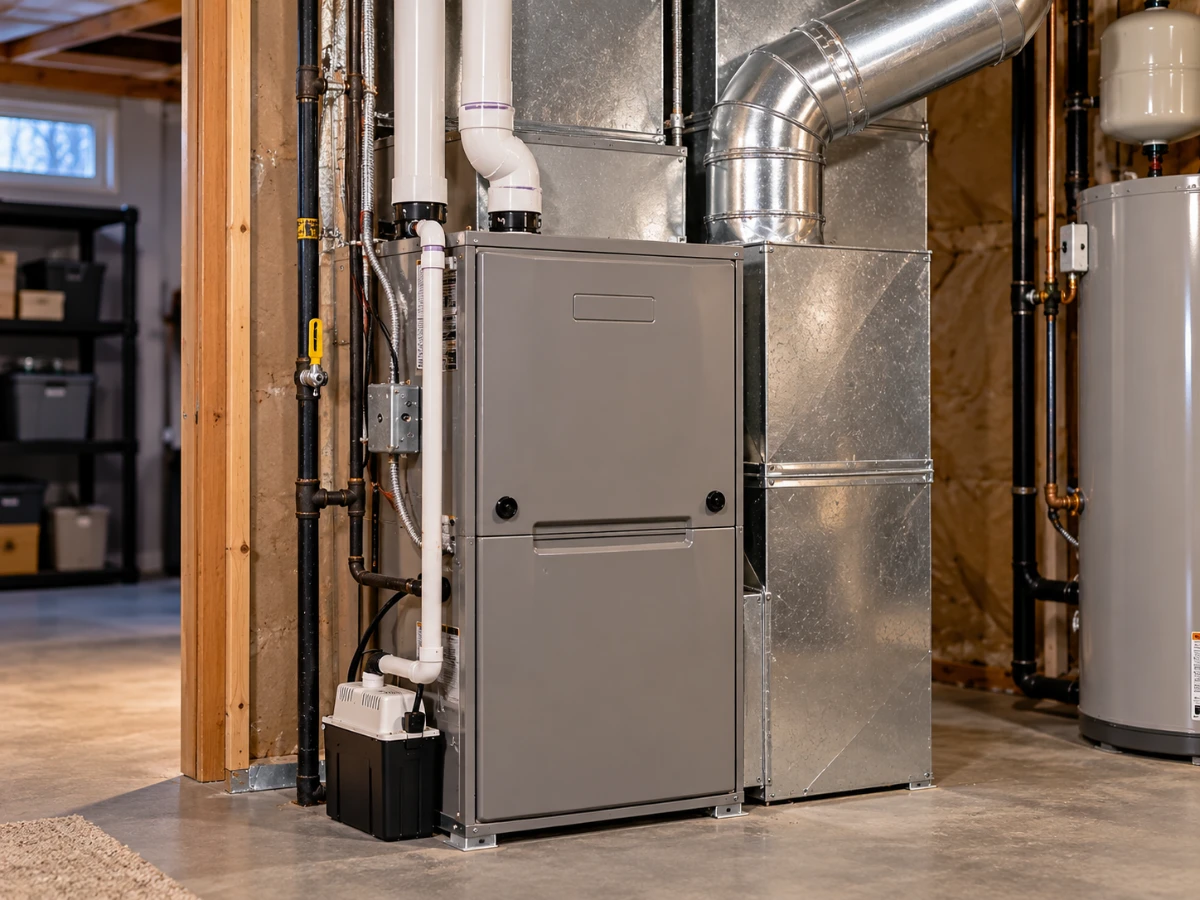
Standard Gas Forced Air (Lowest Complexity)
If your home was built after 1980, you likely have a standard gas forced-air furnace with central air. This is common in newer suburbs like Maple Grove, Woodbury, and Plymouth. These systems use a simple, low-voltage wiring setup. The furnace and AC connect straight to the thermostat’s wall plate. That means less work for us, and a lower cost for you.
Hydronic Boilers & Radiant Heat (Higher Complexity)
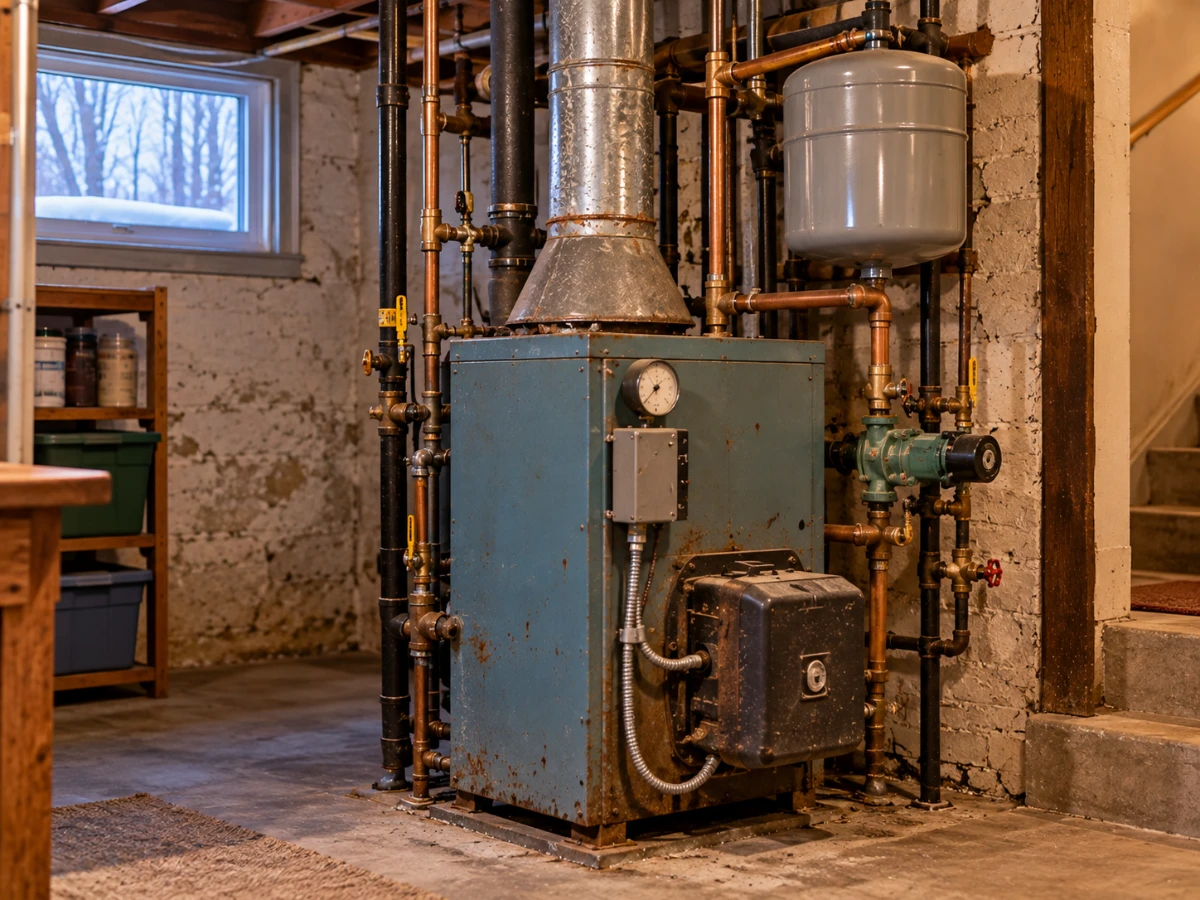
Classic Minneapolis bungalows, Tudors, and historic Saint Paul homes often run on hydronic boilers or radiant heat instead of forced air. Keeping a smart thermostat powered on these systems usually takes more work than a standard furnace. This involves a dedicated transformer added just for the thermostat or laying a C-wire (more on that C-wire later).
Some components, like zone valve relays and aquastats, are part of the boiler itself and are normally serviced by your HVAC technician. We'll coordinate with them if anything outside our scope comes up. All that extra wiring takes more time, so a boiler install typically costs more than a simple forced-air swap.
Dual-Fuel Heat Pumps & Multi-Stage Heating (Moderate to High Complexity)
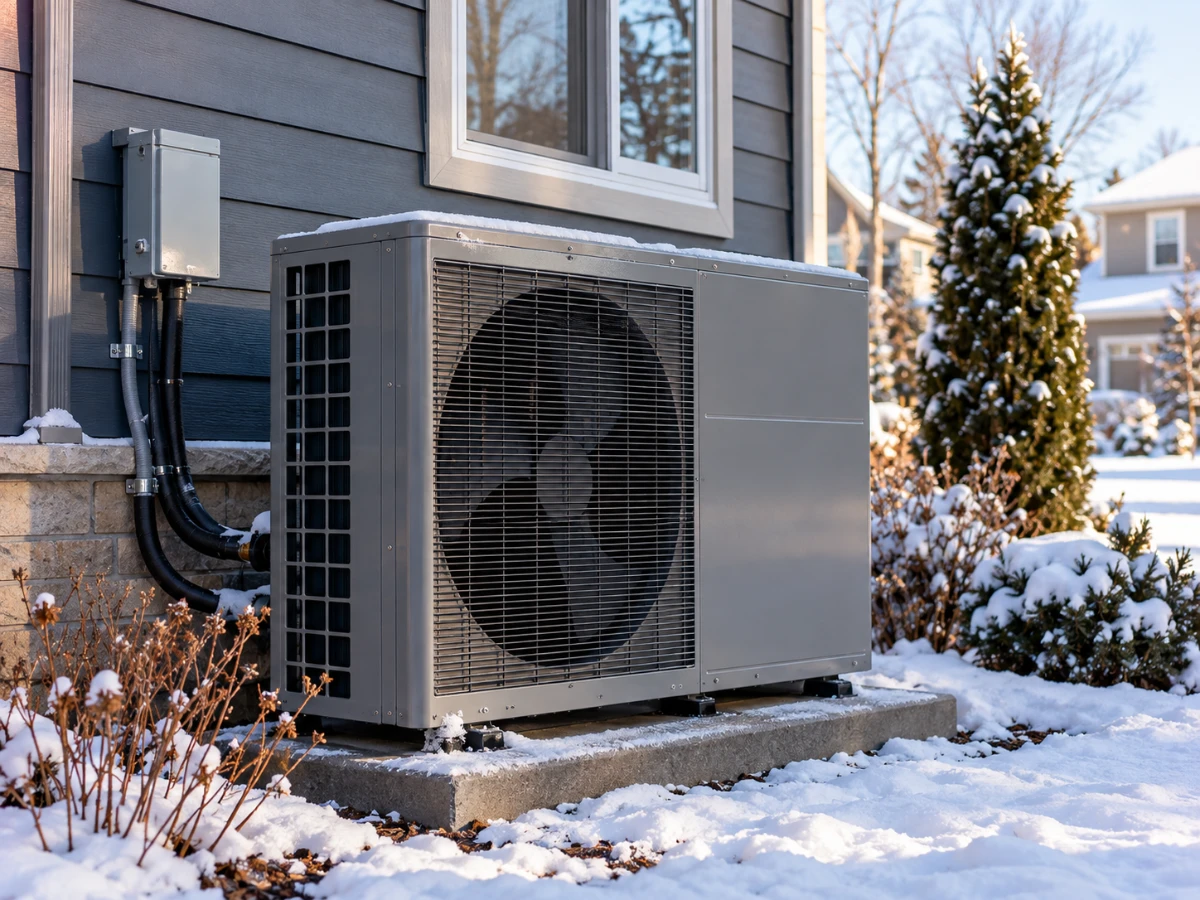
Heat pumps keep growing in popularity across Minnesota. They stay efficient even in cold weather. But they also need more careful wiring. Your smart thermostat has to manage auxiliary or emergency heat staging, which kicks in backup heat when it's too cold for the heat pump to keep up on its own. This means wiring the right terminals for your system.
Heat pumps also need their outdoor temperature lockout setting configured on the thermostat, so it switches to backup heat at the right point. This can be set based on your equipment's specs, and is what keeps your home warm during a sub-zero cold snap, so it's worth doing right.
Still deciding which thermostat model fits your heating setup? Our guide on how to pick the right smart thermostat walks through furnace and boiler compatibility, and useful features like cold-snap recovery, and humidity sensing, so you can find a model that actually works with your system.
The C-Wire & Existing Control Cable Conditions
This is one of the biggest hidden cost factors homeowners run into, and it trips up a lot of Minnesota homes.
The Common Wire Dilemma
Homes built before 1980 often have older 2-wire or 4-wire thermostat loops that don't include a dedicated, continuous 24V power return, better known as a C-wire. Without it, a smart thermostat can't pull steady power. The result is a screen that blacks out, a Wi-Fi connection that drops, and a furnace that short-cycles at the worst possible time.
Option A: C-Wire Adapter (Mid-Cost Fix)
The simpler way to fix this is installing a power connector or adapter module inside the furnace or boiler control board. This supplies continuous power without pulling any new cable, and it only takes up a small amount of field labor time. On some old boiler systems, this could mean adding a small dedicated transformer just for the thermostat, since the boiler's existing transformer is often already tasked with running the zone valves.
Option B: Fishing Fresh Low-Voltage Cable (Higher-Cost Fix)
Sometimes the existing wiring is broken, shorted, or just not up to the job. In that case, we need to fish a brand-new C-wire (multi-conductor cable) from the utility room, through the wall cavities, and up to the thermostat mounting point. This is more involved, costs more, and takes longer, but it's the more permanent fix.
If you want the full rundown on how C-wires work and how to check your own setup, our C-wire installation guide covers it in detail, including the warning signs of a missing common wire.
Single-Zone vs. Multi-Zone Dampening Systems
Not every home controls its temperature with just one thermostat, and that changes your cost picture.
- Single-zone systems use one thermostat to control the entire main floor or home heating. These use standard terminal connections and are the simplest setup to work with.
- Multi-zone damper control boards are used in homes with independent, floor-by-floor climate control. Installing a smart thermostat here takes more effort. We make sure the zone control panel works with the new thermostat, confirm there's enough power for every thermostat head, and watch for back-feeding voltage issues that can happen when multiple zones share wiring. More zones generally means more time on site, which affects your total cost.
Structural & Electrical Subsystems
A couple of smaller factors can still move the needle on your final price.
- Wall construction: This matters more than most homeowners expect. Mounting a new thermostat on modern drywall takes just a few minutes. Pre-1950 homes with plaster-and-lath walls take longer, since drilling into old plaster can crack or crumble it without the right technique and anchors.
- HVAC control board and transformer health: We check that your system's 24VAC transformer has enough power left over to run a smart thermostat's Wi-Fi alongside your heating relays. If the transformer is weak or aging, it may need to be upgraded or replaced before the thermostat install can move forward.
These structural and electrical checks are part of the work we handle across smart home projects. If you're planning bigger upgrades, our smart home wiring services page covers how we handle dedicated wiring for connected devices throughout your home.
Self-Diagnosis Checklist & Next Steps
Use this quick checklist to get a sense of where your project might land before you call us.
Home Feature | Expected Complexity | On-Site Labor & Hardware Scope |
Modern forced-air furnace with a C-wire already in place | Low | Swap the faceplate, set up Wi-Fi, and run a test cycle |
Modern forced-air furnace with no C-wire | Moderate | Add a C-wire power connector |
Boiler heat with a separate central AC system | High | Add a dedicated transformer or run a new C-wire |
Pre-1950 home with plaster walls and multiple heating zones | High | Careful wall mounting, checking zone compatibility, and setting up each unit |
If your setup lands anywhere past low complexity, or if you're just not sure which category you fall into, it's worth having a licensed electrician take a look before you buy a thermostat. That way you're not stuck with a smart device sitting in a box on your counter.
Ready to get your thermostat installed right the first time? Reach out to Loch Monster Electric and we'll walk you through exactly what your home needs, with pricing based on real field time, not guesswork. Call 763-292-1191 today for precise, expert smart thermostat installation.
Frequently Asked Questions
Most smart thermostats need continuous power to run their Wi-Fi and touchscreen, and a C-wire is the most reliable way to provide it. Homes without one may need an adapter or new wiring.
Hydronic boiler systems often need extra work to keep the thermostat powered, like a dedicated transformer or a new C-wire. Some components, like zone valve relays, are part of the boiler itself and are handled by your HVAC technician, but the added wiring on our end still takes more time than a standard forced-air setup.
You can, but older homes, multi-zone systems, and boiler setups often have wiring quirks that are easy to miss. A miswired thermostat can damage your furnace control board, so it's worth having a licensed electrician check things first.
Yes. Multi-zone systems need extra work to verify zone panel compatibility and power supply across every thermostat, which adds to the labor involved compared to a single-zone home.