What It Costs to Fix a Breaker That Won't Reset After Storm Damage
Updated: Sep 18, 2026
This guide breaks down what it costs to fix a breaker that won't reset after storm damage in the Twin Cities, covering the three root causes (moisture, surge damage, tripped main), inspection and replacement pricing, safety steps, insurance coverage, and Minnesota permit requirements.
A Minnesota storm rolls through, the power flickers, and now one breaker just won't reset no matter how many times you flip it. Before you keep trying to force it, it helps to know what you're dealing with. The fix, and the cost, depends on which of three root causes your electrician finds. We'll walk through all three below, plus what Minnesota permits require and what your insurance may cover.
Need a hand right now? The team at Loch Monster Electric are licensed electricians serving homeowners across Minnesota and Wisconsin, and storm season is when we're busiest for exactly this reason. Give us a call at 763-292-1191 or fill out our contact form and we'll get back to you right away.
Circuit Breaker Replacement Cost After Storm Damage
Here's a quick breakdown of what Twin Cities homeowners typically pay once a licensed electrician is on-site.
Item | Estimated Cost |
Troubleshooting Visit (1 to 2.5 hours) | $365 - $655 |
Circuit Breaker Replacement (Parts + Labor 1 to 1.5 hours) | $ 215 - $ 400 |
Important Note: If you need more breakers replaced on the same visit, you'll only pay for the additional labor and parts needed to finish the job, with no additional visit charges.
The pricing above covers diagnosis and breaker-level fixes. If the inspection turns up damage to the panel itself rather than just the breaker, a panel repair or replacement may be needed, which is priced separately.
Our circuit breaker repair services page has more on what's included. Check it out to learn more.
The Three Root Causes of a Breaker That Won't Reset After a Minnesota Storm
When a breaker won't reset after a storm, it almost always comes down to one of three things:
- Moisture in the panel box: In Minnesota, moisture is the most common culprit during spring freeze-thaw cycles and summer thunderstorms. This happens when rain, ice dams, or a fast spring thaw pushes water into your panel.
- Surge damage: This can be caused by a direct lightning hit or when the power grid snaps back on unevenly. Surge damage can fry the circuit breaker itself.
- A tripped main breaker: The main tripped and is holding every other breaker locked out. A tripped main is the simplest fix but still needs a professional check before you touch anything.
Now let’s look at these three root causes in more detail.
Moisture in the Electric Panel: Why Minnesota Weather Makes This Risky
Twin Cities weather is rough on outdoor and basement electrical panels. Ice dams on the roof can send water down into a service mast, or rain during a summer storm can seep into an outdoor panel that isn't fully sealed. And when a hard freeze is followed by a quick thaw, condensation can build up right inside the box.
Here's an important safety tip: never try to force a wet breaker to reset. Water inside a panel creates a path for electricity to travel somewhere it shouldn't, and that's a shock risk and a fire risk.
Look for these signs:
- Rust or water stains on the panel door or inside the box.
- A musty or metallic smell near the panel.
- Breakers that trip the moment they're reset.
- Visible condensation on the panel cover.
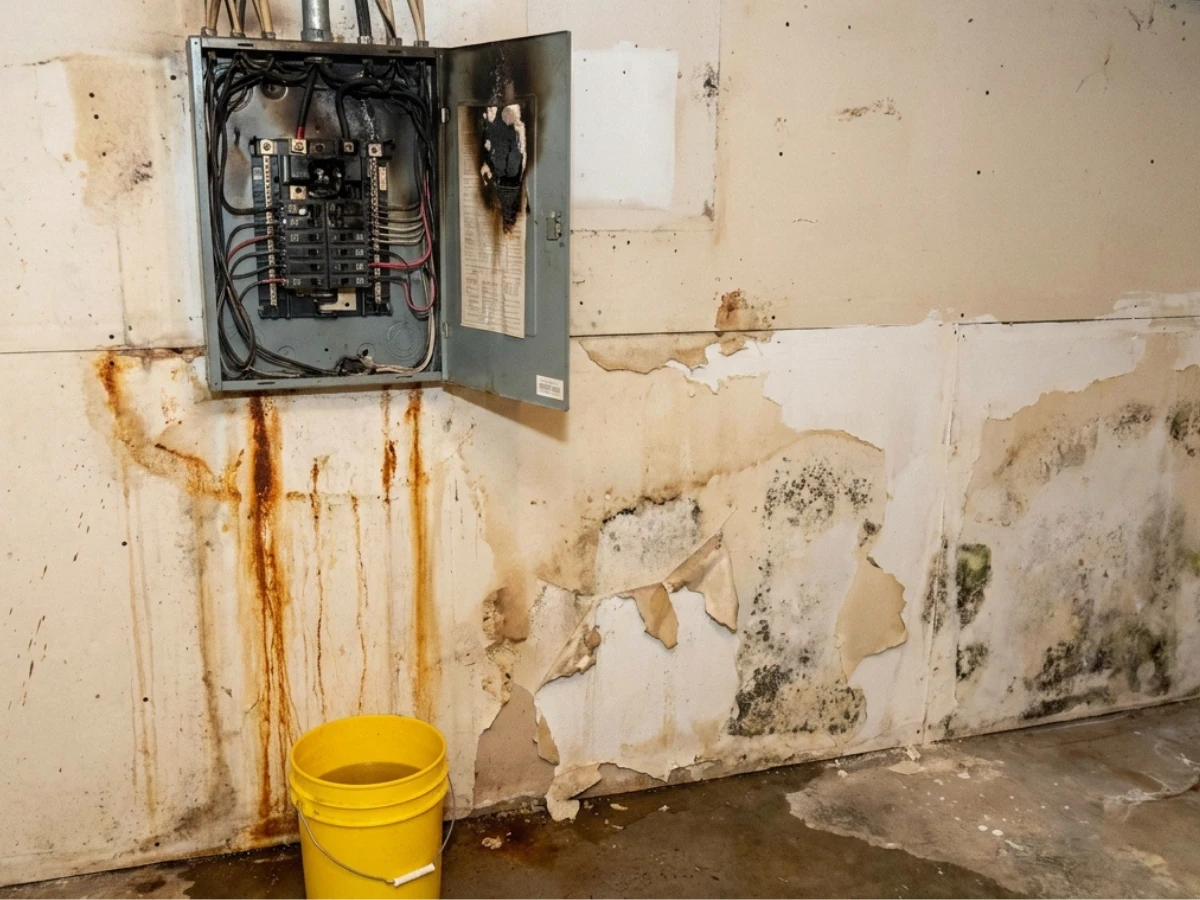
A licensed electrician will shut off power to the panel, dry it out completely, inspect the internal components for corrosion, and only then attempt a safe reset. If moisture has reached the breakers themselves, they'll need replacing.
If the moisture has damaged the panel itself, that's a different scope of work than a simple breaker swap. Our electrical panel upgrade guide breaks down what a panel replacement will cost you in the Twin Cities if it comes to that.
If you're in a home with an older panel in a spot prone to water intrusion, especially basement units common in older Woodbury and Eagan homes, keeping an eye on this after every heavy storm is a smart move.
Surge Damage: How to Tell a Breaker Is Burned Out
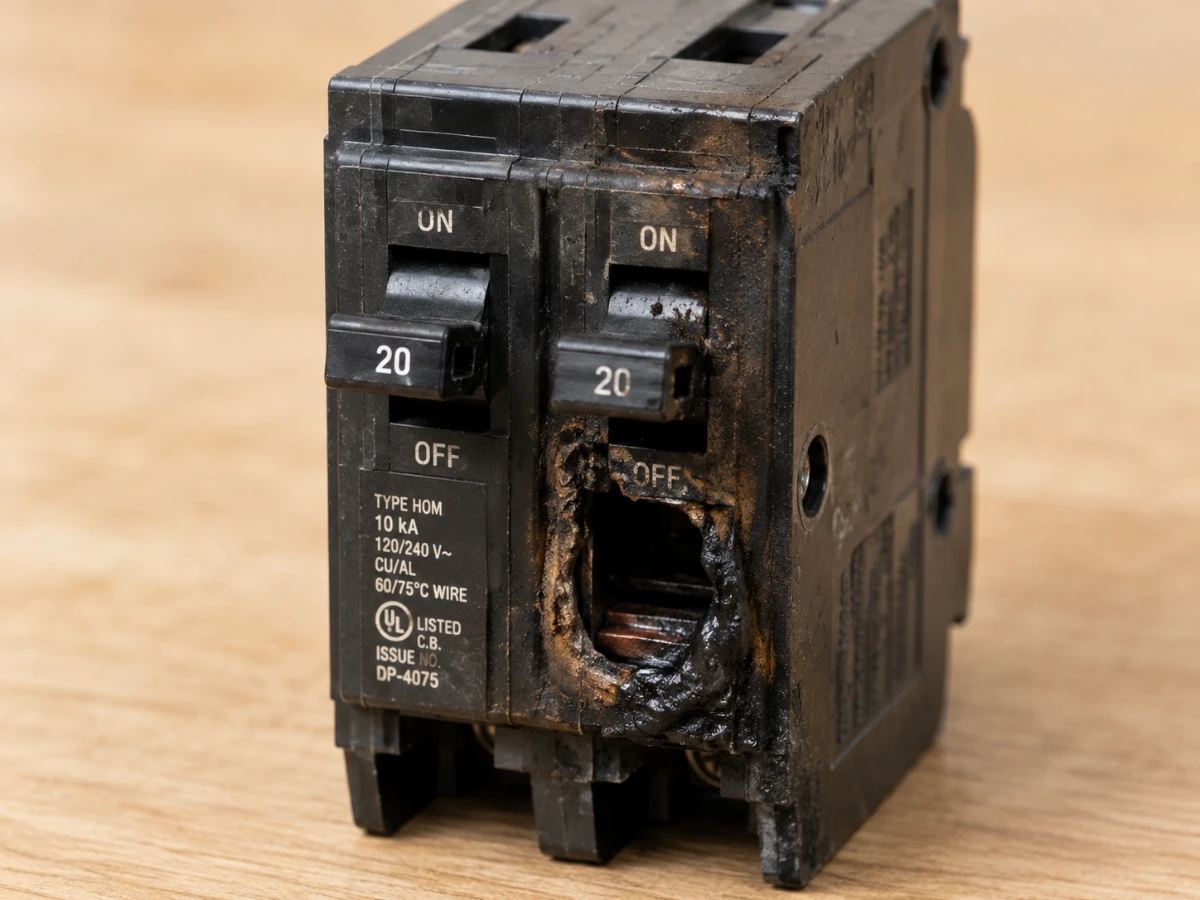
A power surge, whether from a lightning strike or the grid reconnecting after an outage, can send way more current through a breaker than it's built to handle. When that happens, the breaker can burn out internally even though it looks fine on the outside.
Signs your breaker took a surge hit:
- Scorch marks or discoloration around the breaker.
- A burning smell near the panel.
- The breaker arm moves like it's resetting but won't hold.
- A cracking or buzzing sound when you flip it.
Circuit Breaker Types
Once an electrician confirms surge damage, the replacement cost depends on the breaker type, and its compatibility with your current panel.
- Standard single-pole breakers are the cheapest to source and install.
- Double-pole breakers, which power larger appliances, cost a bit more in parts and labor.
- AFCI and GFCI breaker costs, which Minnesota code requires in certain locations like bedrooms, kitchens, and bathrooms, run higher still because the parts themselves cost more.
Our circuit breaker repair cost guide breaks down these cost factors, and Minnesota permit rules, in more detail if you want the full picture.
Some surge damage doesn't stop at the breaker. It can hit the bus bar inside the panel too, and that's not something you can see just by looking at the breaker itself. This is why a full panel inspection matters, not just a quick swap.
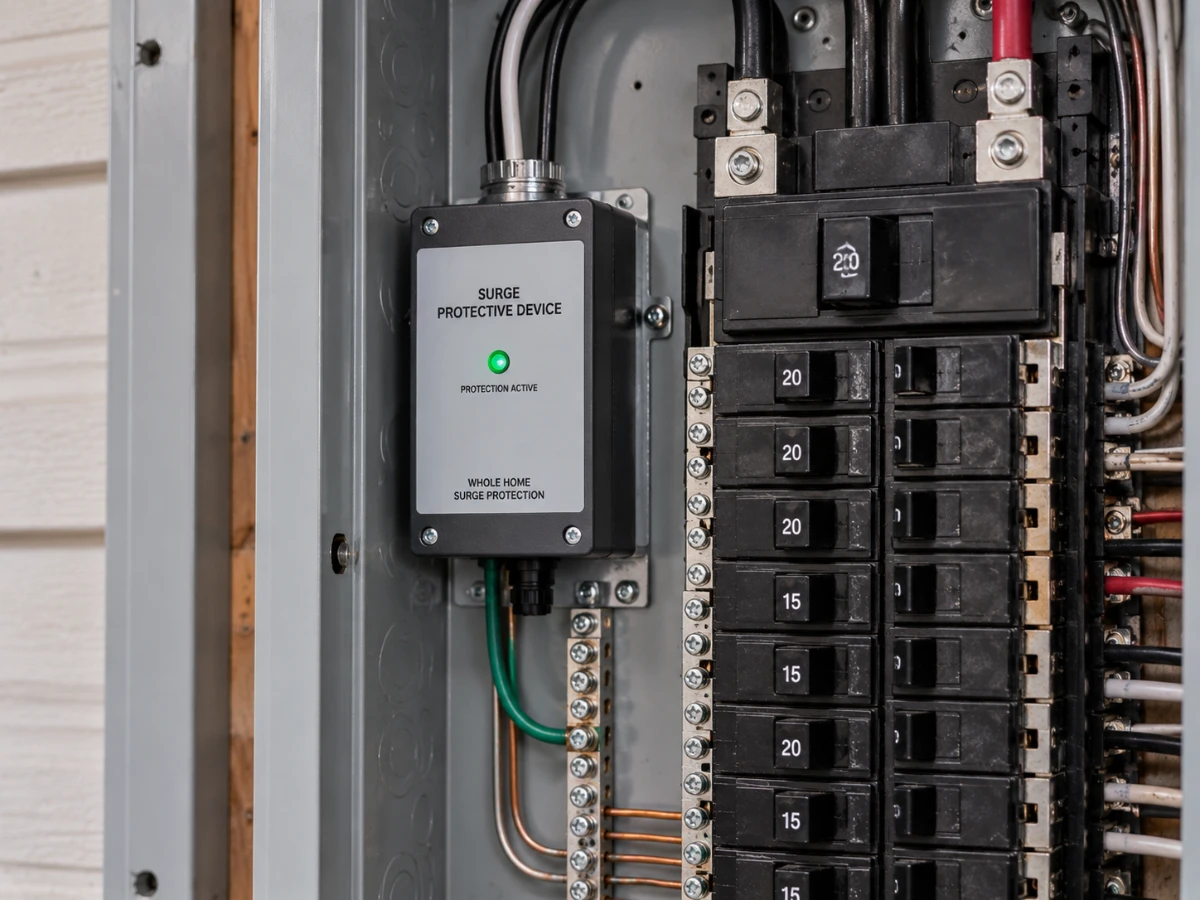
If your home has taken more than one surge hit over the years, or you'd rather not gamble on the next storm, whole-home surge protection installed at the panel can catch a spike before it ever reaches your breakers, outlets, or appliances.
Tripped Main Breaker: The Lowest-Cost Fix
Sometimes a whole-home surge doesn't damage individual breakers at all. Instead, it trips the main breaker, and when the main is tripped, every branch breaker downstream can look and act like it's stuck, even though nothing is actually wrong with them.
This is the cheapest of the three problems to fix, but it still isn't a do it yourself job. Minnesota electric code, and most homeowners insurance and HOA policies, require a licensed electrician to first check there's no underlying fault before the main is safely restored. If there actually is a fault downstream, flipping it back on without fixing it can cause real damage or a fire.
If the tripped main is part of a bigger problem, like a mast or meter issue that came with the same storm, our power outage after storm repair guide covers the full restoration timeline from utility coordination to final inspection. It also includes permits and HOA responsibilities.
What a Professional Storm-Damage Electrical Inspection Includes
An inspection is more than just having someone flipping circuit breakers. Here's what's typically included:
- A full visual and physical check of the panel and breakers.
- Testing circuits under load to see what's working and what isn't.
- Checking for hidden surge damage on the bus bar, not just the breaker.
- A written report on what was found.
Insurers and HOA boards often ask for that written report before they'll approve or pay for repairs. Skipping the inspection to save money now can cost you more later if your claim gets denied.
Staying Safe Between the Storm and the Repair Appointment
If your breaker won't reset and you're waiting for an electrician, a few ground rules keep you safe:
- Don't keep trying to force the breaker to reset. Repeated attempts on a damaged breaker raise your risk of sparking or fire.
- Figure out which circuits are dead and unplug sensitive appliances on circuits that are still live, in case power surges again.
- Call 911 immediately if you see sparks, smoke, or smell burning.
For anything else that isn't life-threatening, you can call us at 763-292-1191. Check our emergency electrical repair services to learn more.
Insurance Coverage for Storm-Damaged Breaker Repair
Minnesota homeowners insurance usually covers breaker and panel damage caused by a power surge. Insurers treat surges as sudden, unexpected events, so they're typically covered. Water damage is a bit different. If wind-driven rain got into your panel, coverage can depend on your policy's exact wording. It's best to call your insurance company and ask.
Here's how to make your claim go smoothly:
- Take photos of the damage before any repairs start.
- Save every invoice and permit copy from your electrician.
- Ask your adjuster if they're calling it surge damage or water damage. This can change what's covered.
Loch Monster Electric can give you the invoice format most Twin Cities insurers want when you file a claim.
Ready to Get Your Breaker Replaced?
A breaker that won't reset after a storm is your panel's way of telling you something needs a closer look, whether that's a wet panel, a burned-out breaker, or a tripped main. Getting a licensed electrician out to inspect it before you keep flipping the switch keeps your home safe, satisfies Minnesota's permit requirements, and protects your insurance claim.
Loch Monster Electric is licensed in Minnesota and Wisconsin. We can get a professional electrician out to check your breaker and get your power back on safely. Give us a call at 763-292-1191 to schedule a visit.
Frequently Asked Questions
No. Repeatedly forcing a breaker to reset when it won't hold can cause sparking, further damage, or a fire, especially if the cause is moisture or internal burnout. Leave it off and call a licensed electrician.
Often yes, particularly for surge-related damage, which is usually considered sudden and accidental. Water intrusion coverage can vary by policy, so confirm directly with your insurer.
Yes. Minnesota requires a permit for any electrical replacement or repair, including a single breaker, unless you own and occupy the home yourself and choose to do the work personally.
Yes. Moisture can corrode internal breaker components, and once that happens, the breaker typically needs replacement rather than drying out and reuse.
It depends on your governing documents. Damage inside an individual unit's own panel is usually the homeowner's responsibility, while damage to shared service equipment typically falls to the HOA.
A straightforward diagnosis and breaker swap often wraps up in one to two hours once the electrician is on-site, though a fuller panel inspection or hidden surge damage can extend that.
No. If your panel is outdoors or exposed to rain, wet hands or a wet panel surface create a shock risk the moment you touch the breaker. Wait until conditions are dry, or better yet, have a licensed electrician check the panel first if it's been exposed to heavy rain or flooding.