EV Charger Installation Costs in Minnesota
Updated: Aug 19, 2026
This guide covers Twin Cities EV charger installation costs, Level 1 vs. 2 comparisons, pricing factors, local permits, electrical panel upgrades, Minnesota utility rebates, HOA rules, and a step-by-step installation timeline.
If you recently parked a brand-new electric vehicle in your garage in Bloomington or up in Maple Grove, you know how slow a standard wall outlet is. That slow trickle charge gets old fast, especially when a Minnesota winter freeze cuts into your daily battery range.
At Loch Monster Electric, we fix these charging headaches all the time across the Minneapolis-St. Paul metro. Upgrading to a dedicated Level 2 home setup is the only reliable way to keep your car ready every morning. In this guide, we will break down realistic Twin Cities installation costs, explore local municipal permitting rules, and direct you to the utility rebate programs that can help you save money.
If you are ready to get an EV charger installation, call us on 763-292-1191, or fill this contact form, and we’ll get through to you later.
Why Minnesota Drivers Actually Need Level 2 Home EV Chargers
Why Level 2 and not Level 1? The difference in speed and reliability becomes especially clear during our harsh Minnesota winters. Here’s a quick comparison:
Charger Type | Power Source | Charging Speed | Best Suited For | Winter Performance |
Level 1 | Standard 120V Outlet | 3 to 5 miles of range per hour | Low-mileage drivers or temporary use | Very slow due to battery thermal demands in freezing weather |
Level 2 | Dedicated 240V Circuit | 25 to 40 miles of range per hour | Daily commuters and overnight full recovery | Highly reliable, ensuring a full battery every morning despite cold temperatures |
To keep your daily commuter vehicle fully charged and ready for winter roads, upgrading to a professional Level 2 system is the best choice for your home.
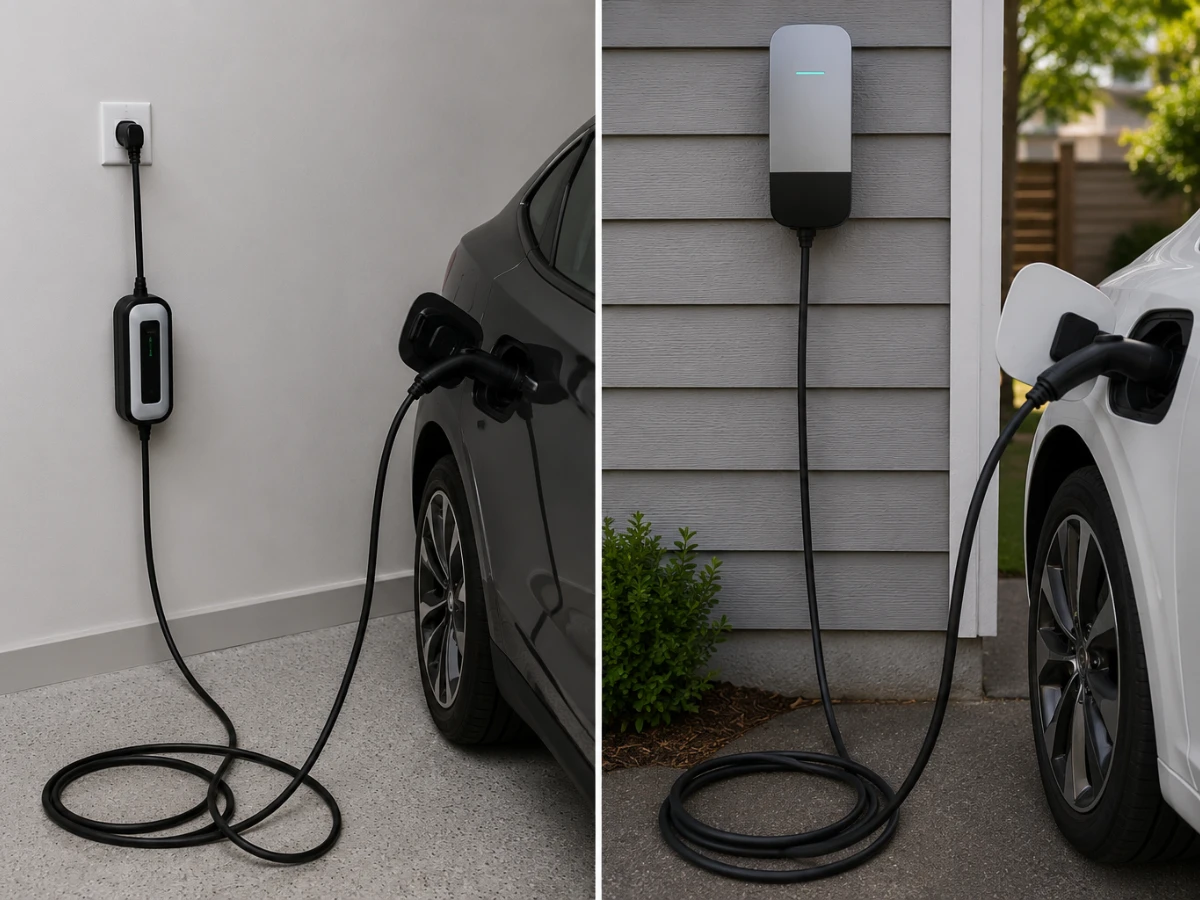
To learn more about EV charger types, the dedicated circuit and conduit runs you need, read our home EV charger installation guide.
EV Charger Installation Cost in the Twin Cities
The EV charger installation cost depends on your home layout. A standard Level 2 setup where your electrical panel is close to your parking spot and your system has open space, costs usually range from $1,500 to $3,200.
Here’s a quick high-level price breakdown:
Item | Estimated Cost |
EV Charger Unit | $ 800.00 |
Parts | $ 200.00 - $ 900.00 |
Professional Labor (3 to 8 hours) | $ 500.00 - $ 1,500.00 |
Total Project Estimate | $ 1,500.00 - $ 3,200.00 |
Important Note: These figures are estimates. Your final quote may vary based on your home's unique requirements. Factors that can influence the total cost include the condition of your current wiring, the accessibility of your current panel, or complex utility coordination, and specific code requirements for your municipality.
Already purchased your own EV charger?
If you already have the EV charger unit, our team can handle the professional installation for you, and that EV charging unit cost ($ 800.00) can be deducted from your total estimate.
If you’re ready to get started, check out our EV charger installation services.
The 6 Factors That Move Your EV Charger Installation Cost Up or Down
Your total installation cost depends on a few key details around your home:
Distance from Panel to Garage: Every foot of heavy copper wire adds to your bill. If your electrical panel is right next to where you park, your costs stay low because less material is used. If the panel is on the opposite side of your house or basement, electricians have to run much longer lines through walls or ceilings, which increases labor time and material expenses.
Panel Capacity and Age: A typical Level 2 home EV charger requires a dedicated 240-volt circuit (usually drawing 40 to 50 amps) and enough physical space and total amperage capacity in your main panel. If your electrical panel is outdated or does not have the necessary capacity, you will need a panel upgrade to safely handle the heavy electrical load. Read our electrical panel upgrade guide to learn more.
Conduit Routing Through Open vs. Finished Spaces: Running tubing across an open basement ceiling is fast and easy. But hiding heavy wires behind finished drywall in older homes takes extra work, specialized fishing tools, and careful wall repairs so your house looks untouched when they finish.
Outdoor vs. Indoor Placement: Putting your charger on an outside garage wall or open carport takes special weatherproof parts. These pieces guard your system against driving rain, heavy snow, ice, and extreme Minnesota sub-zero temperatures.
Smart Charger Hardware Cost: Basic plug-in chargers cost less upfront because they plug straight into an outlet. Smart chargers with built-in Wi-Fi, smartphone scheduling apps, and energy-tracking software have a higher initial hardware price tag.
Permit and Inspection Fees: Every city across the Twin Cities metro has its own official fee list for electrical permits. Local licensing and inspection fees vary by location. Here at Loch Monster Electric, we handle this entire permitting process for you from start to finish so you do not have to worry about the paperwork.
Minnesota and Utility Rebates to Reduce Your EV Charger Installation Costs
Local incentives help lower your overall EV charger installation cost:
- Xcel Energy Programs: Xcel offers
charger and wiring rebatesup to $500 (or up to $1,200 for income-qualified households) when you join off-peak charging programs like Optimize Your Charge or EV Accelerate at Home. - Dakota Electric Association Programs: Dakota Electric offers EV charger and installation hardware rebates up to $500 when you sign up for one of their
ChargeWise EV programs. - Federal 30C Tax Credit (Expired June 30, 2026): If you fully installed your EV charger on or before June 30, 2026, in an eligible area, you can still claim a federal tax credit. This credit covers up to 30% of your hardware and installation costs (up to a $1,000 limit) using IRS Form 8911. Be sure to double-check the rules with a tax professional before filing.
Minnesota Permits and Electrical Code for EV Chargers
In Minnesota, strict rules govern electrical work such as home EV charger installations to keep families safe through every season.
The Code and Local Rules
The state follows the National Electrical Code (NEC). The Minnesota Department of Labor and Industry (DLI) enforces these rules. State law allows you to get a DIY permit if you own and live in the home. However, it is strongly recommended to hire a licensed electrician to get the permit and do the work.
Permit Differences by City
- Minneapolis & St. Paul: City inspectors strictly review the electrical load calculations, wiring, and protective piping layouts. Getting a permit can take longer during the busy summer building season.
- Hennepin & Ramsey County Suburbs: Cities like Edina, Bloomington, Minnetonka, and Maple Grove run local offices. They require you or your contractor to schedule standard rough-in and final checks.
Regardless of your city, all electrical permits require a rough-in inspection before wiring is covered and a final inspection once the charger is fully installed.
Skipping the permit brings major risks. If a DIY setup without a permit causes a fire or electrical failure, your homeowner insurance company may refuse to pay for the property damage.
Why You Need a Panel Upgrade for Your EV Charger
When homeowners first call us, a common reaction is: "I just want to install an EV charger—why are you asking me to do a panel upgrade?"
It can feel frustrating or unexpected, but it usually comes down to the age of our local housing stock. Many classic homes throughout the metro were built well before modern power needs. We’re talking about turn-of-the-century St. Paul Victorians, pre-war South Minneapolis bungalows, as well as 1950s–1980s first-ring suburban split-levels in places like Bloomington and Richfield, that were originally built with just 100-amp electrical panels.
Adding a heavy 32- to 40-amp Level 2 EV charging load to a home already powering central air conditioning, a clothes dryer, and kitchen appliances risks overloading the main breaker.
The 200A Panel Upgrade Solution
If your home's setup doesn't have enough capacity for the extra load, you will need a panel upgrade. This ensures your level 2 charger won't constantly trip your main breakers and protects your home from potential electrical safety issues.
This means replacing your old, crowded breaker box with a spacious, industry-standard modern 200-amp panel which comes with plenty of physical breaker spaces for future home additions. We also update the main utility service drop/feed, install whole-home surge protection to safeguard your sensitive electronics and EV hardware, and ensure all grounding and bonding meet current NEC safety codes.
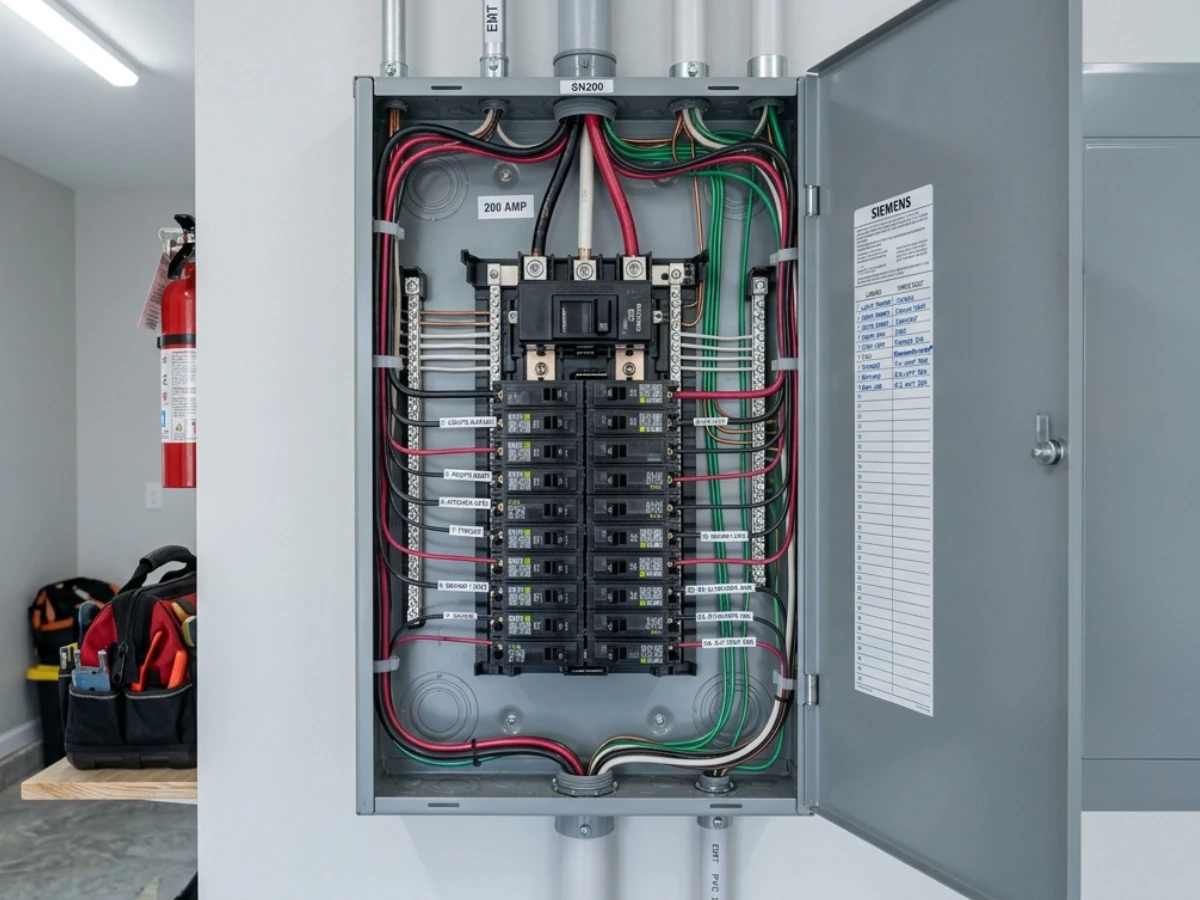
If you need this 200A upgrade for your EV charger, check out our electrical panel upgrade services.
Twin Cities Neighborhood and Housing Stock Considerations
Aside from old electrical panels, different types of Twin Cities homes come with their own unique setup challenges that may add your EV charger installation cost:
- Aging Underground Wires in Historic City Homes (Minneapolis & St. Paul): Older properties like classic city bungalows often rely on worn-out underground wires. These old lines cannot handle the heavy power needs of a modern EV charger and usually need to be replaced.
- Detached Garages in Older Suburbs (St. Louis Park): If your garage sits completely separate from your house, electricians have to run power across your yard. This requires digging deep outdoor trenches to protect the electrical lines from freezing Minnesota winter soil. To learn more about this, read our
trenching for outdoor EV chargerguide. - Tight Walls and Finished Basements (Richfield, Roseville, Bloomington): Mid-century ramblers and split-levels often feature finished basements or cramped utility closets. Running thick new wires through these tight spaces takes extra work, special tools, and careful drilling to avoid ruining your walls.
Keep in mind that fixing these unique property challenges will add to the overall cost of your installation.
HOA and Multi-Unit Dwelling Rules for EV Charging in Minnesota
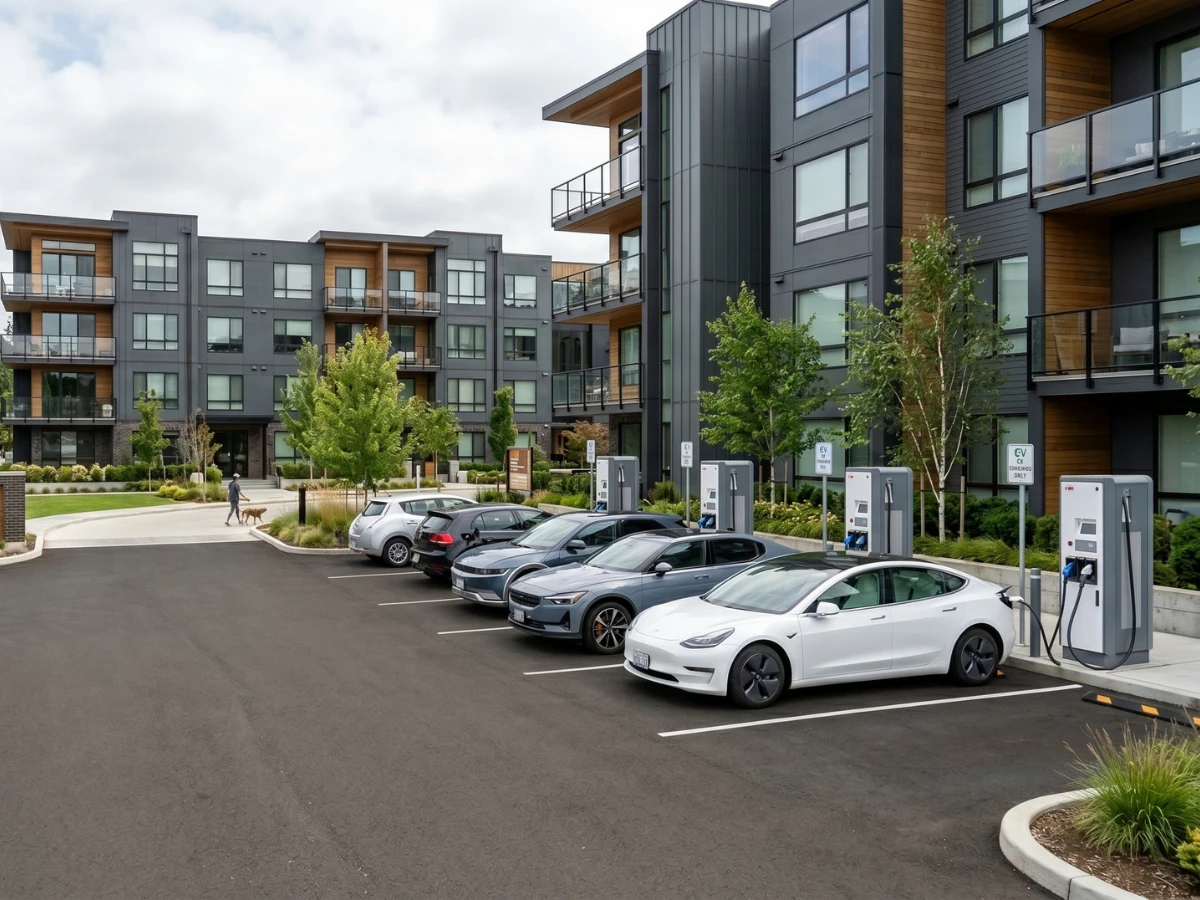
If you live in a Twin Cities townhome or condo, you cannot just buy a plug-in Electric Vehicle (EV) charger and hook it up. You must first check the rules of your Homeowners Association (HOA). Here is how the process works in Minnesota:
1. Getting Approval from Your HOA
Minnesota does not have a specific law that guarantees your right to install an EV charger. Instead, your HOA board decides the rules. Because townhomes and condos share walls and roofs, the HOA must approve any changes to the building. They can set rules to keep things looking neat, like requiring you to paint the plastic pipes to match the building or hiring a licensed electrician.
2. Checking the Power and Handling Bills
Condo buildings share one main electrical system. Before you do anything, an electrician must test the building's wiring. They need to make sure your new charger will not overload the system and cause a blackout. If the building has enough electricity, the HOA usually tracks your power bill in one of two ways:
Sub-meters: The building installs a separate meter just for your charger, and the extra cost is added to your monthly HOA fee.
Smart chargers: You use a high-tech charger that records your exact energy use so you only pay for what you plug in.
3. Insurance and Paperwork
To protect the property, HOAs require safety paperwork. Before an electrician can drill holes through shared garage walls or concrete floors, they must give the HOA a Certificate of Insurance (COI). This document proves that if the worker accidentally damages the building, their insurance company will pay for the repairs, not the neighbors.
Timeline and What to Expect on an EV Charger Installation
Knowing what to expect during the installation helps your project run smoothly. The exact timeline depends on whether you just need a standard charger setup or one that includes an upgrade for your electrical panel. Here is the step-by-step process:
- Site Check & Planning: Before any work starts, your electrician looks at your main breaker box, measures the distance to your parking spot, and figures out the safest path for your wiring.
- Permit Paperwork: Your contractor handles and submits the official electrical permit with your local city before starting any physical work.
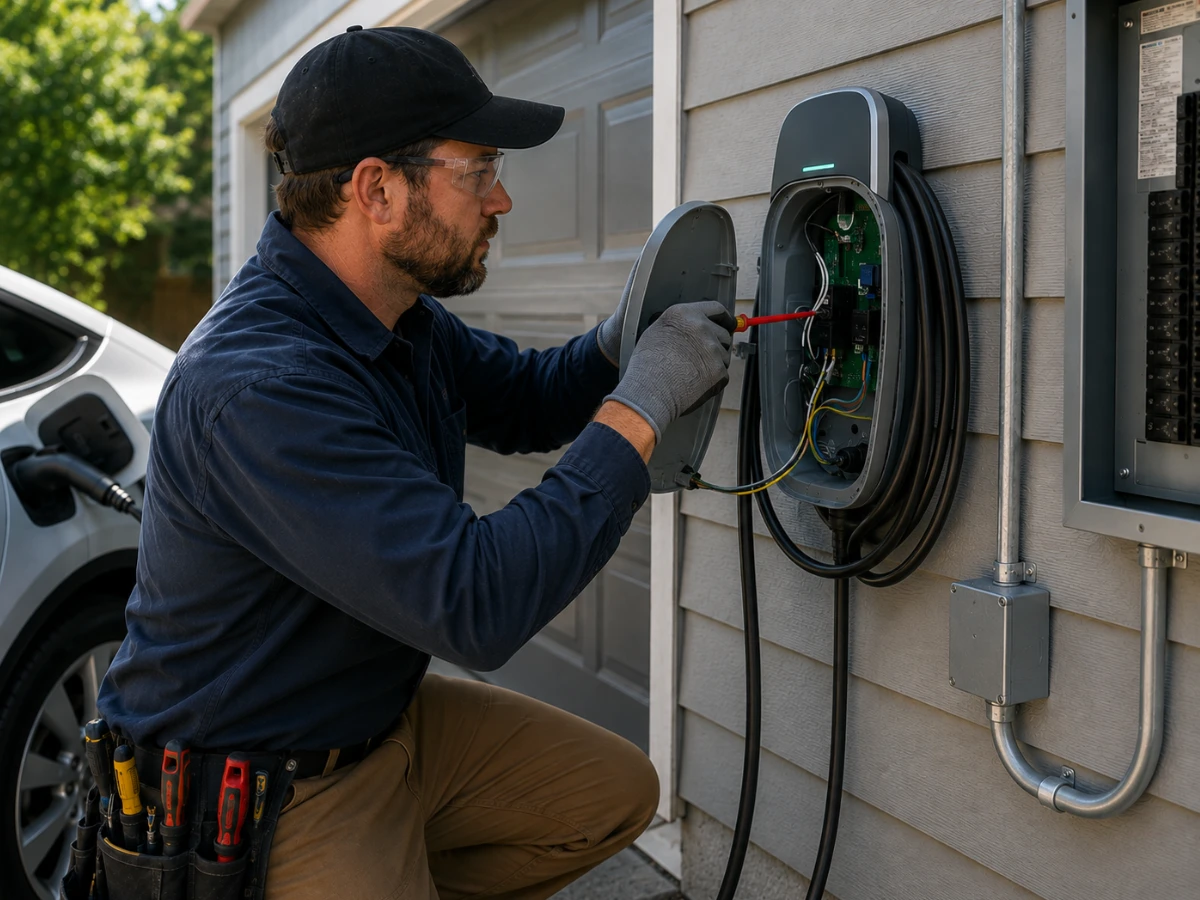
- Running the Wires (The Rough-In): On installation day, your electrician will turn off your home's main power for a short time to safely connect your new 240-volt breaker. They will then run heavy copper wires inside protective pipes along your basement ceiling or garage walls.
- Mounting and Testing: The Level 2 charger is firmly attached to your wall, hooked up, and tested to make sure it works safely.
- Final City Inspection: After the work is done, your contractor schedules an inspection. A local city inspector will come by to check the work and sign off on your permit.
Realistic Timelines: Standard Install vs. Panel Upgrade
- Standard Same-Day Install: If your current electrical panel has enough empty space and power, the entire physical installation is usually finished in one day (taking about 3 to 8 hours).
- Multi-Visit Panel Upgrades: If your home needs a new 200-amp panel to handle the extra power, the job takes more than one visit. Your local power company has to disconnect and reconnect the main power lines, and your house will be without electricity for a few hours while your old breaker box is replaced.
Ready to Install an EV Charger?
While upgrading your home with a Level 2 EV charger involves a few important moving parts like checking your panel capacity, pulling local permits, and picking the right equipment, expert help makes the entire process stress-free.
At Loch Monster Electric, our friendly team is here to make sure your car is fully charged and ready for a full day of driving every morning. Give us a call today at 763-292-1191 or tell us what you need in this contact form, and we’ll reach out to you.
Frequently Asked Questions
Most Twin Cities homeowners invest between $1,500 and $3,200 for a standard Level 2 installation. Your final price depends on your home setup, like how far your garage is from your electrical panel, and whether your house needs a panel upgrade.
Yes. Cities across the entire Twin Cities metro legally require an electrical permit and a municipal inspection for any permanent EV charger installation. Skipping this step can void your homeowner insurance if an electrical issue occurs.
It depends on your home's current power capacity. If your house has a modern 200-amp electrical panel, you usually have enough room and power. However, older 100-amp panels found in many mid-century homes in Minnesota often lack the capacity and require a panel upgrade to safely handle a heavy EV charger load.
A standard installation takes just one day (about 3 to 8 hours). However, the total timeline from filing the initial permit to the final city inspector sign-off typically takes from a few days to a couple of weeks, depending on how busy your local city inspection office is.
Minnesota homeowners can save money using utility off-peak charging programs and rebates (such as Xcel Energy or Dakota Electric, which offer up to $500 or more). Additionally, federal tax credits can cover up to 30% of your hardware and installation costs in qualifying census tracts using IRS Form 8911.
Yes. Bitter Minnesota winters increase battery thermal demands, meaning your car battery needs extra power just to warm up and charge efficiently. Installing a 40-amp or 50-amp dedicated 240-volt circuit ensures your car charges reliably overnight, even during sub-zero freezes.
Always verify that your contractor holds an active license by checking official state databases. Here at Loch Monster Electric, we are licensed in both Minnesota and Wisconsin, and our team takes care of all the paperwork, permits, and professional wiring installation so you don't have to worry about anything.