Circuit Breaker Repair in Minneapolis: Safe, Affordable Fixes for Older Homes
Updated: Nov 25, 2026
Is your Minneapolis breaker tripping, buzzing, or running warm? This guide covers warning signs, repair costs, risky old panels like Federal Pacific and Zinsco, repair vs. replacement, permits, rebates, GFCI and AFCI upgrades, and what a Loch Monster Electric visit looks like.
It's a cold January night in your South Minneapolis bungalow. You turn on the space heater, and click. The back bedroom goes dark. You head to the basement, flip the breaker, and it trips again. Sound familiar?
In this guide, we'll cover the warning signs, what circuit breaker repair in Minneapolis costs, which old panel brands are risky, and when a quick fix isn't enough. We'll also walk you through permits, rebates, and what to expect on a service visit.
We're Loch Monster Electric, licensed electricians serving Minnesota and Wisconsin. We know how older Twin Cities homes are wired, and we'll give you a straight answer before any work starts.
Ready to get started? Call us at 763-292-1191 or fill out our contact form to tell us what you need.
Warning Signs Your Minneapolis Circuit Breaker Needs Service Right Now
A breaker usually gives you hints before it fails. Watch for these:
- The breaker won't reset, or it trips right away: This usually means a worn-out breaker, a short, or an overloaded circuit. The breaker is doing its job, so don't tro to force it back on.
- You smell burning plastic: That odor often means wires or breaker parts are overheating and the insulation is starting to melt.
- The panel cover feels warm to the touch: A panel should stay cool. Heat points to loose connections or a breaker working too hard.
- Lights flicker on just one circuit: If the rest of the house is fine, the trouble is likely the circuit's breaker or a loose connection at the panel.
- You hear buzzing or crackling from the box: Those sounds can mean arcing, which is electricity jumping across a bad connection.
- Scorch marks or brown spots around a breaker: That means the breaker has already overheated or arced, so it's time to call a pro.
These signs are common in Minneapolis homes with original 1950s to 1970s wiring. If you spot any of them, don't wait. Call a pro at 763-292-1191 and have a licensed electrician check your panel.
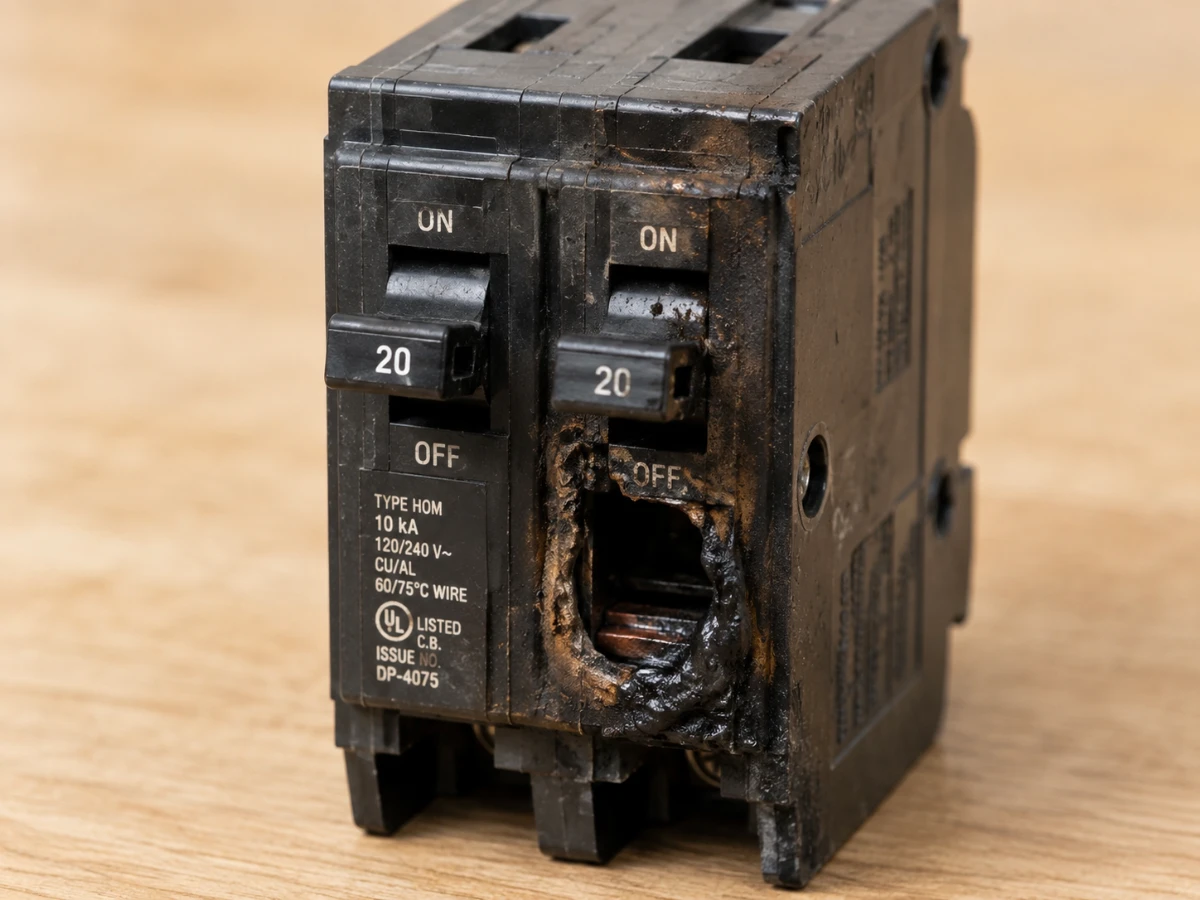
If one circuit keeps acting up, our circuit breaker keeps tripping guide explains how to reset a breaker safely one time and what the common causes are.
Circuit Breaker Repair Costs in Minneapolis
Breakers are sealed safety devices, so repair actually means replacing the breaker. For a standard single breaker, here are the typical charges:
Item | Estimated Cost |
Circuit Breaker Replacement Parts | $ 215.00 - $ 400.00 |
Professional Labor (1 to 1.5 hours) | |
Visit Charges | $ 170.00 |
Total Cost | $ 385.00 - $ 570.00 |
Need more than one breaker swapped on the same visit? You only pay for the extra parts and labor, while the visit charge doesn't repeat.
Double-pole breakers (the big ones for dryers and ranges), tandem breakers, and arc-fault or ground-fault breakers usually cost more than a basic single breaker. Replacement in older Minneapolis homes can also cost a bit more because of cramped original panels and hard-to-find parts.
For a deeper breakdown, see our circuit breaker repair cost guide, which covers what moves the price up or down.
Why Pre-1980 Minneapolis Homes Create Unique Circuit Breaker Problems
Think about the homes in Longfellow, Powderhorn, and Northeast Minneapolis. Many were built after World War II when a house had a radio, a fridge, and a few light bulbs. Today the same house has a microwave, a dryer, central air, and a phone charger in every room.
That's a lot to ask of an old system. Here are the problems we see most often:
Small Service Panels (60 to 100 Amps)
An older, smaller panel can hit its limit fast when several modern appliances run at once, so breakers trip again and again. It also leaves no room to add an EV charger or heat pump down the road.
Active Knob-and-Tube Wiring
Common in homes built before about 1940, this early wiring has no safety ground, and it can break down after a century of use. It becomes a serious fire risk if it gets buried under modern blown-in attic insulation. Many insurance companies also want active knob-and-tube removed before they will cover a home. Our knob and tube wiring replacement guide explains what a rewire involves.
Aluminum Wiring
Aluminum wiring was used in homes from the mid-1960s to early 1970s. Aluminum expands and shrinks more than copper, so connections can loosen over time and heat up. Warm outlets or switches and flickering lights are the clues you need to look out for. This is not a do-it-yourself fix.
Decades of Do-It-Yourself Add-Ons
These are things like extra outlets, double-tapped breakers, and mystery wires. A double tap means two wires under one breaker screw, which is a code problem and a fire risk. Add in unlabeled circuits and overloaded lines, and it's hard to know what's safe without a close look.
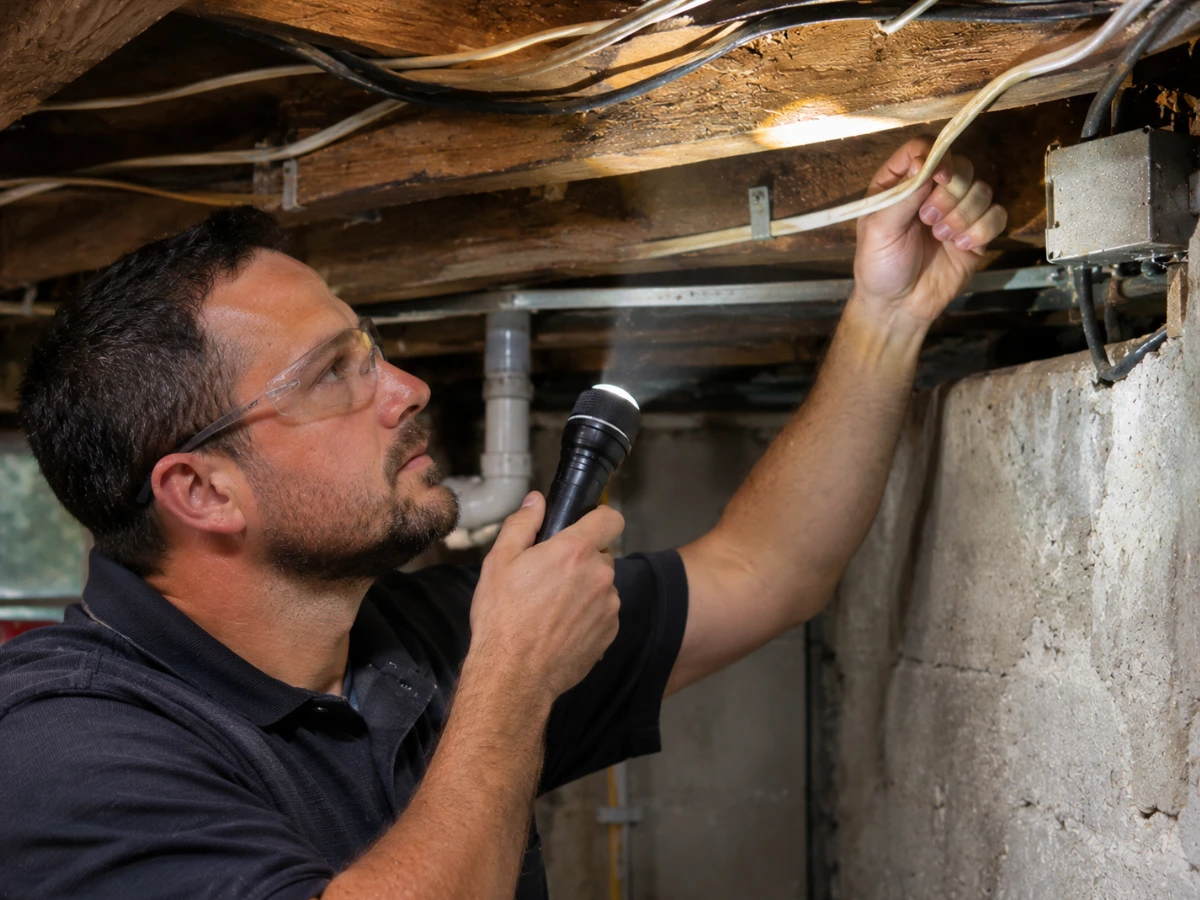
A general handyman can miss these things, but a local electrician who sees old Twin Cities panels every week knows where to look. Not sure whether you even have a fuse box or a breaker panel? Our fuse box vs circuit breaker guide shows you how to tell in under a minute and how each one affects insurance and resales.
Dangerous Legacy Panels Still Found in Minneapolis Homes
Some old panel brands have a poor track record. Here's what to know about each one.
- Federal Pacific (Stab-Lok): These were common from the 1950s through the 1980s. Independent testing has shown their breakers can fail to trip during an overload. They weren't formally recalled, but many electricians treat them as a replacement priority.
- Zinsco: Zinsco breakers can overheat and stick to the metal bar behind them. When that happens, the breaker may not trip at all. That defeats the whole point of having one.
- Pushmatic: Pushmatic panels have push-button breakers. They don't carry the same reputation as the other two. But they're very old, the moving parts wear out, and matching parts can be hard to find. They usually need a careful look from a licensed electrician.
To check your own panel, open the door and look for a brand name on the label or the breakers. If you spot one, call a pro, and don't touch anything inside. Swapping a single breaker in these panels isn't the safest fix, so a full panel replacement is usually the better option.
Breaker Repair vs. Full Panel Replacement: How to Decide
A single bad breaker in a healthy panel is a simple swap. But ask yourself these questions:
- Is the panel a Federal Pacific, Zinsco, or other problem brand?
- Is it 30 or more years old?
- Are all the slots full, or are there double-tapped breakers?
- Is your service only 60 or 100 amps while you want an EV charger or heat pump?
- Are you selling or refinancing soon?
Several yes answers here point to a new panel. In addition to these, home inspectors in Minneapolis often flag outdated or undersized panels during a sale. This can lead to repair requests which will cost you or a lower offer. Insurance companies may also ask about old panels.
Our electrical panel upgrade guide breaks down what a replacement will cost you in the Twin Cities.
GFCI, AFCI, and Code Upgrades for Older Homes in Minneapolis
Current electrical code calls for two kinds of protection that older homes in Minneapolis often lack:
- AFCI (arc-fault) protection: This guards against sparks from damaged wires. It's required on most bedroom and living space circuits.
- GFCI (ground-fault) protection: This guards against shock. It's required in kitchens, bathrooms, garages, and other damp spots.
Old wiring that nobody touches doesn't have to be brought up to current code, but when a circuit is changed or replaced, the new work has to meet today's rules. That can mean installing an AFCI or GFCI breaker instead of a basic one, which costs more than a standard breaker.
Adding this protection during your repair visit saves you a second trip charge. See our GFCI and AFCI installation page for how we add this protection.
What Happens During a Circuit Breaker Repair Visit in Minneapolis
Here's how a typical visit goes:
- Panel Inspection: We open the panel and look at the brand, the age, and the size of your service. We check for scorch marks, rust, loose wires, and double-tapped breakers. We also note if it's a problem brand like Federal Pacific or Zinsco.
- Load Testing: We find out how much power the troubled circuit is using and what is plugged into it. This tells us if the cause is an overload, a short, or a breaker that has simply worn out.
- Breaker Swap and Cleanup: Once we know the cause, we shut off the power and replace the bad breaker with the right type and size. We also tighten loose connections and clean up any corrosion or buildup we find.
- AFCI and GFCI Check: We see whether the circuit needs arc-fault (AFCI) or ground-fault (GFCI) protection under current code. If it does, we can handle it on the same visit, which saves you a second trip charge.
- Final Testing: We turn the power back on and test the circuit under load. We make sure the new breaker holds steady and works as it should.
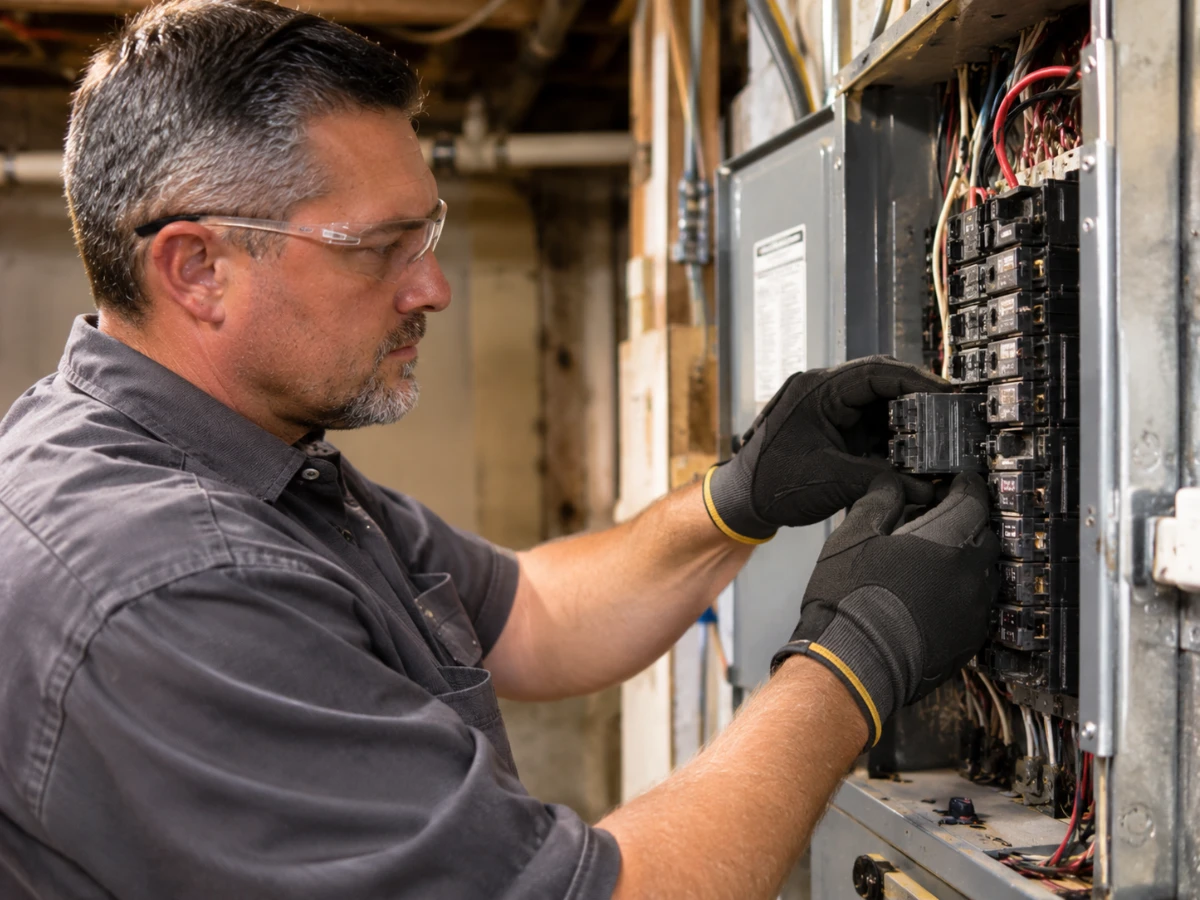
Learn more about our circuit breaker repair services and what they include.
Rebates and Incentives for Panel Replacement
If your old panel is holding back a heat pump or EV charger, it may be time to replace it. You may be able to offset the cost with one of these programs:
- Xcel Energy panel rebate: Xcel offers up to $1,500 toward a panel upgrade if you are a customer. Your panel's amperage has to go up, such as from 100 amps to 200 amps, and a licensed electrician must do the work.
- Minneapolis bonus rebate: If you live in the city and pair the panel upgrade with a qualifying heat pump or heat pump water heater, you can add a bonus on top of Xcel's rebate. It is up to $3,000 in a designated Green Zone and up to $800 outside one. Funds are first come, first served.
- Minnesota state panel grant: The state's Residential Electrical Panel Upgrade Grant is expected to be income-based, with up to $3,000 available. It hasn't launched yet, and it won't repay work you finish early. So, it’s best to wait for the official launch before you upgrade.
- Federal tax credit: The old 25C credit ended for work completed after December 31, 2025, so don't count on it.
Rules and funding can change, so it’s recommended you check the current details before you book the work. Our panel upgrade rebates in Minnesota guide walks through how to apply for each one.
Minnesota Electrical Permits and Code: What Homeowners Must Know
Electrical work in Minnesota falls under state law (Minnesota Statute 326B) and the National Electrical Code. A like-for-like breaker replacement in the same spot often doesn't need a permit. But added circuits or panel work typically do, and the work has to pass inspection.
The good news is that a licensed electrician can pull the permit for you. At Loch Monster Electric, we file the permits for customers, so you don't chase paperwork. Skipping a needed permit isn't worth it, since unpermitted electrical work can complicate an insurance claim and cause headaches when you try to sell your house.
Our electrical permit requirements in Minnesota guide covers everything you need to know about permits in detail.
Minneapolis Neighborhoods and Housing Types We Serve
Every neighborhood has its own wiring story. Here are the problems we run into around town:
- South Minneapolis bungalows: small panels, basement add-ons, and updates done in pieces over the years.
- Northeast Minneapolis brick two-flats: shared or separate panels and tight utility spaces.
- Uptown Victorian doubles: older wiring, plus extra circuits added for each unit.
- North Minneapolis ramblers: mid-century panels that were sized for much lighter use.
We also work in nearby Richfield, Bloomington, and St. Paul, where the housing stock is a lot like this. See our Minneapolis service area page for more on where we work.
Get Your Minneapolis Circuit Breaker Problem Fixed Right
A breaker that trips again and again is your home asking for help. Catching it early costs far less than a panel fire or a failed home inspection. Loch Monster Electric is the licensed Twin Cities electrician who can solve it. Give us a call at 763-292-1191 and we'll get to the bottom of it right away!
Frequently Asked Questions
A standard breaker replacement with Loch Monster Electric typically runs $385 to $570, including parts, labor, and the visit charge. Specialty breakers, hard-to-find parts, and permit fees can raise the total.
Yes, in many cases. Breakers are sealed, so a bad one gets swapped for a new one. If your panel is in good shape, you don't need to replace it. Problem brands like Federal Pacific and Zinsco are the exception.
A like-for-like swap in the same spot often doesn't. Added circuits or panel work typically do. A licensed electrician can tell you which one applies and pull the permit for you.
Open the panel door and read the label. Look for the names ‘Federal Pacific’, ‘Stab-Lok’, or ‘Zinsco’. Don't remove the cover or touch anything inside. Snap a photo and send it to a licensed electrician if you're unsure what the brand is.
Overloaded circuits are the top cause, since old panels weren't built for today's gadgets. Worn breakers, loose connections, damaged wiring, and faulty appliances can also be to blame.
A simple swap usually takes about 1 to 1.5 hours once the electrician is on site. A bigger panel problem could take longer.
Yes. Xcel Energy offers up to $1,500 toward a panel upgrade when your panel's amperage goes up and a licensed electrician does the work. Minneapolis homeowners may also qualify for a city bonus if they add a qualifying heat pump or heat pump water heater. Programs change, so confirm the current details before you do the installation.